Delving Into Moroccan Jewish Heritage
I’m in a country, Morocco, that is 99% Muslim, but I spent this morning in Casablanca exploring, just touching the surface really, of the Moroccan Jewish Heritage. Go figure.
It’s not my heritage, mind you. I come from Ashkenazi Jewish stock, whereas Moroccan Jews are Sephardic, but, vive la différence as they say in Morocco.
I visited two synagogues, one with a small attached museum. Then I taxied to a museum dedicated to Moroccan Judaism.
Before diving into that, a bit of background that I got, not from my visits today, but from the two guidebooks I’m using on this trip.
One said that as of 1948, the Jewish population of Morocco was about 300,000. The other pegged the Jewish population that year at more than 250,000. Because 300,000 is more than 250,000, those two numbers aren’t contradictory, but it leaves a lot of leeway.
Today, the Jewish community of all of Morocco is about 3,500 strong, with the largest number living in Casablanca. Many Moroccan Jews emigrated to Israel (and elsewhere in the world) after the creation of the State of Israel.
It is illegal to criticize Islam in Morocco, but I read that the government is very tolerant of its religious minorities, including Judaism. In fact, in at least two instances you’ll read about below, the government took concrete action to honour its Jewish heritage.
My Moroccan Jewish Heritage Morning
Ettedgui Synagogue
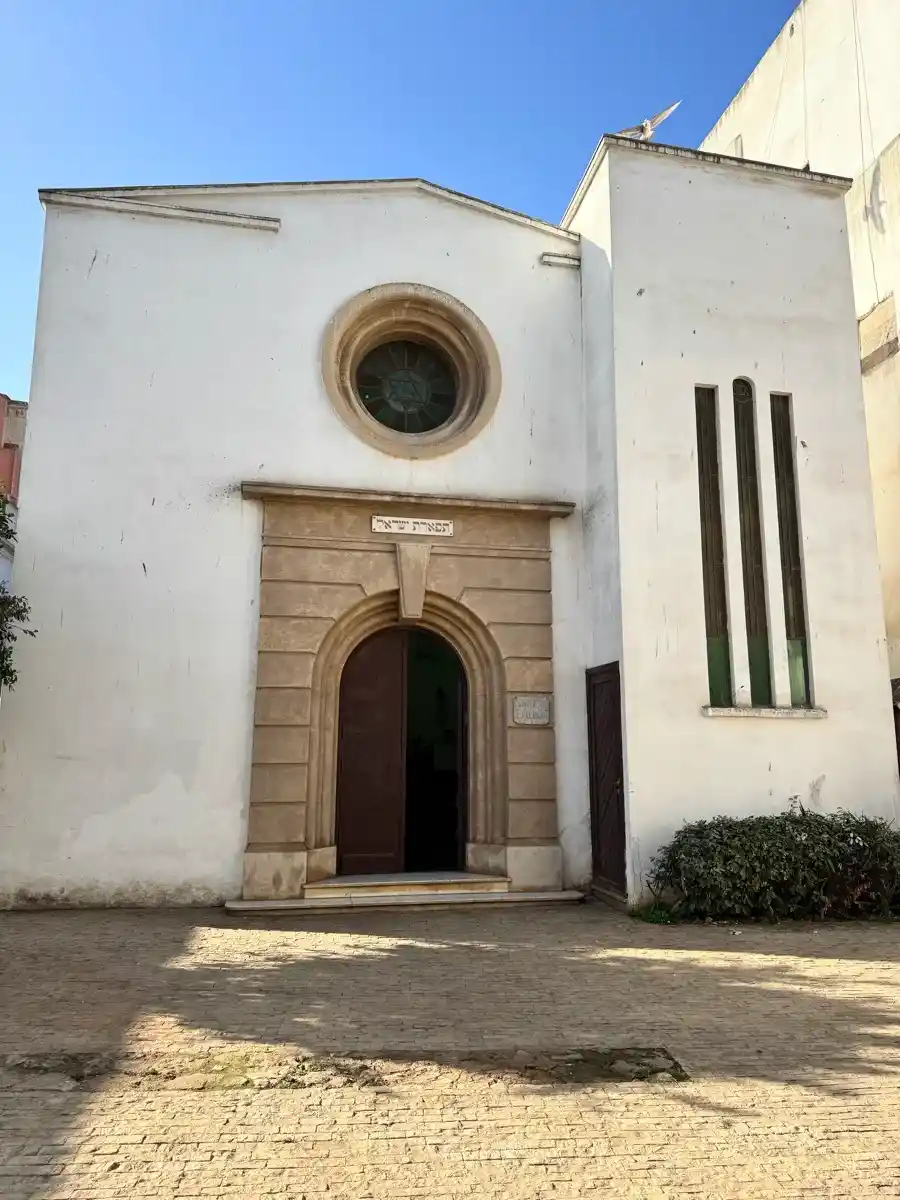
The Ettedgui Synagogue is located in the old part of Casablanca, in what was the Mellah, or Jewish district. In Casablanca, although not everywhere else, the Mellah was not a ghetto. There were no walls, and many Jewish people lived in the non-Jewish European districts. It’s just where they tended to congregate to be close to others in the community and to Jewish services.
The first Ettedgui Synagogue, then just one large room with six pillars, was constructed in 1873–1874. The synagogue in the form it stands today was built in 1929–1930.
The building was damaged in 1942; it was damaged by mistake as a result of an Allied bombing in the Second World War. In the late 20th century, as part of an initiative by King Mohammed VI to protect Moroccan Jewish heritage, the Ettedgui Synagogue was rebuilt exactly as it was when finished in 1930.
The entrance to Ettedgui Synagogue is quite understated. An arched, sand-coloured doorway mounted in a white stucco wall holds two dark wood doors.
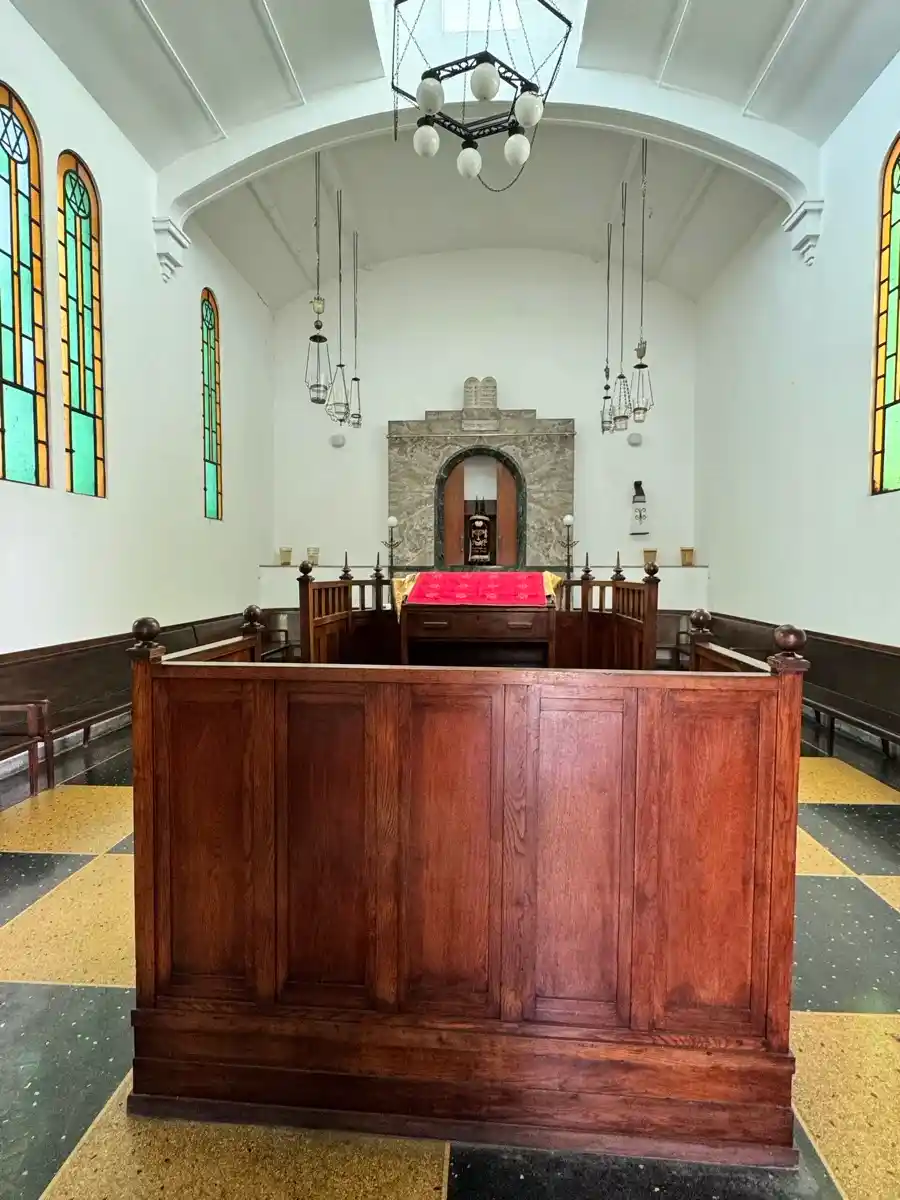
The interior is fairly plain as well. Simple stained-glass windows sit in undecorated white walls. The ceiling is vaulted and also white.
The pulpit of unadorned dark wood stands in the centre of the small sanctuary.
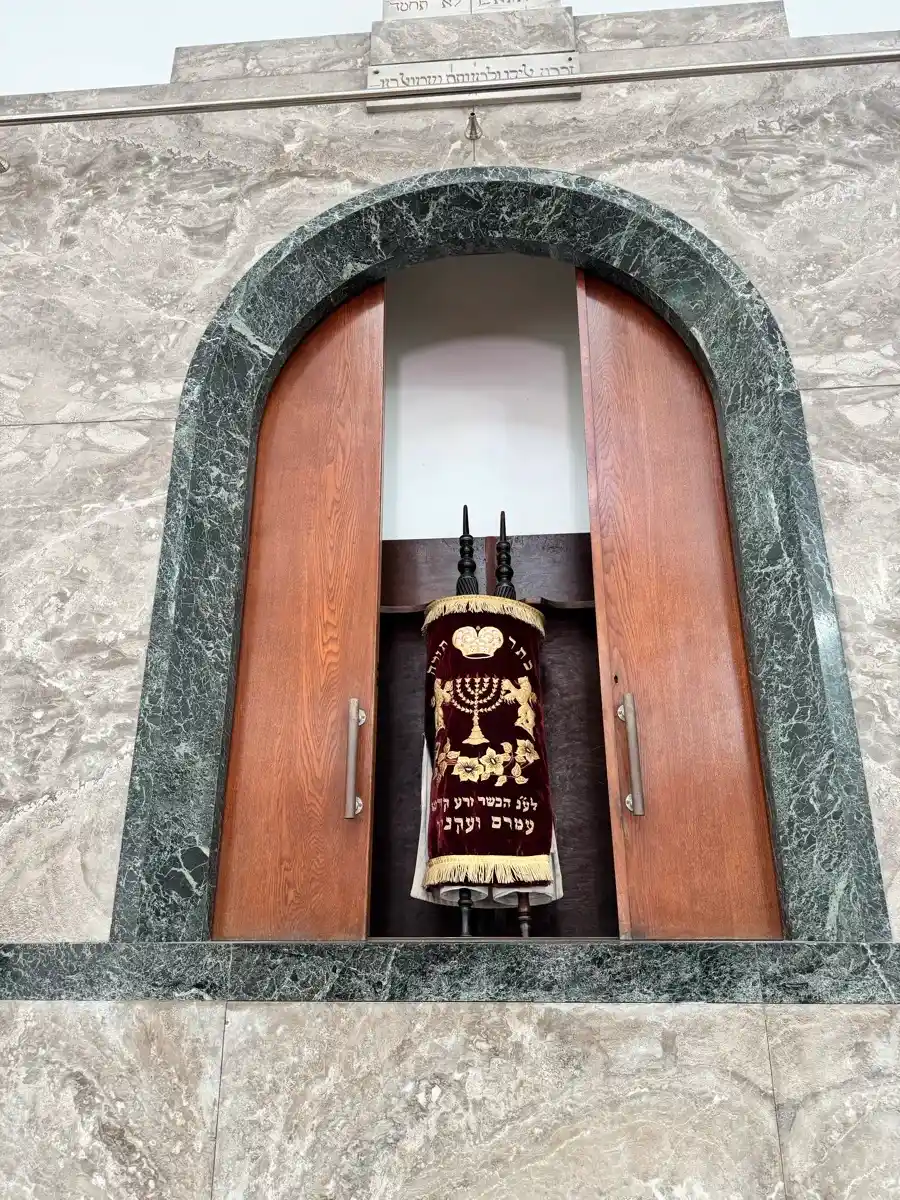
The Torah ark at the front is simple but impressive. Polished green stone, probably marble, outlines the arched ark. That is set into a rectangle of polished grey stone, again probably marble. Atop that are two Ten Commandments tablets also made of grey stone.
Inside the ark is a beautiful gold-on-burgundy Torah cover. I don’t know if there is a Torah inside the cover or if it is just for show, but rods for a Torah scroll do protrude above and below the cover.
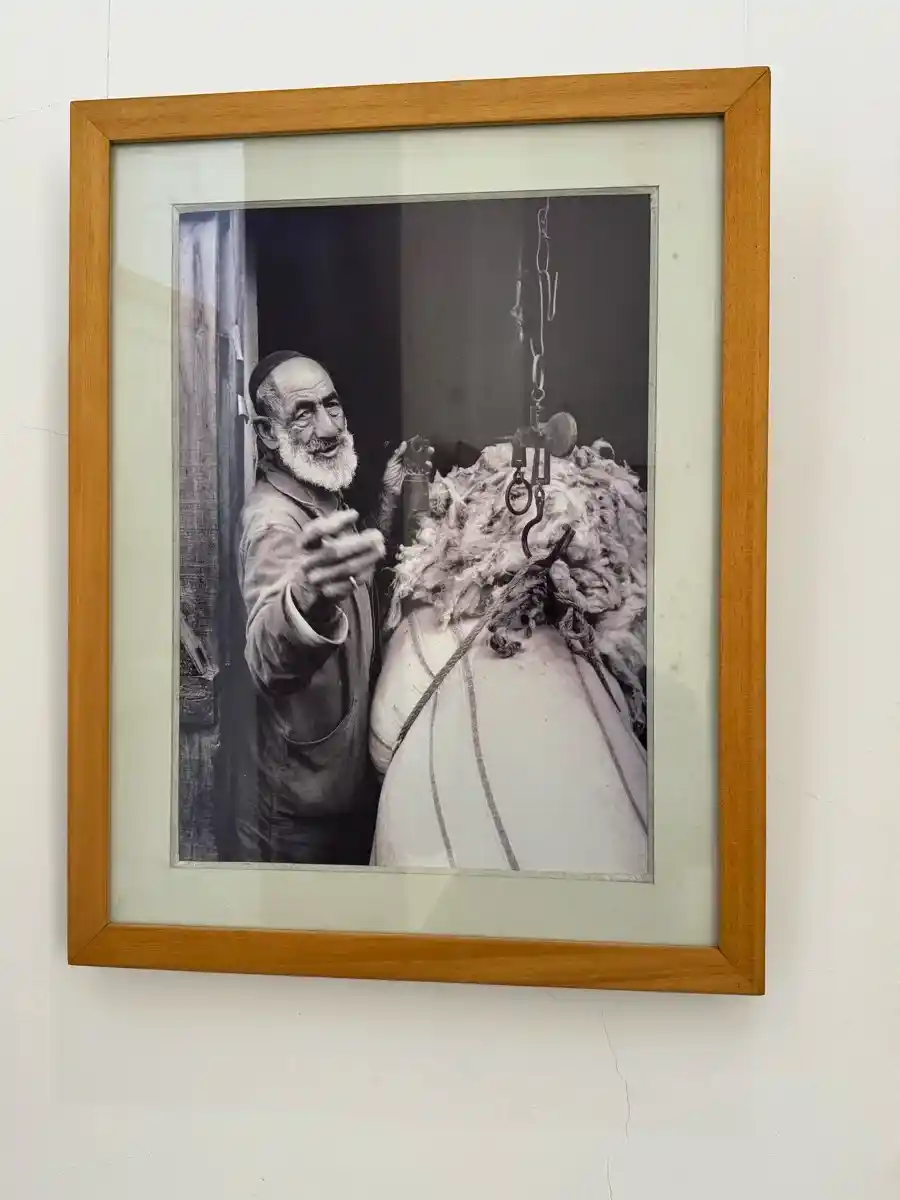
Extending the Jewish Heritage theme, there is a room beside the sanctuary that contains evocative photographs of Jews from Casablanca. I believe they are all from 1960, but I might have missed the dates on a few. There are also some photographs that include King Mohammed VI when he came to the synagogue for the December 16, 2016 rededication after the reconstruction was finished.
Temple Beth-El
Continuing my informal, self-directed tour of Casablanca’s Jewish heritage, I walked roughly twenty minutes to Temple Beth-El.
A tall, opaque wall runs along the street in front of the temple, aligned with the neighbouring facades. The door through this barrier is plain and without markings.
There was no signage saying that it is Temple Beth-El, nor was there anything that suggested there was a synagogue or anything Jewish there. But it was where Google Maps said it should be, both by the dot on the map and the street number. I tried the door. It was locked.
There was a police officer positioned on the other side of the street. He looked like he was there to guard the building, so I figured I was in the right place. That’s the reality of Jewish sites these days.
I asked the officer if it was Temple Beth-El. He said yes. I asked him if I could go in. He said yes. I asked him how. He told me I had to push the buzzer. He crossed the street and pushed it for me. The buzzer didn’t look like a buzzer. It was an unlabelled, slightly raised rectangle.
I waited a minute or two after the officer pushed the button, but there was no response. I pushed it again. I waited a while. Eventually, a short, wizened man opened the door for me. He asked me if I was Jewish. I said yes.

Only Jewish people are supposed to be able to enter. He handed me a fancy kippah for me to wear and let me in. I suppose that allowing only Jews in is fair, seeing as though non-Muslims are not allowed into mosques in Morocco except for the Hassan II Mosque.
My walking tour app said the gatekeeper is Muslim, but he is very respectful and kneels during prayers at the synagogue. Kneeling is not a Jewish thing, but, whatever. Respect.
I also read some reviews of Temple Beth-El before going. A few mentioned the need to be Jewish to enter. But one said the gatekeeper was nice and let them in despite telling him they were Christian.
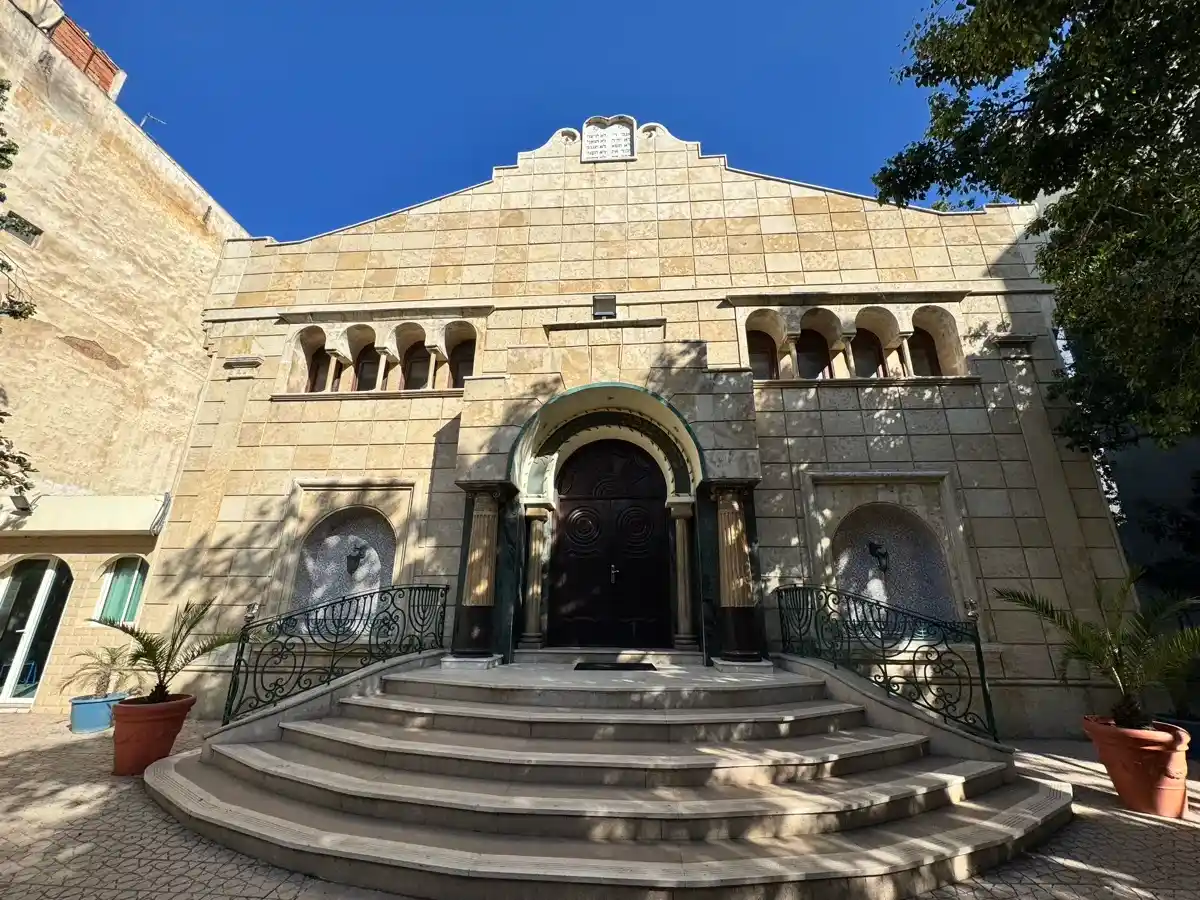
Once through the door in the wall, there’s a small courtyard with five arced steps with wrought-iron railings leading into the synagogue. The facade is peaked sand-coloured stone, topped by Ten Commandments tablets. It’s a handsome front.
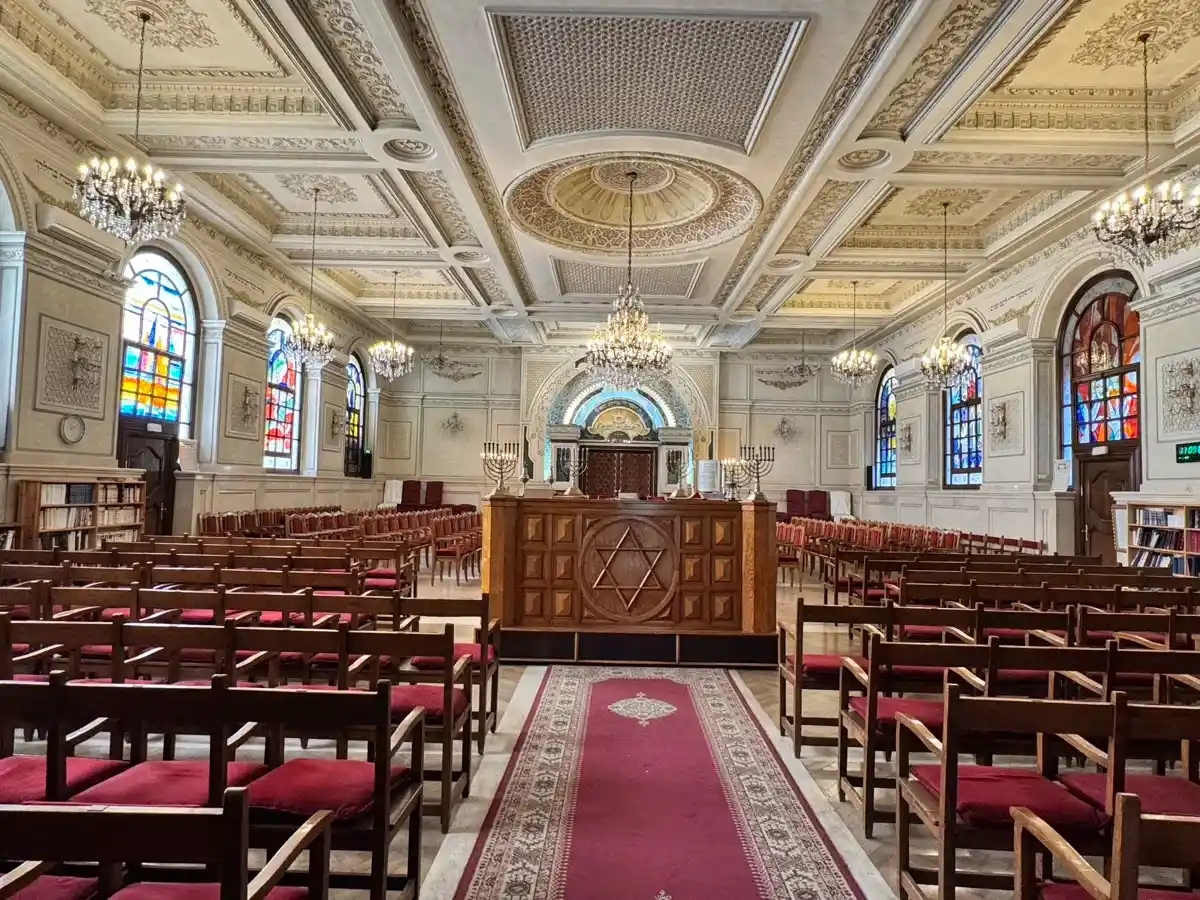
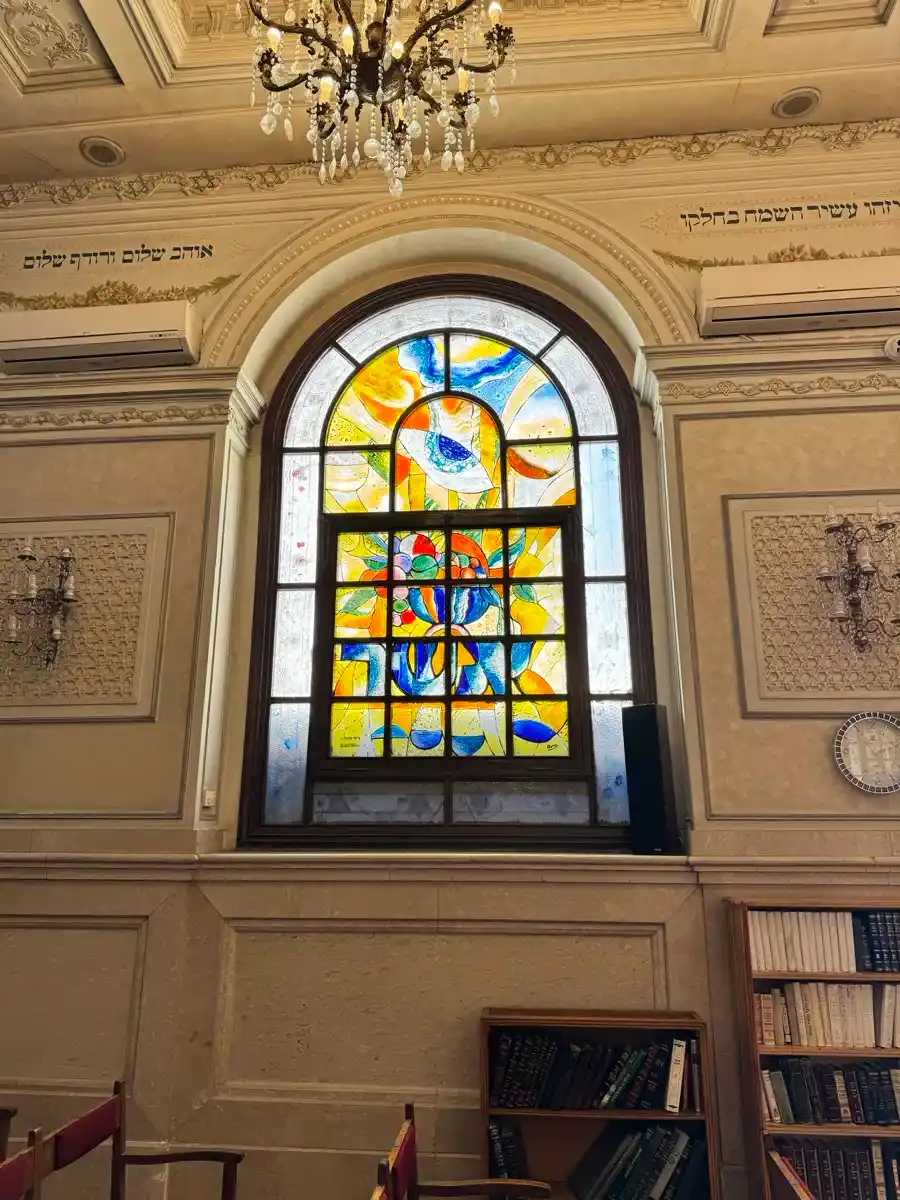
The interior is very attractive. There are stained-glass windows inspired by Marc Chagall and lovely chandeliers. The central, dark wood pulpit is elegantly carved, including a Magen David. The ceiling is coffered.
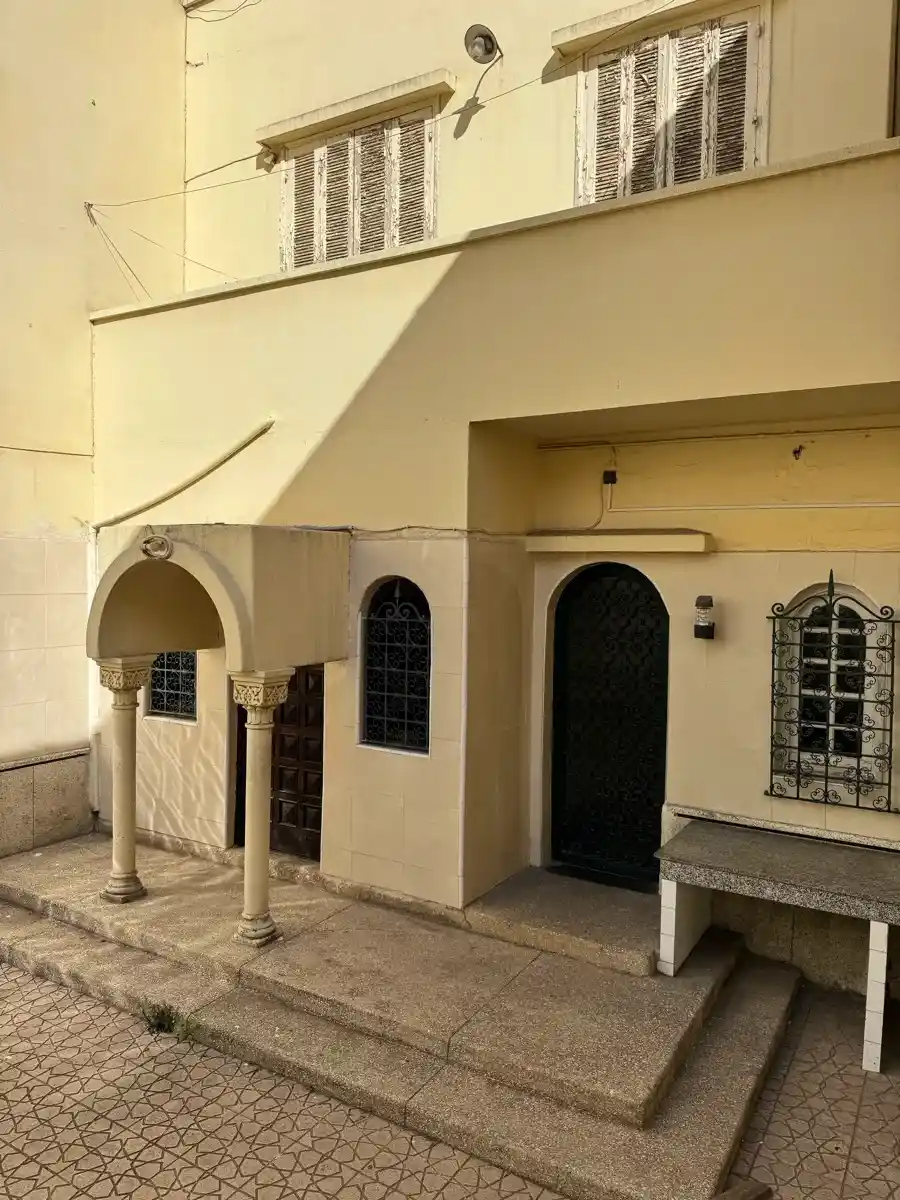
There are small courtyards off to the sides of the synagogue. Off one of those courtyards is a function room that was set up with a few banquet tables and chairs.
Temple Beth-El still functions as a synagogue, serving the Casablanca Jewish population of about 2,000. That’s the largest Jewish population in any city in the Arab world. It’s a large enough community to support Casablanca’s 30 synagogues.
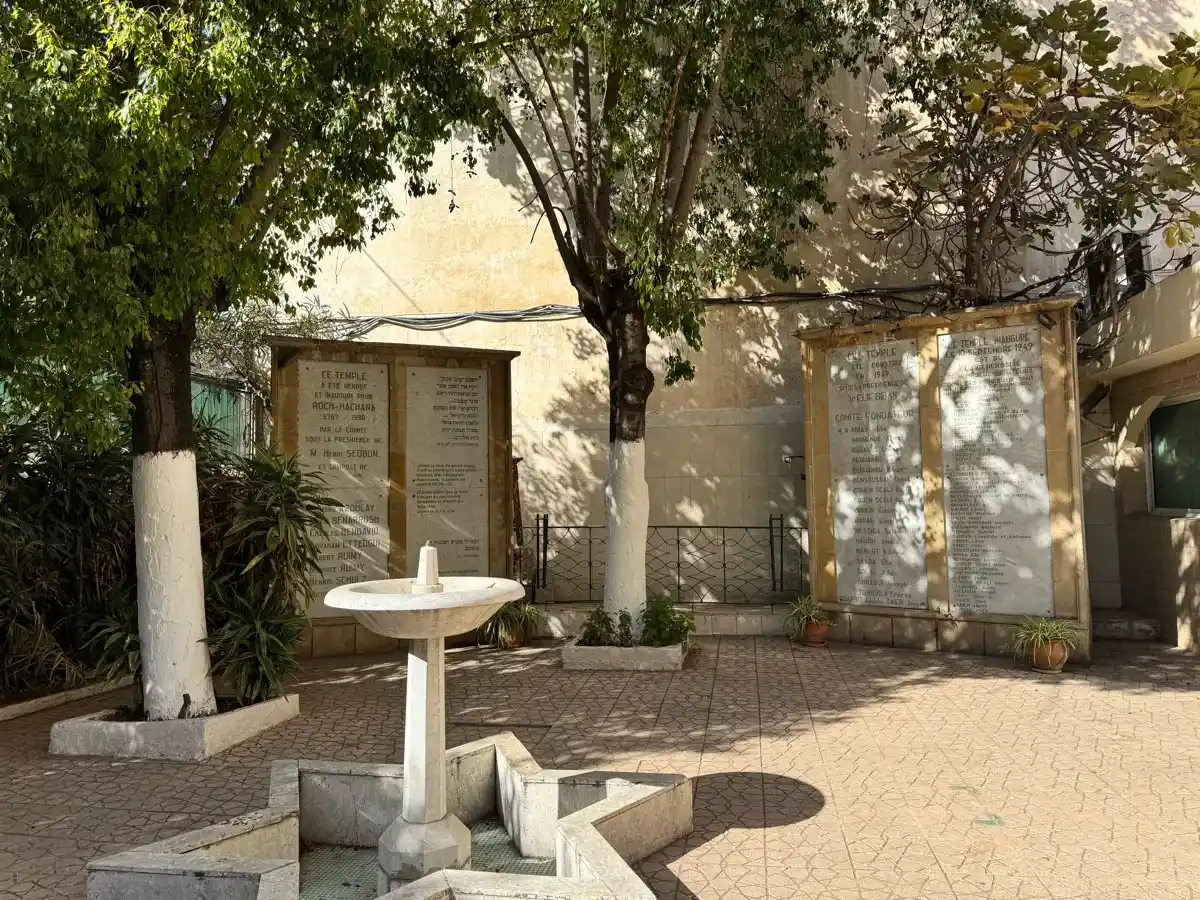
Museum of Moroccan Judaism
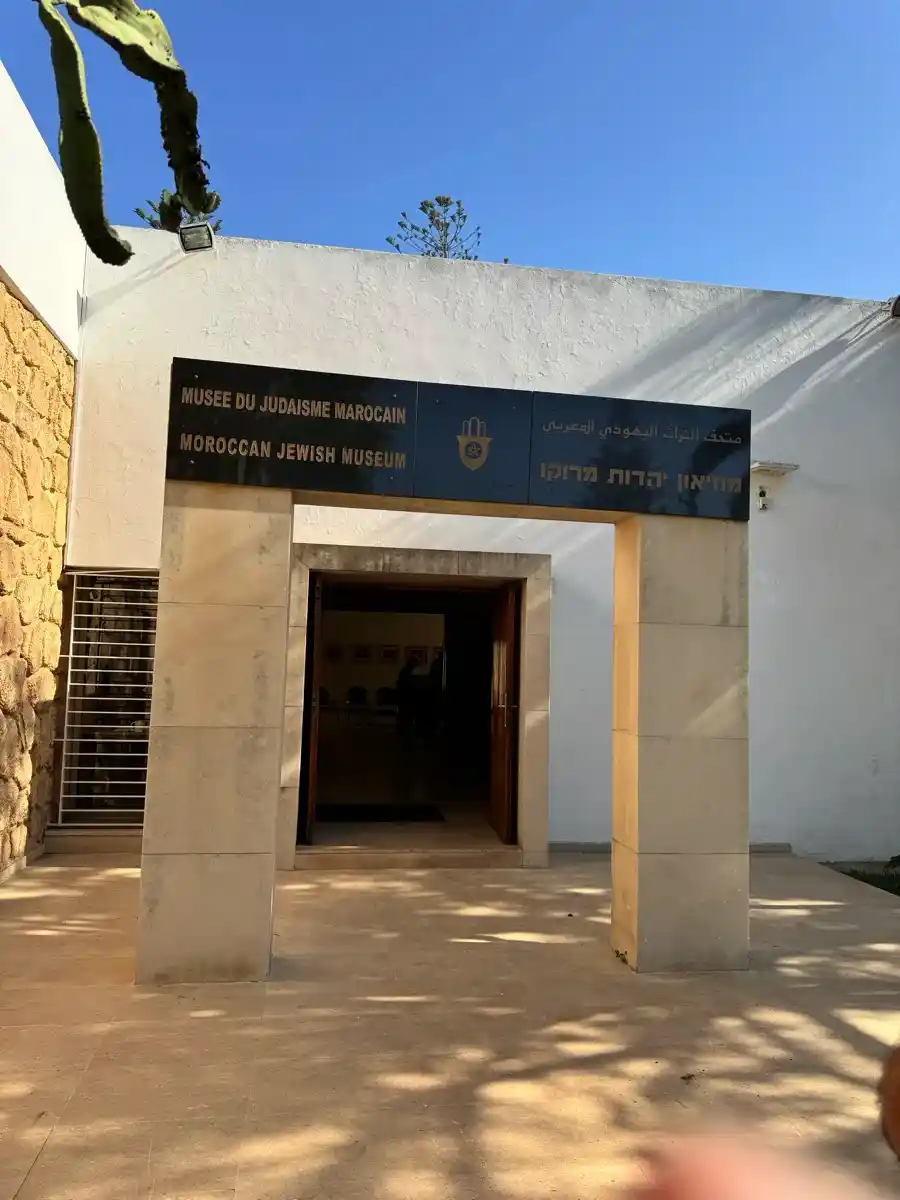
Continuing with and completing the Jewish Heritage theme, I took a taxi quite a distance from the old centre of Casablanca to visit the Museum of Moroccan Judaism. This is another project that was financially and morally supported by the government through King Mohammed VI to protect Morocco’s Jewish heritage.
One room contained what I think was a temporary exhibition of photographs by a single photographer, Juno David, of Jewish people from not just Casablanca, not just Morocco, but from several countries in Africa.
An adjoining room contained more photographs, I think by a variety of photographers, of Jews in Casablanca in 1960. I don’t know what was special about 1960.
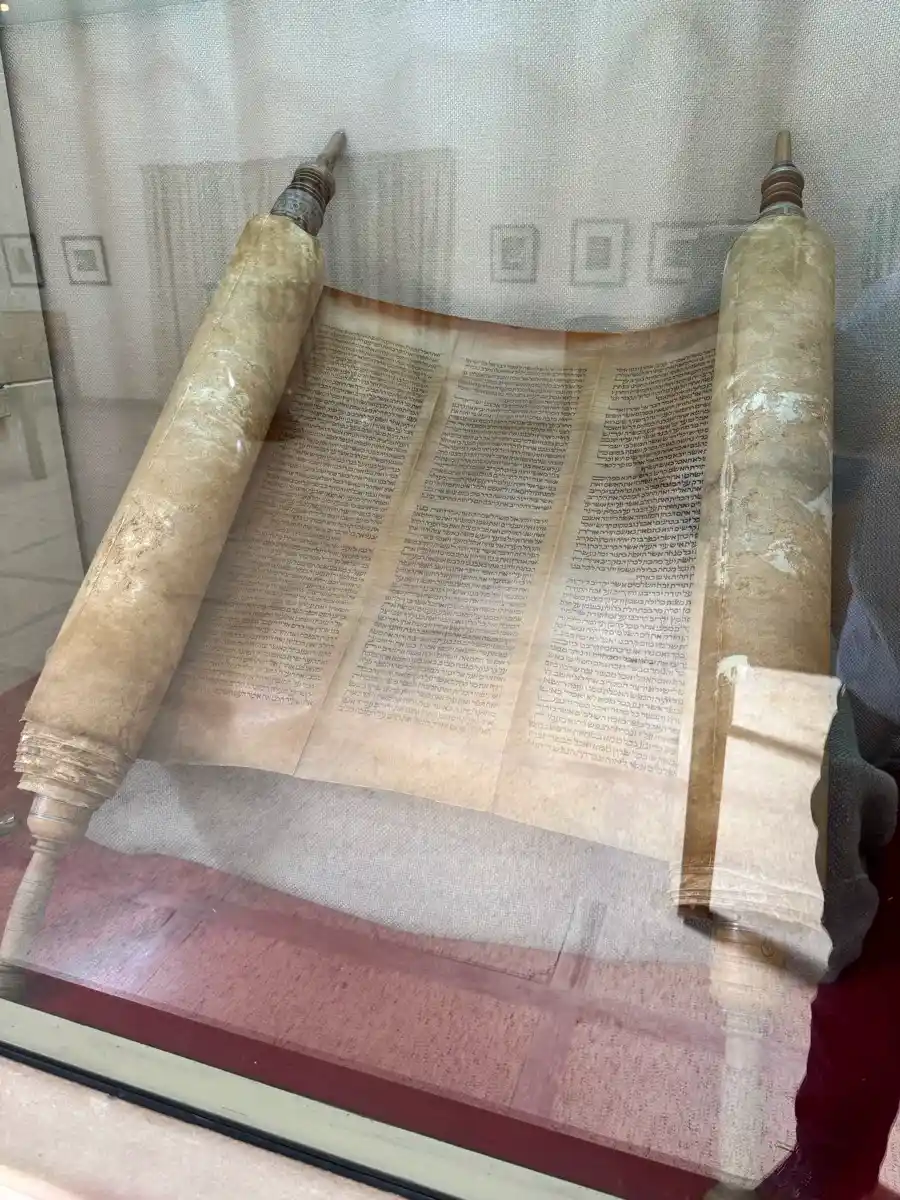
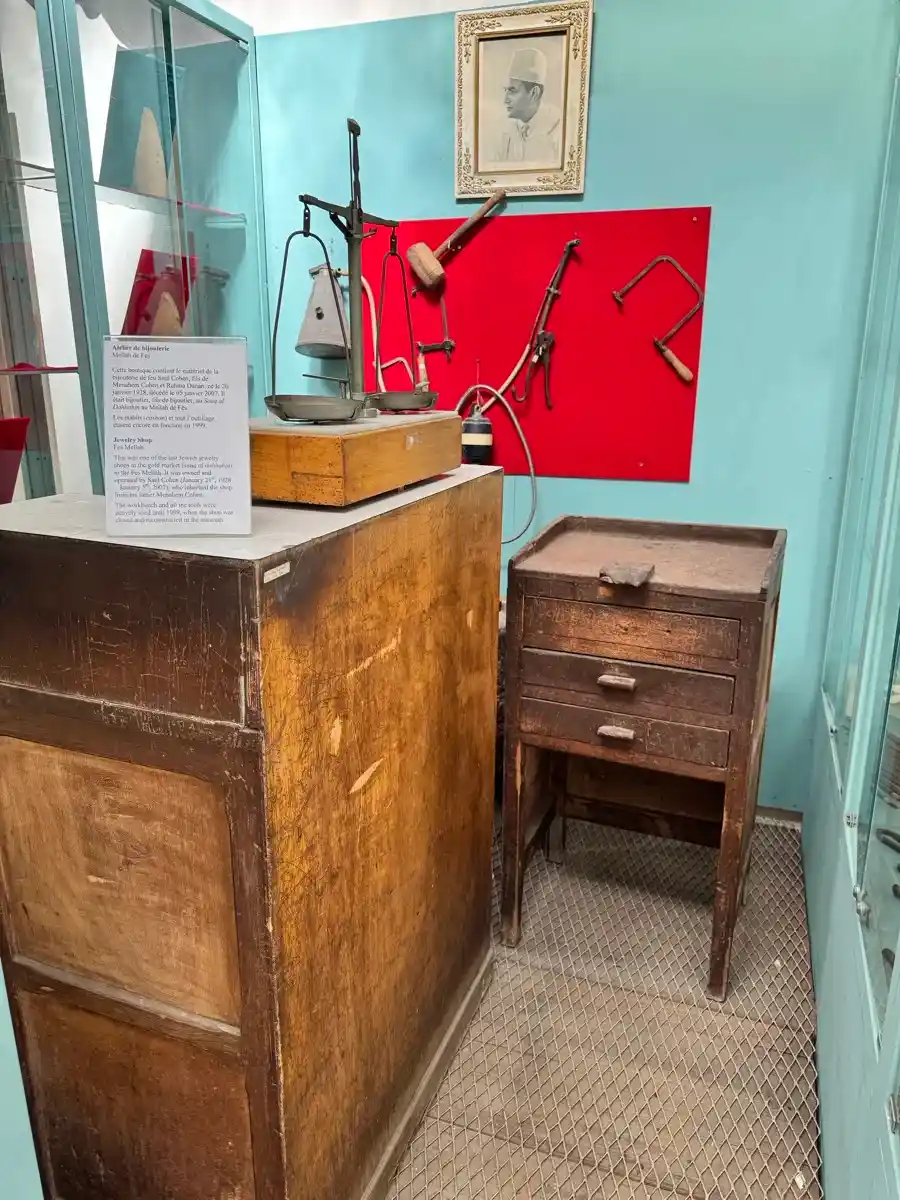
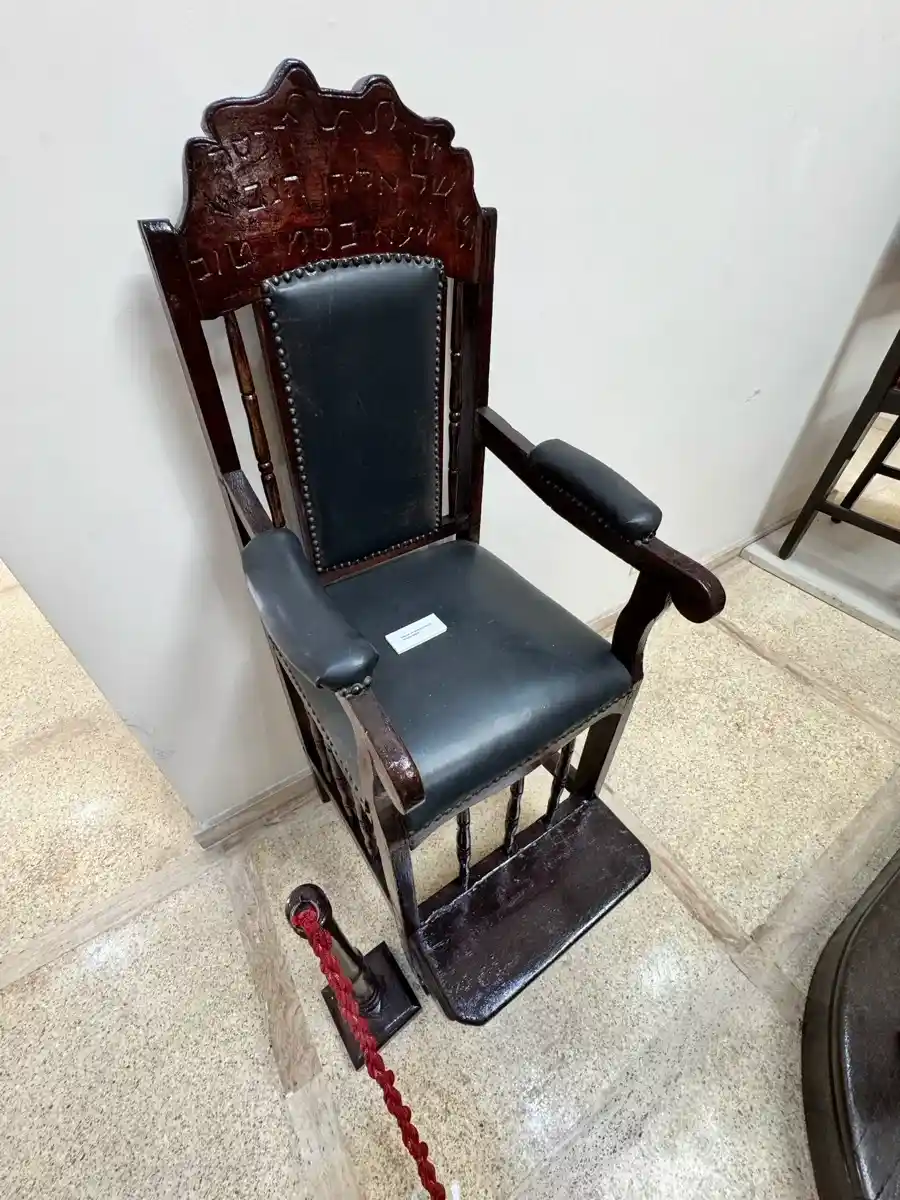
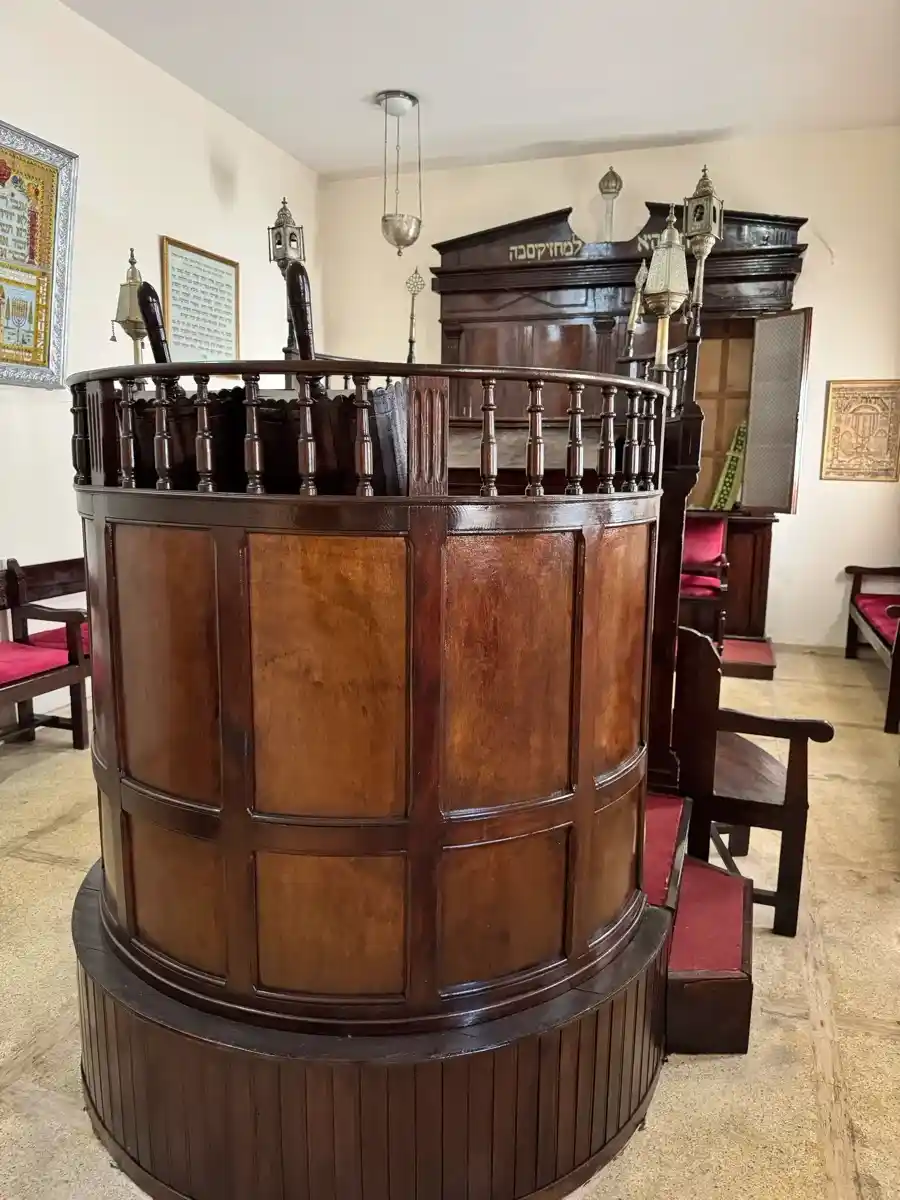
There were also display cases containing Jewish artifacts such as Torah scrolls, covers, and breastplates; kiddush cups; menorahs; dolls with traditional local Jewish garb; and more. Three ceremonial circumcision chairs occupied places of honour behind a teba (pulpit) from an old synagogue. There were other old tebas and some other furnishings from other synagogues, as well. In addition there was a recreation of the last Jewish jewelry-making workshop in Casablanca, including the actual workbench from the shop.
The Museum of Moroccan Judaism is not particularly large, but it is interesting and well presented.
More pictures from the Museum of Moroccan Judaism:
Discover more from Joel's Journeys & Jaunts
Subscribe to get the latest posts sent to your email.
Relaxing in Arab League Park and Exploring Quartier Habous
Exploring Central Casablanca, Including its Central Market
30 functioning synagogues! That surprised me. When you said that Morocco is 99% Muslim, I assumed there weren’t enough percentage points worth of people of varying other faiths to support any kind of Jewish community at all. But, I glean from you that Casablanca is the place. That I didn’t know. Such an interesting history. Thanks for taking us there.
I’ve forgotten where I got the number 30 from. It was one or more of my walking tour app or guidebooks. I have to admit that I’m skeptical. I probably should have cited the source so I can blame them if it’s wrong. I don’t think all of them are functioning as synagogues with regular services every week. Neither of the two I saw today was large, and I think they’re the largest.
I guess many of the 2,000 Jews in Casablanca participate in at least the cultural aspects of their synagogues.
An enlightening post. Led at least a couple readers to delve deeper into the online wikis and other links about the long history of Jewish Morocco.
You reminded me of something I meant to say in the post, but forgot. My one complaint is that there was little or no text at any of the three places I visited. In the museum, what text there was said little more than what each artifact was.
So there was nothing about the, yes, long history of Judaism in Morocco or any unique customs and traditions that might have taken root in the community. So, research on. There are probably some interesting stories.
(English is very far from universal on signage here. Signs are typically bilingual, Arabic and French. My French being only a couple of steps above nonexistent, I probably would have required Google Translate for information panels if they did existed. I’ve already made use of Google Translate several times here.)