Visits to Assayag Synagogue and Musée Dar Niaba
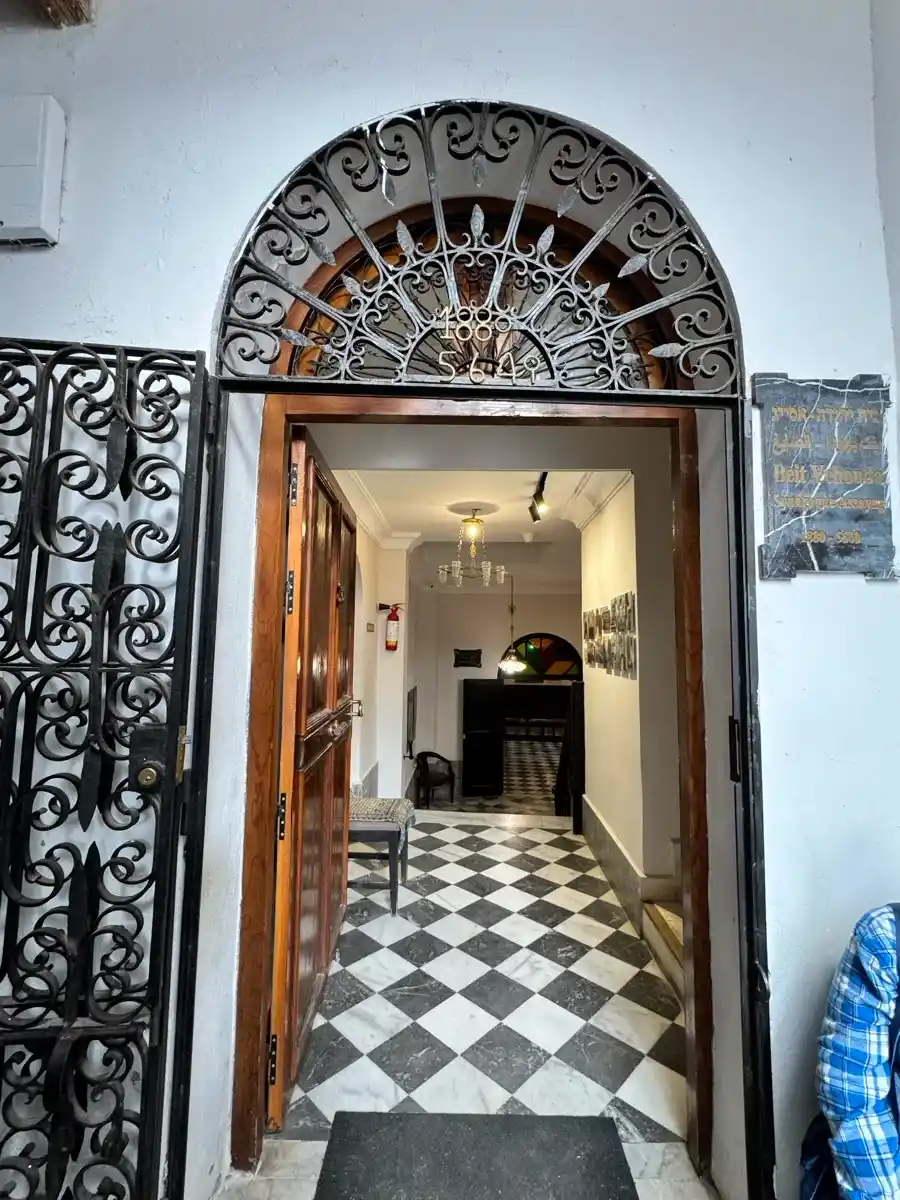
When I planned this trip, Moroccan Jewish heritage never entered my mind. Nevertheless, my first destination of the morning in Tangier was Assayag Synagogue. And this came after a whole morning a couple of days ago that I spent visiting three Jewish heritage sites in Casablanca. Go figure.
I had a fitful sleep last night. I woke up the final of many times last night later than I do most mornings. Probably apropos of that, I got a slow start to the day. And Assayag Synagogue is in the Medina, almost a 45-minute walk from my hotel. The long and the short of it is that I didn’t do much this morning.
However, the synagogue is half a block from Musée Dar Niaba, so I visited that, too. And, because they’re in the ever intriguing Medina, I did some more brief wandering around a small area of that, as well.
Assayag Synagogue
The Assayag Synagogue, also known as Beit Yehuda Synagogue, was founded in 1880 to serve the then-larger Jewish population.
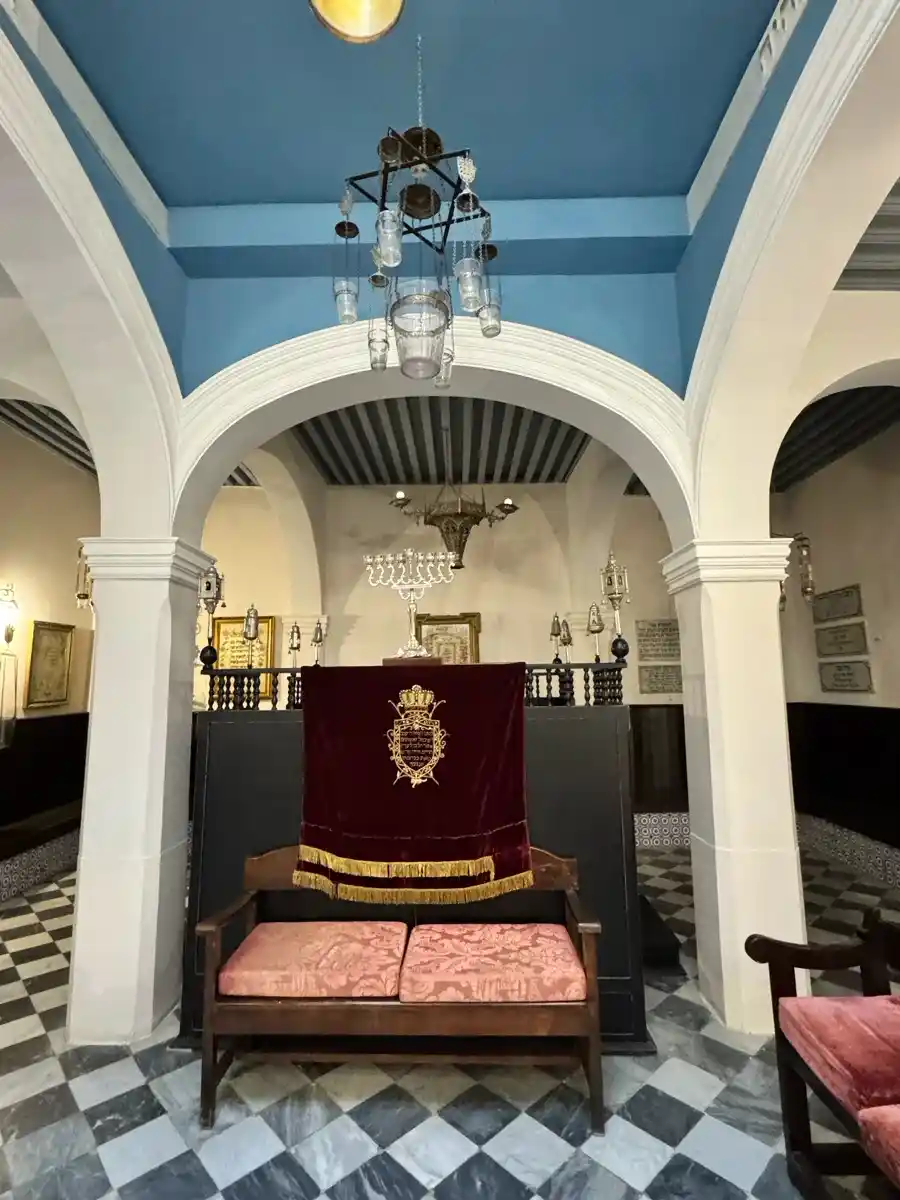
After the mass emigration of Jews from Morocco in the 1950s and 1960s, the synagogue was abandoned. It remained dormant and deteriorating until it was restored starting in 2021 with funding from the Moroccan Ministry of Culture and the Jewish community. Today, the Jewish community in Tangier numbers fewer than 200 people.
The Assayag Synagogue stands a short distance down a narrow lane off one of the backbone streets of the Medina. The door is quite plain, but it’s wrought iron, and there’s some wrought-iron decoration in the small arch at the top of the doorway. A faded sign marks it as “Beit Yehuda Assayag Synagogue.”
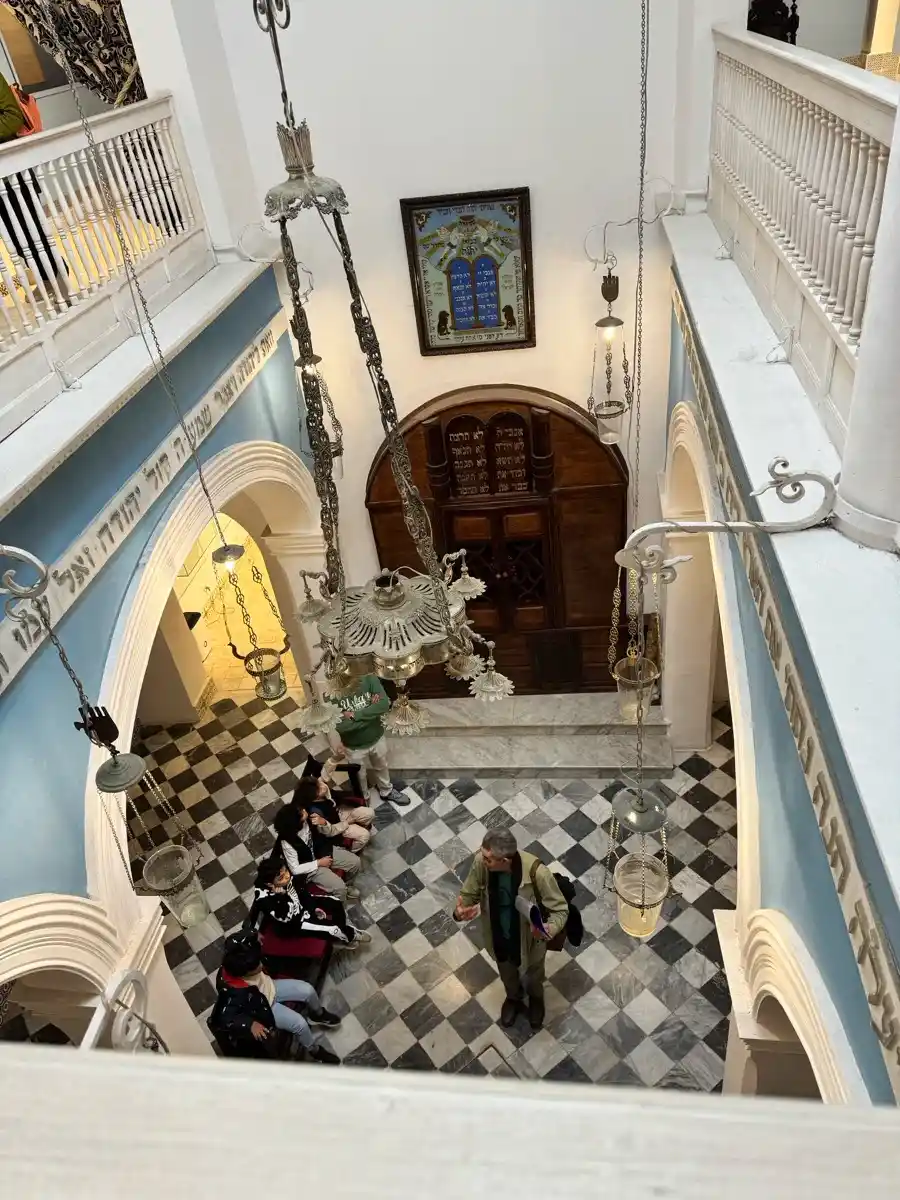
It’s a small but attractive synagogue. White pillars and arches hold up the women’s gallery above.
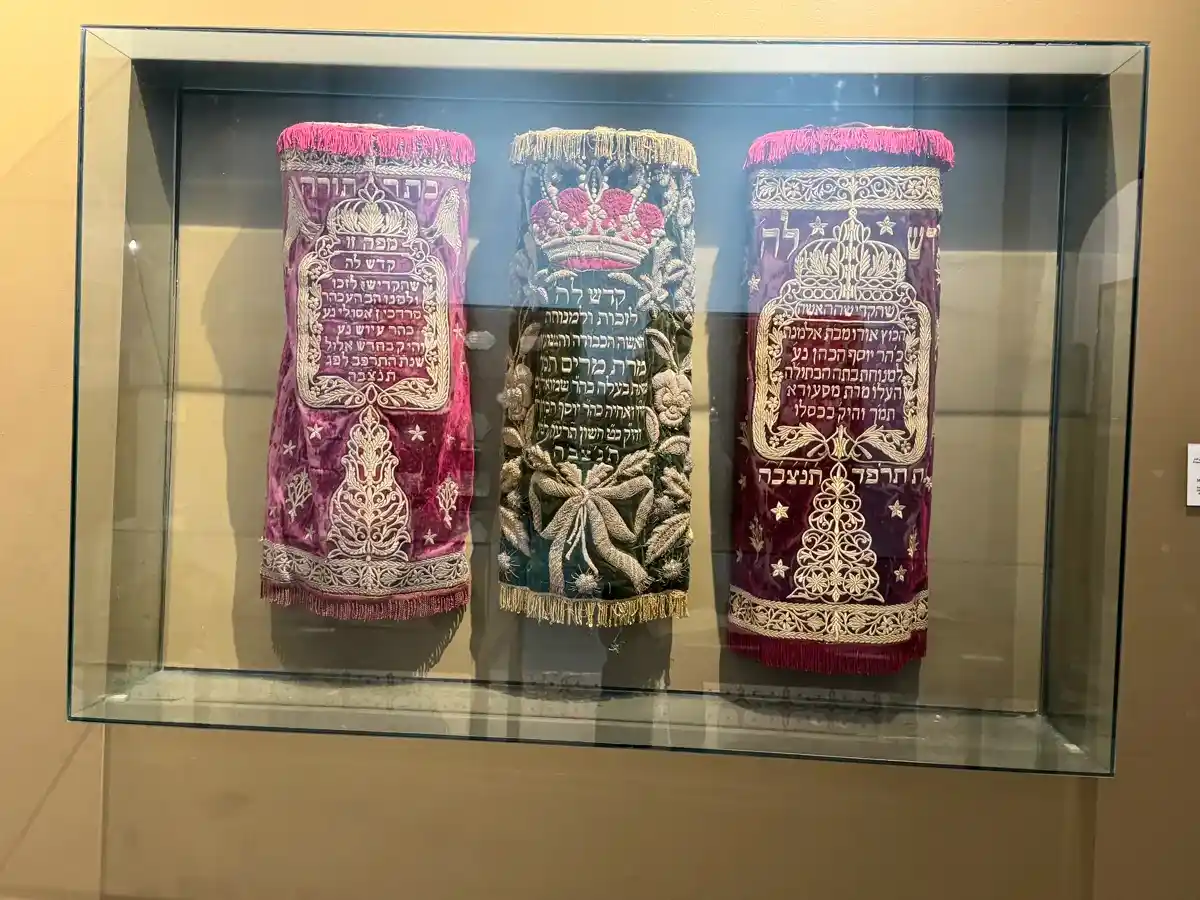
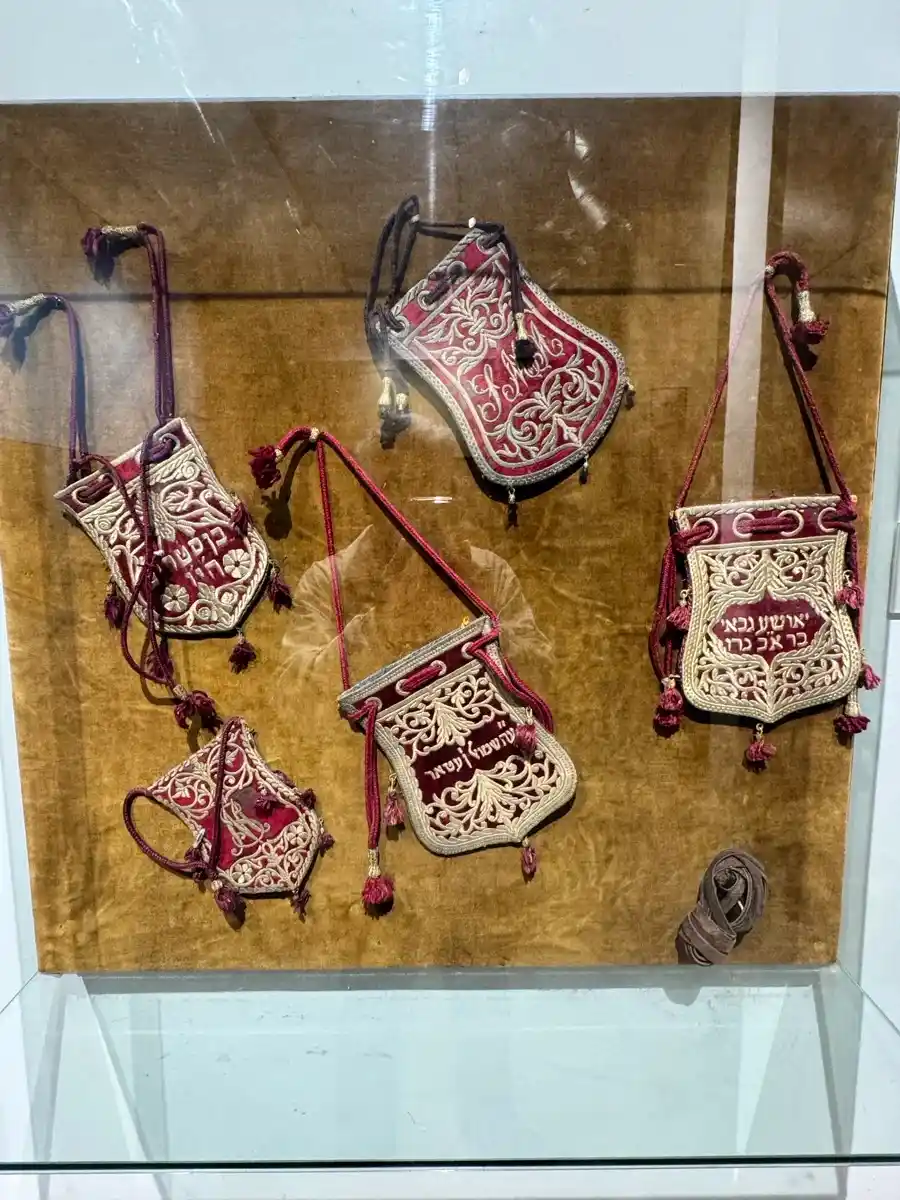
Today, in addition to the original furnishings, the synagogue contains a small museum with an old Sefer Torah, an old Megillah scroll (the whole Megillah), Torah covers, tefillin pouches, and more.
Upstairs, there are pictures and information panels about Judaism in Tangier. The signage was trilingual: Arabic, French, and Spanish. I relied a lot on Google Translate to get the information below.
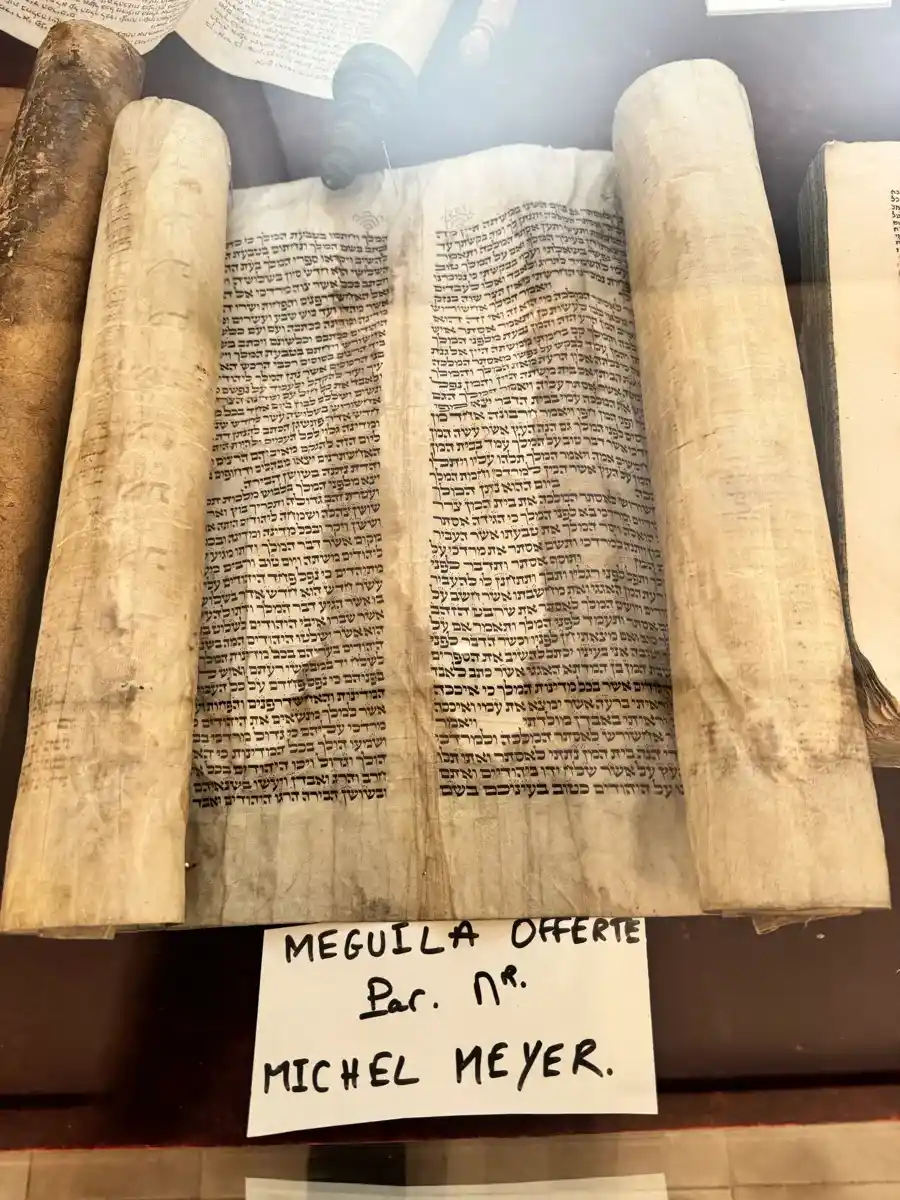
As I said above, the Jewish Community was once much larger than the fewer than 200 people today. It grew from 2,000 in 1835 to 3,500 in 1867. Then, after Tangier was declared an international zone in 1925, the Jewish population grew to 10,000 and eventually 17,000 in the 1950s.
The Jews of Tangier have their own lingua franca, Judeo-Spanish, also called Judesmo, Spanyolit, Djudyo, Tetuani, or Haketia. It’s derived from 5th-century Old Castilian and Hebrew.
Unlike elsewhere in Morocco, Tangier didn’t have a mellah (Jewish quarter). Jews lived like others, and their homes were in the broader community.
Between 1810 and 1918, when the Jews of Tangier spoke of going to America to earn their fortunes, they meant South America. There, they formed communities in Argentina, Uruguay, Brazil, Peru, and Venezuela.
Because Sephardic Jews were Spanish-speaking, they had no language problems there. And there had already been Jews in Recife, Brazil, since 1630.
Assayag Synagogue is a small, handsome, old synagogue with an interesting little museum. It’s worth a short visit if you’re in Tangier.
More photos from Assayag Synagogue:
Musée Dar Niaba
As I said, Musée Dar Niaba is only about half a block from Assayag Synagogue. So it was just a hop, skip, and a jump from one to the other. Or rather, it’s a hop, skip, and a jump for someone who is younger and more energetic than I am (or ever was). I sauntered over.
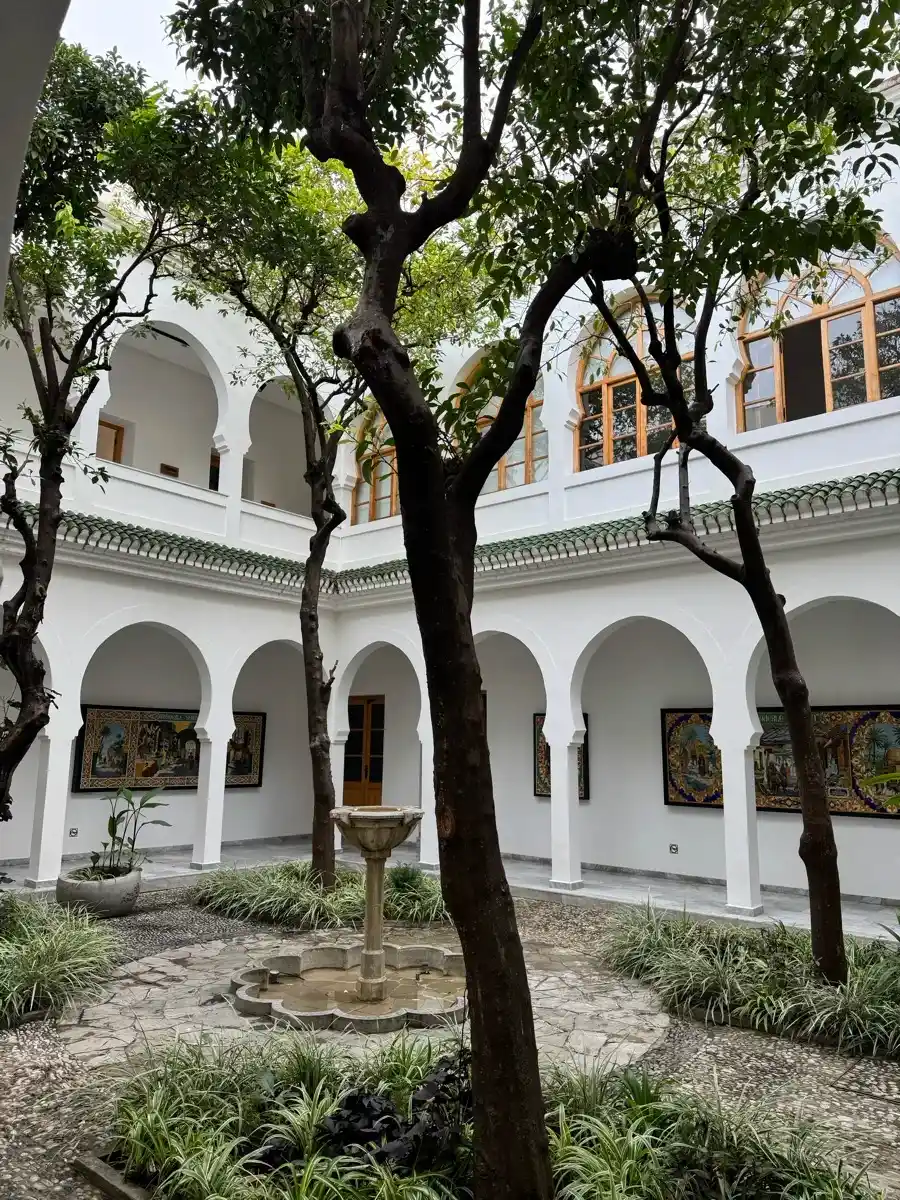
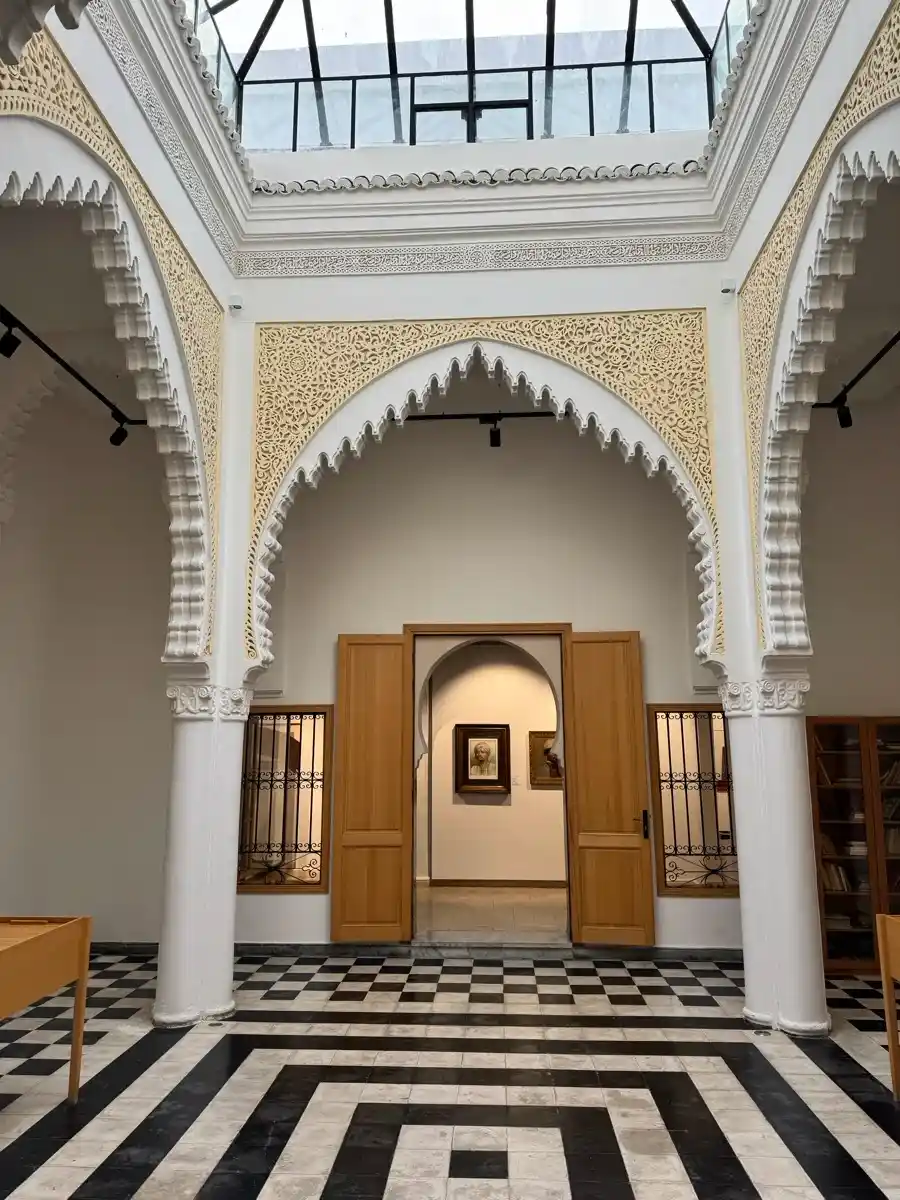
Musée Dar Niaba is housed in a beautiful old building in the Medina that used to be the French consulate. It’s a two-storey building that wraps around a lovely courtyard with some ground vegetation, something that looks like a stone church font but isn’t, and four large orange trees. Around the sides of the courtyard, there’s a portico with white pillars and keyhole-shaped arches. It’s lovely.
Most, but not all, of the signage at the museum had English on it (along with French and Arabic).
The first room contained a timeline of the history of Tangier running along a couple of walls. While there was a text panel on the diplomatic history of Tangier that had English on it, the timeline itself was in only Arabic and French. Google Translate helped me there.
Early 20th century
Tangier life scene
The first date on the timeline noted the Libyan-Berber civilization in Tangier in 3000 BCE. Except, of course, because I translated from the French, that’s not literally what it said. It said “Civilisations libyco-berbères” and it gave the date as “3000 av. J.-C.” That’s short for, “avant Jésus-Christ.” Or, in English, “before Jesus Christ.”
I found that strange. Morocco is a 99% Islamic country. And the museum is just a rhetorical hop, skip, and a jump from an old synagogue. But it uses dates relative to Jesus Christ. I’m not Christian. I don’t use “AD” and “BC” for ancient dates. I use CE (Common Era) and BCE (Before Common Era; or Bell Canada Enterprises, but that’s something completely different and not at all relevant). Why don’t they do something similar here? Anyone know?
But never mind that. My restless night last night left me exhausted, so let’s press on, shall we?
The last date on the timeline was April 6, 1956, which was when Tangier was annexed to the Kingdom of Morocco. A heck of a lot of stuff happened in Tangier between those dates, but, as I said, let’s press on, shall we?
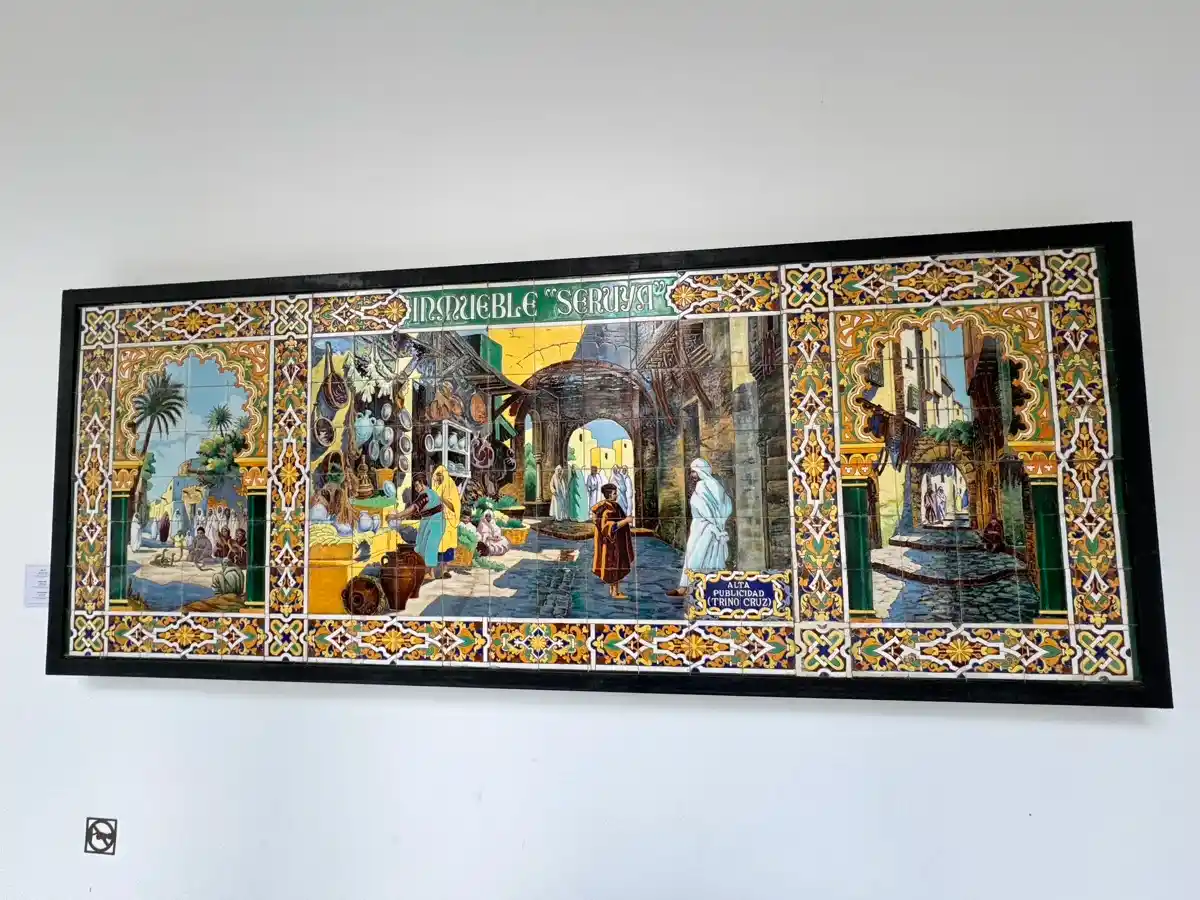
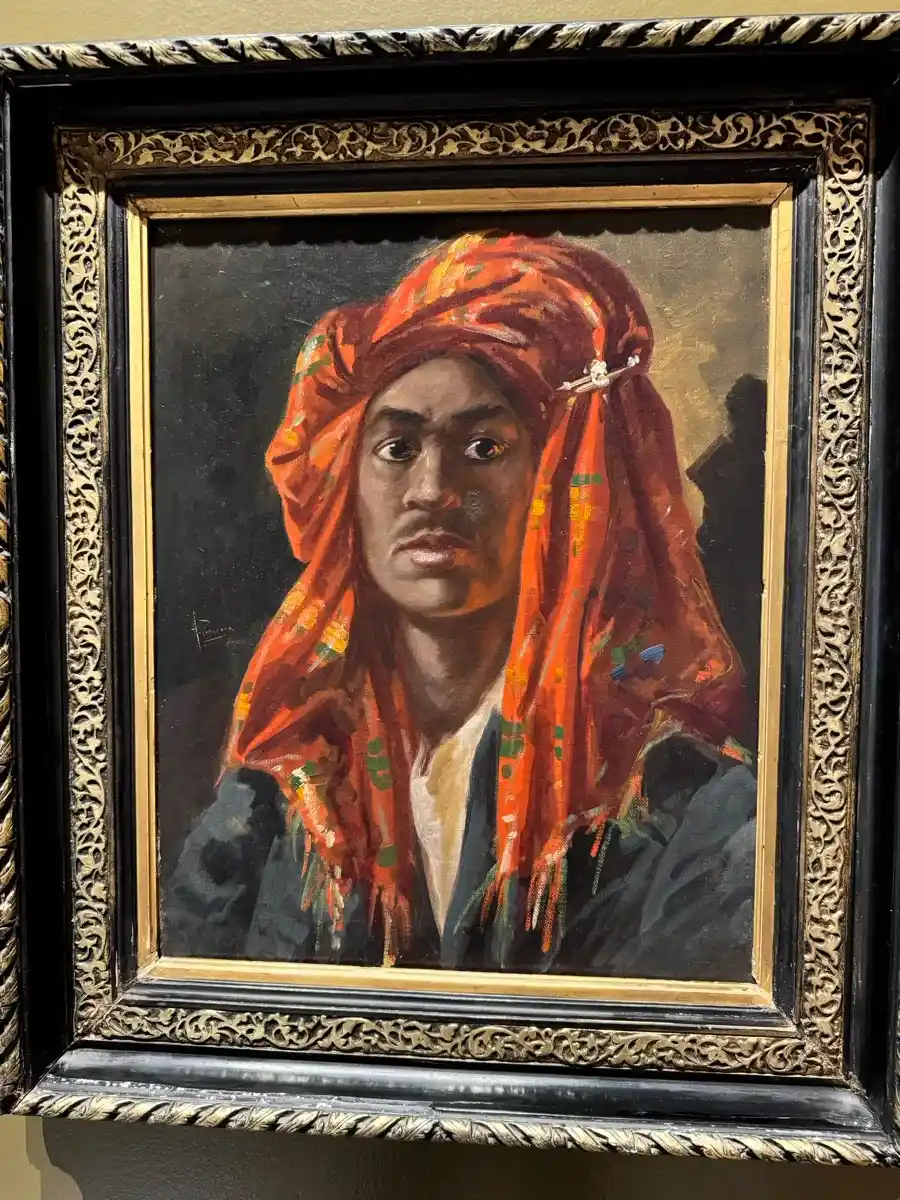
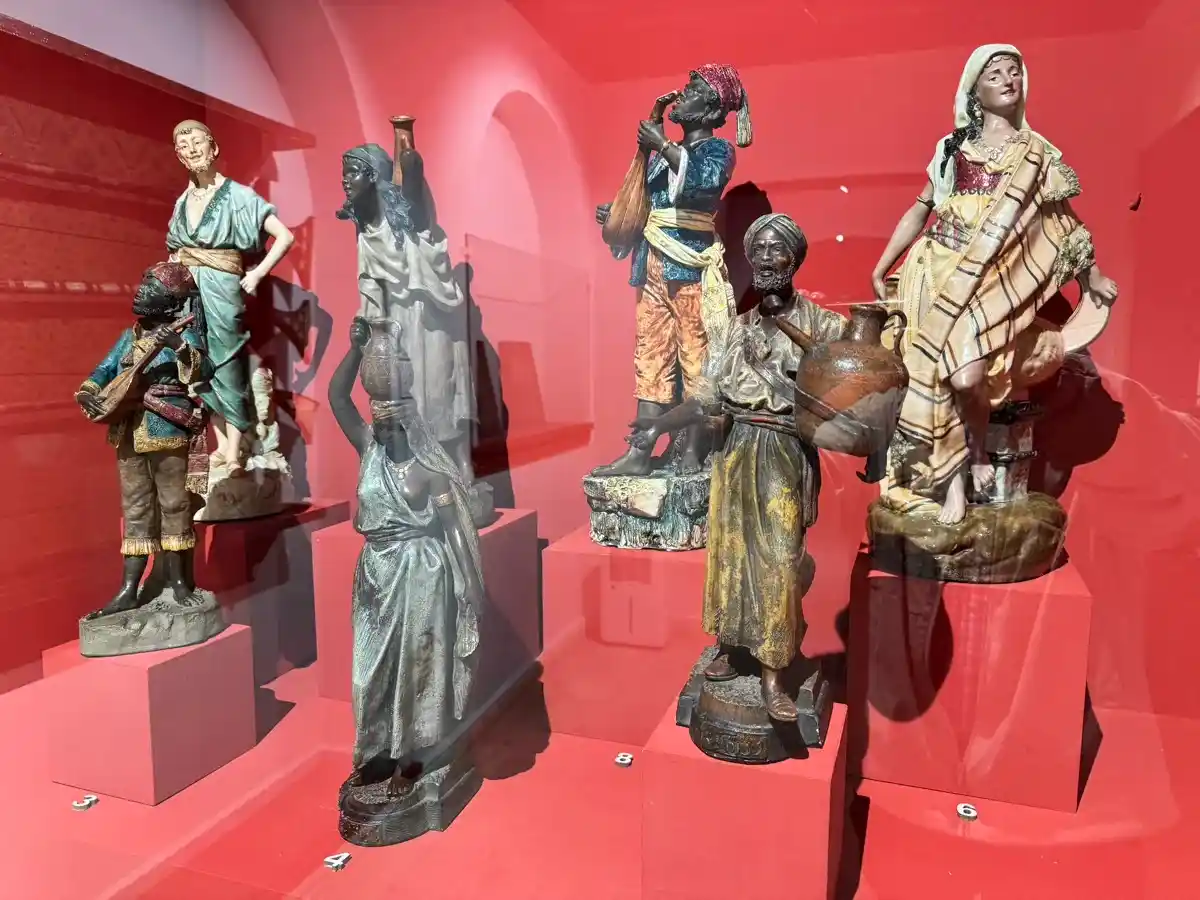
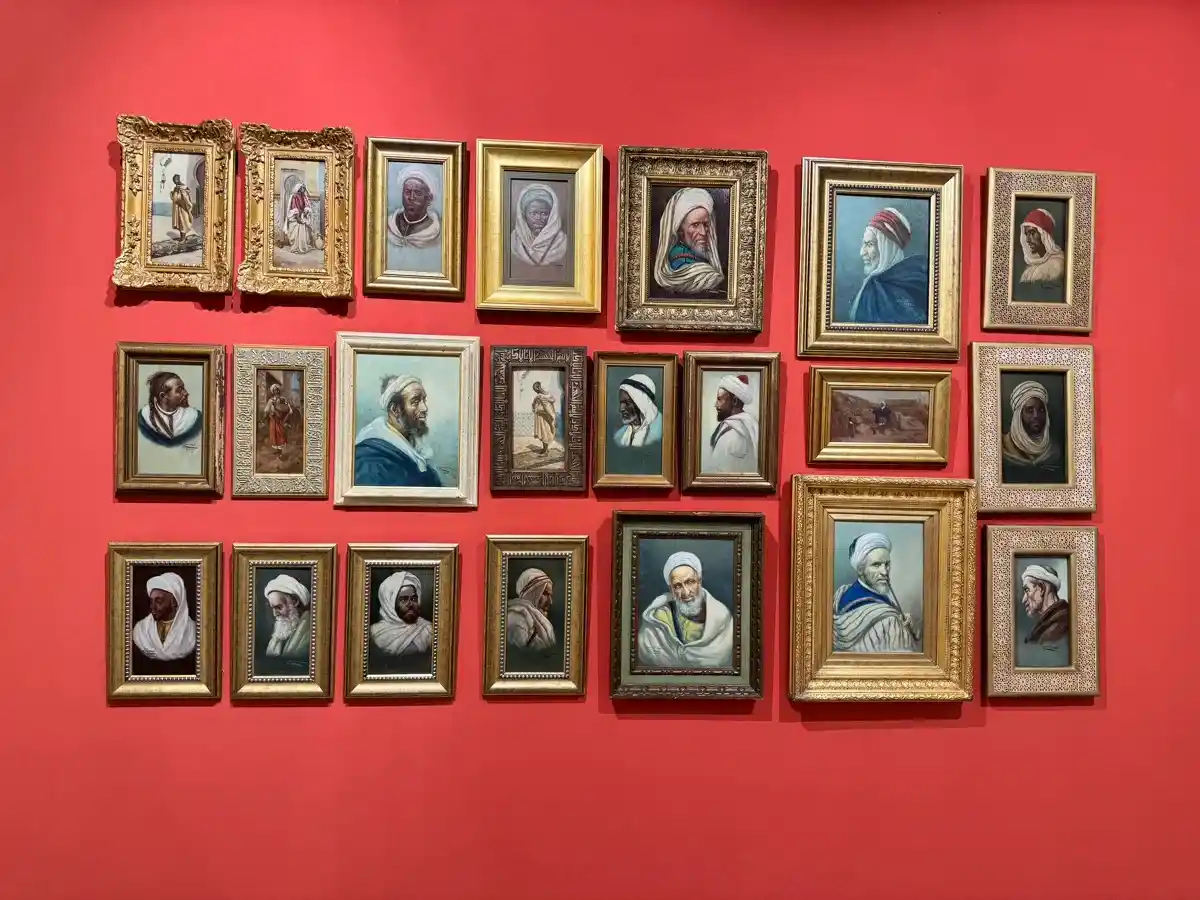
The Musée Dar Niaba also displays some local artwork, including paintings, figurines, and a beautiful, large painted tile piece.
It’s an interesting museum in a gorgeous building. It, combined with the nearby Assayag Synagogue, made for a worthwhile, if short, morning.
More photos from A room in Musée Dar Niaba:
Lunch
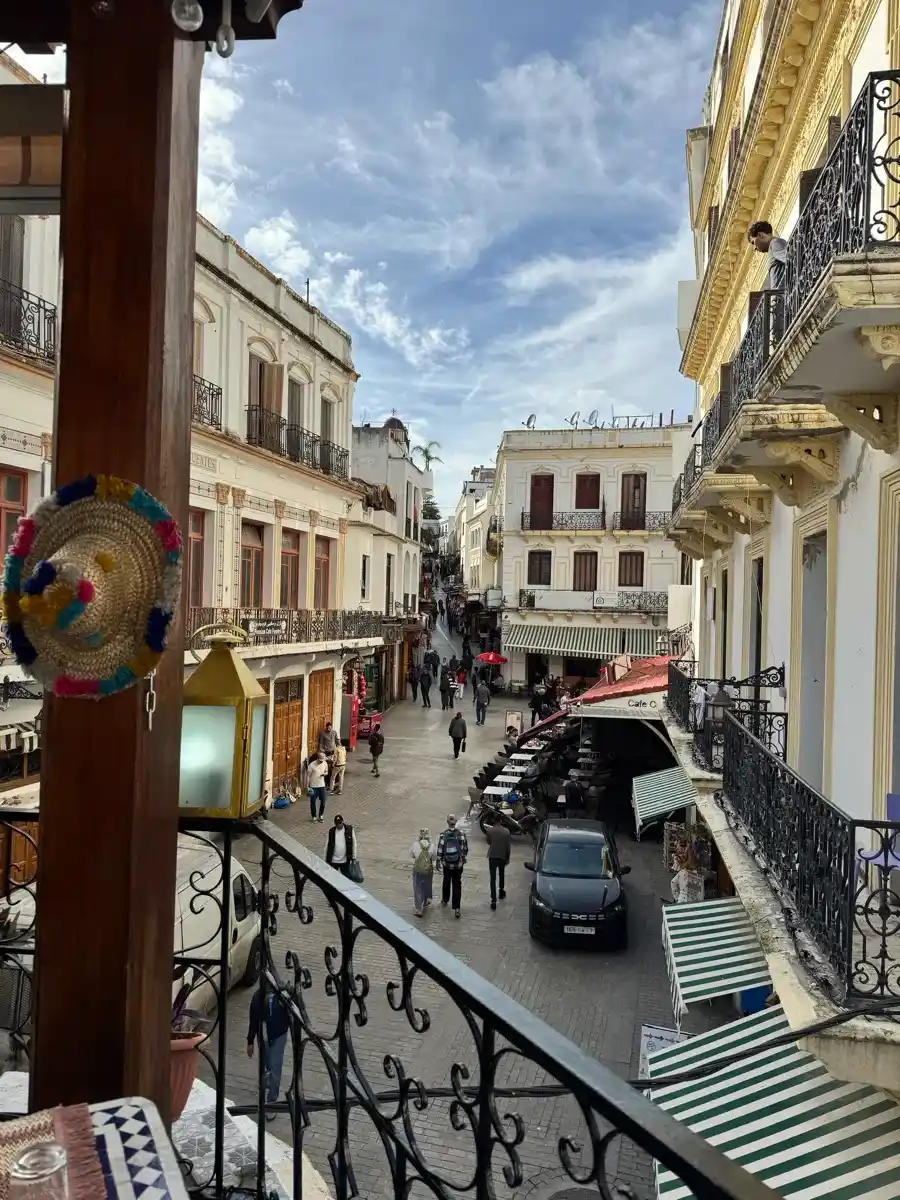
I had lunch on the rooftop terrace of a simple restaurant off the Petit Socco in the Medina, close to Assayag Synagogue and Musée Dar Niaba. A socco is a public square or market. The Tangier Medina has both a Petit Socco and a Grand Socco. I’m not sure if I’ve been to the Grand Socco. Apart from specific sights I’ve gone to see, including Assayag Synagogue and Musée Dar Niaba today, I’ve pretty much just wandered around the Medina without paying attention to whether any squares have names.
But when I looked for a place for lunch on Google Maps, I couldn’t help seeing that one of the restaurants it pointed me to was on the Petit Socco.
I had chicken couscous, which was okay. But the view from the restaurant terrace looked down on the hive of activity of the Petit Socco and along that souk backbone street I mentioned above. It was a very enjoyable place to spend a long, lingering lunch.
I’ve posted a picture of the view from the terrace here.
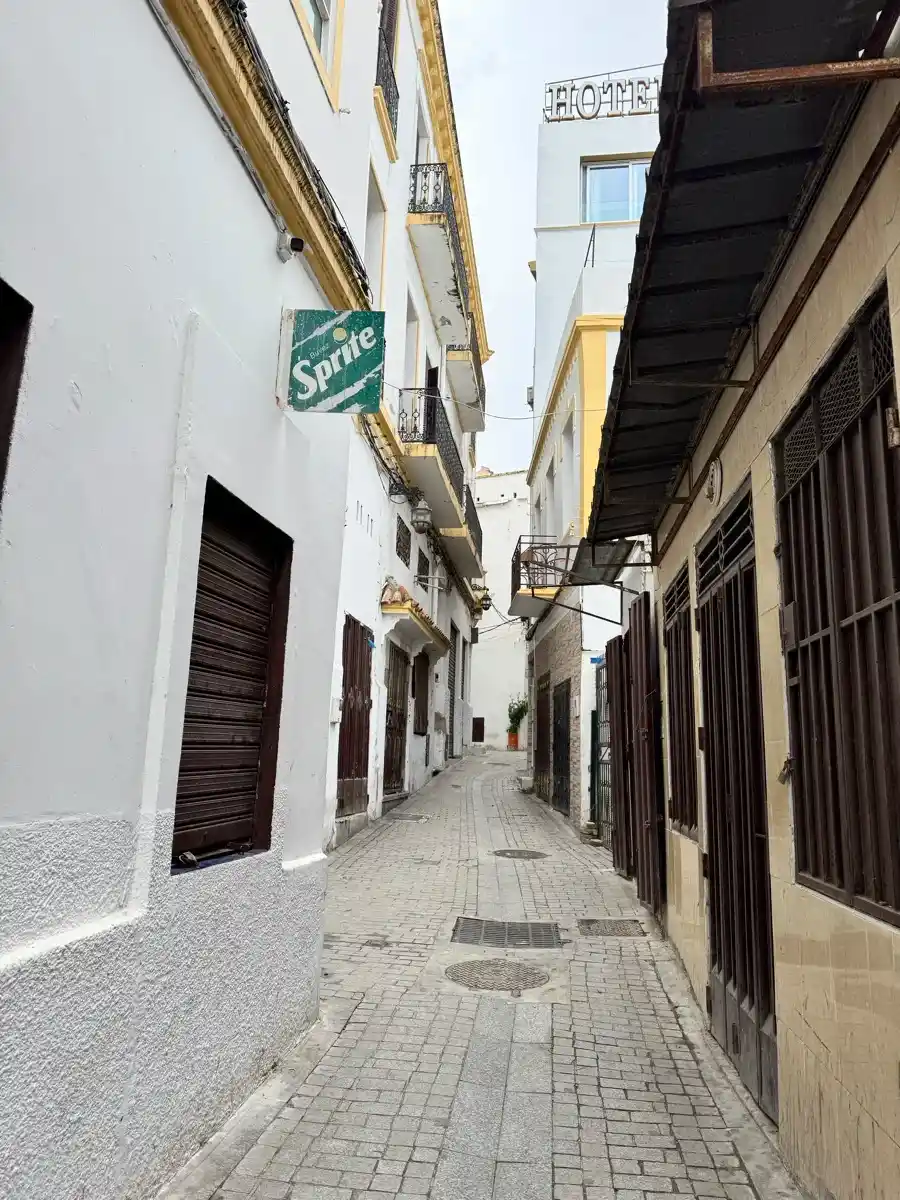
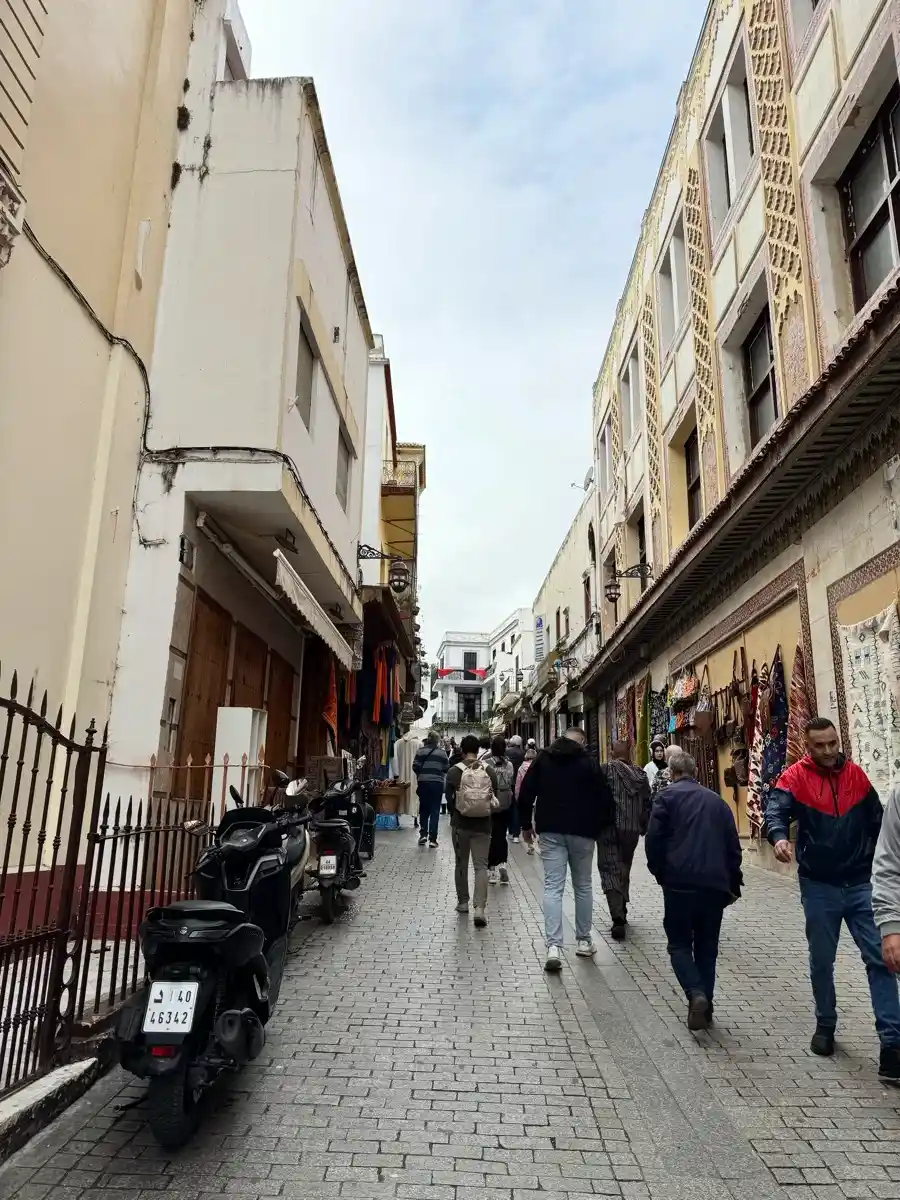
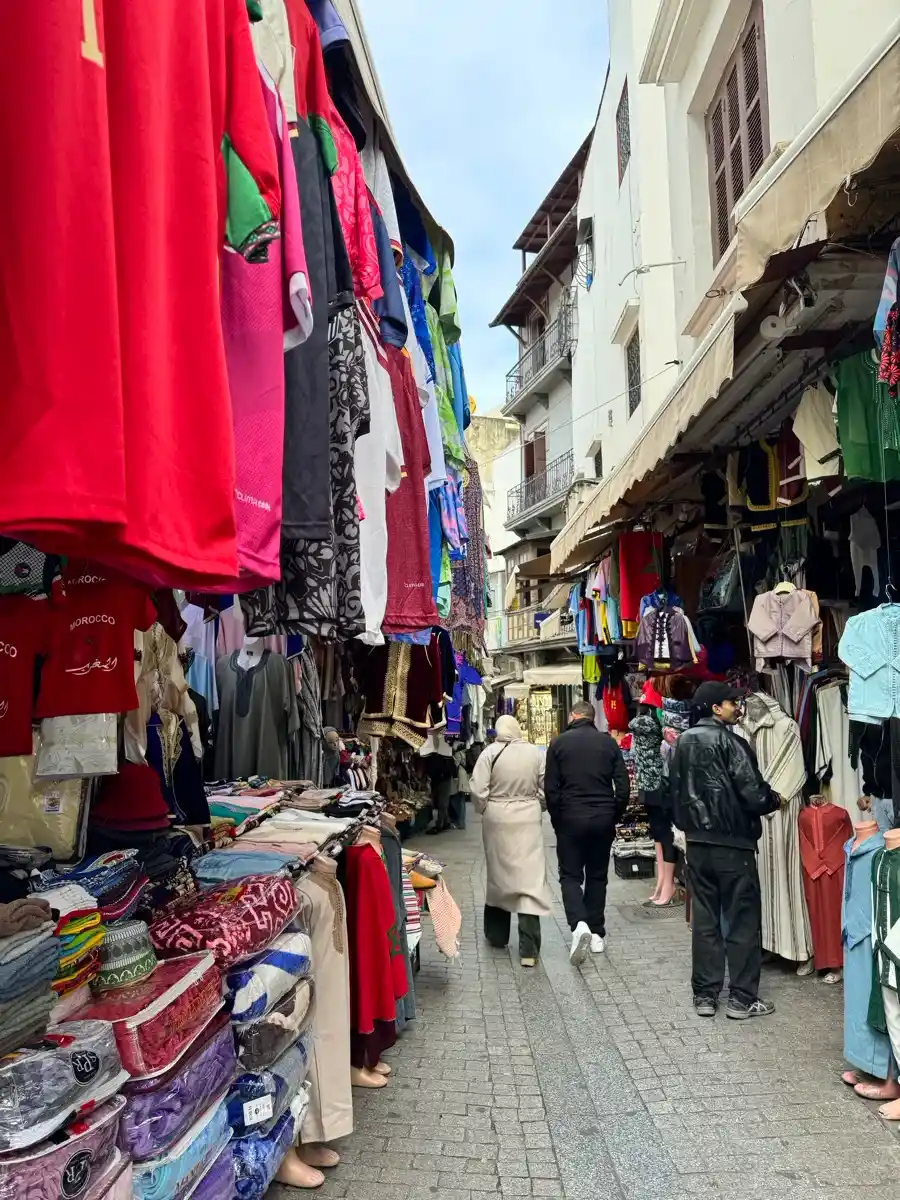
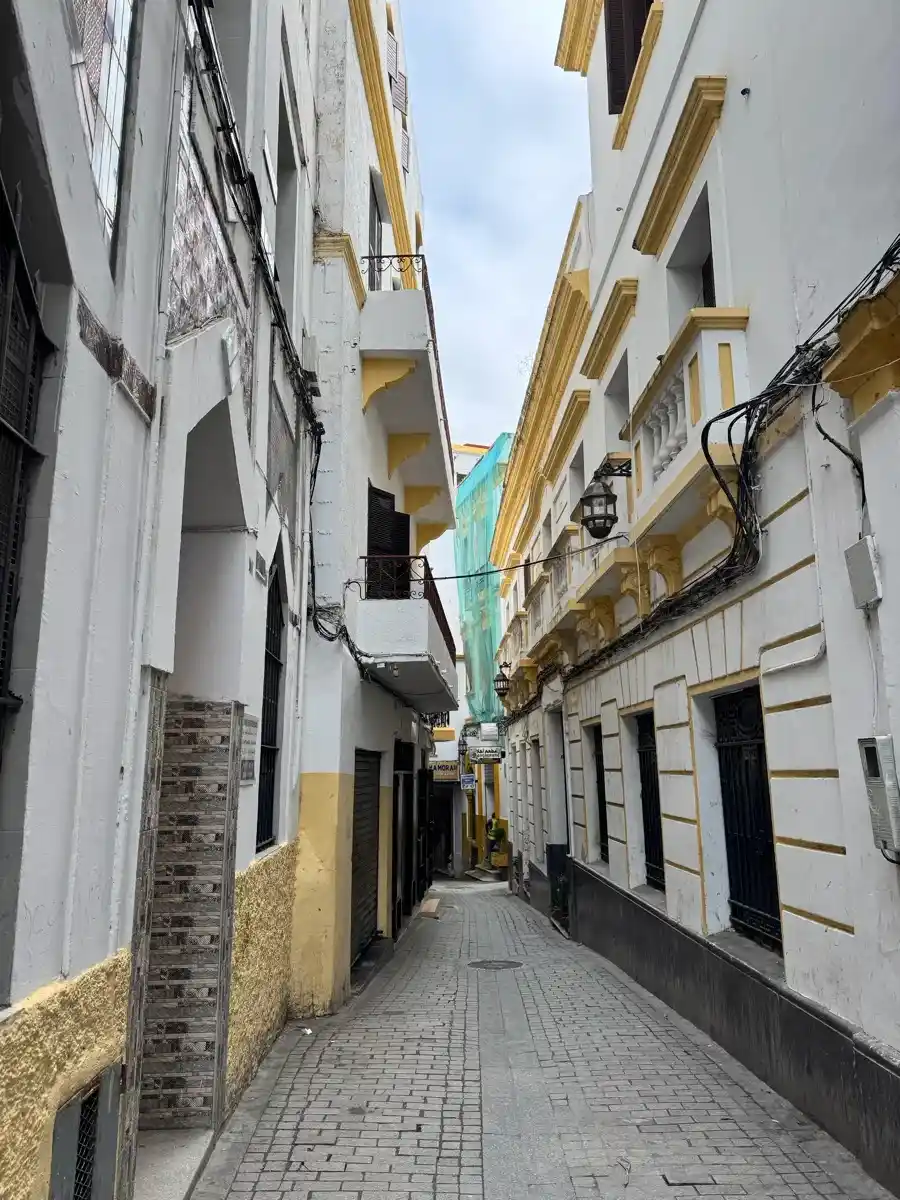
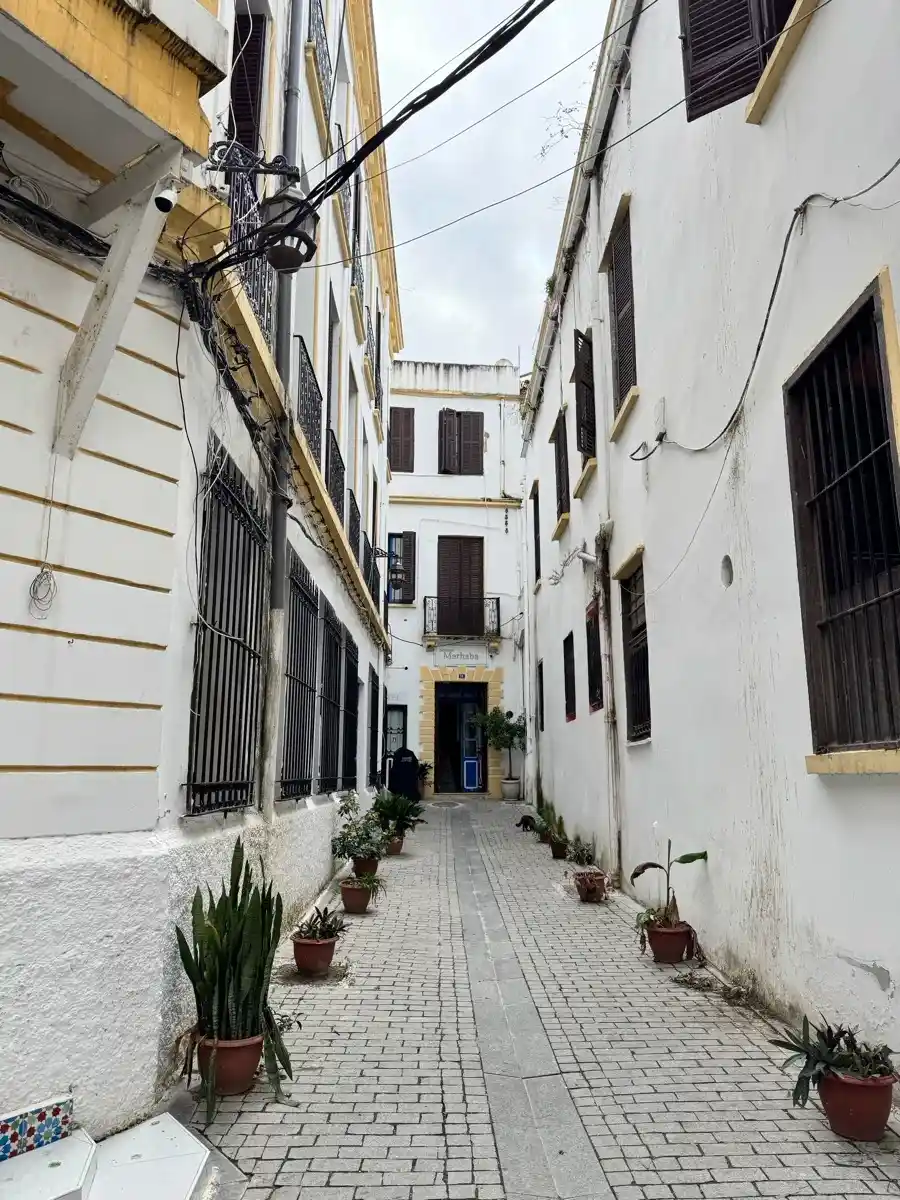
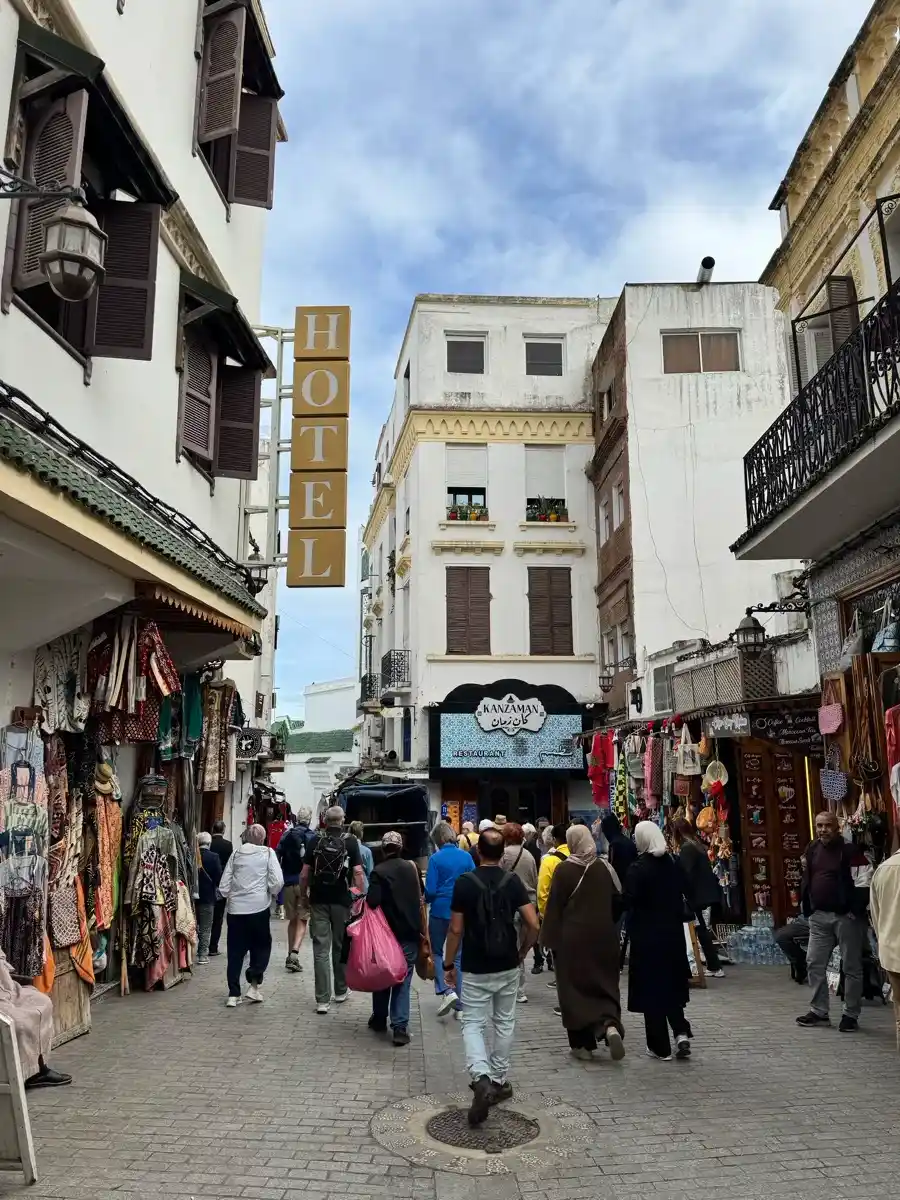
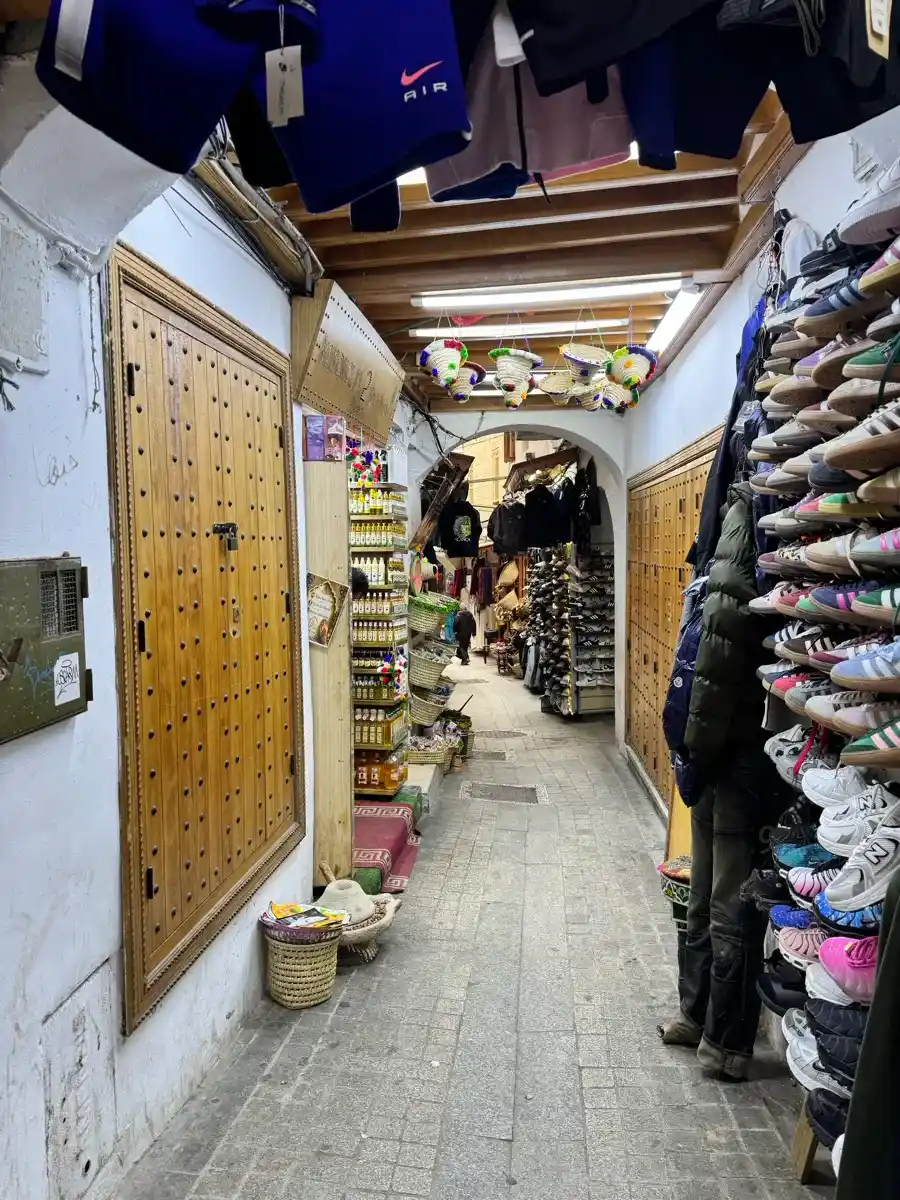
Because there's no such thing as too many pictures of the Tangier Medina, here are some more I took this morning:
Discover more from Joel's Journeys & Jaunts
Subscribe to get the latest posts sent to your email.
Sorry the lunch wasn’t more spectacular, but the sights were. Lovely. A charming synagogue and a beautiful museum, and the Medina – just wow. I could see enjoying even a mediocre lunch on that rooftoop terrace as long as I could linger and look at life passing in front of me there. Sounds like a morning well spent to me.
I didn’t mean to underplay the lunch too much. I enjoyed the food, but didn’t love it. However, the view was charming and engaging. And the sites and sights from the morning were great.