Visiting the Kasbah Museum and Ibn Battouta Museum
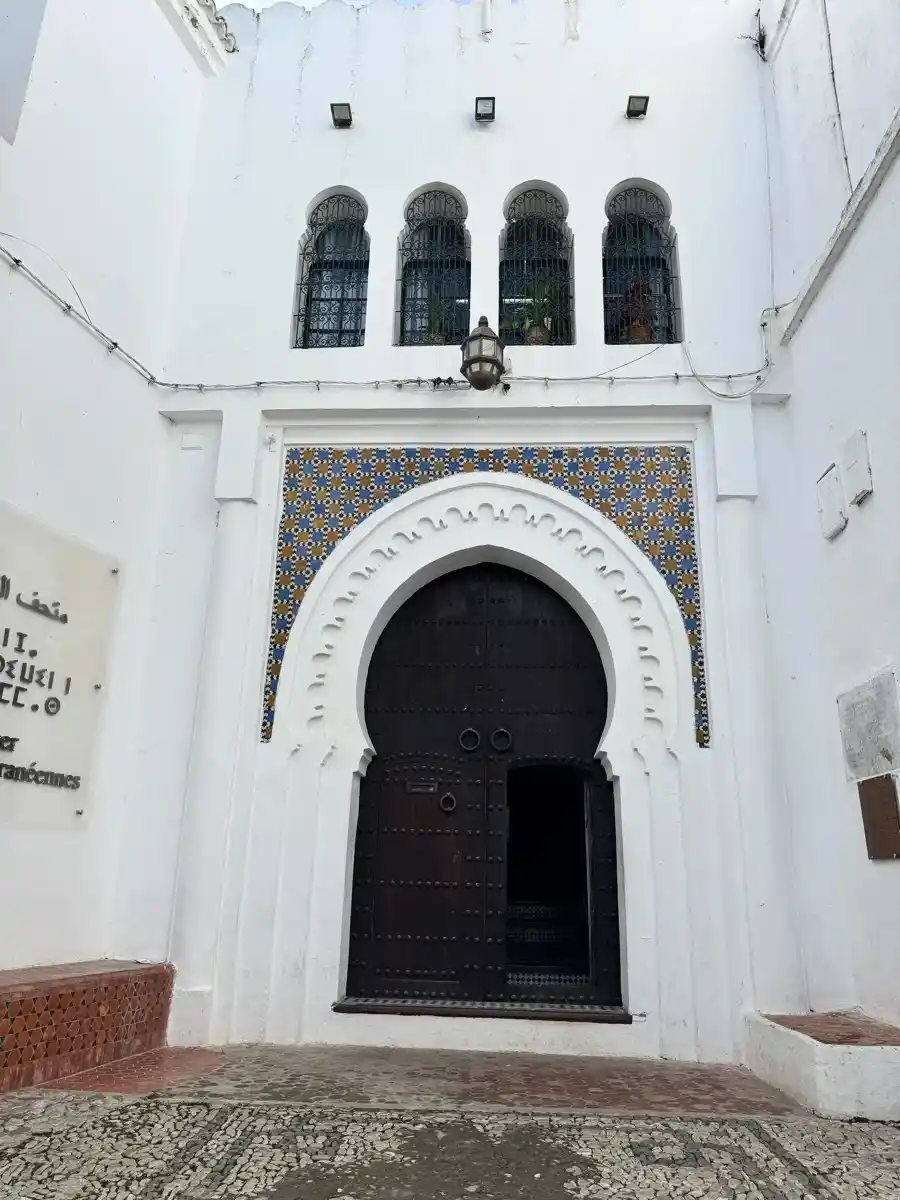
If you read my morning post, you’ll know I had a long, lingering lunch. That didn’t leave a lot of time this afternoon. I spent it visiting the Kasbah Museum and the Ibn Battouta Museum, both in the Kasbah of Tangier’s Medina.
If you also read yesterday’s post, you might have surmised that I’d be a little apprehensive about venturing back into the Kasbah after the human gnat I had trouble shaking yesterday. He persistently, and somewhat annoyingly, tried to lead me places for a tip. If you surmised that, you were right.
However, I set forth anyway. As it happens, I didn’t run into him, or anyone else trying to provide the same unsolicited service, until I finished with the museums and was leaving the Kasbah. As I got a few blocks from the gate I was leaving by, I heard, “Hi, Canada.” It was him. He remembered my nationality. Of course, he wanted to direct me to something he said was pretty in the Kasbah. I said no, thank you, and pressed on. Unlike yesterday, he didn’t persist.
Kasbah Musuem
The full name of the Kasbah Museum is “Kasbah Museum of Mediterranean Cultures.” My guidebooks do give the full name in the body of the entry, but they generally refer to it as just the Kasbah Museum. To save keystrokes, I’ll do the same.
Most of the signage in the Kasbah Museum is in Arabic and French, without any English. So Google Translate got a bit of a workout during my visit. That wasn’t always easy, because my phone data connection went in and out during my time there. I have French downloaded into Google Translate for offline use, but when using the camera function, it struggles and usually fails to provide a translation from an image without a strong internet connection.
The brochure handed out at the entrance, however, has four languages: Arabic, French, English, and Spanish. It doesn’t provide detailed information about the exhibits, but it provides some history of the building, as well as describing the general topic area of each room of the permanent exhibition.
The Kasbah Museum is in the former Kasbah Palace. The site has an even older and more storied history than that. It was used by both the Carthaginians and the Romans. Yes, the ancient Romans made it to Tangier. Where didn’t they get to? (Off the top of my head, they didn’t get to anywhere in North or South America, Eastern Asia, Australia, and New Zealand, but never mind that. It’s irrelevant.)
As other countries occupied Tangier, they made use of the site too. For example, there was a residence for Portuguese governors. Later, the British built a larger castle there for its governors from 1662 to 1684.
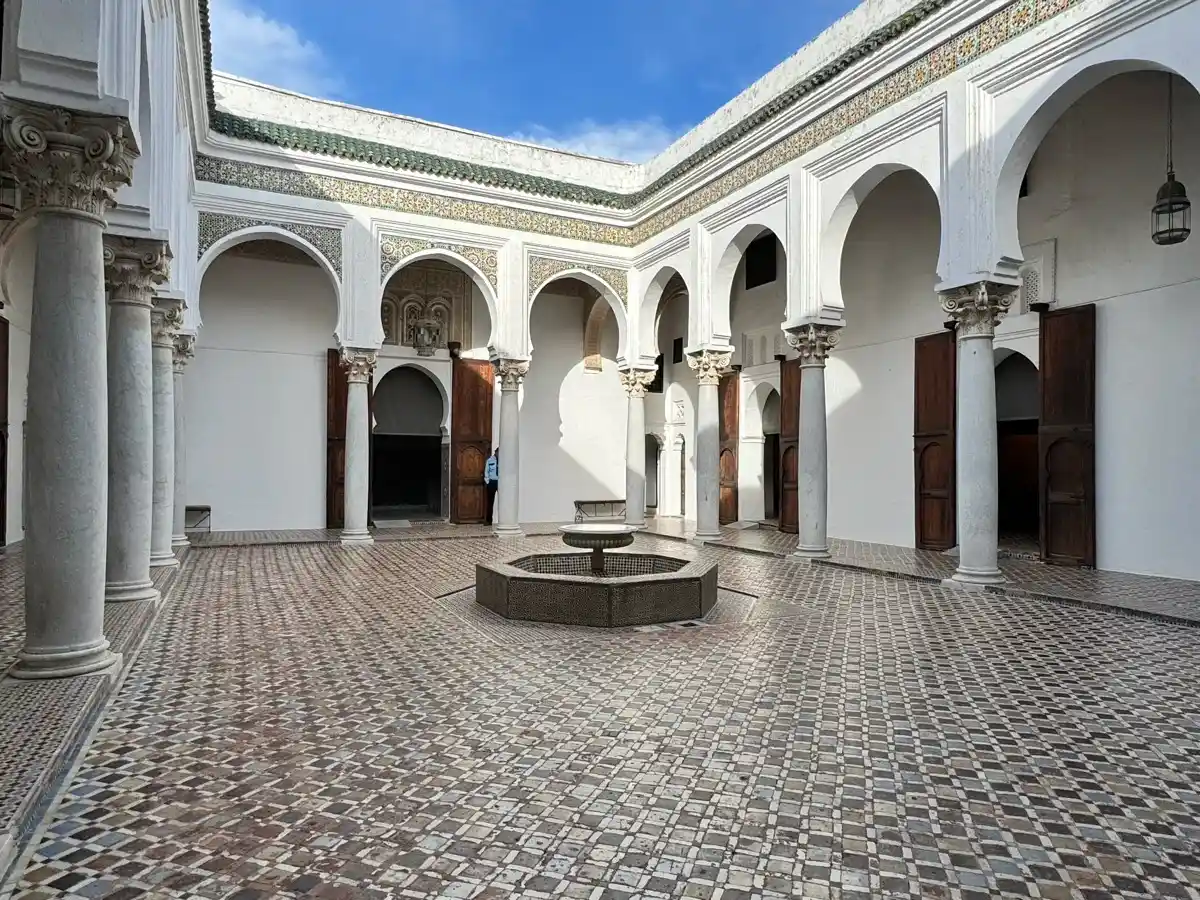
The current palace building has an inscription that shows dates of 1757–1758. The building is quite charming, with a lovely porticoed courtyard paved with decorative tiles.
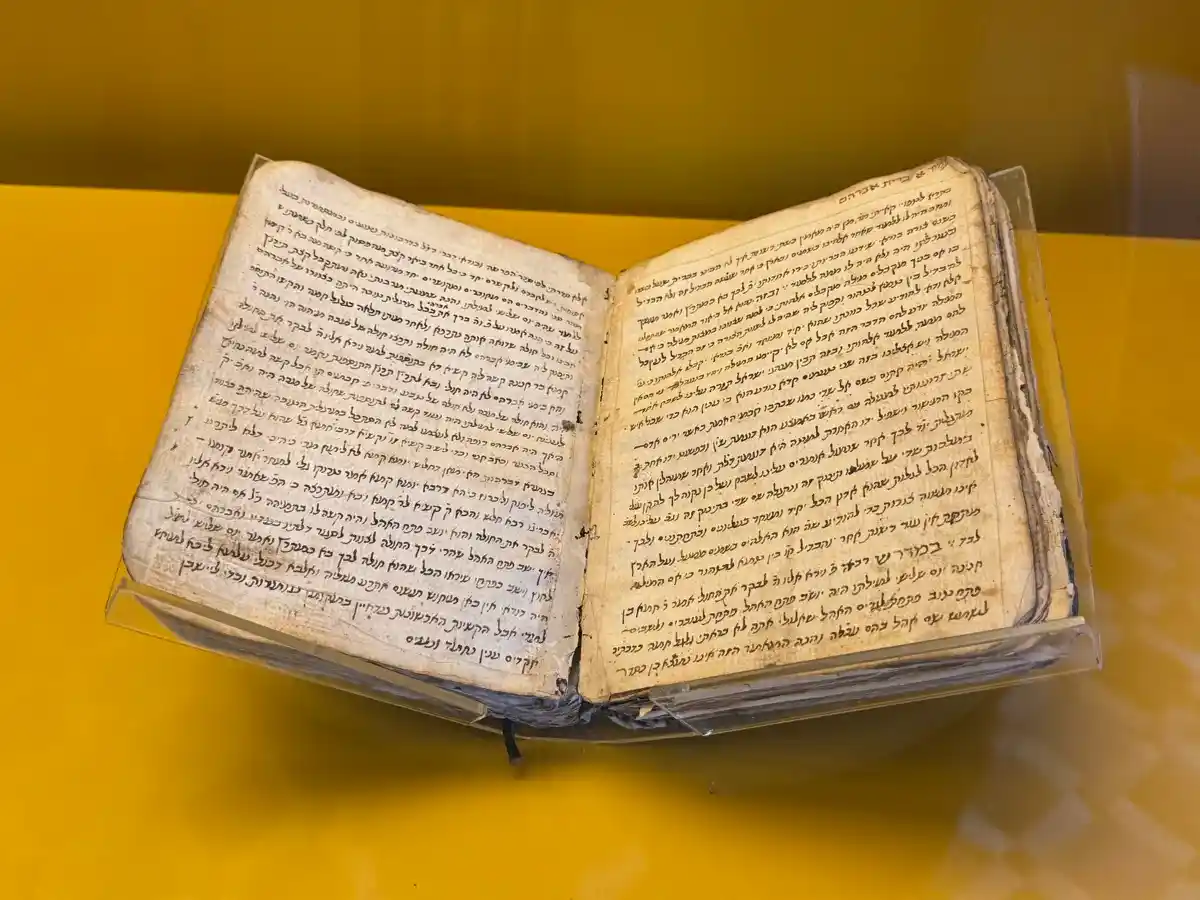
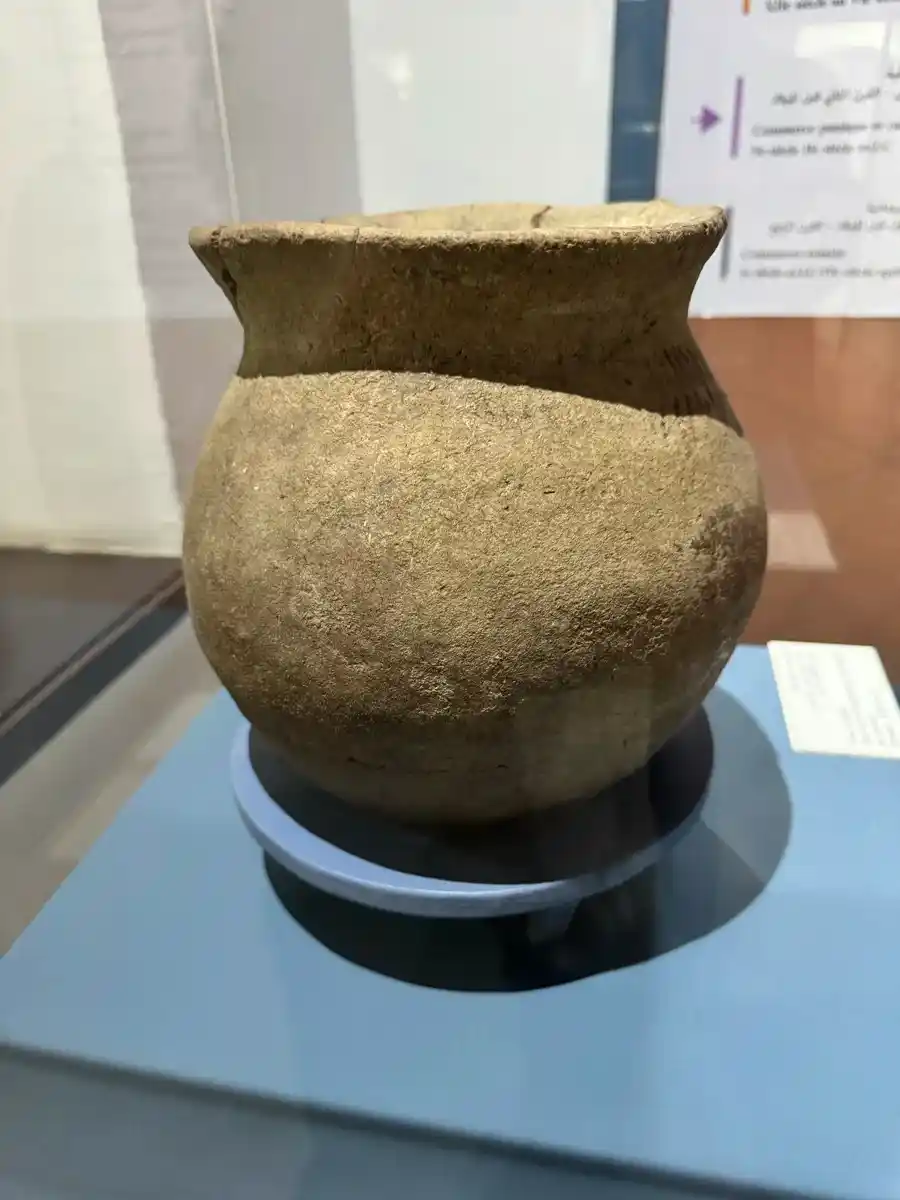
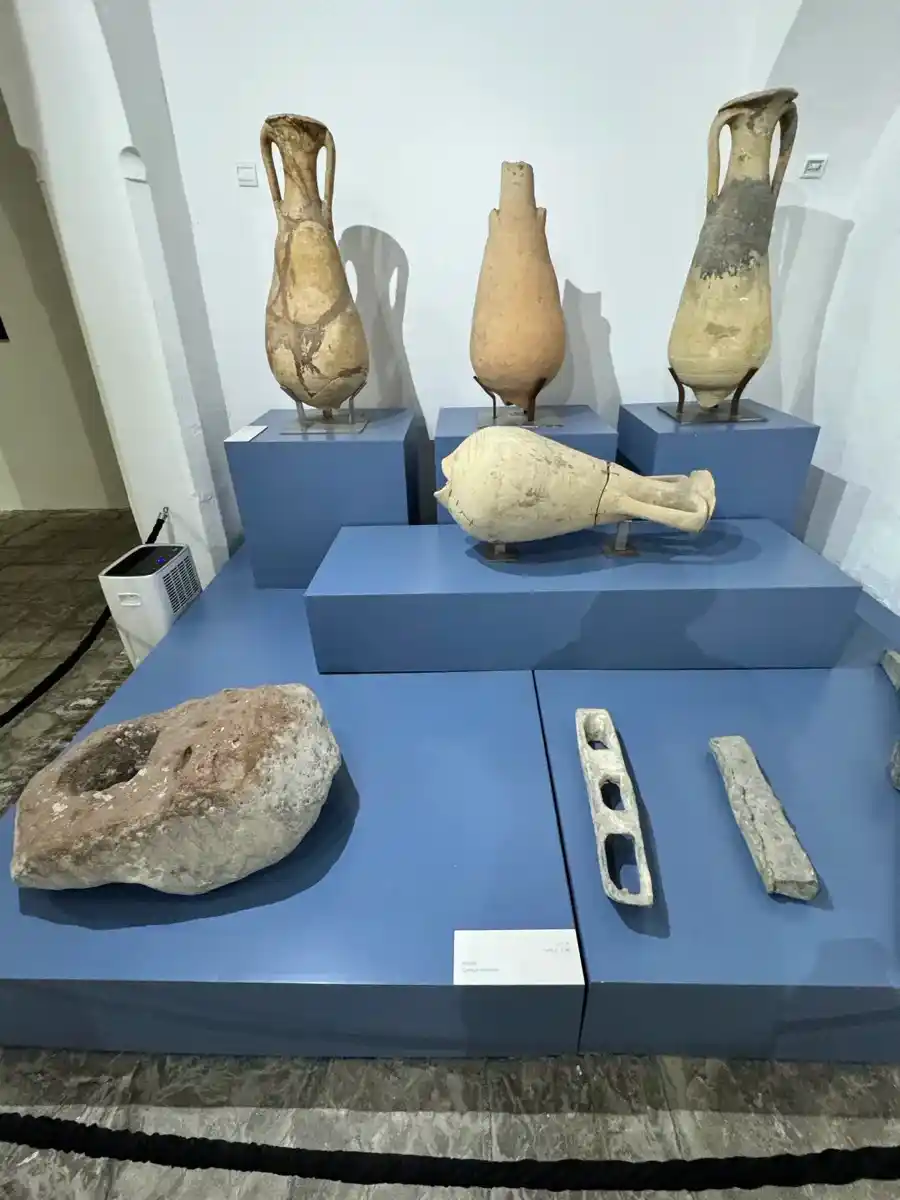
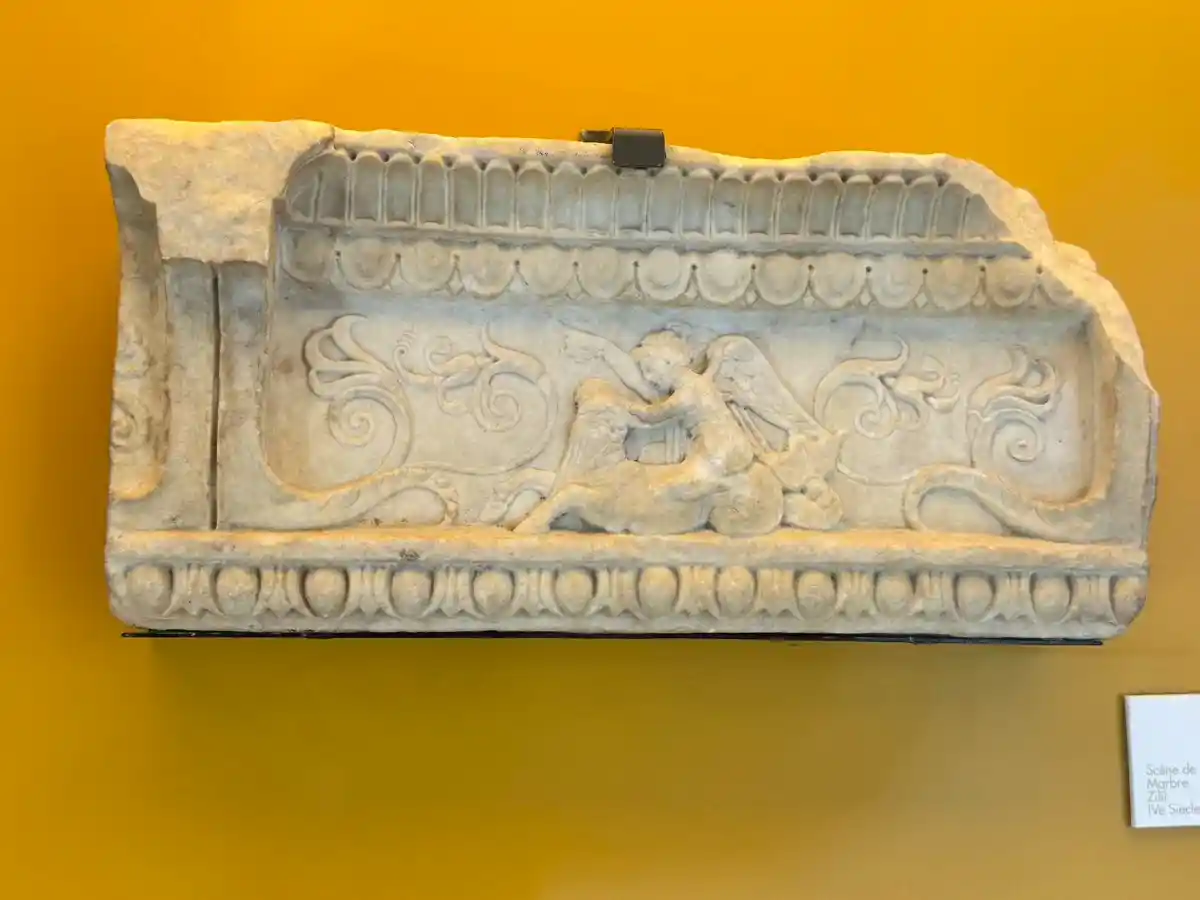
The exhibits include archaeological and ethnographic artifacts from the long history of Tangier. There is a vase decorated with shell prints that dates from 5000 BCE. A 17th-century engraved Portuguese stone looks like it’s a gravestone. Without any explanation that I could find, other than what it is, there’s a Hebrew manuscript from the 17th century.
One section of the Kasbah Museum is dominated by a mosaic tile floor depicting the Navigation of Venus that dates from the 3rd century CE, along with other relics from Roman times.
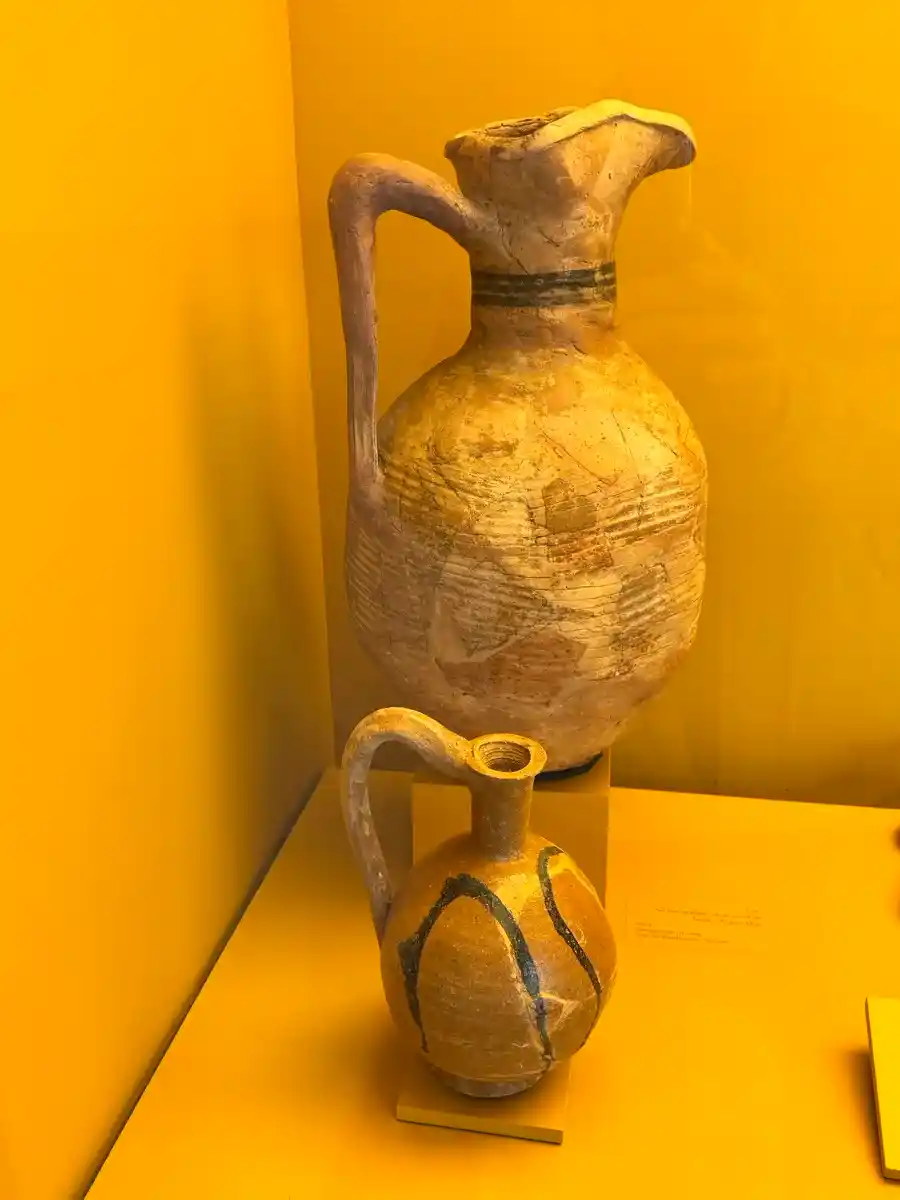
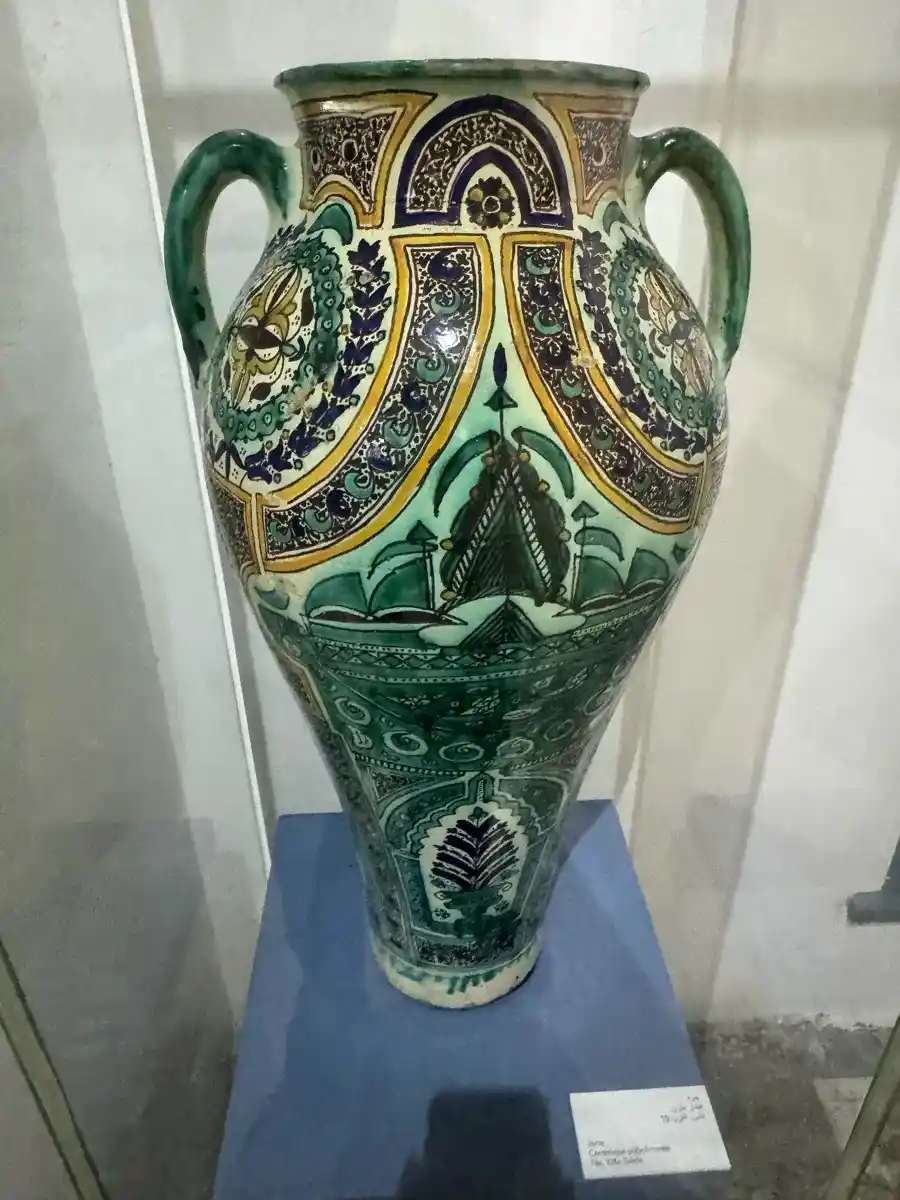
There’s also a gorgeous decorated ceramic polychromatic jar that dates from much more recently, the 19th century.
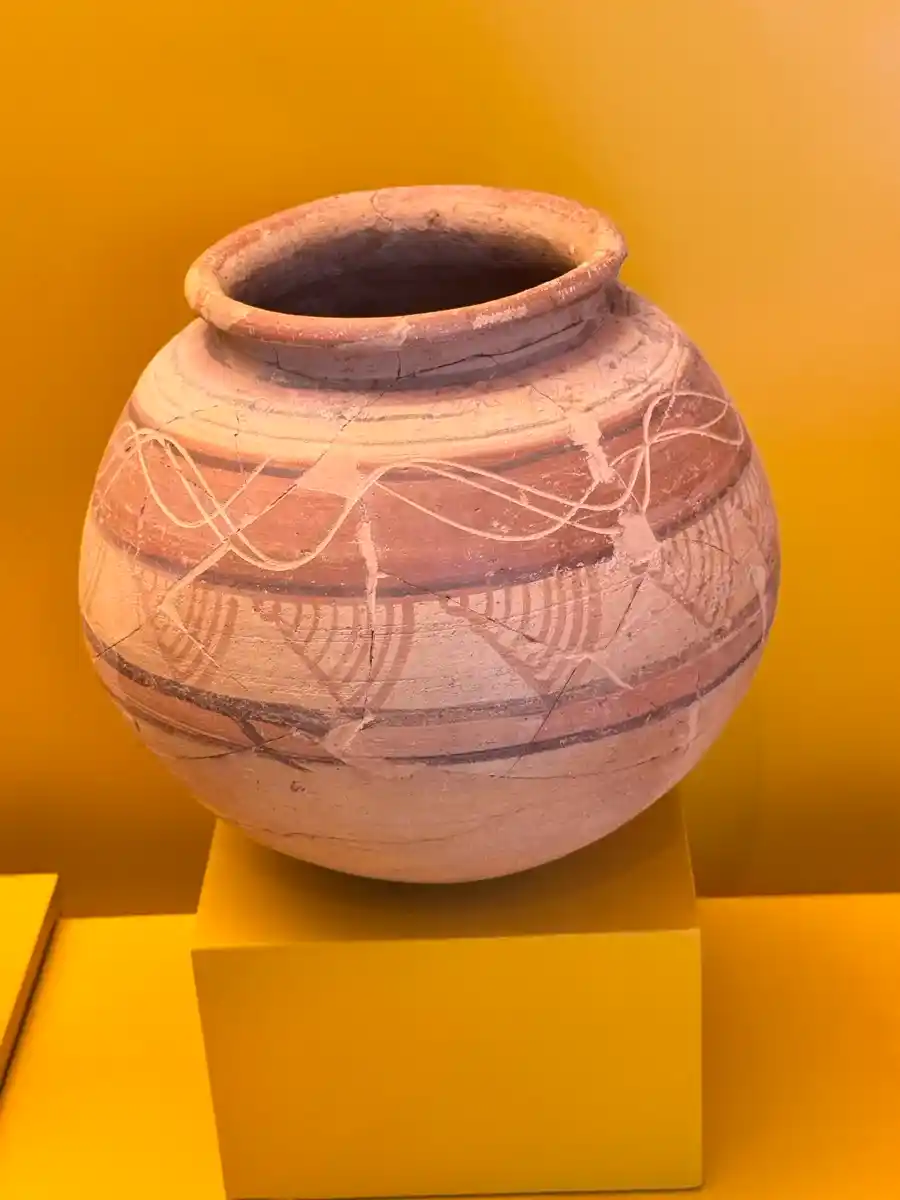
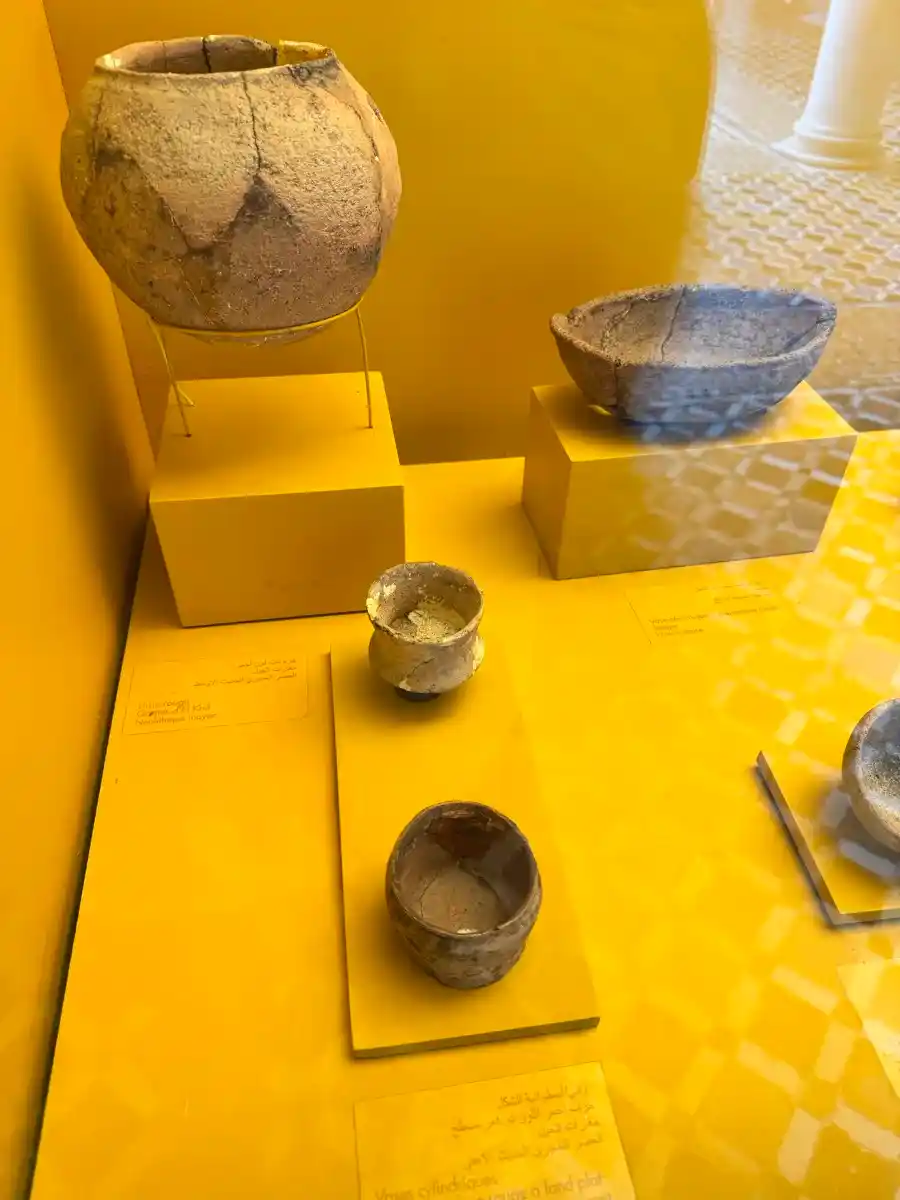
Jumping back in time, I also saw ceramics that originated from the late Neolithic period.
There’s also a room with an exhibit on the Islamization of Tangier.
The history and artifacts laid out in the Kasbah Museum are quite interesting and engaging. Well worth a visit.
But, wait. There’s more.
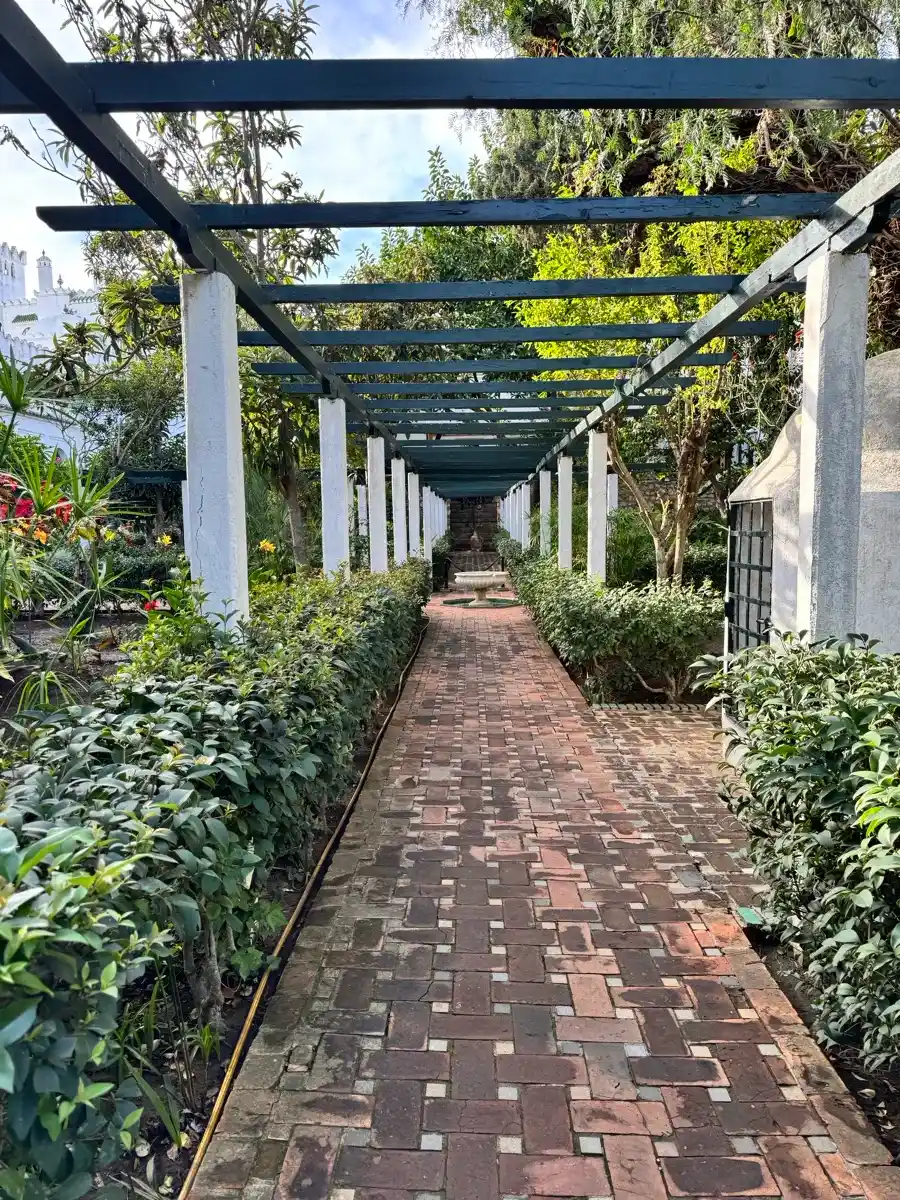
Upstairs, there’s a lovely, peaceful garden with trees and flowers. The stairs to the garden are between some of the exhibition rooms, so I split up my touring of the museum with a spell in the garden.
But, wait. There’s still more.
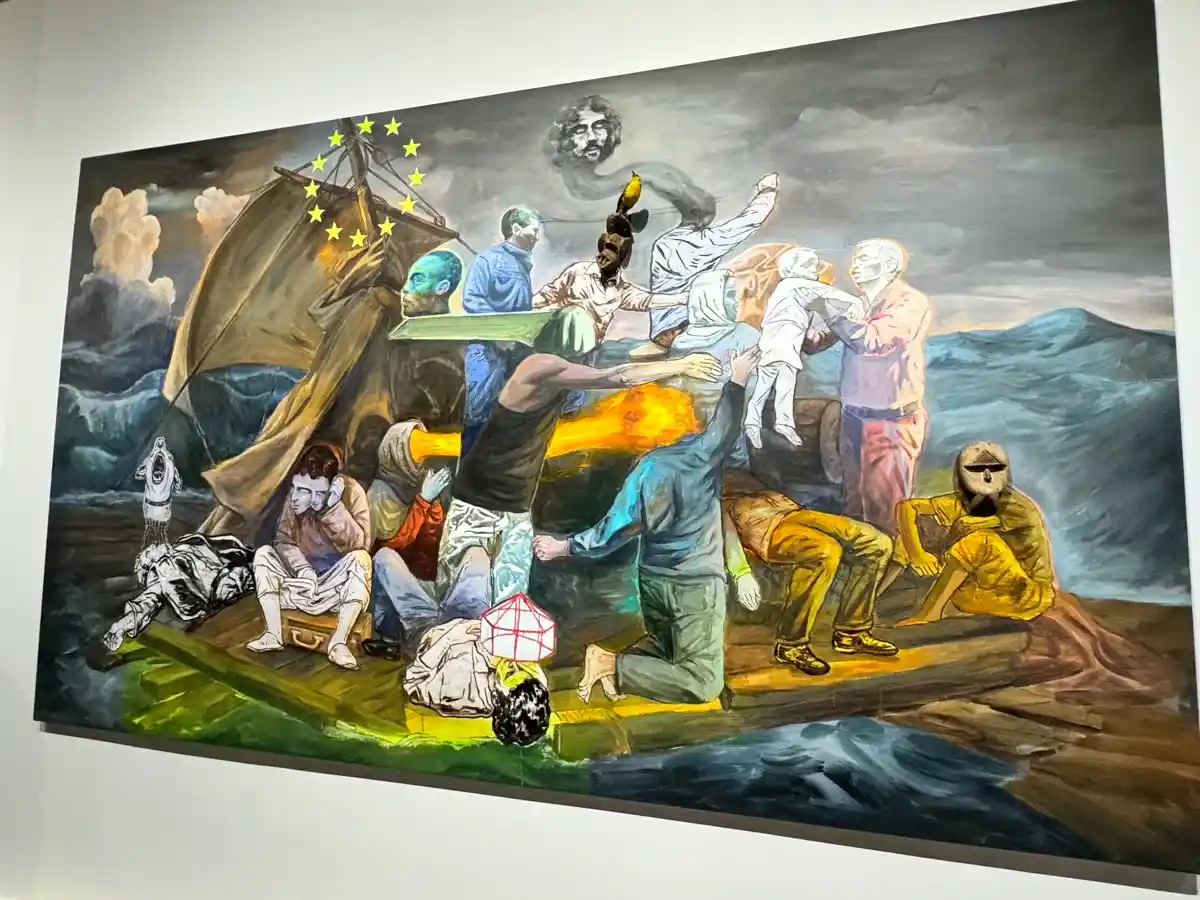
The Kasbah Museum also mounted a temporary exhibition when I was there. It displayed art from a single contemporary artist, Mohamed Lekleti. Some of it was, well, kind of weird to my eyes. However, the placards accompanying each art piece were in Arabic, French, and English. So Google Translate got a rest there.
I probably would have gotten a little more out of it if the Kasbah Museum had English signs. But I am in Tangier, after all. English-speakers are usually spoiled with English being the usual lingua franca of travel. That spoils me too much. Even without English, I quite enjoyed the museum. It was well worth the risking the human gnat to visit.
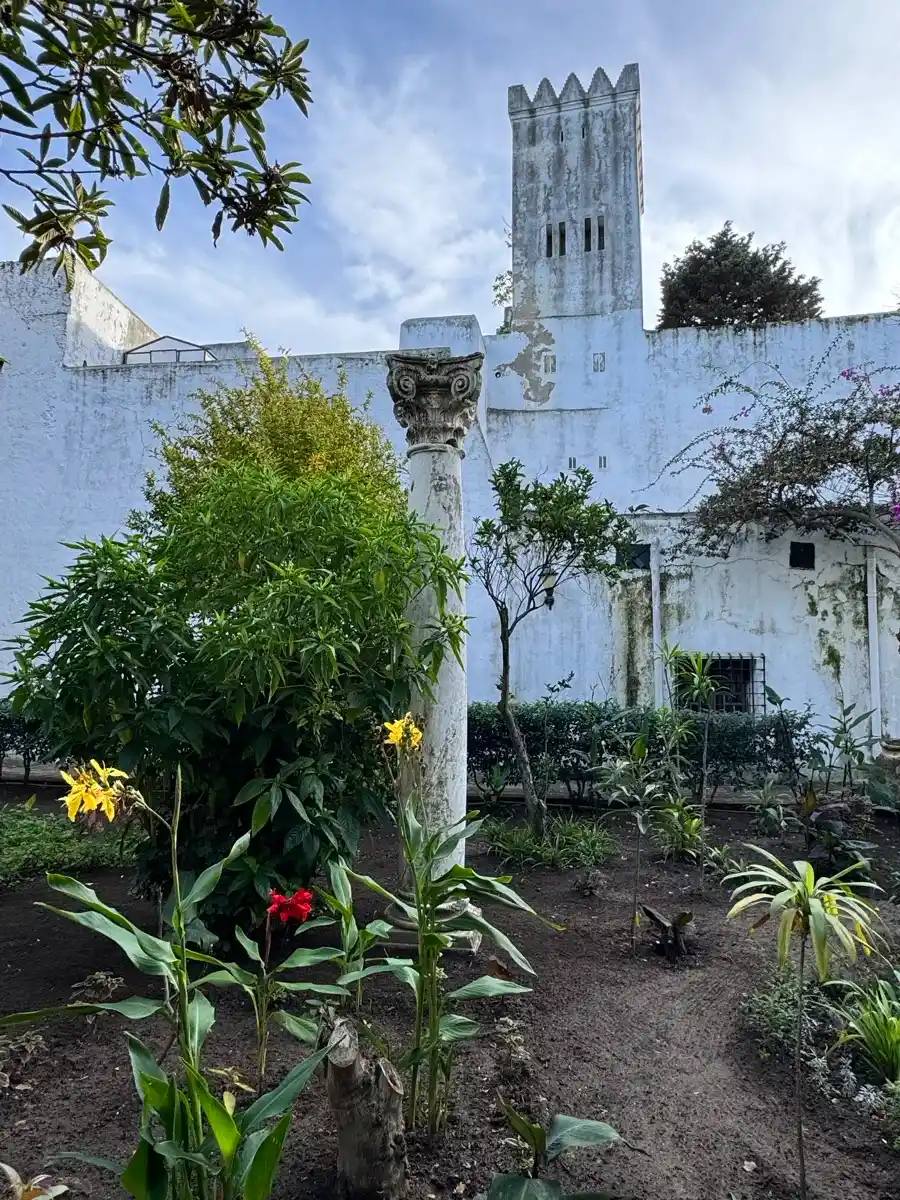
More photos from the Kasbah Museum:
Ibn Battouta Museum
I’m not sure what this museum is called. Both of my guidebooks call it Ibn Battouta Museum. But when I searched afterward for a website, I found one that called itself Borj En-Naam.
The website is only in French, but using the translate function of Chrome, it says that “Originally called Borj Dahman, it took the name Borj Nâam, meaning ‘Fort of the Ostriches,’ as the pasha kept his ostriches there. Built to defend the city from enemy attacks coming from the Strait of Gibraltar, its similarity to the forts of Rabat and Larache suggests that it was built in the 18th century.”
So, that was interesting. A fort named for ostriches.
Despite not having the name that my guidebooks call it, the Borj En-Naam website makes it clear that the museum the building now contains is dedicated to the memoirs and travels of Ibn Battouta. (At the time of writing, the website might be a work in progress. There were some pages with paragraphs of “Lorem Ipsum …” text below the headings.)
Ibn Battouta, who was born in 1304, was an Islamic scholar who travelled the world in pursuit of expanding his knowledge.
The museum, in addition to presenting information about Ibn Battouta and his journeys, also has a room with a discussion on the Merinid dynasty, which came to power in 1269. All of the signage throughout the museum is in Arabic, French, and, yay, English.
Ibn Battouta’s travels spanned 29 years. In that time, he visited 38 countries, including, in addition to Middle Eastern and North African countries, India and China. He travelled over both land and sea. In that time, he made four pilgrimages to Mecca.
One of the rooms provides information about his stays in each of the countries he visited. At times, he served as an Islamic judge or scholar. In a couple of instances, the text made it sound as though he was essentially run out of town because people became displeased with him.
This is just a very small sample of information from those stops.
Starting his journey, Ibn Battuta left Tangier in 1325 to make his first hajj pilgrimage to Mecca.
1342 found him in the Maldives, where he was searching for a protector after his time in India. He was hired as a judge there. His knowledge of Islamic law was valued highly in the Maldives, as it was only recently Islamized.
In 1349, Ibn Battouta went to Andalusia because he wanted to help defend Gibraltar against an invasion by King Alfonso XI of Castile and León. That invasion ended not due to the help of Ibn Battouta, but rather because Alfonso died of the Black Death.
He eventually returned to Fez in Morocco and would not have been heard from again had he not engaged Ibn Jouzay to write the chronicles of Ibn Battouta’s journeys.
A couple of rooms presented information about the means of Ibn Battouta’s travels. This included walking, riding animals, and sailing on boats. (He wasn’t thrilled with boat travel, as a mishap on a boat caused him to lose all of his possessions.)
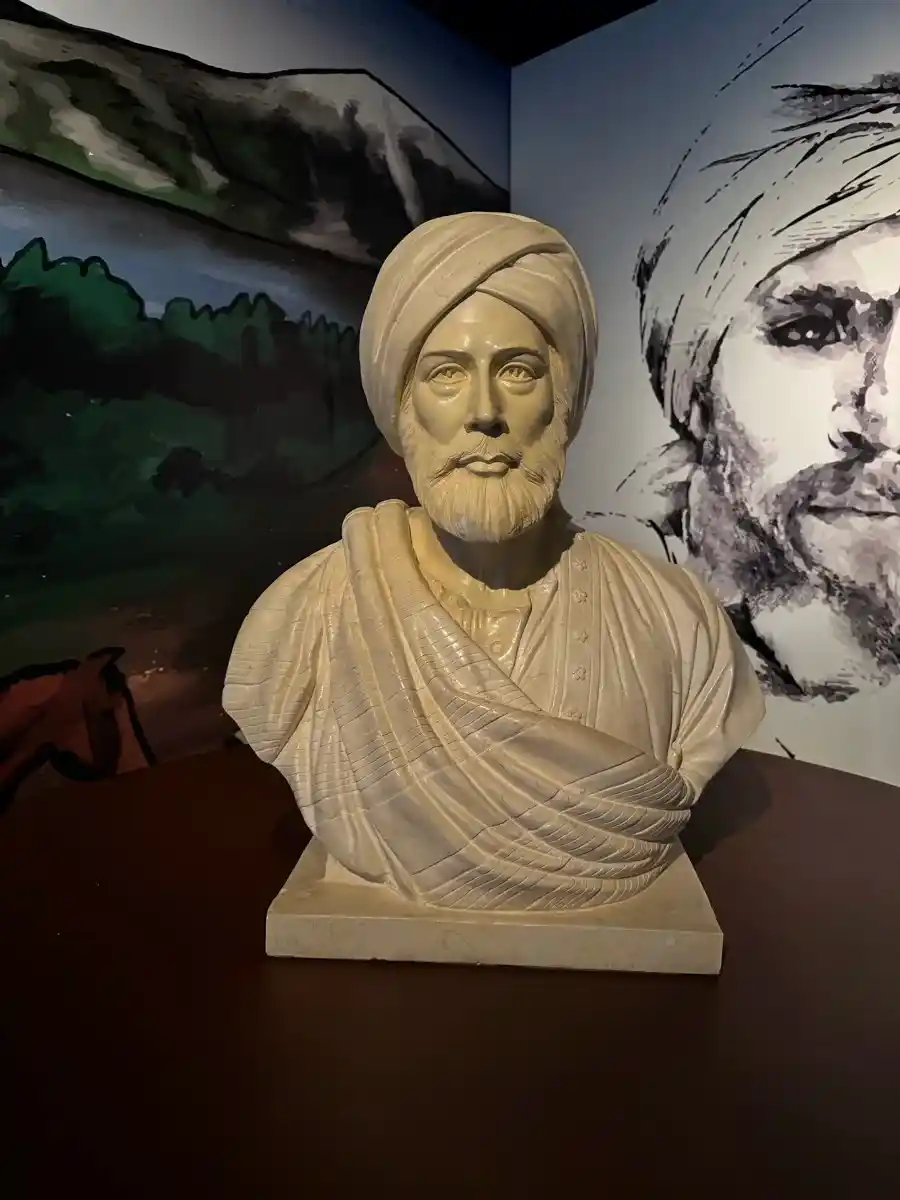
Ibn Battouta sounded like an adventurous guy, and it was an interesting museum. Most of the exhibits were text, so I don’t have a lot of pictures, just a bust of Ibn Battouta. The museum had some scale models of the sorts of ships he might have sailed on, as well as a recreation of a saddle and a human-lifted carriage. But I didn’t think they were worth taking pictures of.
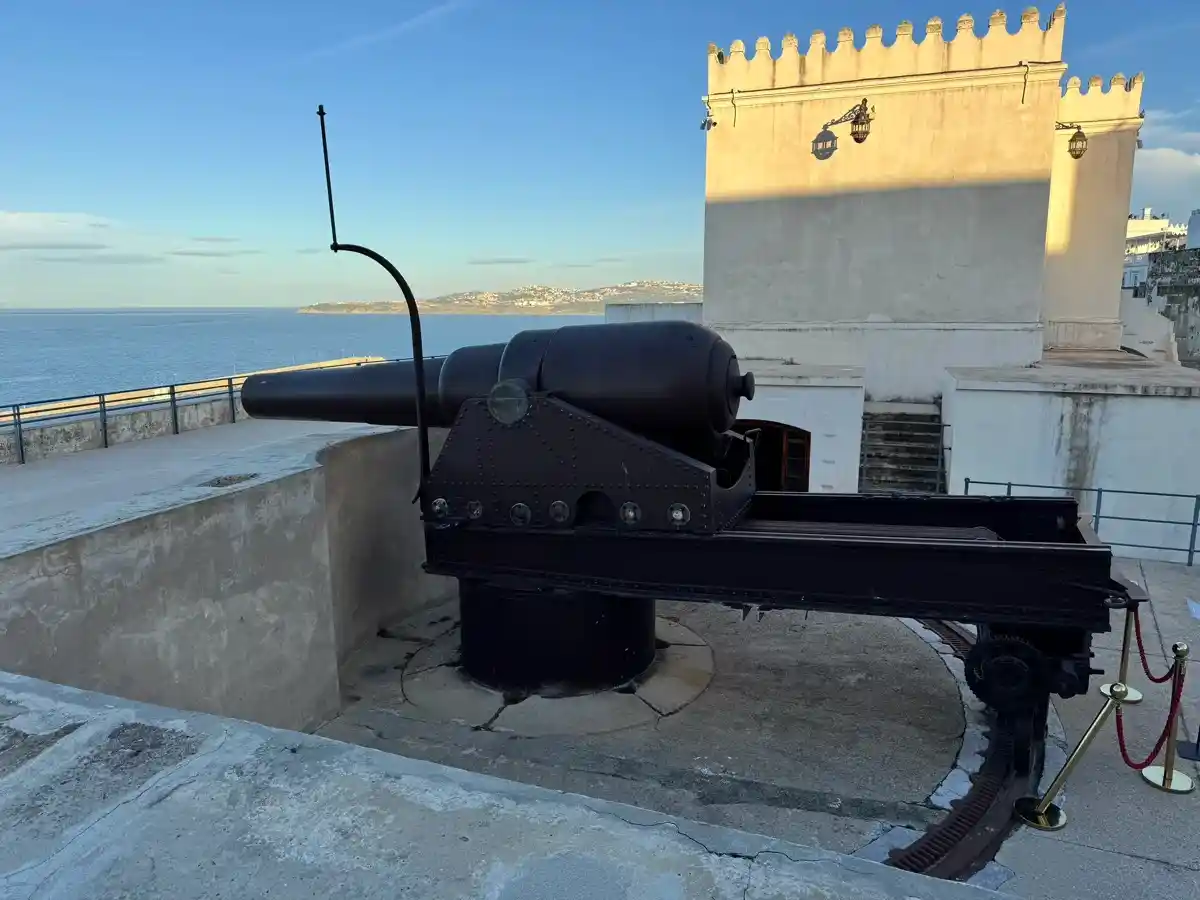
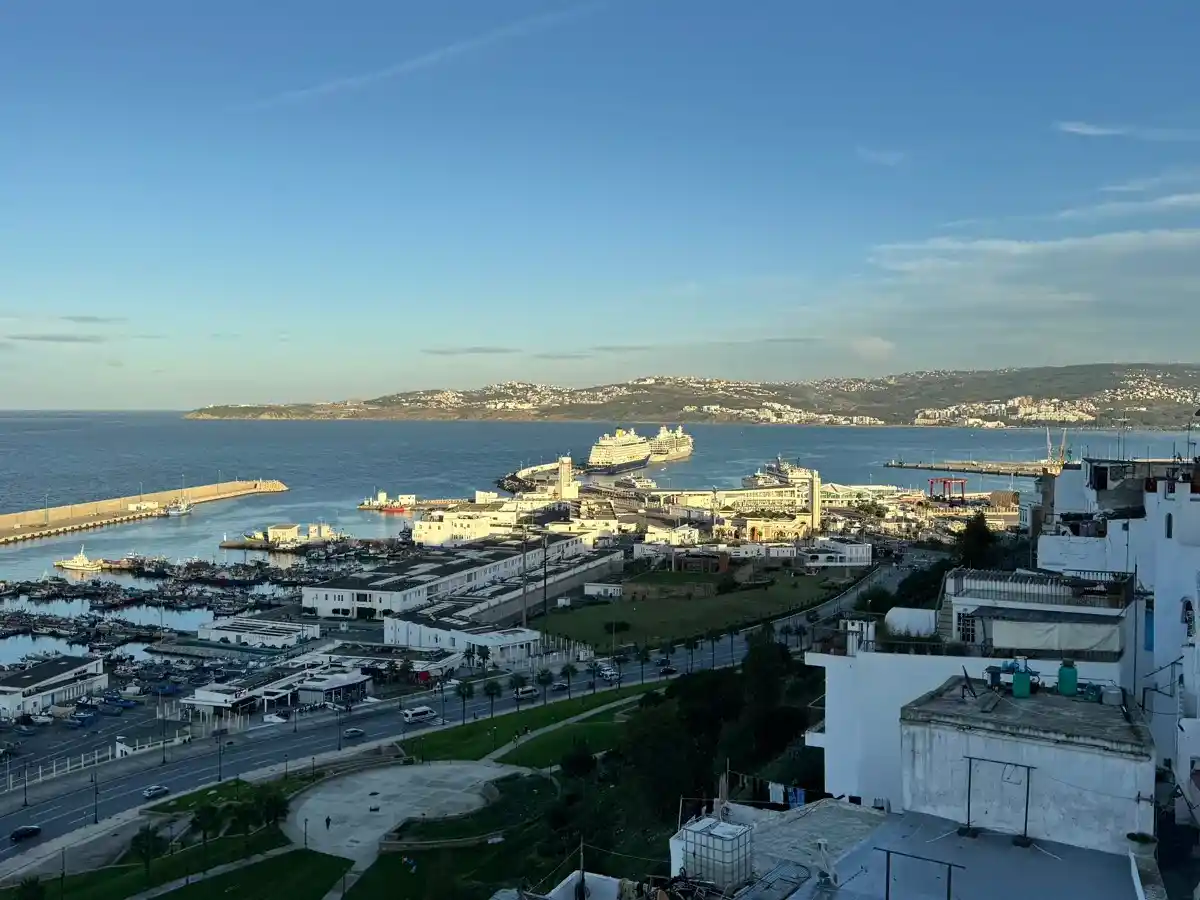
Behind the museum, there’s a terrace with nice views and a couple of mammoth cannons. They arrived in Tangier in 1879. The cannons weigh about 20 tons each and have 13-ton carriages. The cannons could be aimed by moving them on a semi-circular track.
Grand Mosque
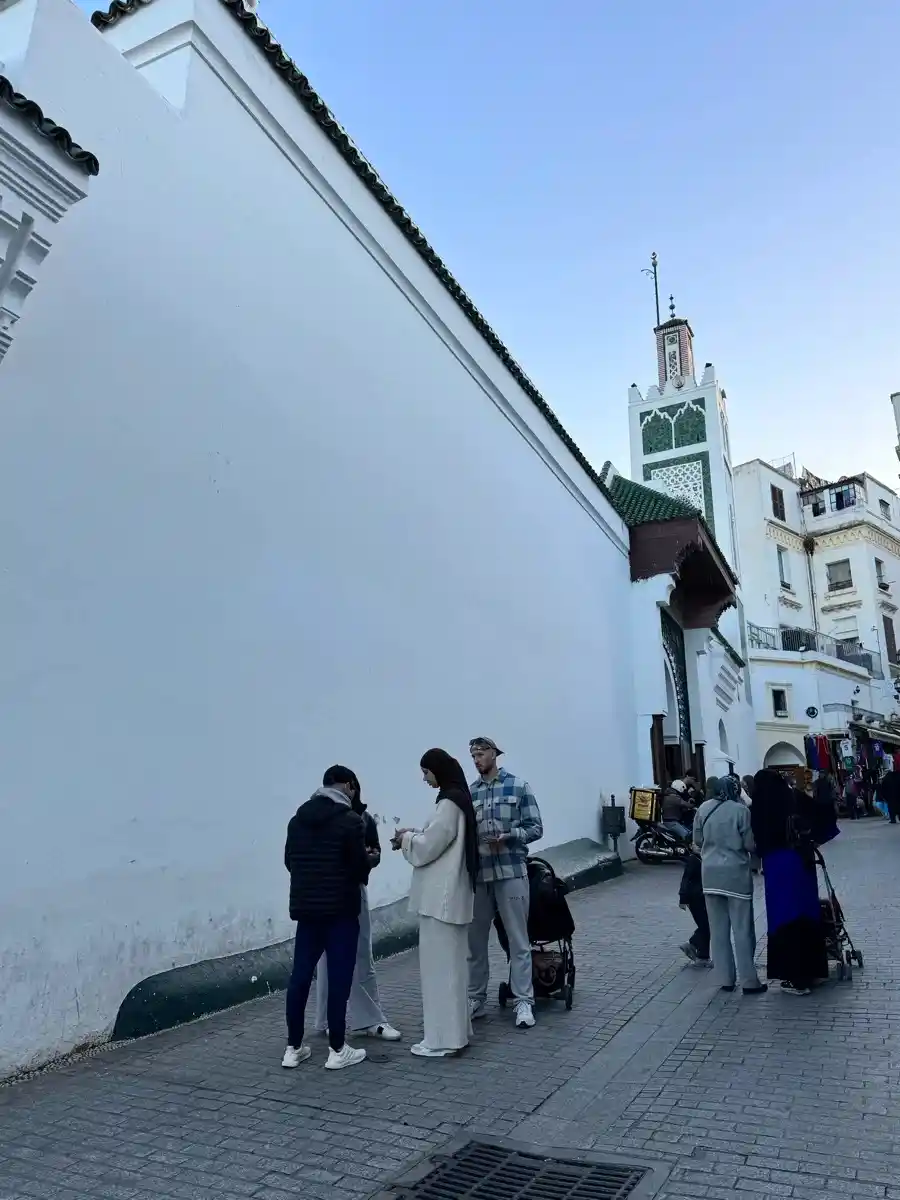
After leaving the Ibn Battouta Museum and heading back to my hotel, I walked by the Grand Mosque of the Tangier Medina. I think I passed by it before, but didn’t notice it. It’s a mostly rectangular white building. The minaret is interesting, but not awe-inspiring. The mosque has a keyhole-shaped green door that’s kind of interesting, but I forgot to take a picture of it.
As with all other mosques in Morocco except the Hassan II Mosque in Casablanca, nonbelievers aren’t allowed inside the Grand Mosque.
If you search for “Grand Mosque Tangier,” you will find some references to the Grand Mosque, but you’ll also find some references to another mosque. That one’s by the waterfront and is called Mosque Lalla Aabia. I’ve only seen it from a distance, but it does indeed look grand. So the confusion is understandable.
Programming Note: I have a day tour booked for tomorrow. I always worry about whether these things will happen or if the tour company will cancel. But if it does come off, I don’t know yet if I’ll post one entry or two tomorrow.
Discover more from Joel's Journeys & Jaunts
Subscribe to get the latest posts sent to your email.
That sounded like a lovely afternoon. Just enough stuff to do and see after a leisurely lunch. I thought the Kasbah museum looked fetching, as did the selection of artifacts you showed us. The garden seemed very peaceful. And that ol’ Ibn Battouta! He was quite a famous traveller for his time. Can you imagine if they had invented travel points back then? He’d be travelling in style. And speak of travelling in style, good work with the gnat. It sounds like you dispatched him off handily! Good work. Knock on wood about your tour tomorrow.
You’re right. It was an enjoyable afternoon in lovely museums. I think the gnat finally figured out he wasn’t going get anything from me and he didn’t want to waste much of his time, but he couldn’t resist trying once.
Thanks for your knocked-on-wood best wishes for my tour.