Wrapping Up Tangier: A Terrace, A Park and a Fortification Interpretation Centre
This will be my last post from Tangier. I move on to my next destination in Morocco tomorrow morning.
I didn’t get up to a lot this afternoon. Until this afternoon, I spent most of my time in Tangier in its Medina, including the Kasbah within the Medina. This afternoon, I ventured out into the section known as Ville Nouvelle (the Grand Succo, which I visited this morning, is also in the Ville Nouvelle neighbourhood). There, I visited a public terrace and a park. Outside of Ville Nouvelle, and also outside of the Medina, but abutting it, I then visited the Tangier Fortifications Information Centre.
If you are a regular reader, you can probably guess based on the title and opening paragraph of this entry what I’m going to say next. Because this is my last post from Tangier, a summary of my time here ensues at the end of this entry.
Place Faro
If you are looking for this terrace on Google Maps you can find it by searching for “Place Faro” or “Terrasse des Paresseux.” Either will take you to the same place. Google marks it on the map as “Place Faro.”
One of my guidebooks calls it Terrasse des Paresseux, as does TripAdvisor. But my other guidebook calls it “Place Faro.” In the body of its entry on the sight, it says it’s also known as “Idler’s Terrace.” Google Translate informs me that “Terrasse des Paresseux” is French for “Terrace of the Idlers.” So, there you have it.
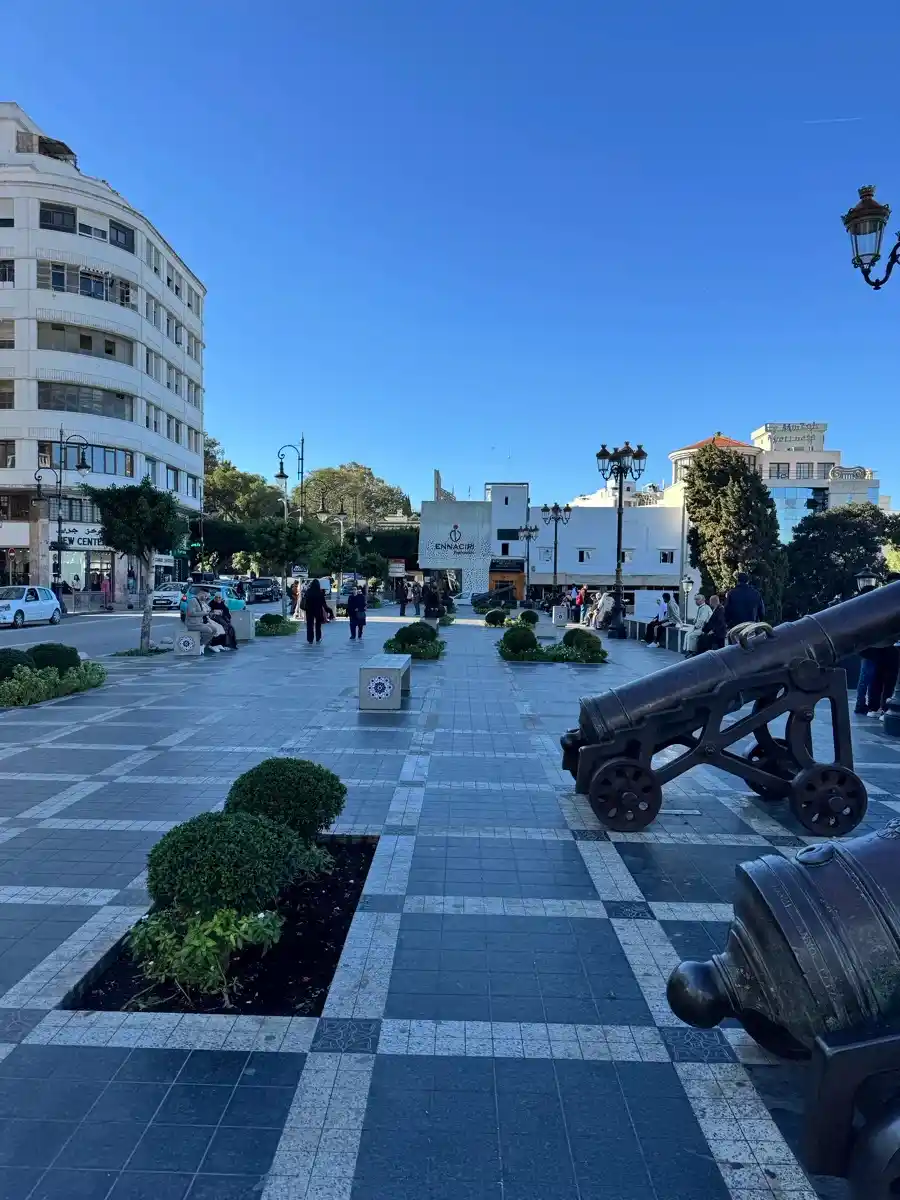
Place Faro is a rectangular terrace that’s significantly longer than it is wide.
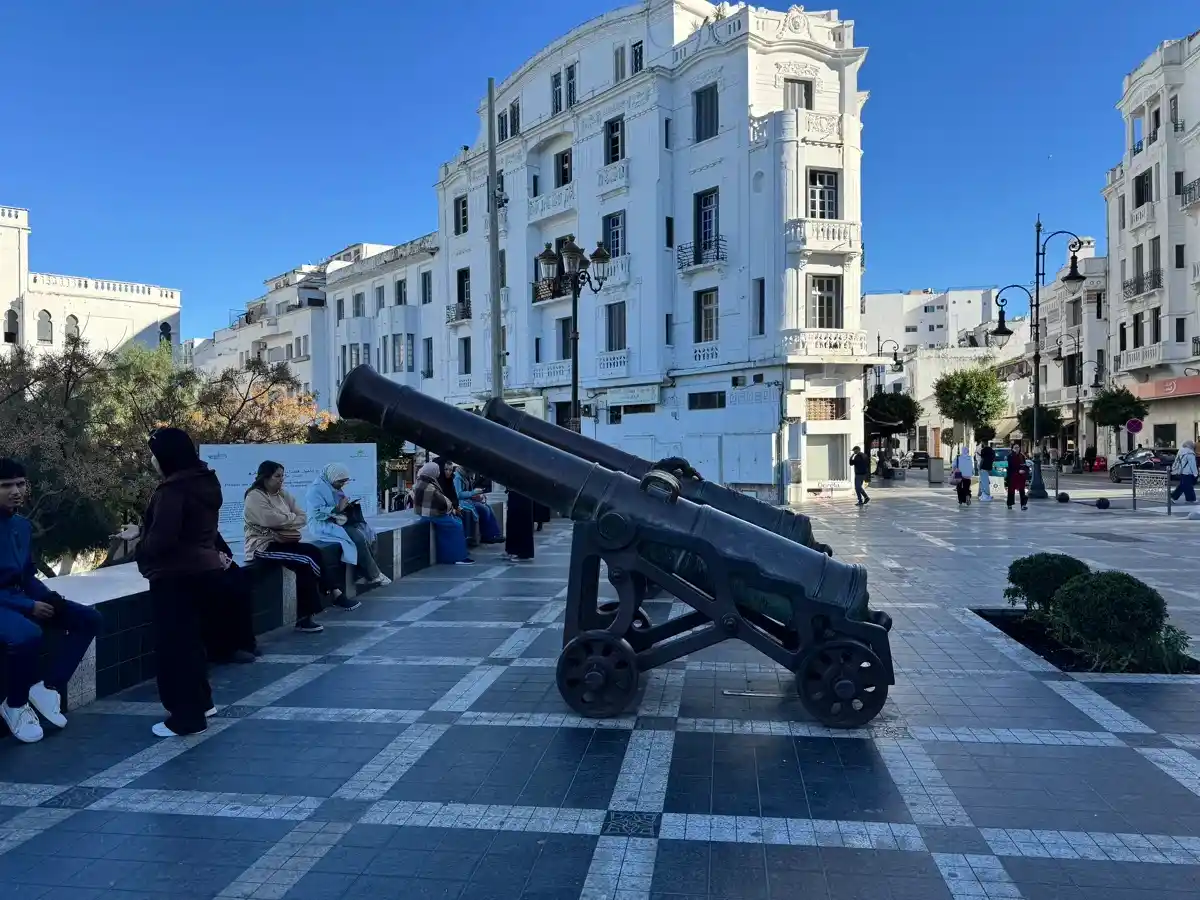
The surface is paved with attractive tiles. There are bushes, trees, and benches. There are two pairs of cannons, one on each end of the terrace.
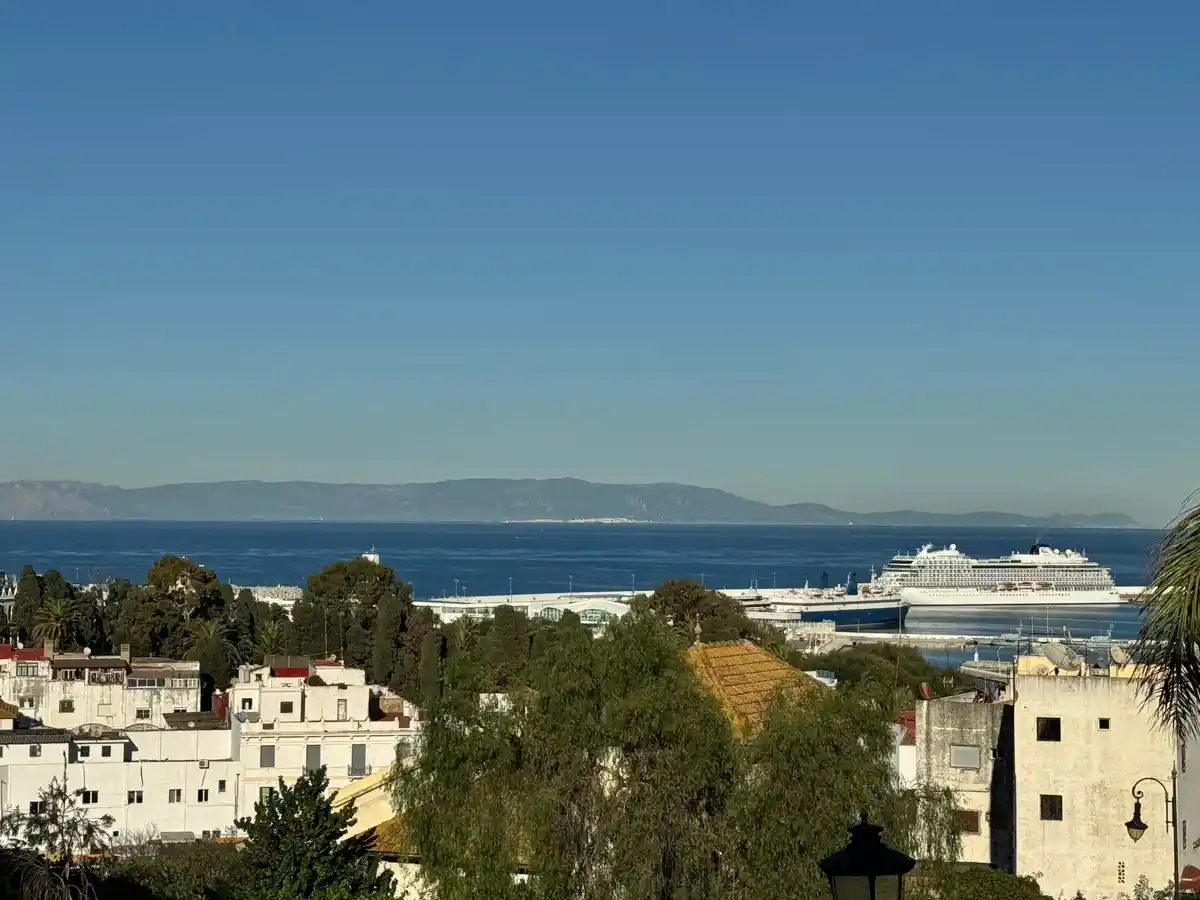
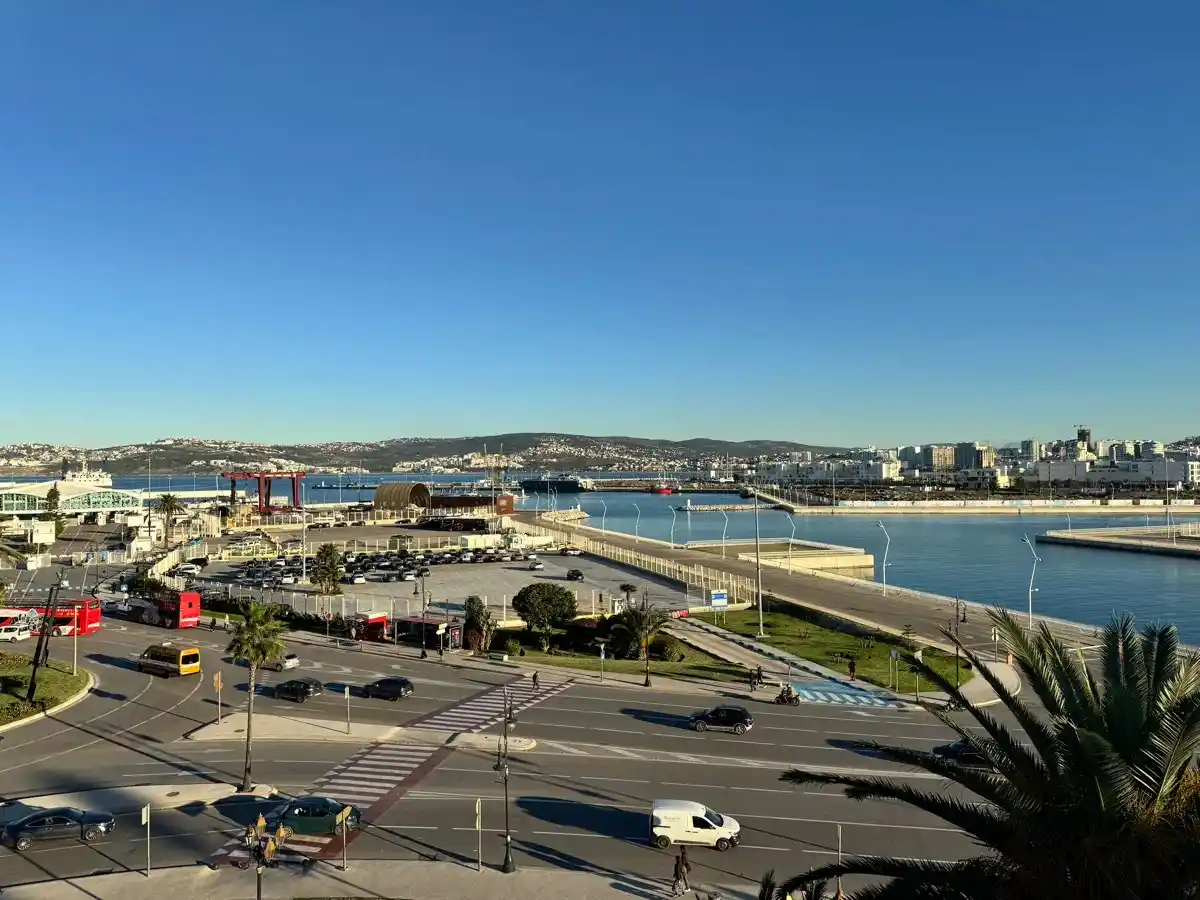
What makes Place Faro special is that it is well above sea level and provides a great view of the portion of Tangier below it, the Strait of Gibraltar behind that, and mountains in Spain behind that. It’s quite lovely. I took some pictures and sat for a spell.
Mendouba Gardens
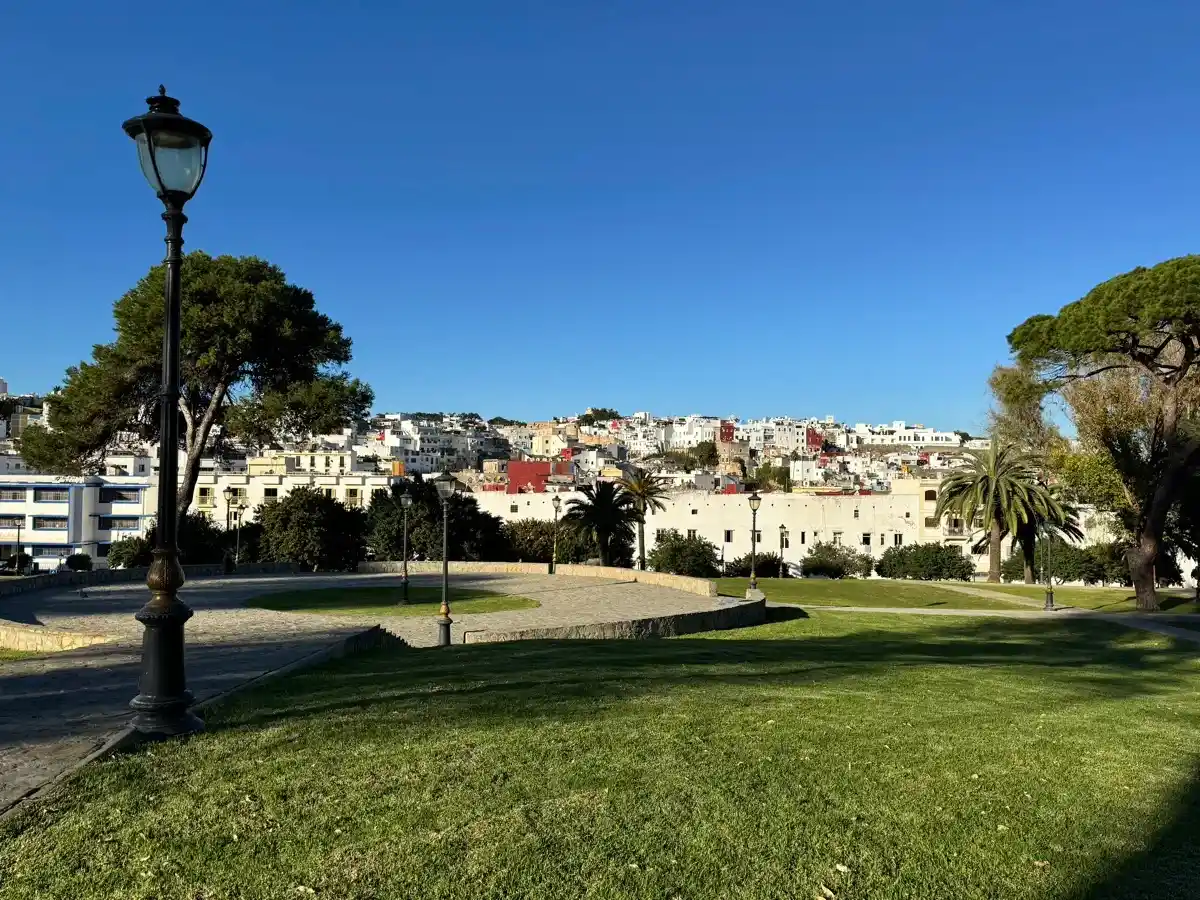
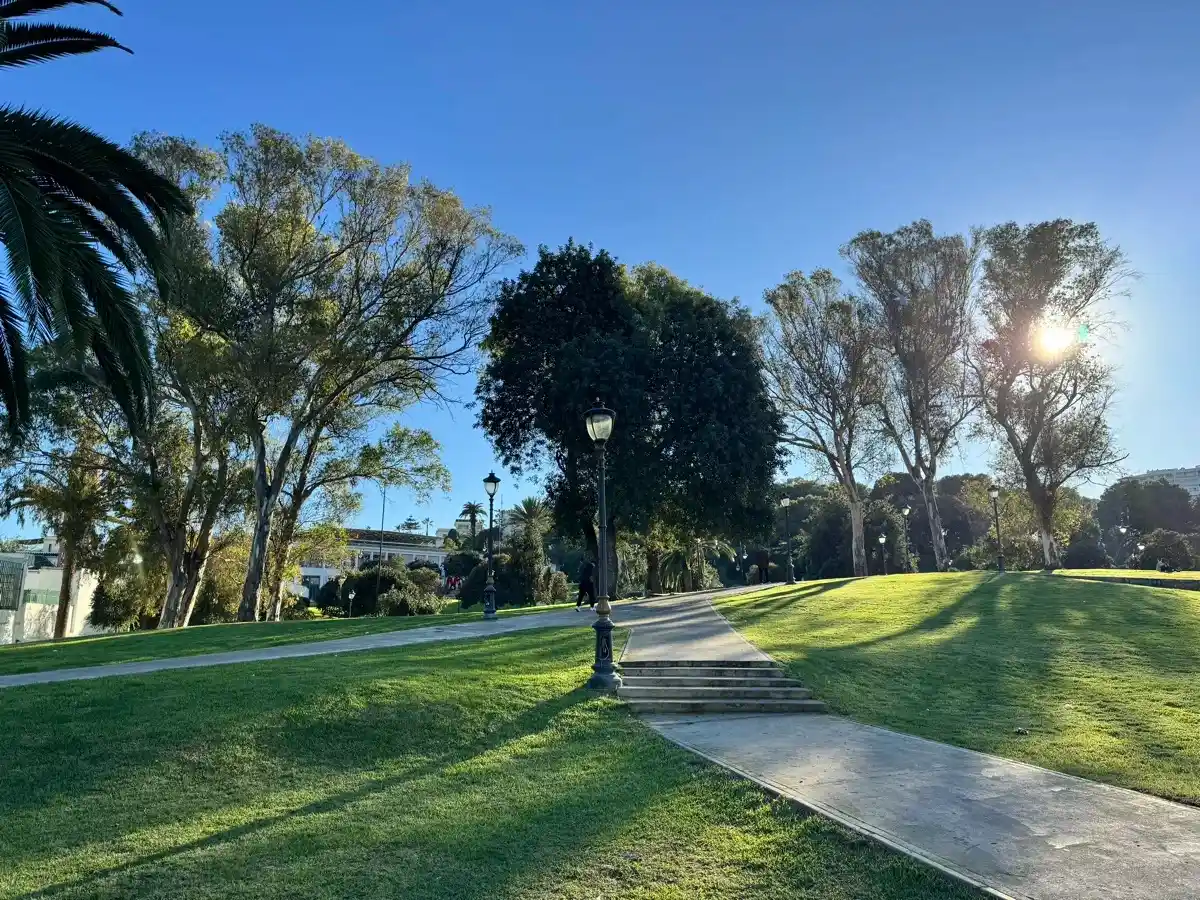
I can’t say I was overly impressed with Mendouba Gardens. It’s a moderately sized park with grass and trees. In the bulk of the park, there are no benches as such. In the middle, there is a paving-stone-paved circle surrounding a small circular lawn, all surrounded by a wall about my knee height, with gaps in the wall. The wall is suitable for sitting on, but there is no back support.
As I was leaving Mendouba Gardens, I came by a small, livelier section hidden around a corner (although it may not technically be part of the park; I’m not sure) that has a small playground and a bunch of real, honest-to-goodness benches with back supports. I sat on one of them for a while. Because that’s what old men do.
Tangier Fortifications Interpretation Centre
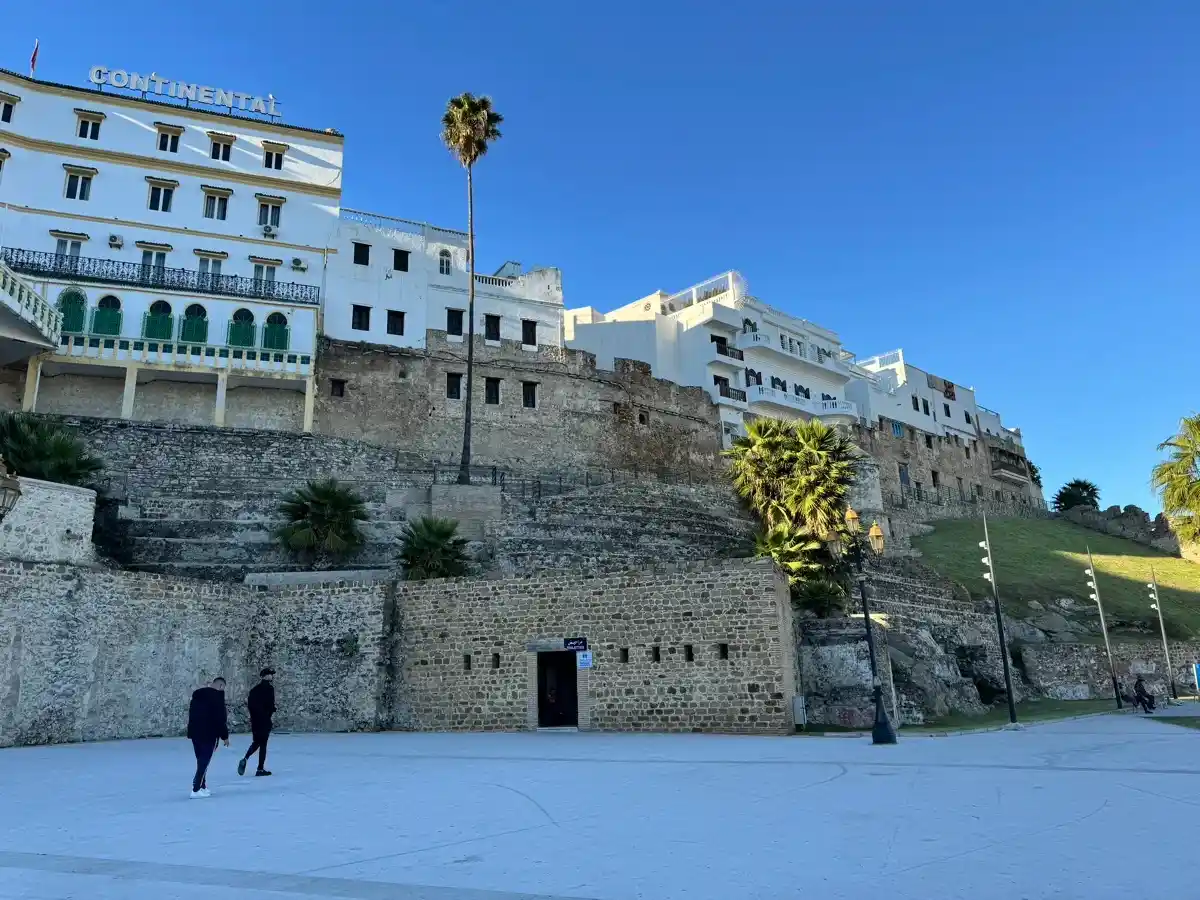
After I left Mendouba Gardens, I was running out of things that I wanted to see that were listed in my guidebooks or on TripAdvisor. I looked on Google Maps and saw something called the Dar Al-Baroud Tower. I headed over there to check it out.
It turns out it houses the Tangier Fortifications Interpretation Centre. Signage provides information in Arabic, French, and English.
The structure is part of the Tangiers fortifications built in the 18th century during the reign of Sultan Sidi Mohammed Ben Abdellah. The fortress is built onto the side of a hill, and there is a series of three or four (I forget) cement-floored terraces climbing up the hill. Each terrace provides great views of the port of Tangier, the Strait of Gibraltar, and across the bay around which Tangier is built to the hill on the other side of the bay and the city climbing up it.
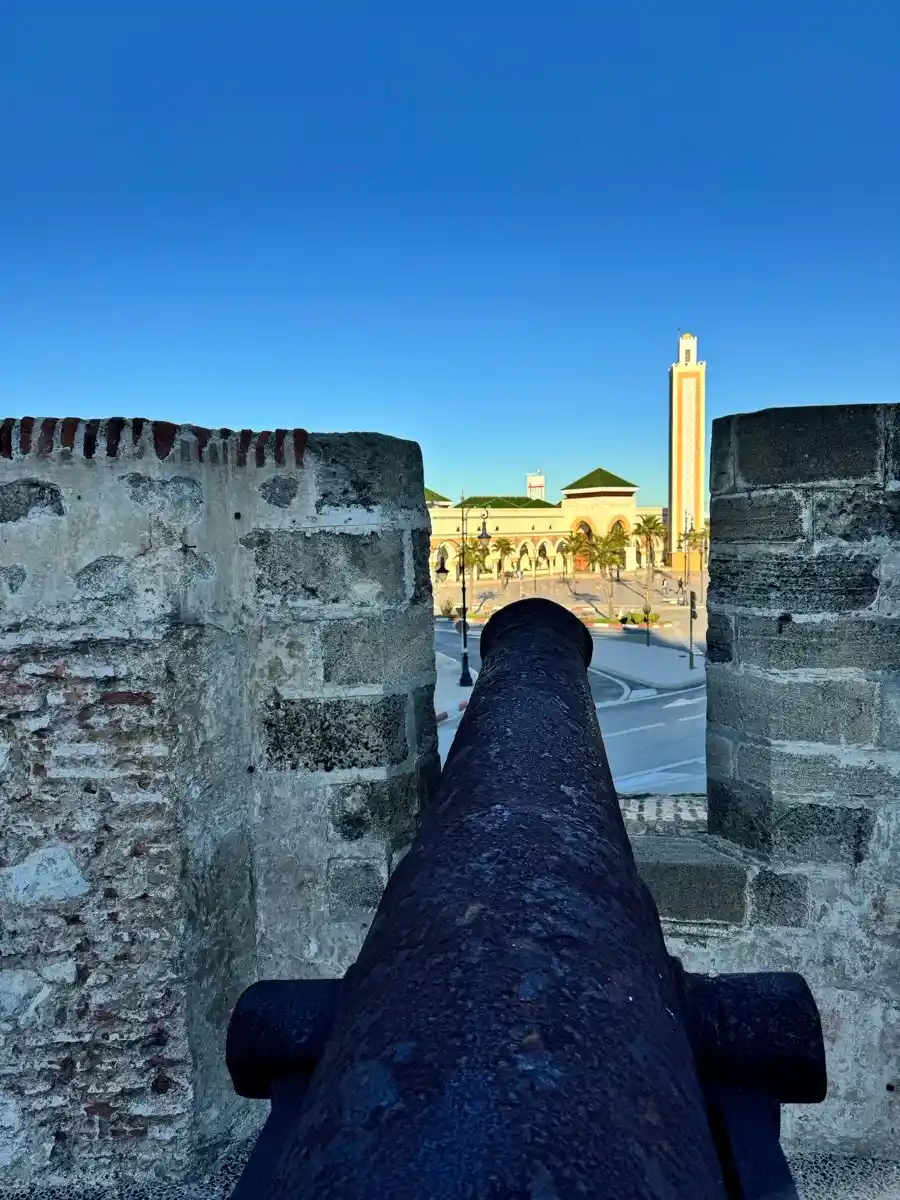
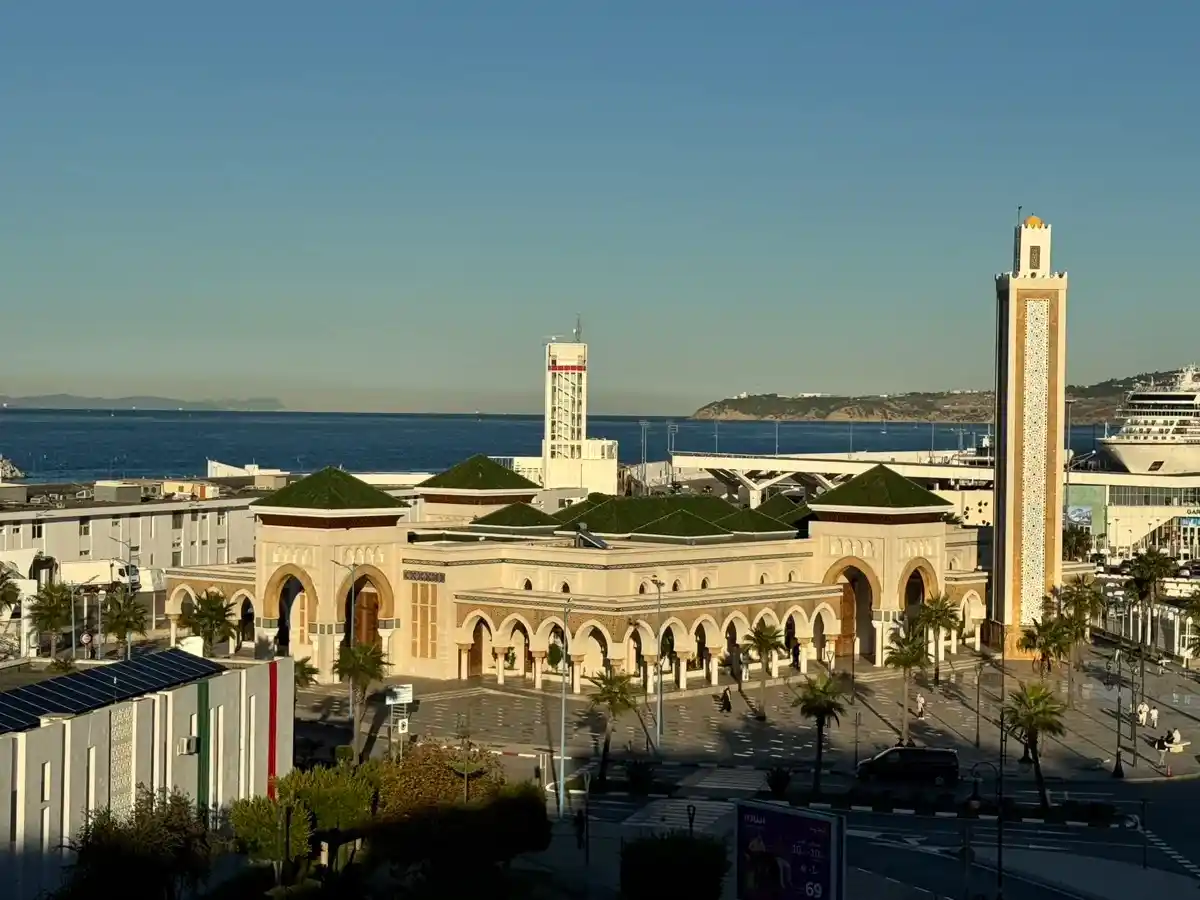
There are cannons of various sizes and styles on each of the terraces. One of the cannons points directly at a grand mosque built close to the waterfront, Mosque Lalla Aabla. To be fair, the mosque looks quite new. I’m sure the cannon was originally put into position long before the mosque was built. I’m reasonably confident it was not intentional targeting.
There are also some very small rooms on the top terrace, not much bigger than broom closets, contain military uniforms for high-ranking officers, documents, and weaponry from the 18th century.
Information panels describe some of the fortifications on the site up to and including the current structure. For example, Roman city walls consisted of a series of watchtowers, fortifications, and military camps intended to repel possible attacks and to monitor the roads connecting Tingis, the Roman name for what is now Tangier, with other cities in the province.
The exit from the Tangier Fortifications Interpretation Centre is on the upper level (the entrance is on the lower one). The exit let me out onto a street in the abutting Medina, where someone tried to misdirect me, probably expecting a tip.
I was following Google Maps to get me out of the Medina and back to my hotel. He said the road off to one side, not the one I was going to take, was closed. He asked me if I was going to the port? I said yes because I did have to go by the port to get to my hotel. He said, “It’s this way.” He pointed to a street leading away from where I knew the port was.
I said, “Thanks, but I’m going this way.” And I headed off in the direction Google Maps sent me. That took me on the straightest route out of the Medina that it’s possible to follow on its curving maze of streets and out to the port area. So ended my activity time in Tangier.
Tangier Summary
I very much enjoyed Tangier. As I said, I spent most of my time in the city in the Medina and its Kasbah.
The Medina is endlessly interesting. The souks are colourful and characterful. I don’t think I would have gotten bored if I spent more time wandering around it. And, because of its maze-like quality, I have no doubt that there are lots of bits I missed.
The walled Kasbah that forms part of the Medina is also a joy. Its narrow, maze-like lanes, with mostly whitewashed buildings, are beautiful. I would have loved it even more were it not for the human gnat I encountered who wanted to lead me around for tips. I ignored his advice and didn’t pay him, but he was annoyingly persistent. Apart from that, it was wonderful.
There are some interesting small and medium-sized museums to visit in the Kasbah and the broader Medina. Plus, surprisingly, at least surprisingly for me in a 99% Muslim country, it has a couple of beautiful little synagogues. There are also some small art galleries that I didn’t go to.
The long beach fronting the Strait of Gibraltar is beautiful, too, so that’s definitely a plus.
I took a day trip from Tangier to Chefchaouen and its Blue City Medina. That was spectacular. I’m glad I went. As I explained in the first entry on that day trip, I wasn’t going to go until the Air Canada agent who checked in my bag in Toronto recommended it. It would have been a terrible shame if she hadn’t.
As I mentioned above, I was running out of known things to do in Tangier. My two guidebooks have less information about Tangier than about the other cities in Morocco I’ll be visiting. And my walking tour app doesn’t have a guide for Tangier, but it does for all of the other cities I’ll be in. The point is, I suspect there’s a lot more in Tangier that I would have liked to have seen, but I just didn’t know about it. Tangier seems like a great city.
Under the circumstances, my four nights (three and a half days) here in Tangier were about right. If I hadn’t gone to Chefchaouen, I would have been looking for things to do with the extra day. But I did go to Chefchaouen and, as I said, it was wonderful.
If I hadn’t gone, I probably would have spent the day wandering around the Medina and its Kasbah some more and sitting on a bench by the beach and staring out at the sea. Come to think of it, that wouldn’t have been so bad.
My guidebooks recommend some nearby seaside towns. But they didn’t seem interesting enough for me to try to figure out how to get there. (The guidebooks generally recommend a car.)
And that’s it for Tangier. See you elsewhere soon.
Discover more from Joel's Journeys & Jaunts
Subscribe to get the latest posts sent to your email.
Walk the Kasbah and Medina in Tangier
Visiting Tangier American Legation Museum, a Synagogue, and More
Thanks, as always, for the thoughtful personal recap, which was so positive, except for the insect problem – but experience seems to have equipped you with the appropriate repellent by now. Lovely views you got there this afternoon. I am sure more idler’s walking back into the Medina and the waterfront spiced with some serious bench sitting and lunch eating would have made up for any lack of direction from your guidebooks if you happened to have more time. But that said, it seems that you did hit it right as it was. Looking forward to the next instalment. Where will it be, I wonder?
You’re welcome.
I did very much enjoy Tangier. It might have been even better with more guidance.
It occurs to me that there might be money to be made from someone making repellent for that sort of insect.