Visiting Tangier American Legation Museum, a Synagogue, and More
Both my guidebooks recommend visiting the Tangier American Legation Museum. (My walking tour app doesn’t currently have a Tangier guide. Pity. I’ve been relying on it much more for the past couple of years.)
I avoided visiting it until now because, well, America. But I decided to go this morning for a couple of reasons. One, Americans recently delivered a resounding defeat to the party of Trump in their midterm elections. And, two, I feared I was going to run out of things to do in Tangier today.
After that, I rounded out my morning by visiting another old Tangier Synagogue, Moshe Nahon Synagogue, the Grand Socco, and the Marché Central.
The Walk Thereto
All of the sights I took in this morning, except the Grand Socco, are in the Medina. And the Grand Socco is just outside one of the gates to the Medina. Getting to the Tangier American Legation from my hotel involved an almost 45-minute walk, a large part of which was along a wide promenade beside the long, wide beach that fronts the Strait of Gibraltar.
Because most of the tourist attractions in Tangier are in the Medina, I took that enjoyable walk in both directions twice already during my short time in Tangier.
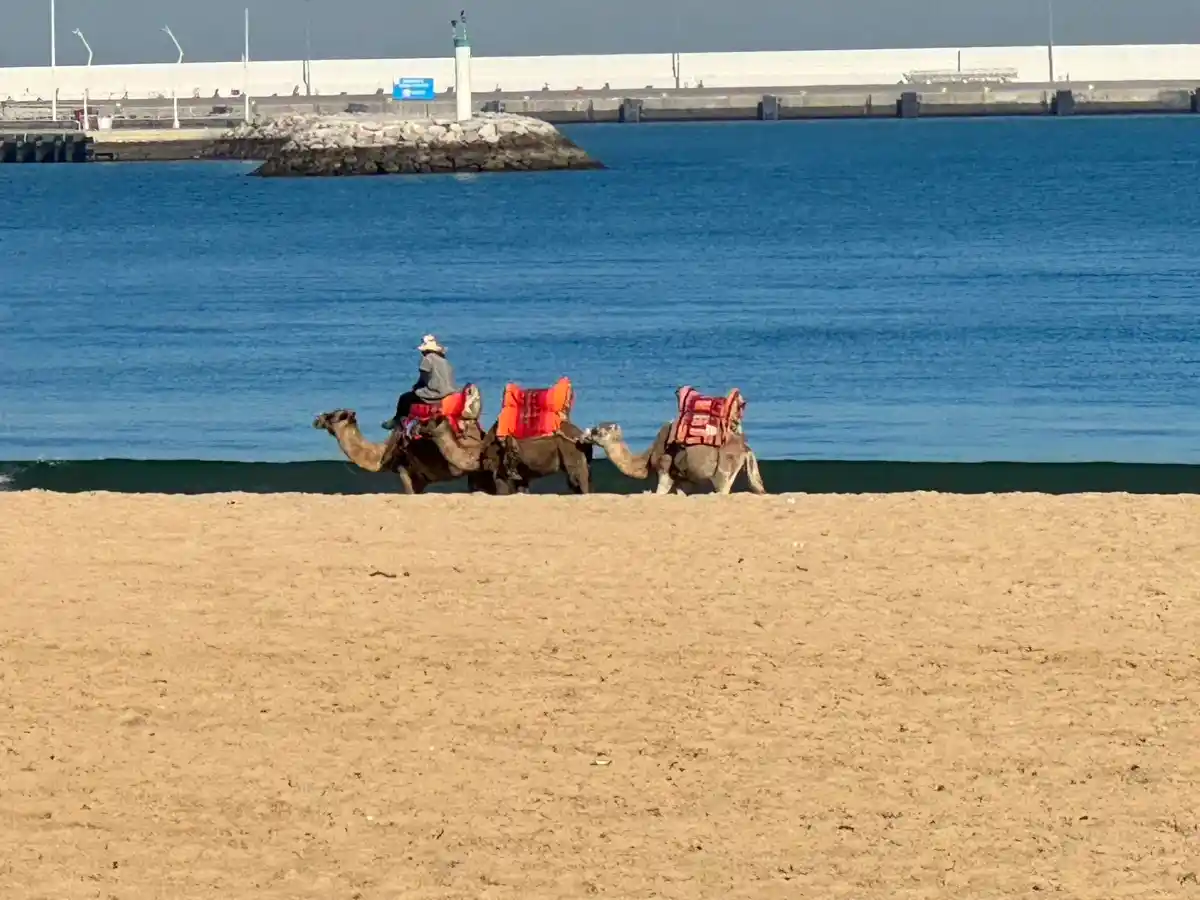
I described the beach somewhat in my first post from Tangier. Then, I said I saw people riding horseback on the beach. I did again today, but today I also saw someone riding a camel on the beach, with two other camels following behind.
They were slow-walking, what looked from what I could see from that distance, immediately beside the water. Because the beach is wide, to snap a picture of them and have them appear as more than dots, I had to zoom in well past the optical zoom of the camera on my phone. So the picture is suboptimal.
Then the man steered his camels somewhat inland and parked them a bit closer to the promenade than to the water.
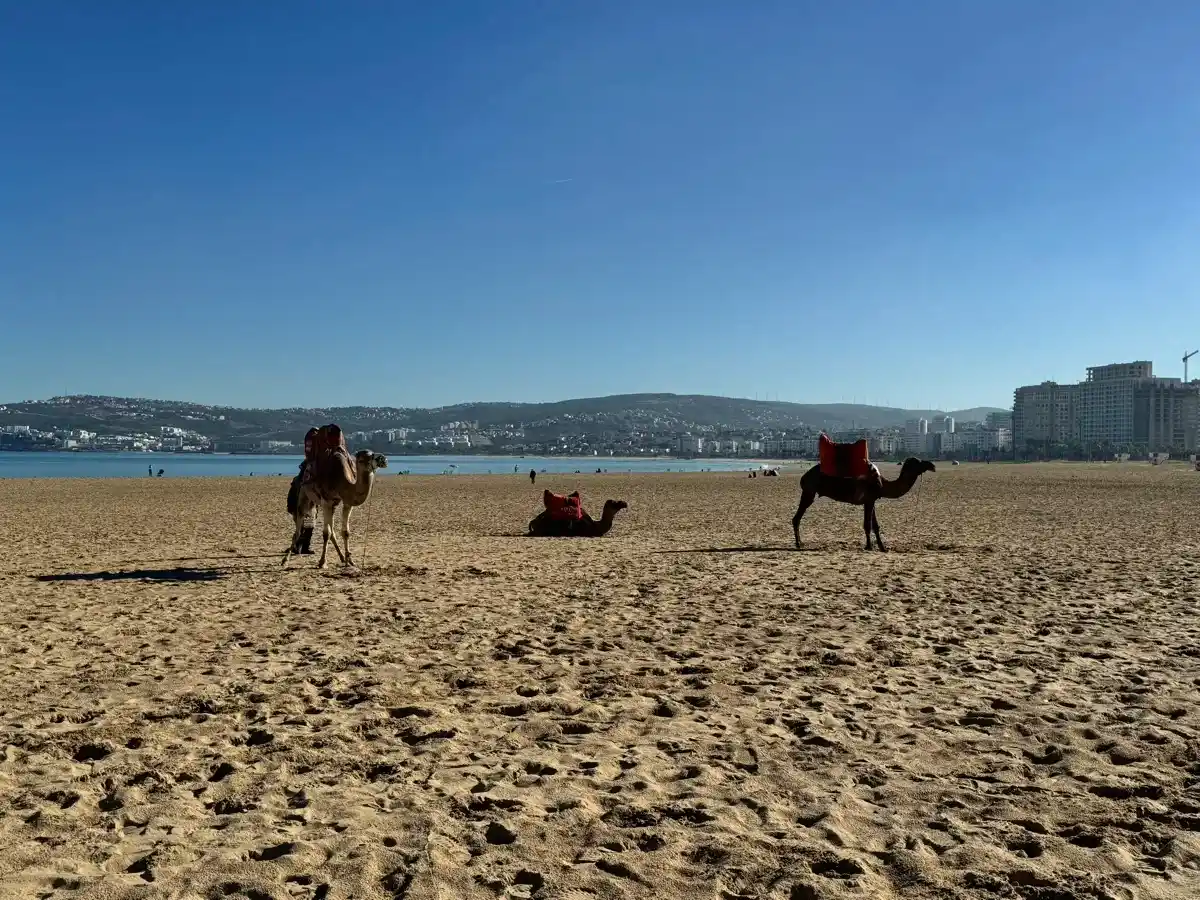
Despite the severe and not at all idle threat of getting sand in my shoes, I walked a bit onto the beach to get a closer look and a better picture.
I still maintained a considerable distance between me and the camels because I perceived an even greater danger than sand in my shoes. I feared that if I got too close, the man would harangue me endlessly to pay him to ride one of his camels.
I think that was a rational fear. Despite staying a fair piece away, he made a come-hither gesture at me that I pretended not to see.
Camels are not something you often see back home in downtown Toronto. In fact, if you ever do see any there, you should probably consider stopping your use of major hallucinogens.
I then resumed my regularly scheduled route to the Tangier American Legation Museum.
As I said, the Tangier American Legation Museum is in the Medina. I’ve spent considerable time there this trip, but it was a little different today. Today is Friday. Morocco is an Islamic country. Friday is the Muslim holy day. Some of the shops in the Medina were closed today. It was probably far fewer than half of the shops, but a noticeable number.
Tangier American Legation Museum
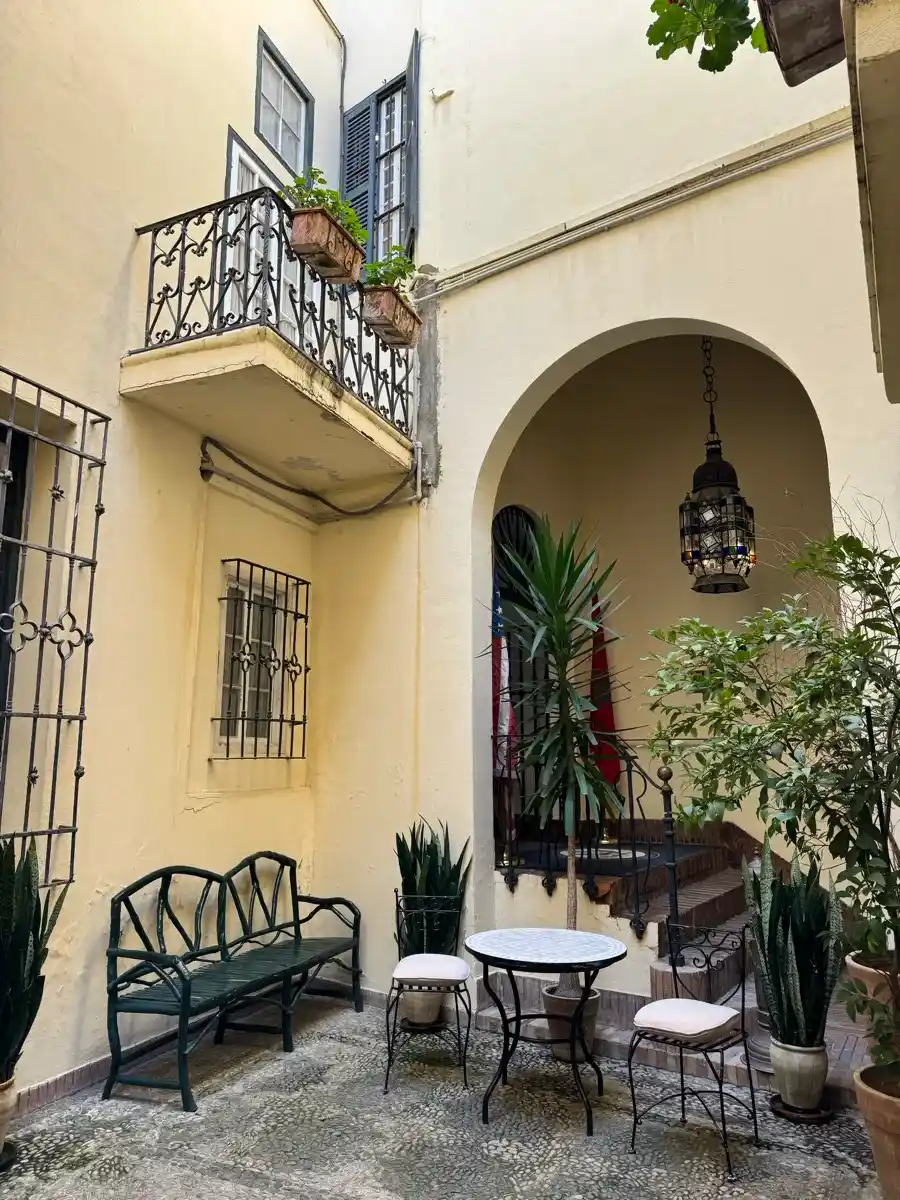
The Tangier American Legation Museum is, not surprisingly, in the building that used to house the American Legation in Tangier. In the building, there are text panels with information about America’s history in Morocco and its relations with the country, along with information about the history of the building.
In 1821, Sultan Moulay Souleiman gifted the Legation building to the United States. It has since been rebuilt and expanded by adding adjoining buildings. After the consulate moved out, the building was used from 1961 to 1970 by the U.S. State Department as a language training centre for diplomats. From 1970 to 1973 the Peace Corps used it as a training centre. Beginning in 1976, it was turned into a public space, with the museum opening for the U.S. bicentennial. In 1982, the Legation building was designated as a U.S. National Historic Landmark, the only one located outside U.S. territories.
Most of the information panels in the Tangier American Legation Museum are bilingual, Arabic and English. Unlike in other venues in Tangier (and Casablanca, although I can’t yet speak for the rest of Morocco), the French language doesn’t have much of a presence in the museum. Everywhere else I’ve been in Morocco so far, if signage has only two languages, it’s invariably Arabic and French.
In 1777, Sultan Mohammed Ben Abdullah offered free passage to ships flying the American flag and provided them with security guarantees. This made Morocco one of the first countries to formally recognize the newly independent United States.
At the time, the Sultan expressed an interest in signing a treaty with the US. The U.S. Congress responded favourably in 1780. However, the U.S. dithered. In 1784, the Sultan became annoyed with the delays and seized an American merchant ship. He said he would release it only when a deal was negotiated and signed. In 1786, the Treaty of Peace and Friendship (also known as the Treaty of Marrakech) was signed.
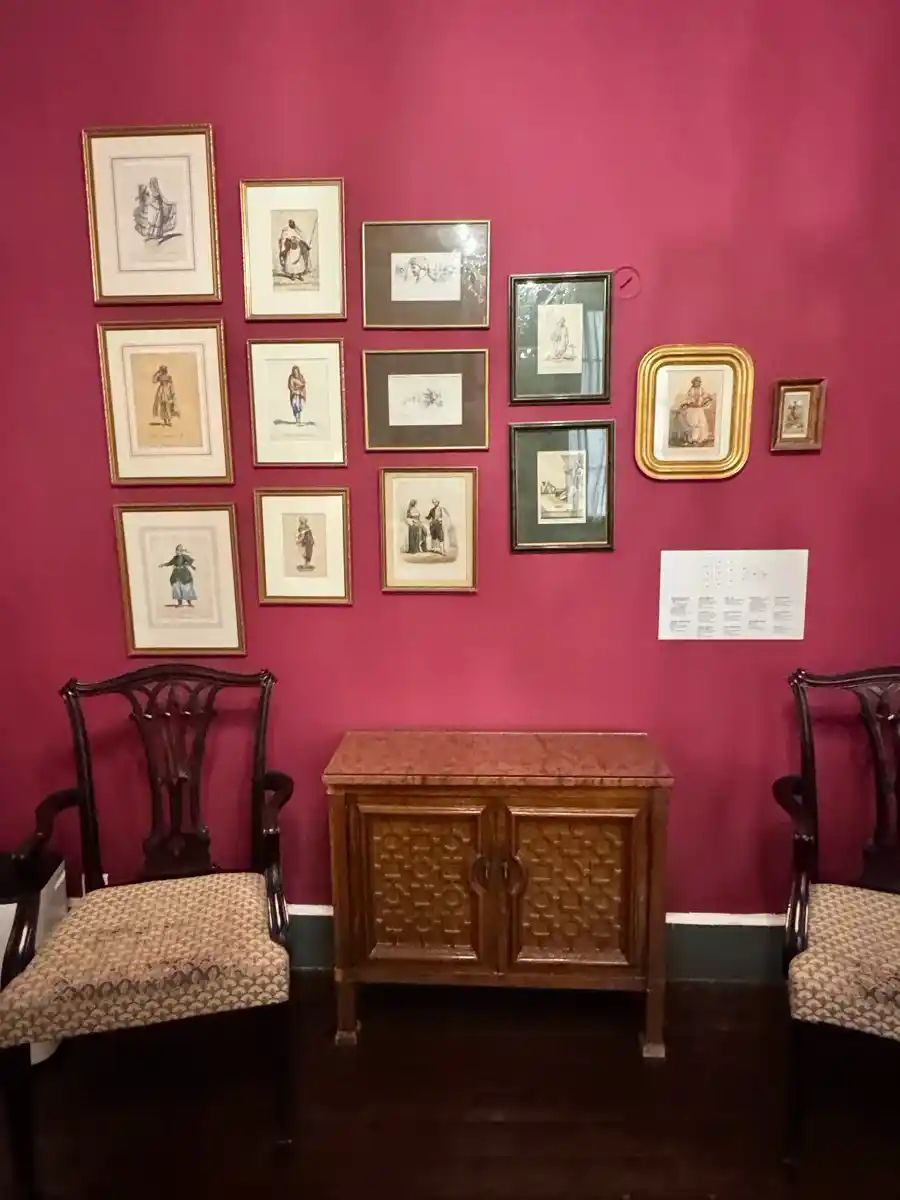
The Tangier American Legation Museum has a room with photographs of senior Moroccan authorities meeting American presidents, both in Morocco and in the White House in DC, small rooms with paintings and drawings, and a room dedicated to Paul Bowles, an American writer, translator, composer, and ethnographer, who lived in Tangier from 1947 until he died in 1999. Another room provides information and artifacts relating to other notable Americans who lived significant portions of their lives in Morocco.
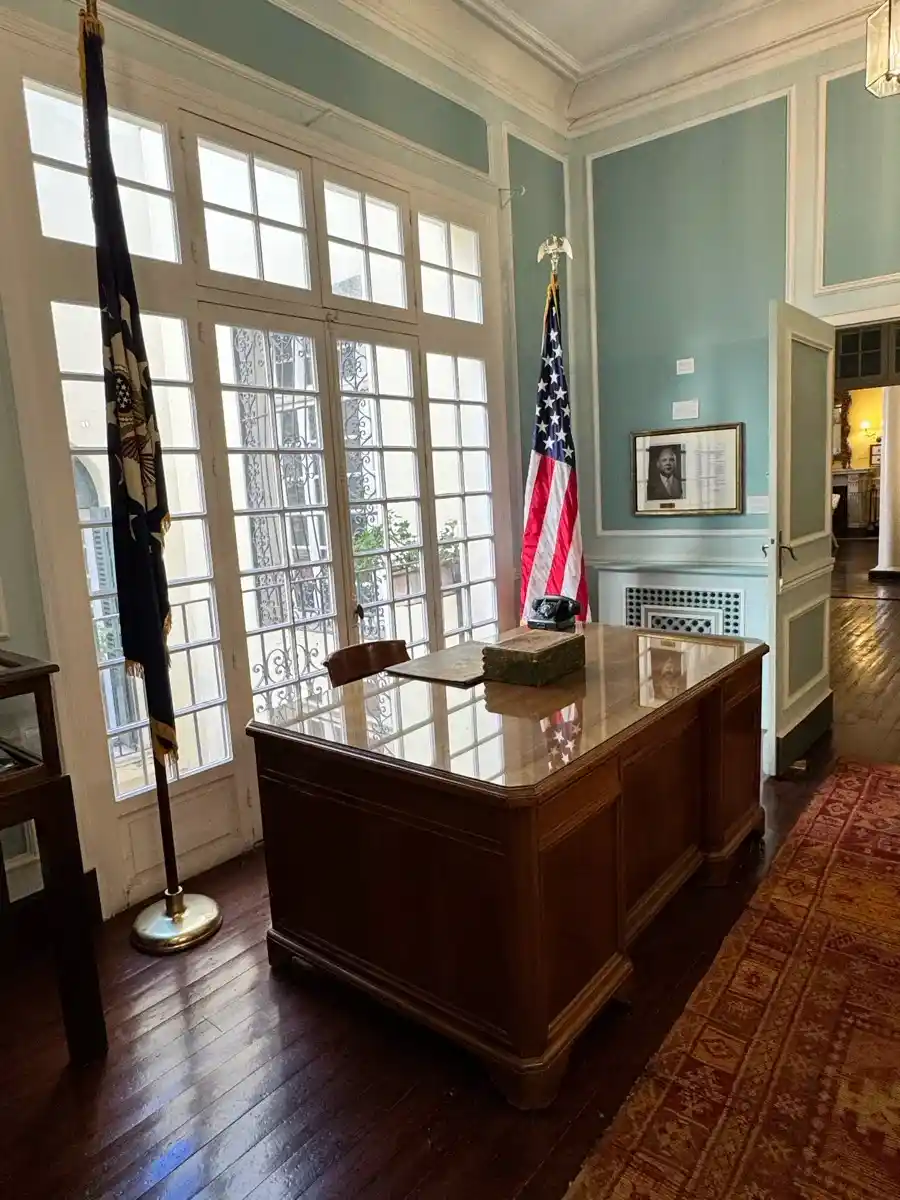
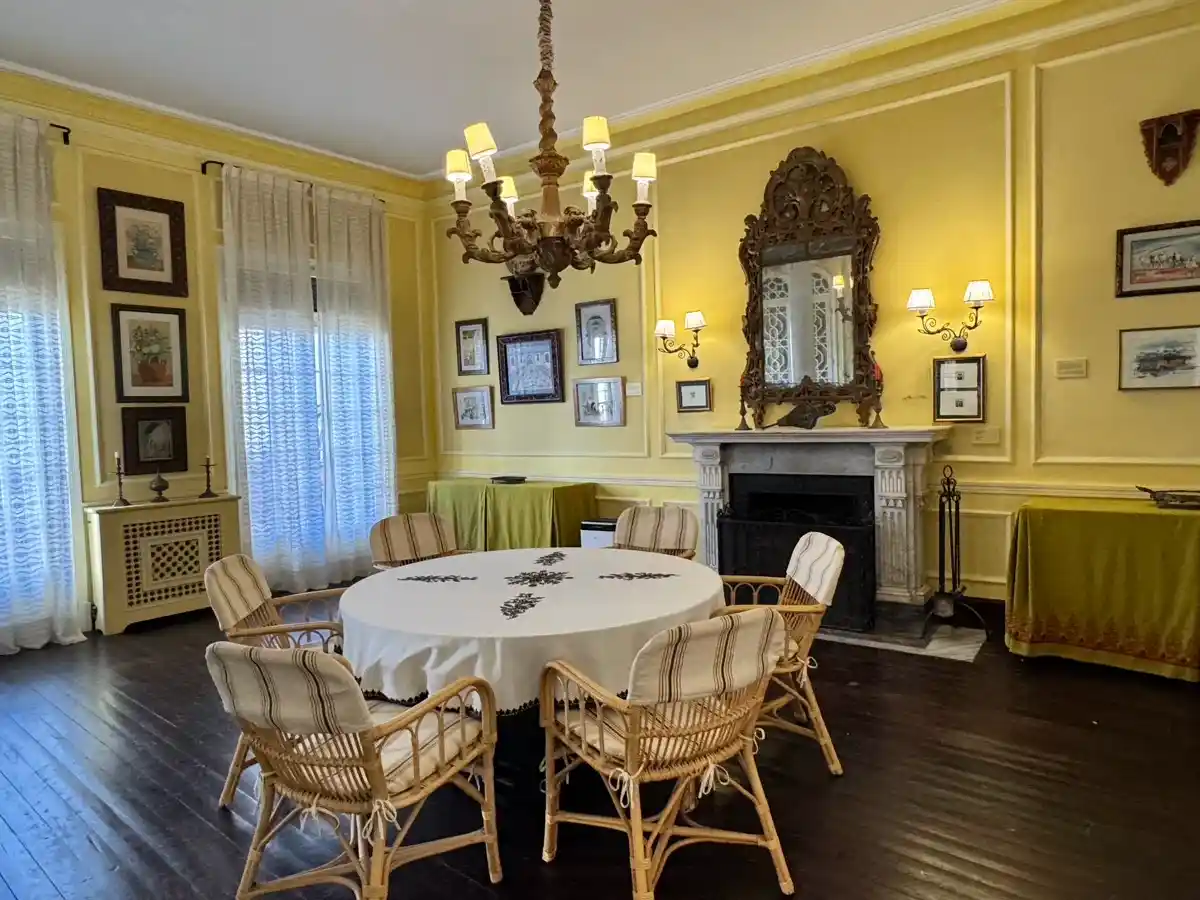
Some of the rooms are furnished as they were when the building housed the American legation. The only information in these rooms is an information panel describing the purpose of the room.
Another room provides information about Operation Torch, a World War II operation designed to liberate French North Africa (French Morocco, Algeria, and Tunisia) from the Nazi-aligned Vichy France.
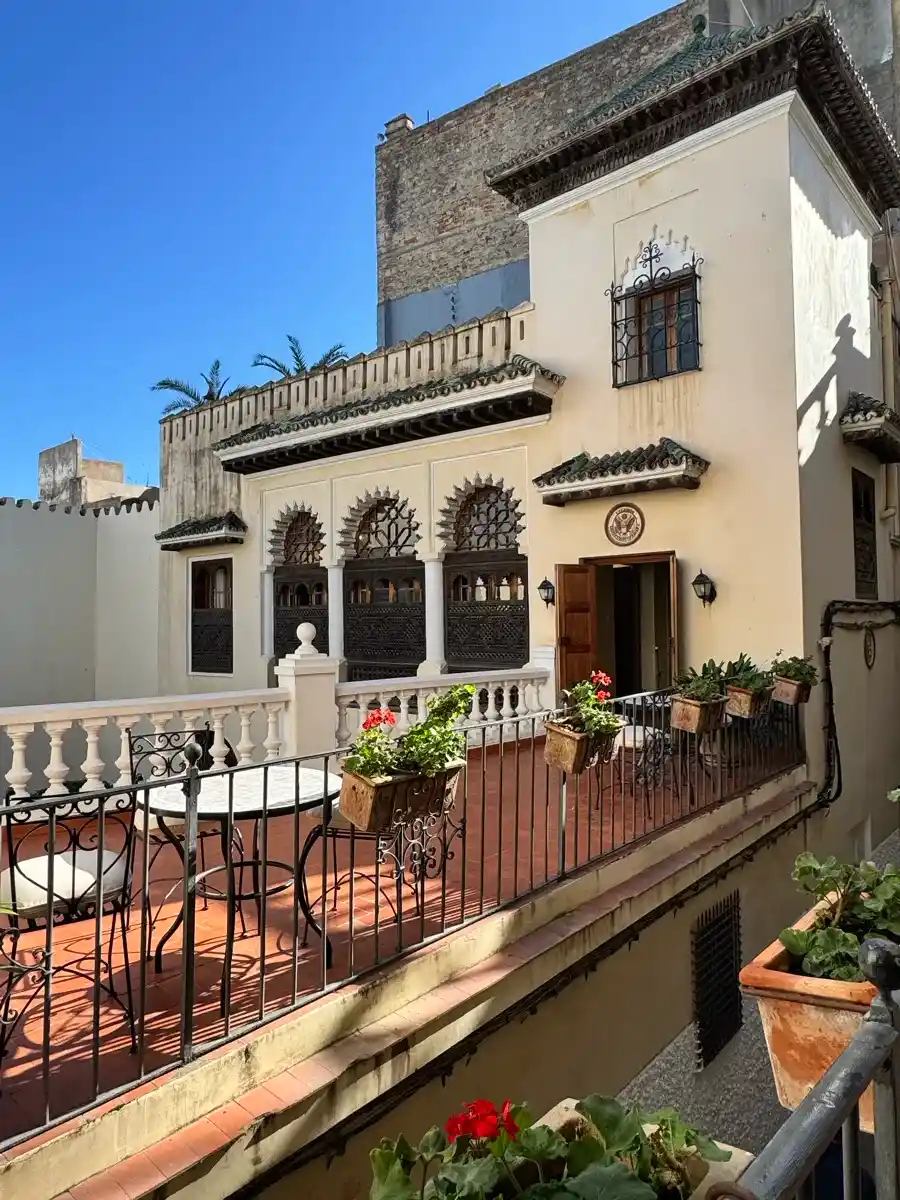
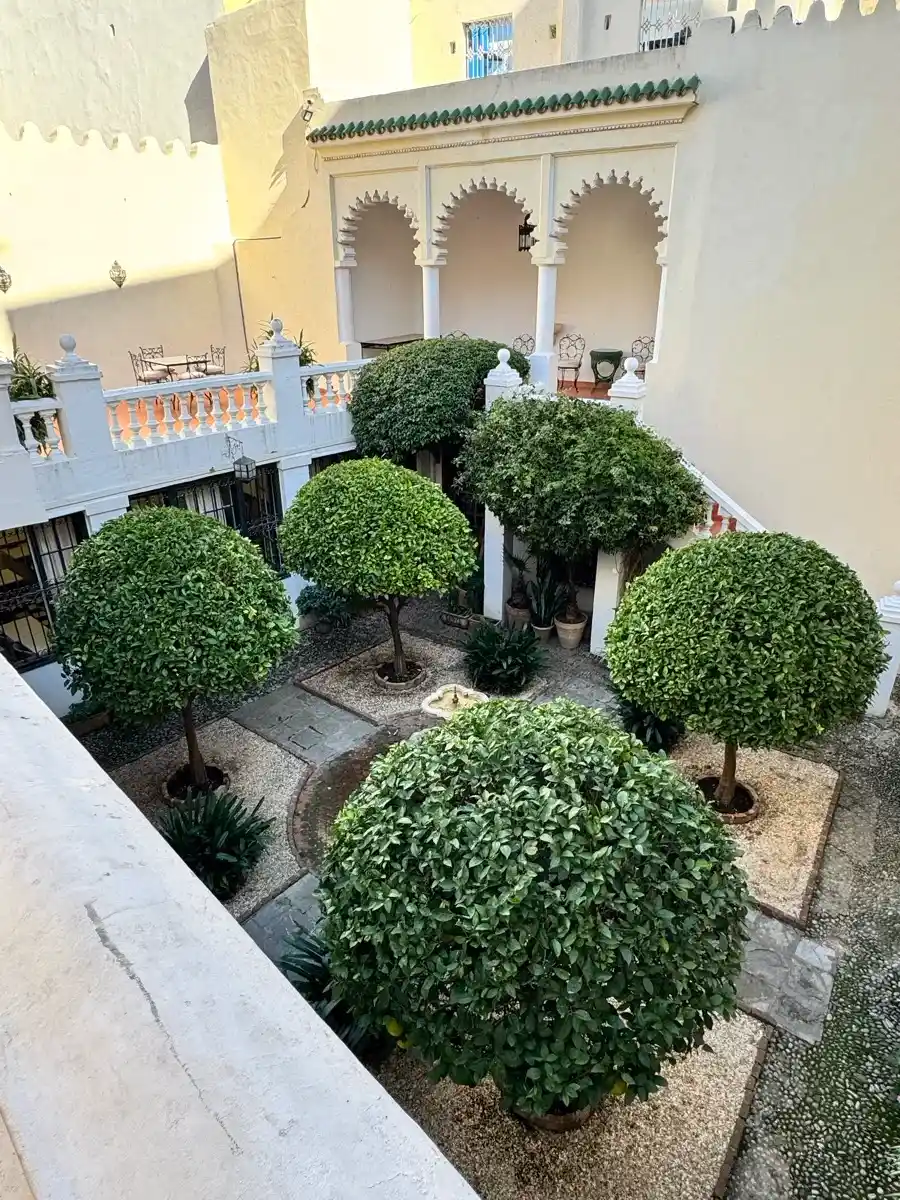
The building itself is lovely, with a couple of attractive courtyards and terraces.
The Tangier American Legation Museum is a nice little museum and worth a visit. It’s a pity about America’s current president. (It’s late 2026 as I write this.)
More pictures from the Tangier American Legation Museum:
Moshe Nahon Synagogue
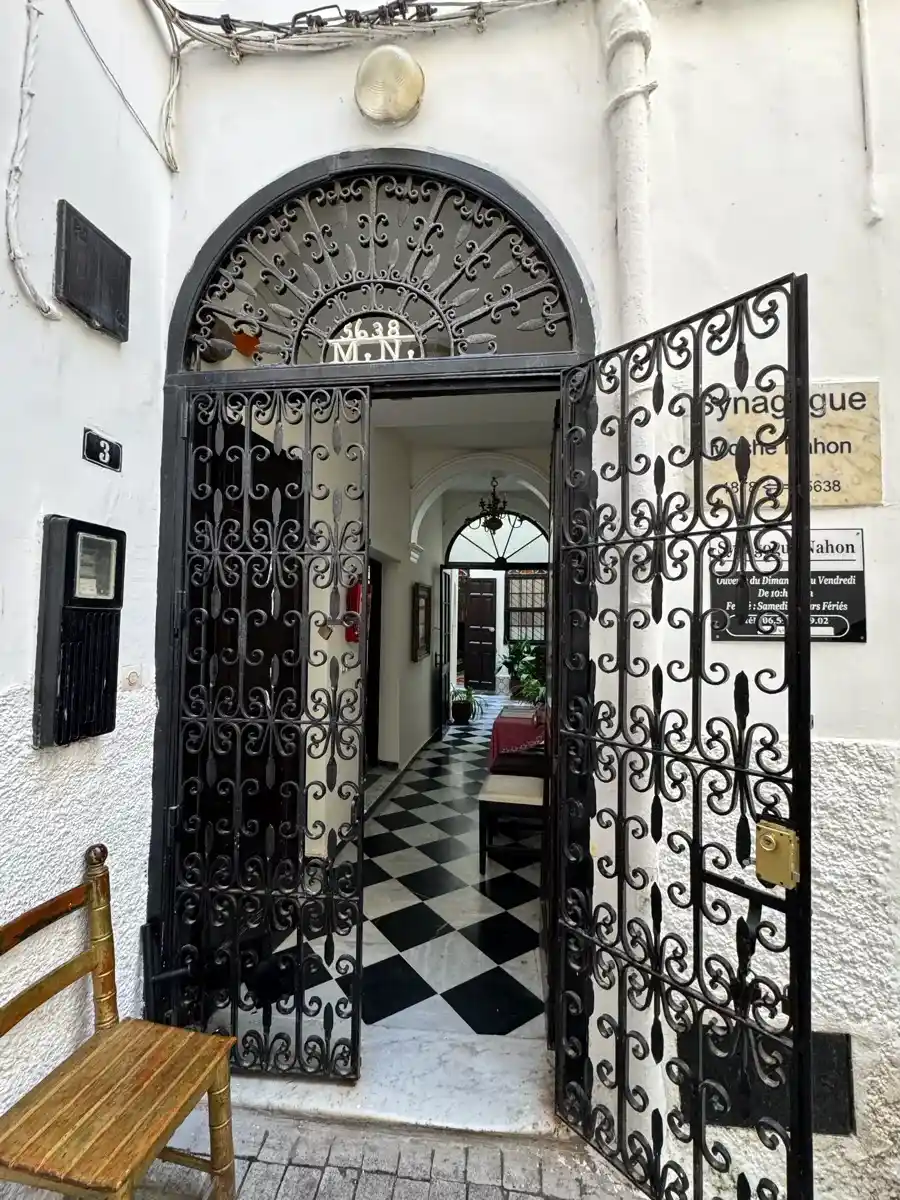
As I mentioned in other pages in this journal, before leaving on this trip, I had no intention of making Moroccan Jewish culture one of its themes. But spontaneity happens. Not often with me, but occasionally.
In Casablanca, I self-designed an ad hoc Moroccan Jewish heritage morning that took in three sights.
Here in Tangier, I’ve already visited the Assayag Synagogue. When considering what to do today, I was running low on sights that looked interesting in my guidebooks. So I opened TripAdvisor to see if it had any suggestions. Despite not being mentioned in either of my guidebooks, Moshe Nahon ranks highly on TripAdvisor.
So I went.
The synagogue is deep in the Medina. You have to take some twists and turns along narrow laneways to locate it. Some of the TripAdvisor reviews said it was hard to find, and they gave hints on how to do so. Someone in Tangier must have read the reviews. At every twist and turn, there is a sign on a wall pointing the direction to the Moshe Nahon Synagogue.
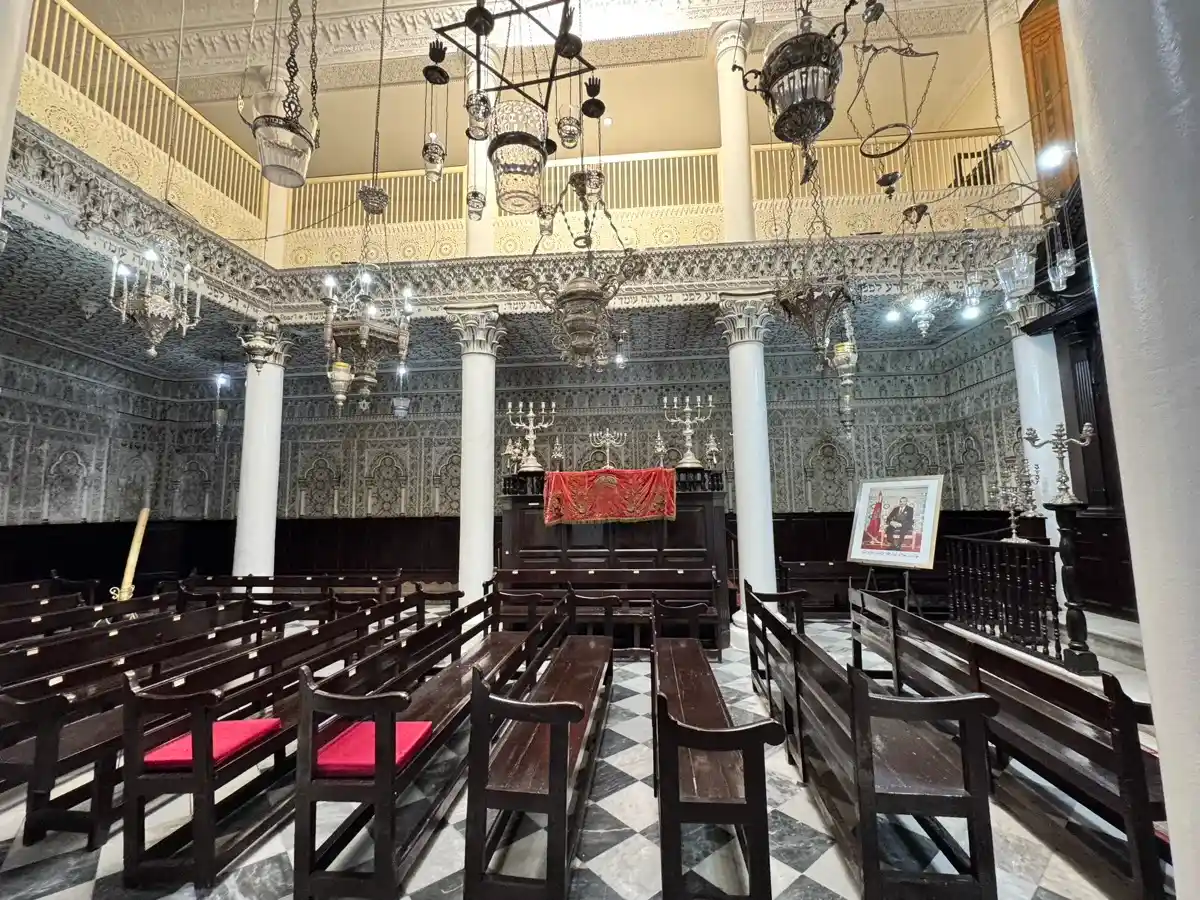
Along the way, I passed a sign mounted on a wall for yet another synagogue and museum, the Akiba synagogue and museum, but the door to it was solidly padlocked shut. That was the only mention of that synagogue that I saw anywhere.
But the Moshe Nahon Synagogue was very much open. And it’s a beautiful little synagogue.
I was the only one other than the doorkeeper and a police officer out front there when I arrived, but another couple came while I was inside the synagogue.
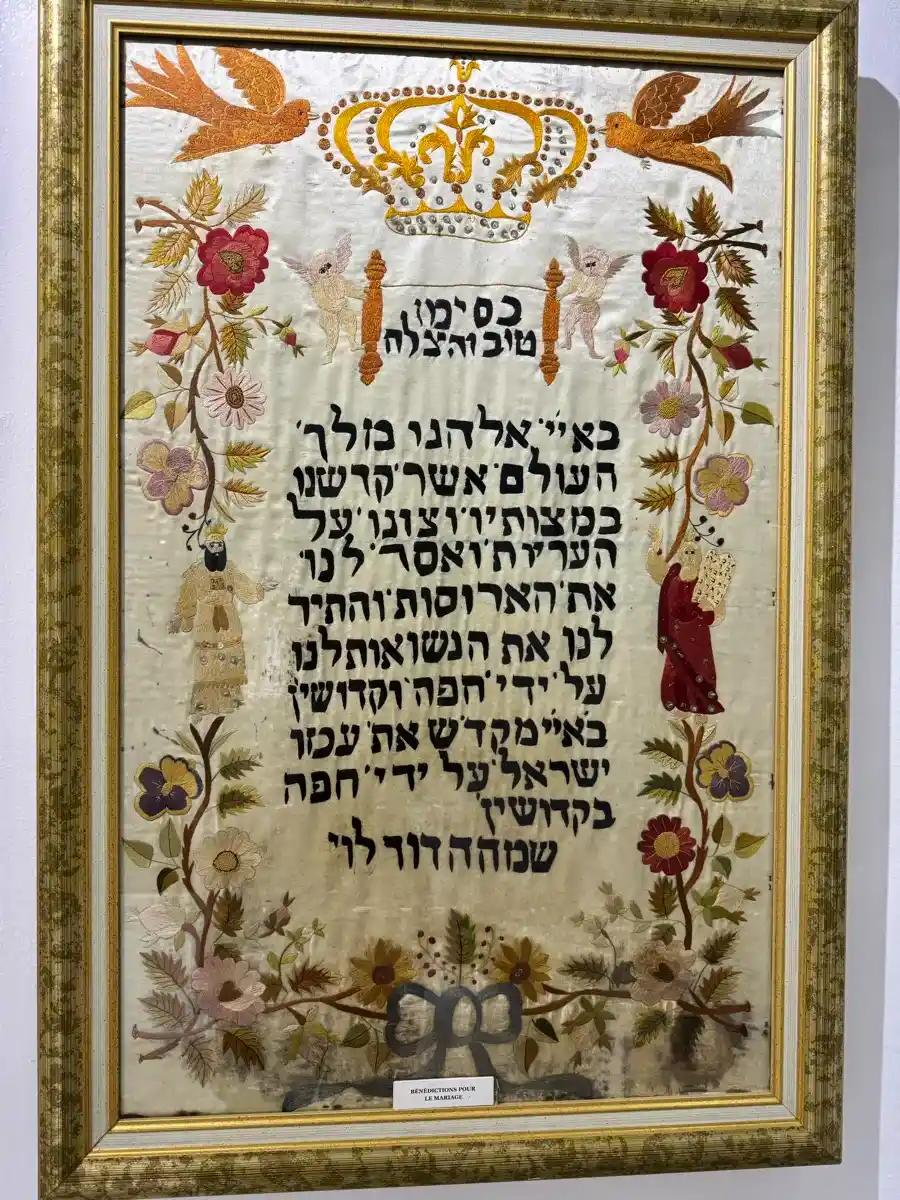
When I entered the synagogue, the doorkeeper came in and opened the doors to the ark to display two lovely Torah scroll covers.
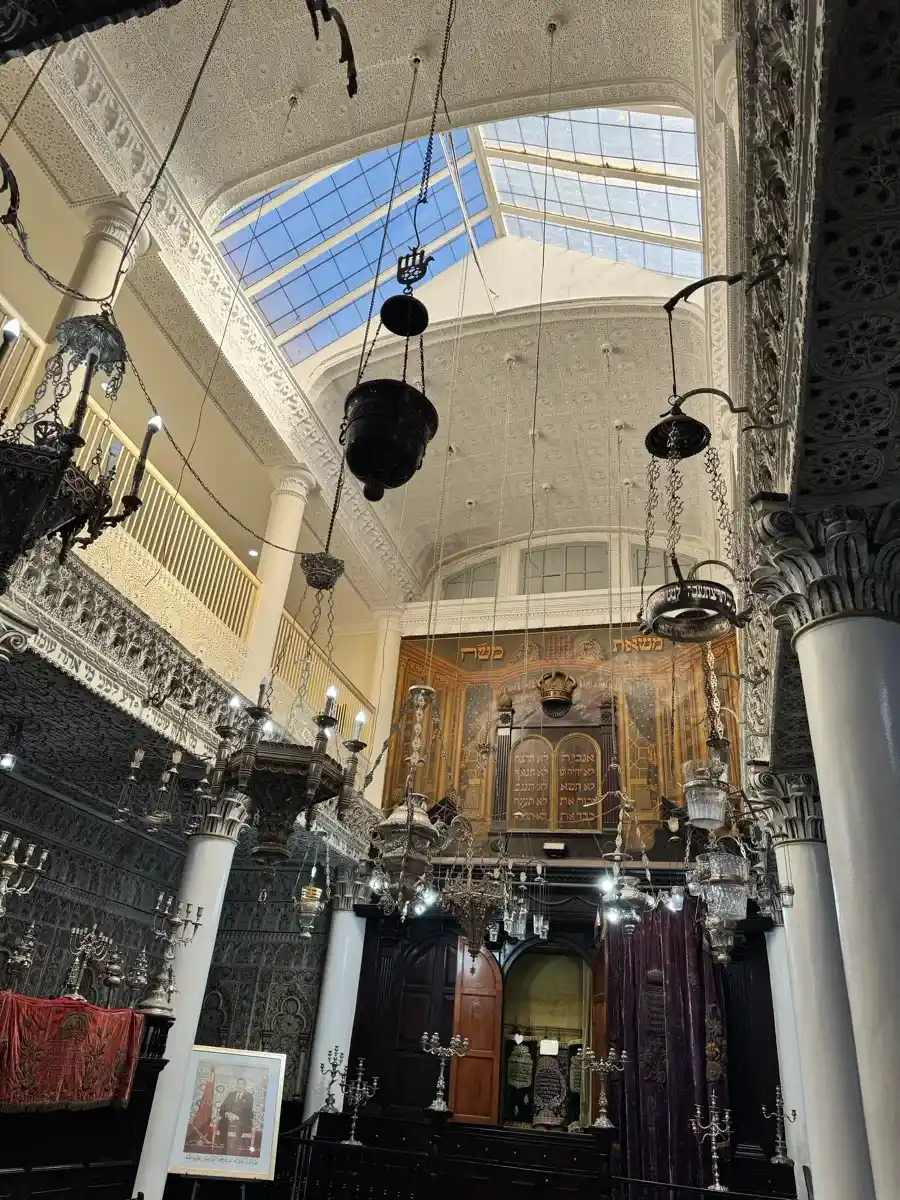
A portion of the sanctuary’s ceiling is a peaked, translucent skylight to let natural light in.
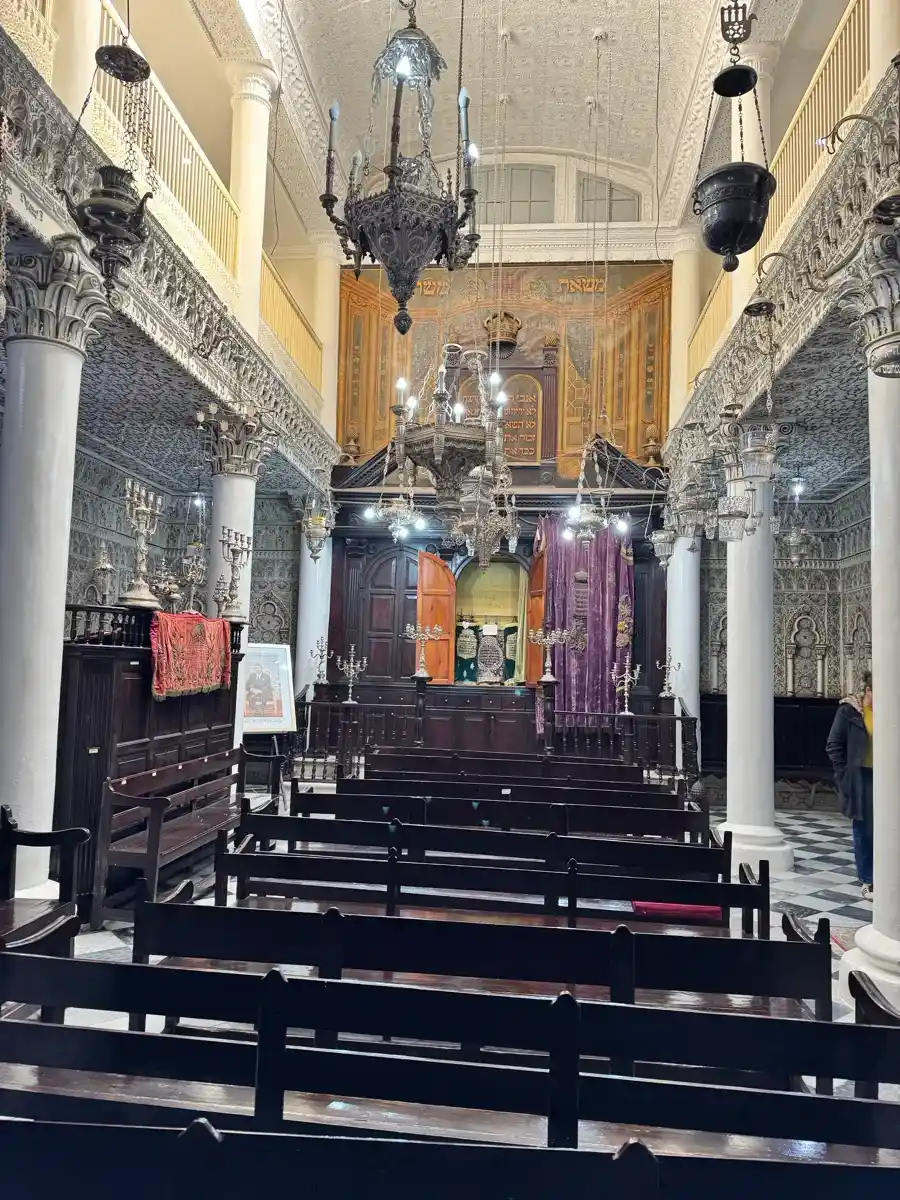
The small synagogue has several chandeliers, a large number of them considering the synagogue’s small size.
There are copies of a single-sided, single-page, English-language information sheet available for use in the Moshe Nahon Synagogue. It explains that it was built in 1878 by a banker in memory of his deceased father. At the time, there were about 8,000 Jews in Tangier, and the city had several synagogues.
According to the information sheet, the Nahon was frequented by the wealthy bourgeoisie. “The chandeliers were gifts from families in memory of deceased family members.”
Again, according to the information sheet, “On holidays such as [Yom] Kippur or Rosh Hashana, the men wore top hats, and the ladies wore beautiful hats, which often came from Mme Boissonet.”
A small room beside the sanctuary serves as a museum with a small collection of Judaica. There is a women’s gallery upstairs, but the doorkeeper said I couldn’t go up there.
The Moshe Nahone synagogue was another worthwhile visit.
More photos from the Moshe Nahone Synagogue:
Grand Socco
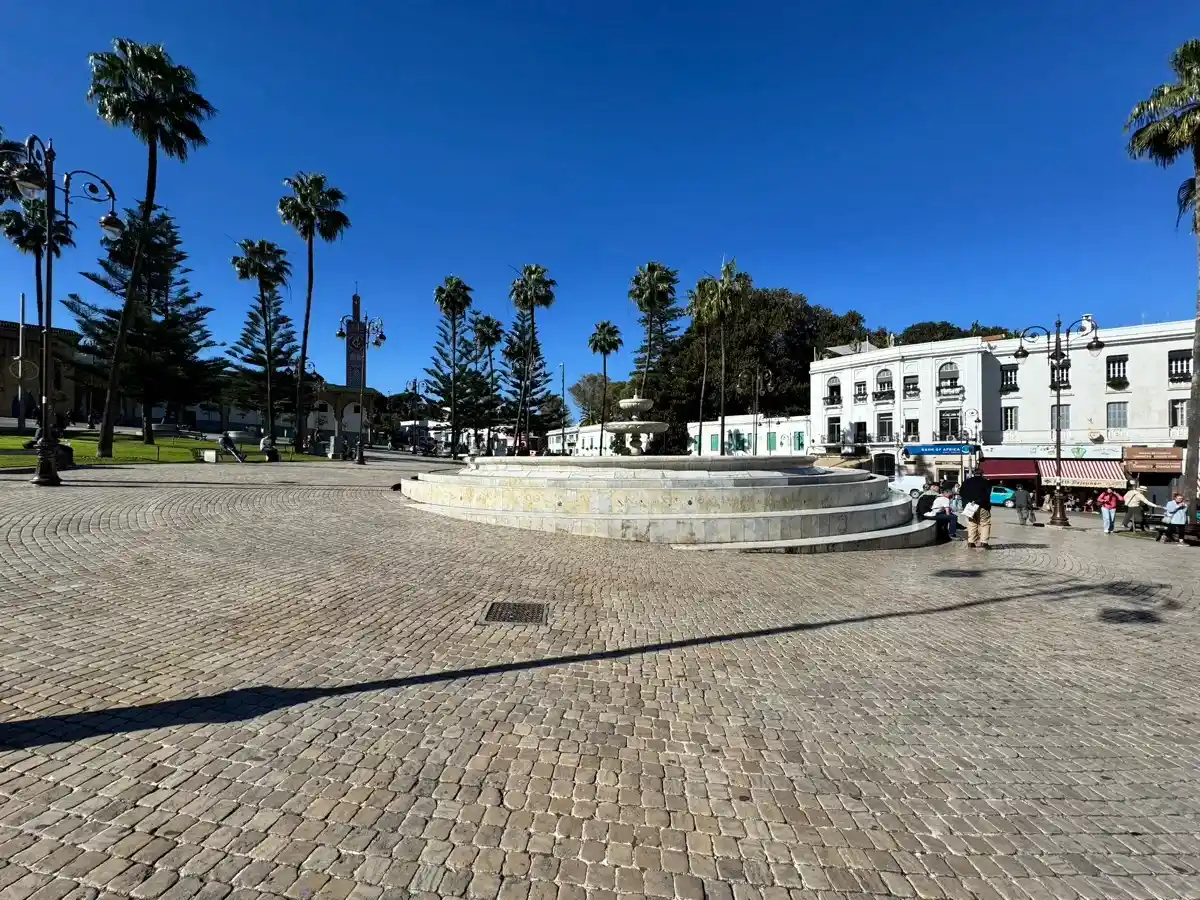
The Grand Socco is a public square in the rhetorical sense. It’s a circular public space inside a large-circumference roundabout. There is a fountain that wasn’t functioning today at its center. Beyond that is a large circle paved with paving stones. Beyond that are some lawns and trees. There are Joel-approved benches in Grand Socco. I spent a little time sitting on one.
Other than that, I can’t say I was overly impressed with the Grand Socco. It’s dominated by the traffic around it.
Marché Central
My final stop of the morning was the Marché Central, which is just inside the Medina, not far from the Grand Socco.
Basically, it’s a food souk. The Marché Central (Central Market) is sort of indoors. However, in one section, the roof is sheets of corrugated metal that overlap, but with vertical gaps between the overlapped sheets. Inside, it’s a maze of narrow laneways like a souk.
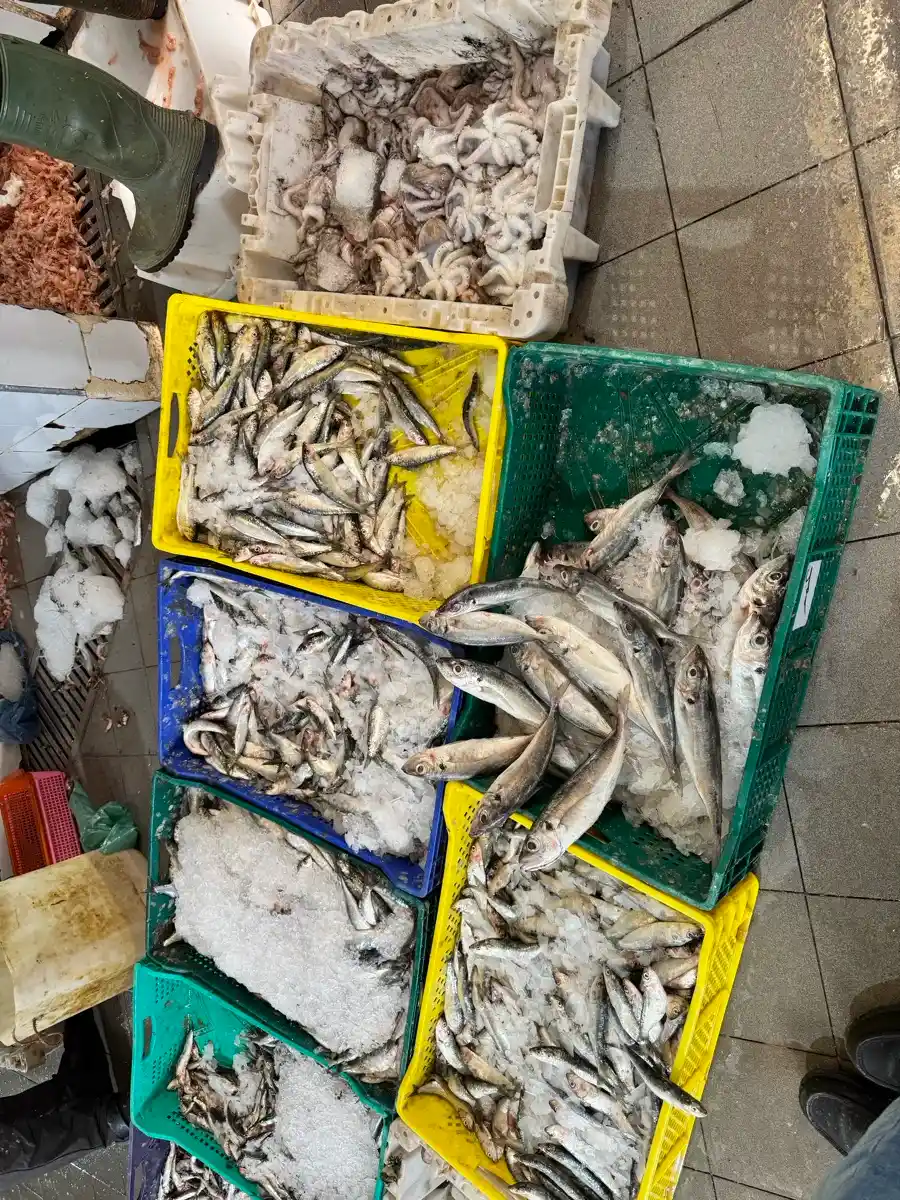
Some of the stalls were closed today. I don’t know if that was because it’s Friday, or if some stalls don’t currently have occupants. The seafood section was particularly sparse. I’d read some reviews praising that section.
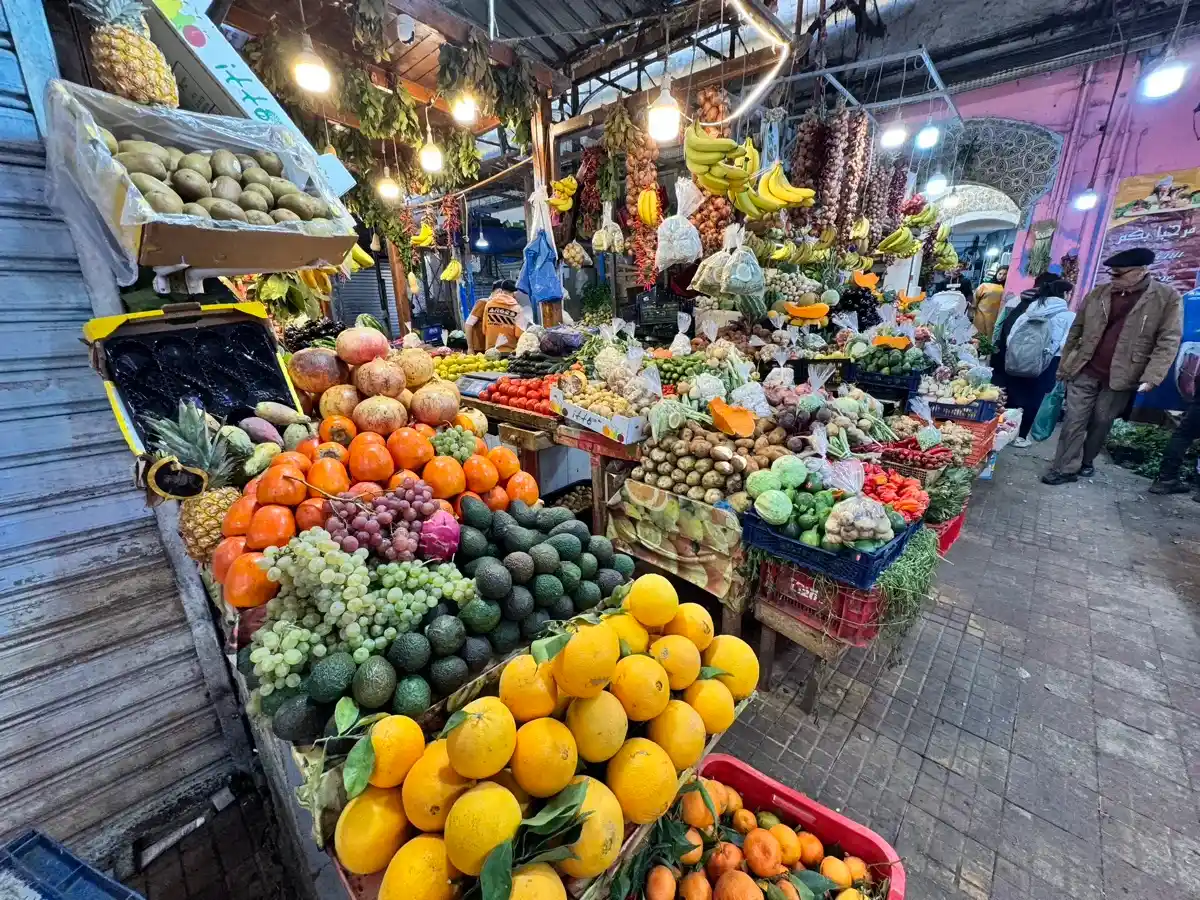
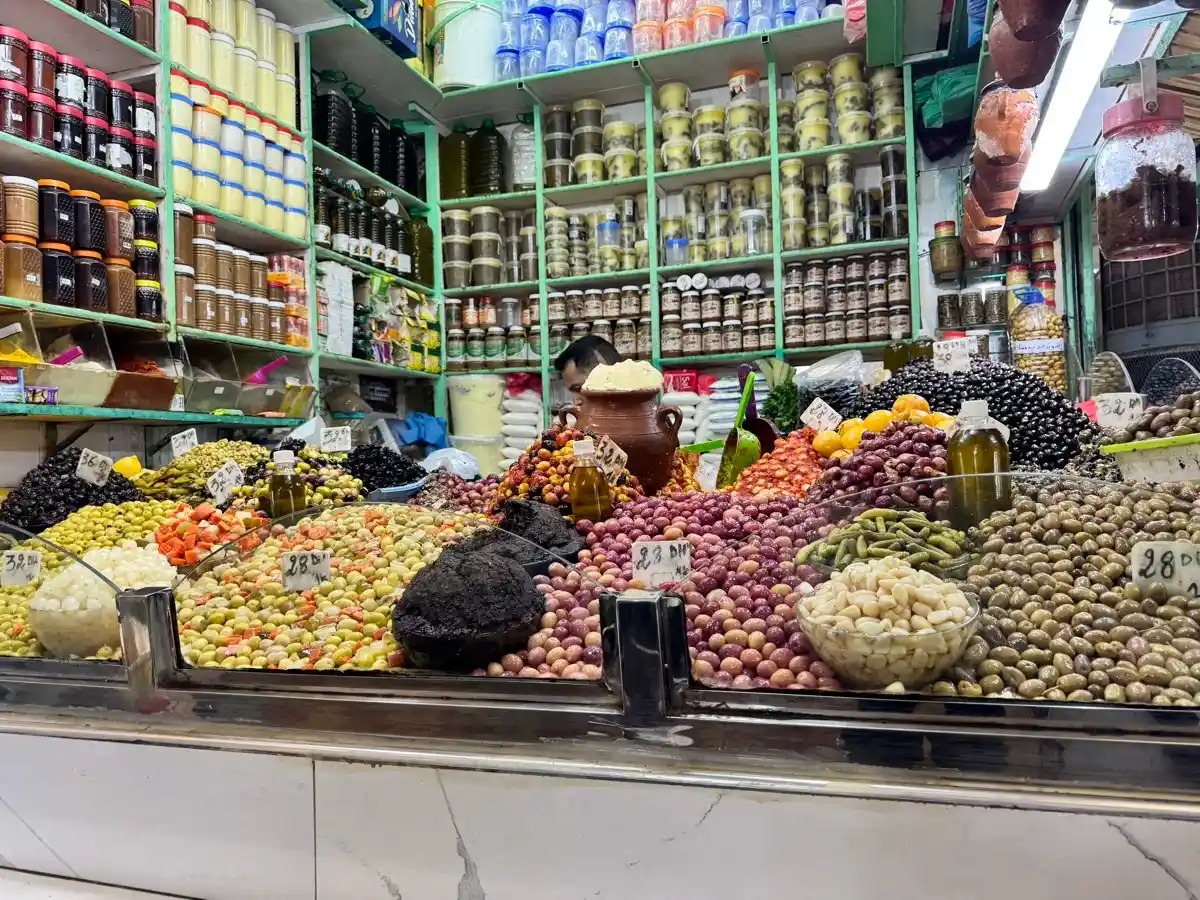
However, there were still several vendors selling fruits, vegetables, nuts, and a lot of butchers. Three or four stalls sold olives, with displays divided into sections loaded with olives of different types and colours.
It’s a nice, little, somewhat grungy market loaded with character.
And with that, it was time for lunch and to close off this post.
Discover more from Joel's Journeys & Jaunts
Subscribe to get the latest posts sent to your email.
Visits to Assayag Synagogue and Musée Dar Niaba
Visiting the Kasbah Museum and Ibn Battouta Museum
Despite asserting that it was a light morning, it was filled with sights of interest. The little synagogue was lovely, the camels a delightful surprise, the museum a charming piece of architecture (although the classic American style interior decoration I found a bit jarring, particularly so, I suppose, being a Canadian in 2026 rattled by the American government), and the market colourful. It seems to me, that if you just sat on a Joel-approved bench in front of the Strait of Gibraltar. or in a nice park for the afternoon, you would still have had a lovely day sightseeing.
It sounds like more than it was. Nothing was particularly large, so I didn’t spend much time in any of them. And they were all clustered fairly close together. But it was a lovely morning.