Seoul Forest and Hangang Park
This afternoon in Seoul, I visited two parks, Seoul Forest and Hangang Park. There’s not much to report on that. So this should, theoretically, be a short post.
Seoul Forest
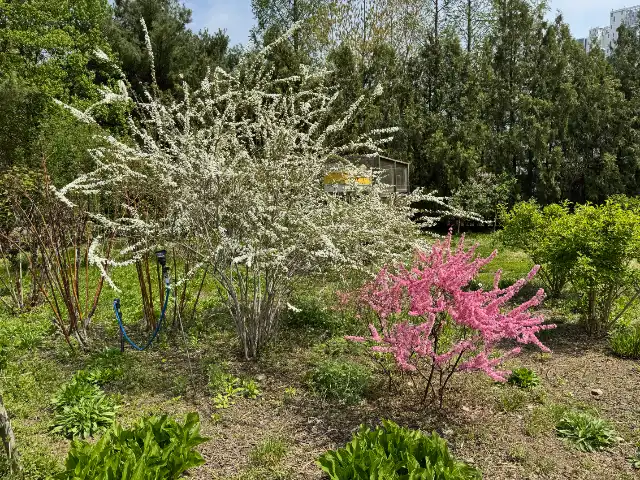
At one time, Seoul Forest was a royal hunting ground. But these are more enlightened times. The Korean royals no longer hunt there. That likely has less to do with animal rights than with the fact that the royalty isn’t what it used to be in Korea. The descendants of the royal family are still recognized as such, but the royalty no longer has any official role in the country.
Seoul Forest is now a huge public park. There is a large, peaceful, treed area, but there are also some playing fields, a honeybee garden with flowers appealing to honeybees, and other areas of flowers.
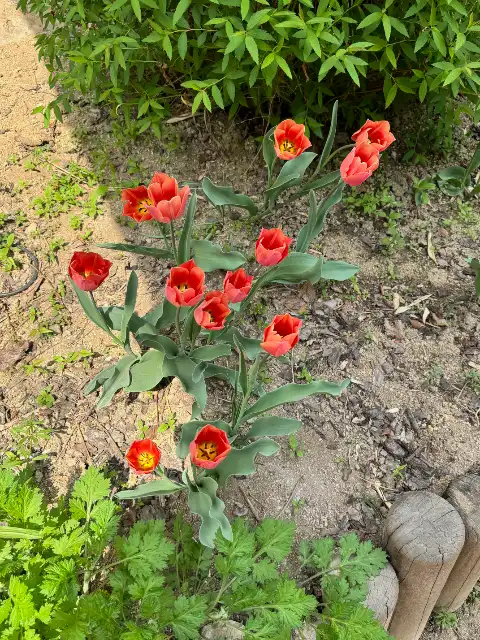
Two adjoining greenhouse buildings contain a butterfly garden and an insect garden. At least those were their names.
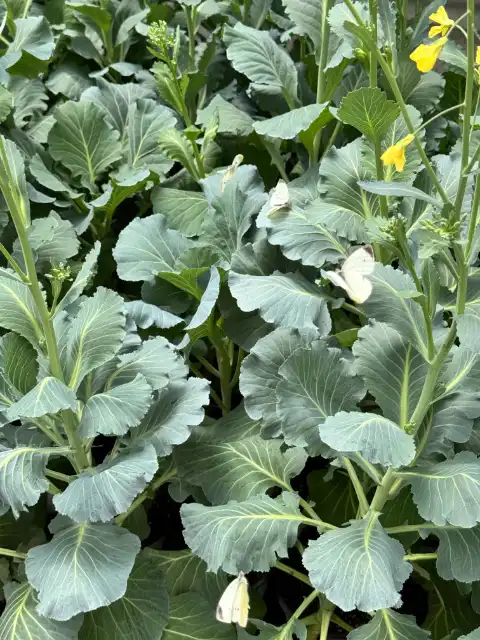
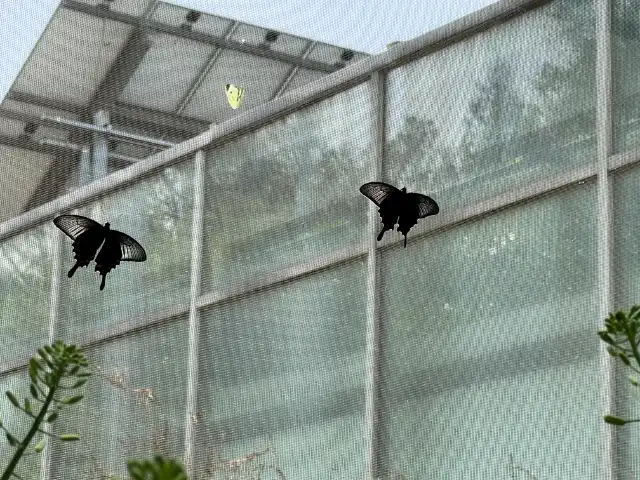
The butterfly garden in Seoul Forest contained mostly a population of a small white butterfly that did a lot of fluttering around. Because they darted around a lot, it was difficult to get a good picture of them. There were also a few butterflies of a mostly black species. They flew around a lot as well, but a couple affixed themselves to a window for a while. And another couple spent a lot of time hanging on a branch. So I was able to get a picture of those.
According to pictures on a sign in the building, there were also a couple of other species of butterflies there, but I didn’t see them. Don’t ask me the names of the species. The sign was only in Korean. I didn’t bother to get one of my phone-based translators to translate it for me.
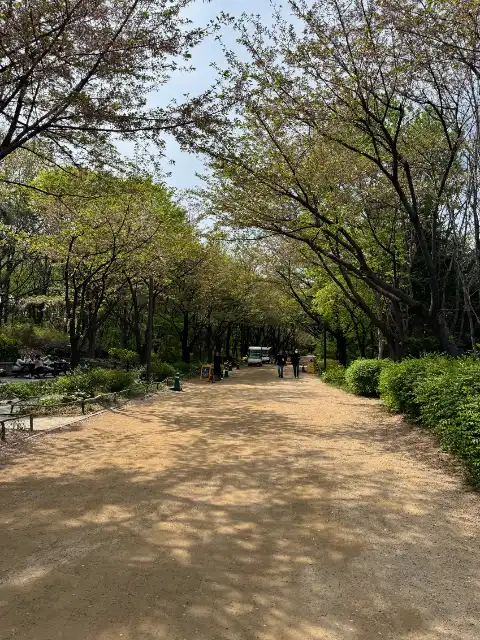
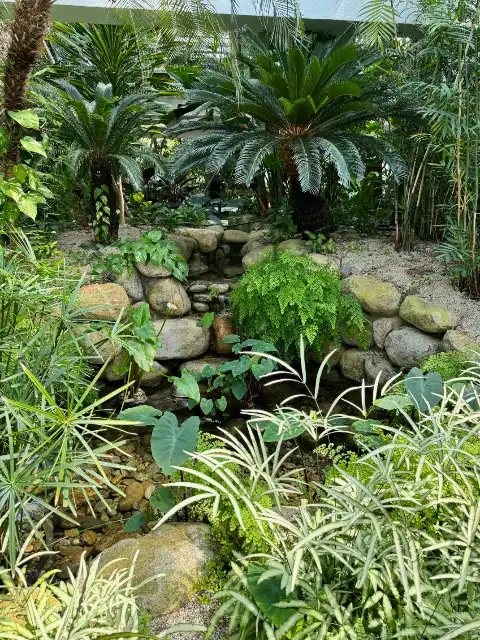
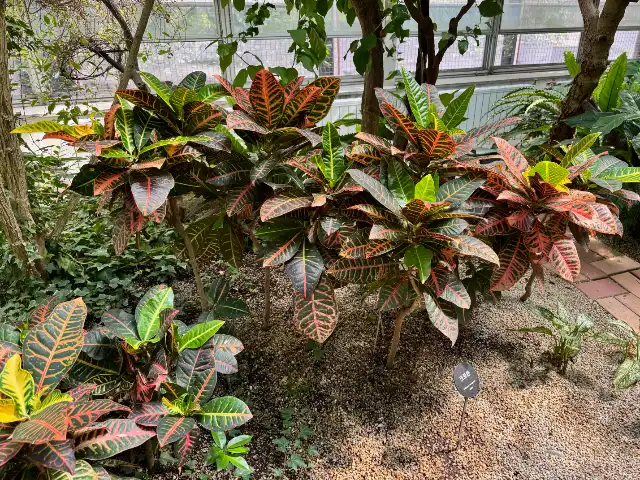
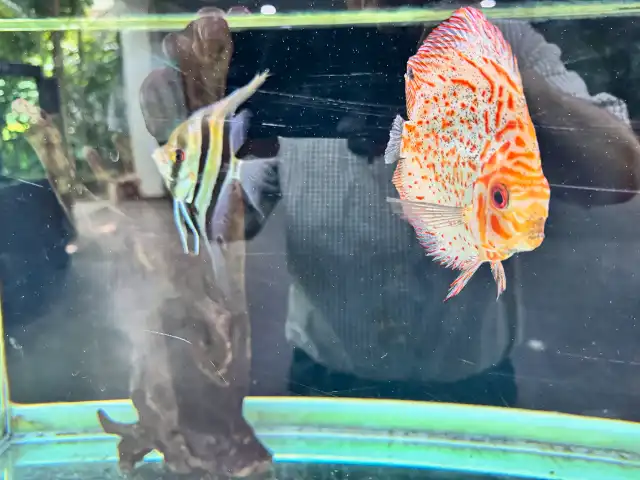
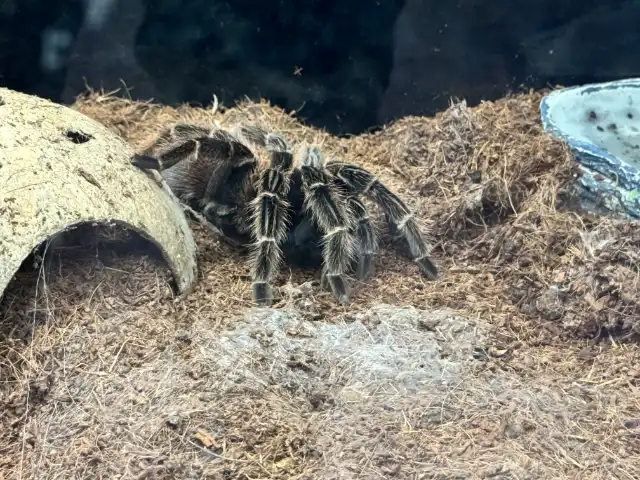
The insect garden was mostly a greenhouse with tropical plants. I didn’t spot any insects among the plants. However, there was a section at the back that had some aquariums with, not insects, but fish. To be fair, there were a few terrariums with insects. One held a large, hairy spider. Another held a large colony of what looked like particularly ugly beetles. I don’t know if they were, in fact, a species of beetles. The signage was, again, only in Korean.
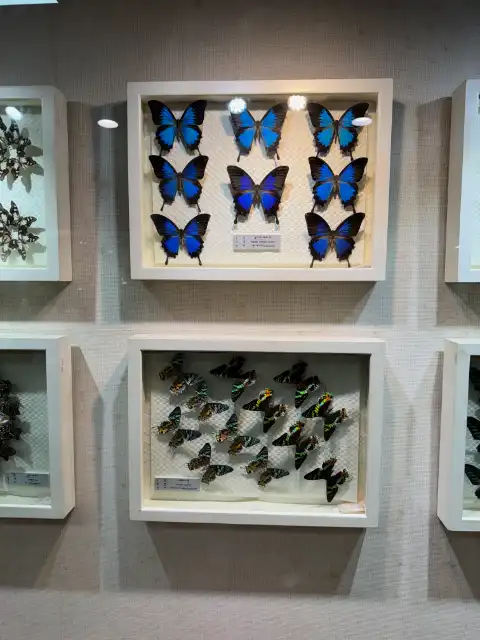
Ironically, I got my best look at some butterflies in the insect garden, not the butterfly garden. Although the ones there were dead, pinned to a board in a display case in a small black room. To be fair, butterflies are insects. So I guess they belong there. But if you’ve got a butterfly garden that’s separate from your insect garden, wouldn’t it make sense to put them in the former?
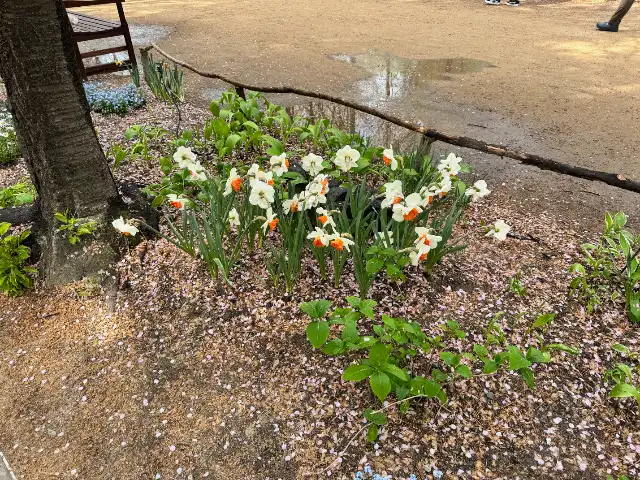
Seoul Forest also contains a double-fenced, large compound for sika deer. The public isn’t allowed in. We can look at the deer only through the fences or from an overhead pedestrian bridge. I don’t imagine the deer enjoy being cooped up in the compound, large though it may be. Nevertheless, I bet they hired high-priced lobbyists who were the ones who convinced the city to stop using it as a hunting ground. Heck, maybe they were even behind ending the reign of the royals.
There is a lot more in Seoul Forest, but a particularly large section of it was solidly fenced off. A sign said they are doing construction for the Seoul International Garden Show. The sign said the show starts May 1, 2026, which is not much more than two weeks away. The fence around the large area was still up, and where I could peer in, it looked like they were still hard at work. I hope they meet their deadline.
More pictures from Seoul Forest:

Hangang Park
As I understand it, there is a series of Hangang Parks that are collectively known as Hangang Park. They all run beside the Han River. I looked up the translation of “river” into Korean on Google Translate. As I suspected, the transliteration of the Korean word is “gang.” Hence, “Hangang” is “Han River.” So, it’s not surprising that the Hangang Parks all sit beside the Han River.
I entered the parks in what was called Banpo Hangang Park. I walked along a bit. I don’t know if I walked out of the Banpo Hangang Park and into another Hangang Park at some point.
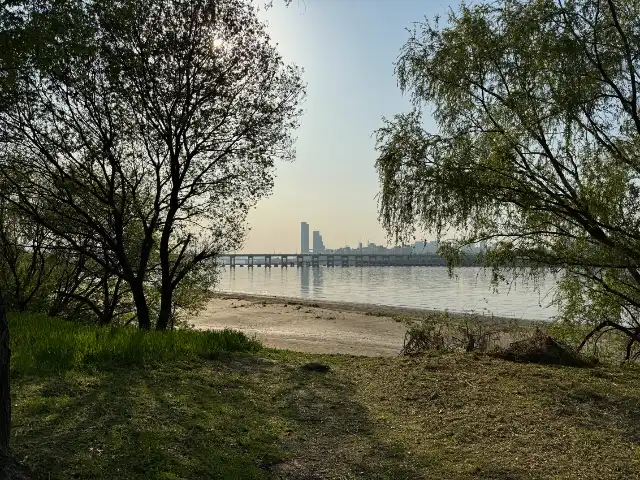
Where I entered, the ground was mostly concrete and paving stones.
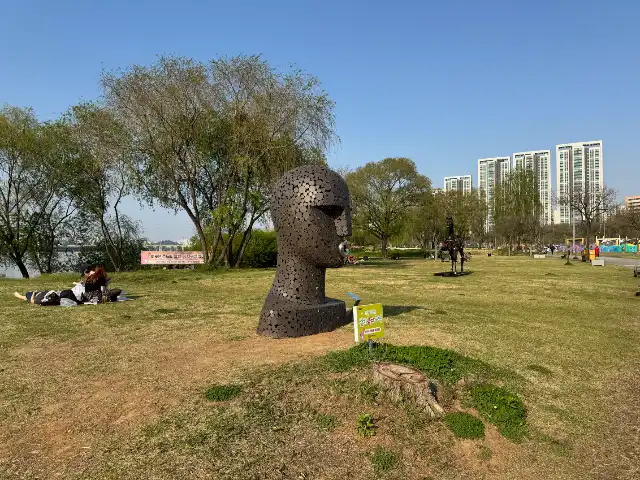
As I walked farther, I arrived at a sparsely forested area, passed some playing fields, and saw some modern sculptures. It was not spectacular, but mostly very pleasant and a good use of the city’s riverfront.
I didn’t spend a long time in Hangang Park because I got there late in the afternoon, and I wanted to get back to my hotel in time for happy hour.
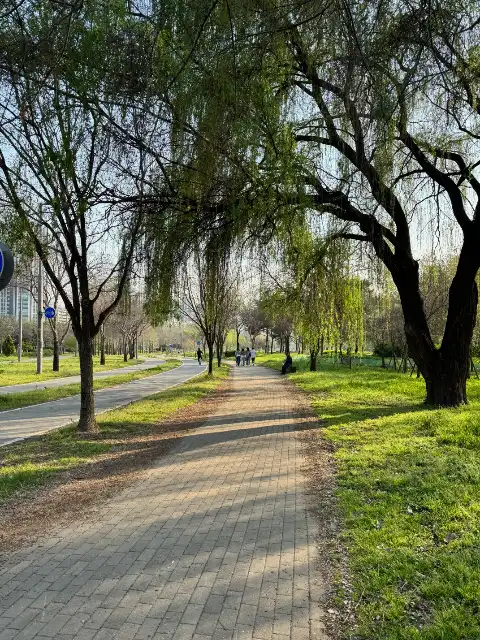
You might have noticed from this and this morning’s post, and my other posts from Seoul so far, for that matter, that I haven’t crammed as much into my days as I used to. That’s particularly true when compared to my earlier trips in this journal, but even somewhat compared to my more recent trips.
My slowing down as I age isn’t the only thing that’s responsible for that. True, it plays a big role, but on this trip …
Aside
Getting around Seoul
Seoul is very spread out. There are several high-rise clusters, but there are also a lot of row-rise neighbourhoods. And the occasional mountain, park, and river collectively take up a lot of the city’s space.
Wikipedia tells me that, as of the first quarter of 2025, Seoul had a population of over 9.6 million people. And that’s just the city proper. The greater metropolitan area then had a population of more than 26 million people.
So, it’s understandable that it is very spread out.
Most of the tourist sights are not tightly concentrated in just one area of the city. The city is so big that if you look at two dispersed locations on a map, the scale becomes so small that they look close. There’ve been times when I’ve looked at two places I’ve wanted to visit and thought, “Great. I should be able to walk between them in no time.” Then, when I check the walking route on a mapping app, I see that it would, sometimes, take me well over an hour.
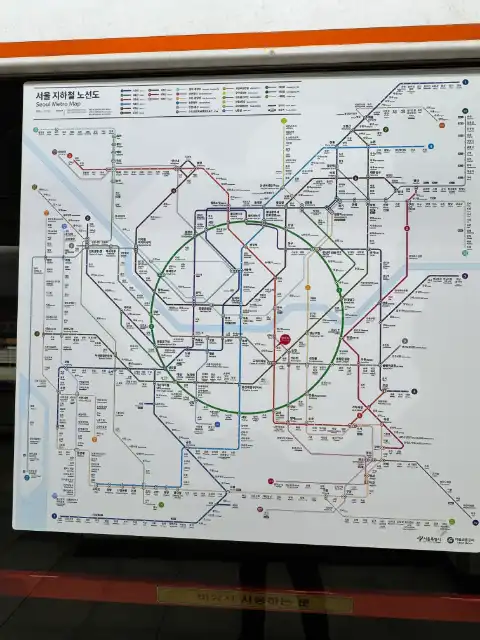
The subway system here is extensive. On the legend on a metro map, I counted 24 separate lines. The map looks like a schematic diagram for a bowl of spaghetti. There’s one circle line, but the others tend to make a lot of bends and twists, sometimes forming weird-shaped “U”s and “J”s.
Were it not for mapping apps providing transit routes that include subway rides, I’d never be able to find my way on the subway here. But I have already used them several times, without once getting lost, yet.
The problem is that most of the subway stops are widely spaced. So I often had to do a fair bit of walking to get to and from subway stations.
And, while there are lots of connections between the subway lines, a few of those connections require walking for a few minutes through long underground corridors.
Oh, and most stations have at least a few, and sometimes several entrances/exits. Long tunnels may connect the entrances/exits to the station. So, even if you are close to the entrance you need, it doesn’t mean you don’t have a long walk to get to the train platforms.
All of those exits are numbered. And mapping apps tell you which exit is closest to your destination. So, that part is easy.
The point is, it often takes a long time to get to where you’re going in Seoul. So far, I don’t think I’ve spent less than 20 minutes getting from my hotel to my first destination and between destinations throughout the day. Sometimes, it’s taken me as much as a little over three-quarters of an hour just to get from one destination to another, despite doing my best to group destinations within the same part of town as much as I can in the day.
The upshot is that the time required to get from here to there is cutting down on the number of sights I have time to see.
Discover more from Joel's Journeys & Jaunts
Subscribe to get the latest posts sent to your email.


If you said that you didn’t fit in as much as you have on past trips only because you wanted to hie get back to your hotel in time to fully enjoy Happy Hour, I would find that a perfectly adequate reason. Slowing down, enjoying a relax in some parks and hunting down more fish – well, also insects, river, forests, other wildlife – is a perfectly acceptable way to spend a trip for many people, and not only the more matured of us. Enjoy.
Relaxing has its joys and other benefits. It’s just that, after coming all this way, I feel I should see lots of stuff that is significantly different from what I can see at home. Yes, I know. I’m not always best at enjoying life.