Paying a Visit to London Zoo
This is my last full day in London. (I still have a half day here tomorrow.) It was time to visit the adorable beasts of the city at the London Zoo. (The ugly beasts of London are elsewhere. I don’t know where. I’m not especially familiar with British and London politics.)
Unless I did it during my first visit to London decades ago and have forgotten, I’d never been to the London Zoo before today. I got close a few years ago, though. On that trip, when I woke up on the morning I was to return home, I saw a message from Air Canada telling me my flight was delayed for a few hours.
I used that extra time to visit Regent’s Park, a large urban green space, a portion of which contains the London Zoo. However, even with the flight delay, I didn’t have enough time to give the zoo its full due, particularly considering that it’s rather pricey.
Today seemed like the perfect day to make up for that shortfall. Yesterday’s rain and foreboding, gloomy skies dissipated overnight. This morning, nary a cloud tainted the pure azure sky. So, off to the London Zoo it was.
London Zoo
Before getting into my experience at London Zoo, a brief aside:
Aside
Winnie the Bear
As most of you no doubt know, one of the things London Zoo is famous for is that it was the home of the late Winnie the Bear, the inspiration for Milne’s Winnie-the-Pooh.
A sign at the zoo told Winnie’s story. My innate Canadianness forces me to relate the tale despite it being generally common knowledge.
The real-life Winnie was named after Winnipeg, Canada. The sign explains that, “On August 24th, 1914, while en route overseas during World War I, Lieutenant Harry Colebourn of the 34th Fort Garry Horse Regiment of Manitoba and the Canadian Army Veterinary Corps purchased a black Canadian bear cub at White River, Ontario. He named her Winnie after Winnipeg, his hometown. The bear became the pet of the soldiers. While Lieutenant Colebourn served in France, Winnie was left in the care of London Zoo. In 1919, he gave her to the Zoo where she was visited and loved by many, including the Author A. A. Milne and his son Christopher. In 1926, A.A. Milne gave the fictional character Winnie-The-Pooh, named after Lieutenant Colebourn’s bear, to Christopher Robin and his friends for posterity. Winnie died at London Zoo on May 12th, 1934.”
Rest in peace, Winnie. Rest in peace.
London Zoo isn’t enormous. It is, after all, contained within the larger, but still not gigantic, Regent’s Park.
Nevertheless, its many animals get reasonably generous compounds with vegetation and, where appropriate, rocks and ponds.
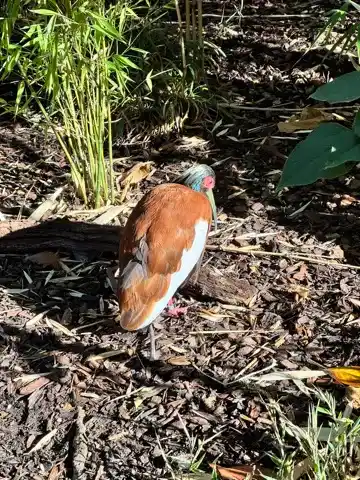
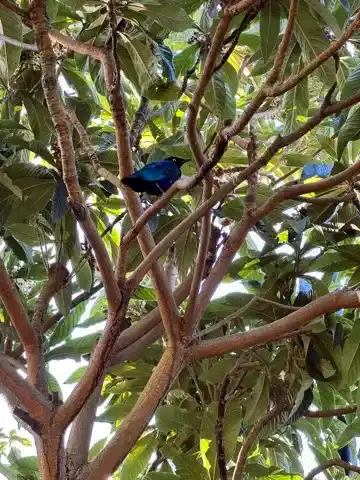
The first animals I saw were colourful birds. There were a few different species. I forgot to take a picture of the species’ names. So, so I’m sorry, I don’t have that information for you.
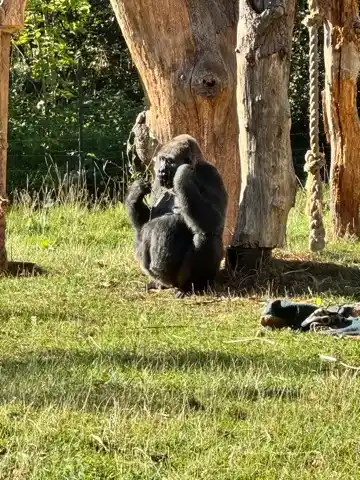
Then I went to the gorilla enclosure. The London Zoo has a troop of seven gorillas. Their birth years range from 1993 to 2024. (I realize that some people might visit here from the future. It’s 2026 as I write this.) They are big, beautiful beasts.
I then tried to see the Sumatran tigers. I couldn’t. They have a big enclosure, with a few different areas, including a glass-fronted indoor den where they rest. I looked hard, but couldn’t see them anywhere.
The pen for a couple of northern white-cheeked gibbons is immediately beside the Sumatran tiger enclosure. (I wonder if that leaves the gibbons a tad anxious.)
Entirely coincidentally, while I was there, a zoo employee was giving a brief spiel about white-tailed gibbons in general and the behaviours of their two individuals. They are mostly black, comparatively small apes. Fortunately, their cheeks are white. Otherwise, the name of their species would be quite confusing.
At the end of his talk, he said there would be a brief talk about the Sumatran tigers starting in five minutes. He suggested that the speaker would give some hints on where to spot them. (Apparently, I wasn’t the only one who couldn’t see them.)
I waited for the talk. The speaker used a wireless microphone. She said she’d wander around while she spoke about Sumatran tigers, and she’d let us know if she could find them. She couldn’t. She said they’d hopefully be around later in the day.
One of the facts she provided about Sumatran tigers is that they sleep up to 20 hours a day. Maybe that explains their absence.
After the talk, someone asked her when they’d be fed, in the hope that we could see them at feeding time. The problem is, they get fed only a few days a week. Thursday (today) isn’t a feeding day. What the what? I get cranky if I don’t have three meals a day. I’d be furious with that feeding schedule.
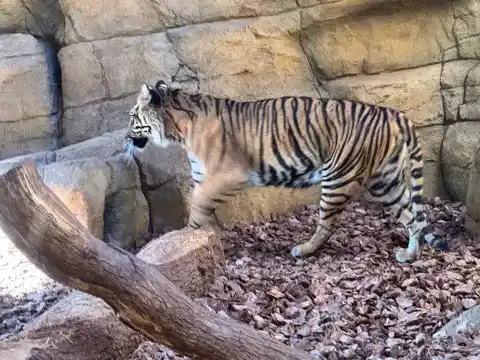
Fast-forwarding, before I left the London Zoo, I returned to the tiger area. There they were, in their glass-fronted, enclosed den. They are beautiful orange-and-black-striped creatures.
Oh, that reminds me. The zoo person said that their coloration provides camouflage. She said that surprises many people because their habitat is mostly green, but their stripes are orange and black. However, most prey of Sumatran tigers are colour-blind. Hence, they see the tigers and the vegetation as shades of grey.
Okay. What say we speed this up, shall we? I can’t go into depth about everything I saw at the London Zoo. I’d miss my flight back home tomorrow.
Here’s just a quick list of some of the species that I remember because I took pictures:
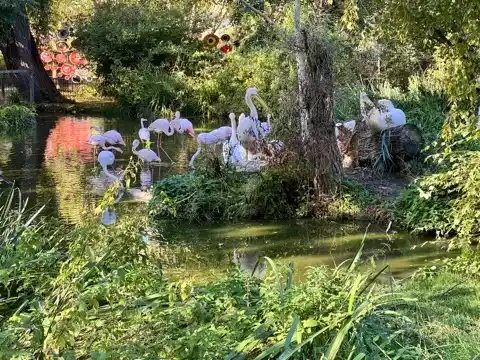
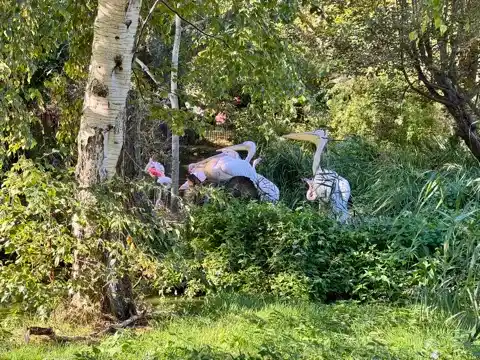
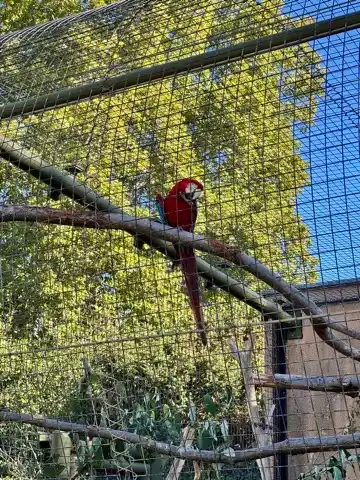
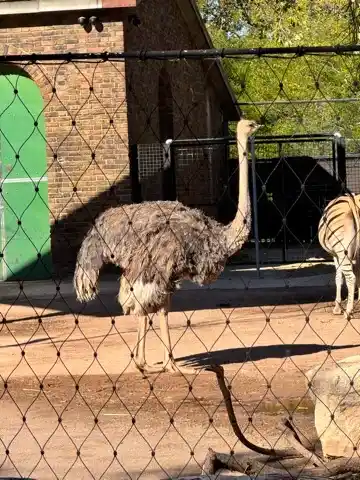
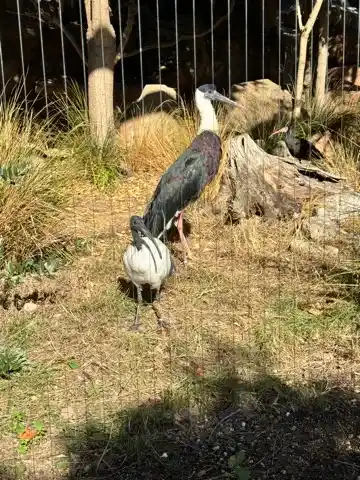
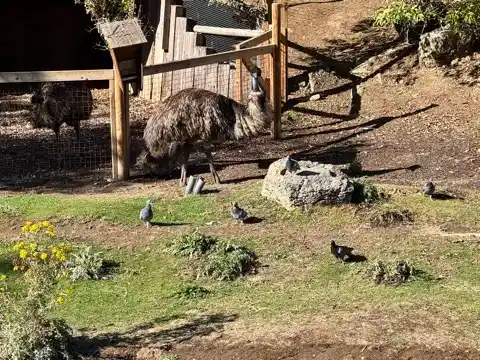
- A variety of additional birds are spread out in different areas of the London Zoo, including flamingos, a green-winged macaw, great flamingos (that’s what they’re called, not that they’re necessarily great), great white pelicans (likewise), ibises, ostriches, and emus.
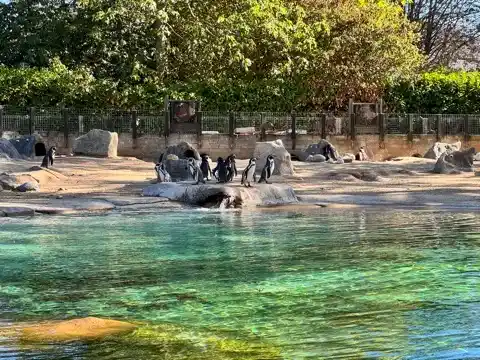
- Penguins. Yes, I know penguins are birds. But I feel they need special mention. There are several of them in an enclosure at the London Zoo. They’re a little standoffish, but incredibly cute.
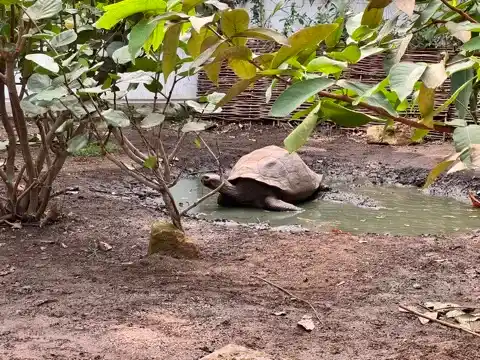
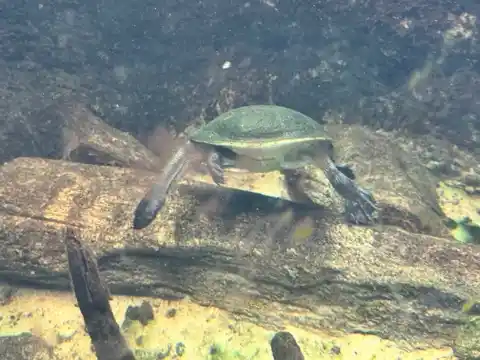
- Turtles and tortoises.
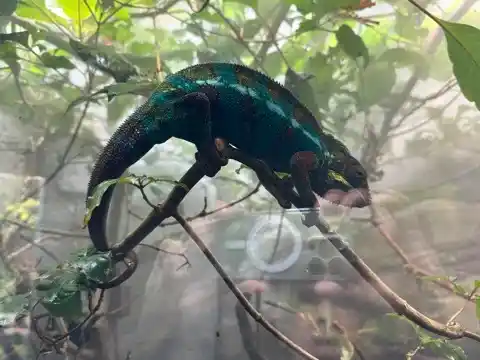
- A panther chameleon. (That’s the name of the species. It’s not a mix of panther and chameleon. That would be quite something, wouldn’t it?)
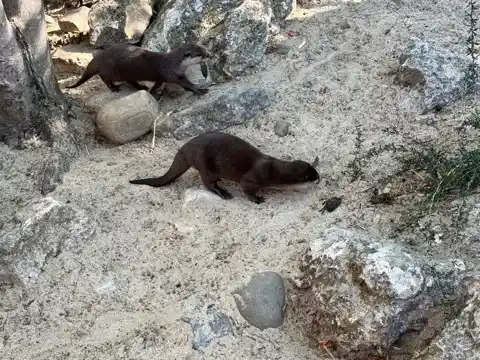
- Asian small-clawed otters.
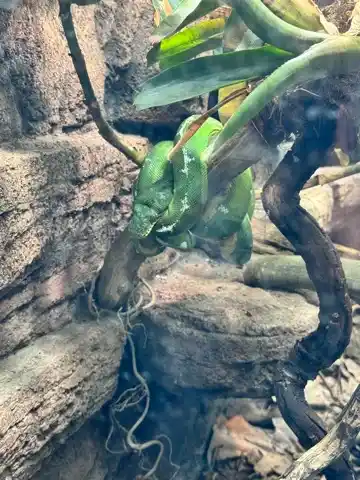
- A snake and other reptiles.
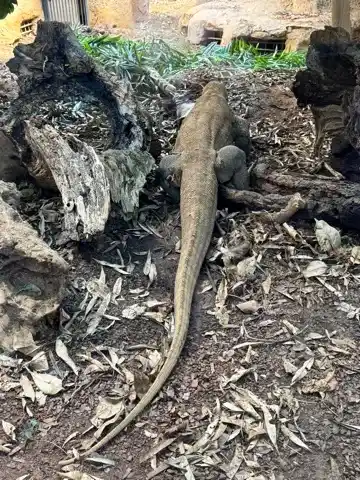
- A Komodo dragon.
- Butterflies in a warm, heavily vegetated room. The butterflies fluttered about too rapidly for me to capture decent pictures of them, but they were beautiful. In particular, a mostly blue species was spectacular. A few times, I tried to photograph some butterflies zooming around in the vegetation. As I attempted and failed to get a picture, another butterfly, sometimes one of the blue beauties, flew rapidly past me, a few centimetres from my face, too quickly to re-aim my phone camera. I also tried videos and failed at that, too.
- Zebras.
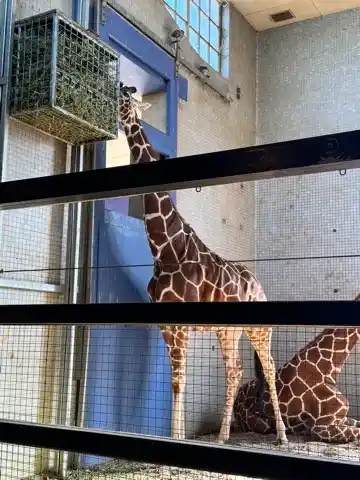
- Giraffes.
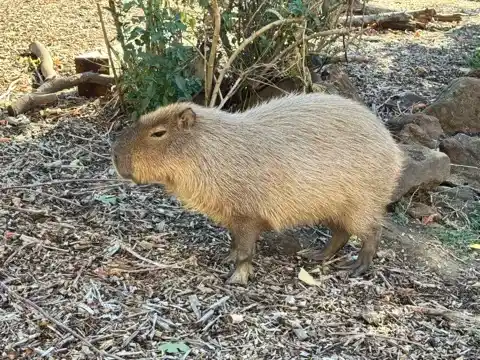
- Adorable capybaras.
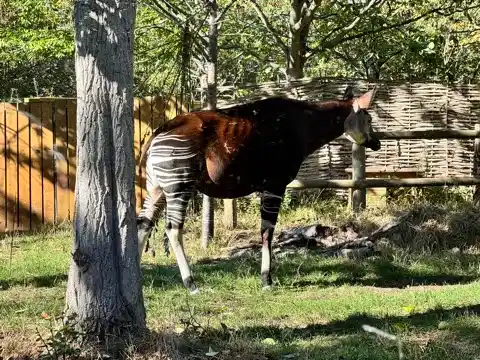
- Okapis. The okapi is a bizarre species. Their legs have black and white stripes, as if they stole them off a zebra that was parked at the side of the road. Their torso is solid brown and appears like it was borrowed from a cow. Their head looks kind of like they found a spare deer head lying around and didn’t want it to go to waste.
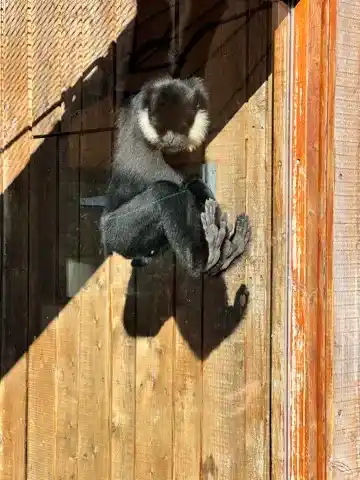
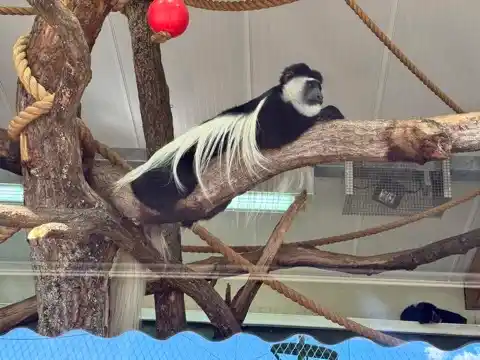
- A beautiful colobus, which is a lovely black monkey with a fringe of long white hair running along its sides.
- There was a pygmy hippo, but it kept to the back of its enclosure, inside an open-front shed. I couldn’t get a good picture.
I saw signs saying that the London Zoo also has lions. I never found them. It wasn’t like the Sumatran tigers. It’s not that I couldn’t find them in their compound. I couldn’t find their compound. I found the zoo difficult to navigate.
I had a paper map of London Zoo they handed out at the entrance. And there were large maps on posts scattered about. I consulted both a few times. However, lacking GPS assistance, my navigation skills are nonexistent.
I seem to recall being slightly (but only slightly) better at it when paper maps were the only option. But that skill seems to have atrophied in me.
(Note to London Zoo: If you have an app that provides GPS mapping to the various species, please make its existence more apparent. If not, well, hint, hint.)
Who knows how many other species I inadvertently missed? If you’re the person who has that information, please tell me.
All in all, the London Zoo is very well put together. And the animals appear to be well cared for.
The zoo is part of the ZSL, which is short for “Zoological Society of London.” The zoo’s website states that ZSL is “an international science-driven conservation charity, working to restore wildlife in the UK and around the world.”
I felt London Zoo was worth the somewhat pricey visit. (ZSL is a charity. The money goes to both the upkeep of their zoos (they have another zoo in addition to London Zoo— and their international conservation activities.)
More pictures of animals at the London Zoo:
Discover more from Joel's Journeys & Jaunts
Subscribe to get the latest posts sent to your email.


A wealth of wondrous animals! Happy to hear they have enough room and care to thrive, all those fellows. Capybaras really have the best shapes, don’t they? Gotta love them. And that Okapi! I don’t recall ever seeing one before. Stranger than fiction, those guys. I wouldn’t have believed it if it weren’t coming from a reliable source. Unless your blog has been co-opted by an AI agent, that is. You would have a lot of fun thinking that creature up. I knew about Winnie the Pooh’s Canadian connection, of course, but I did not retain the fact that A.A. Milne and his son encountered the bear in the London Zoo. There you go. Lovely day so far, it sounds like.
Oh my god! What if not my blog, but I have been co-opted by an AI agent and I don’t really exist?
Okapis do seem like rather wild and wonderful amalgamations, don’t they?
I love capybaras. I think they’re my favourite rodents. In fact, they’re one of the very few rodents I like.
All in all, an amazing amalgam of animals at the London Zoo.