Al Batha Museum and a Bit of the Fez Medina
As suggested by the title of this entry, I’m now in Fez, Morocco. I didn’t have a full afternoon here today, but I managed to go to the Al Batha Museum and dip a bit into the Fez Medina.
I arrived in Fez, Morocco, after a 50-minute high-speed rail ride from Tangier to Kenitra, a connection there, and then a two-hour and 25-minute regular train ride to Fez.
The first train was uneventful and exactly on time. My connection time was supposed to be 18 minutes. The train to Fez left from the same platform as I came in on from Tangier. However, the second train was 14 minutes late, so I had 32 minutes to wait on the platform, but I was able to snag an unoccupied seat on a comfortable bench.
The train lost no more time. In fact, it made up some time. It arrived ten minutes late. If it were Via Rail, Canada’s passenger rail service, that would be considered early.
Aside
Fez by Any Other Name
For the most part, I will spell the name of this city as Fez. That’s the most common English version of the name. However, the widely used second language in Morocco is French, not English. In French, the name is Fès.
Both of my guidebooks, which are, naturally, in English spell it as Fez. My walking tour app spells it Fes, i.e., without the accent. Google Maps and Apple Maps are inconsistent. Sometimes they spell it Fez, sometimes Fes, and sometimes Fès.
For these purposes, Fez it shall be.
Al Batha Museum of Islamic Arts
First of all, if you’re in Fez and searching for this museum, search Google Maps for “Dar Batha Museum” or Apple Maps for just “Dar Batha” without the “Museum.’ If you search for “Al Batha” with or without the “Museum” won’t find it. At least, it wouldn’t work for me today. Maybe they’ll updated it at some point.
My walking tour app also calls it Dar Batha Museum.
But the museum has a snazzy website, including the option of English pages. It calls itself “Al Batha Museum of Islamic Arts.” I figure that if anyone should know what the museum is called, it should be the museum.
Google AI tells me that “dar” is the English transliteration of the Arabic word for “house,” whereas “al” is the transliteration of the word for “the.” So, “Al Batha Museum” seems appropriate.
I took a taxi to the Al Batha Museum because it would have taken close to an hour to walk there. Normally, I wouldn’t mind an hour’s walk as an introduction to a new-to-me city, but I didn’t get started in Fez until mid-afternoon, so I wanted to get there faster. I mention this mainly as a segue to suggest that you keep reading until the end of this post to learn about the adventures that Fez taxis are.
So, you might ask because you’re the sort of person who might ask, why did I start with the Al Batha Museum? One of my guidebooks, calls it a “Top Experience” and provides more information about it than about anything else in Fez. (By the way, it calls it “Musée Al Batha.”)
Also, the museum is closed Tuesdays. Today is Saturday. I have a day trip booked for Monday. So, it was either this afternoon or tomorrow because I leave on Wednesday. I thought I had enough time to take in the museum, but other clustered sights in Fez. particularly its Medina, probably require full days and then some to explore them.
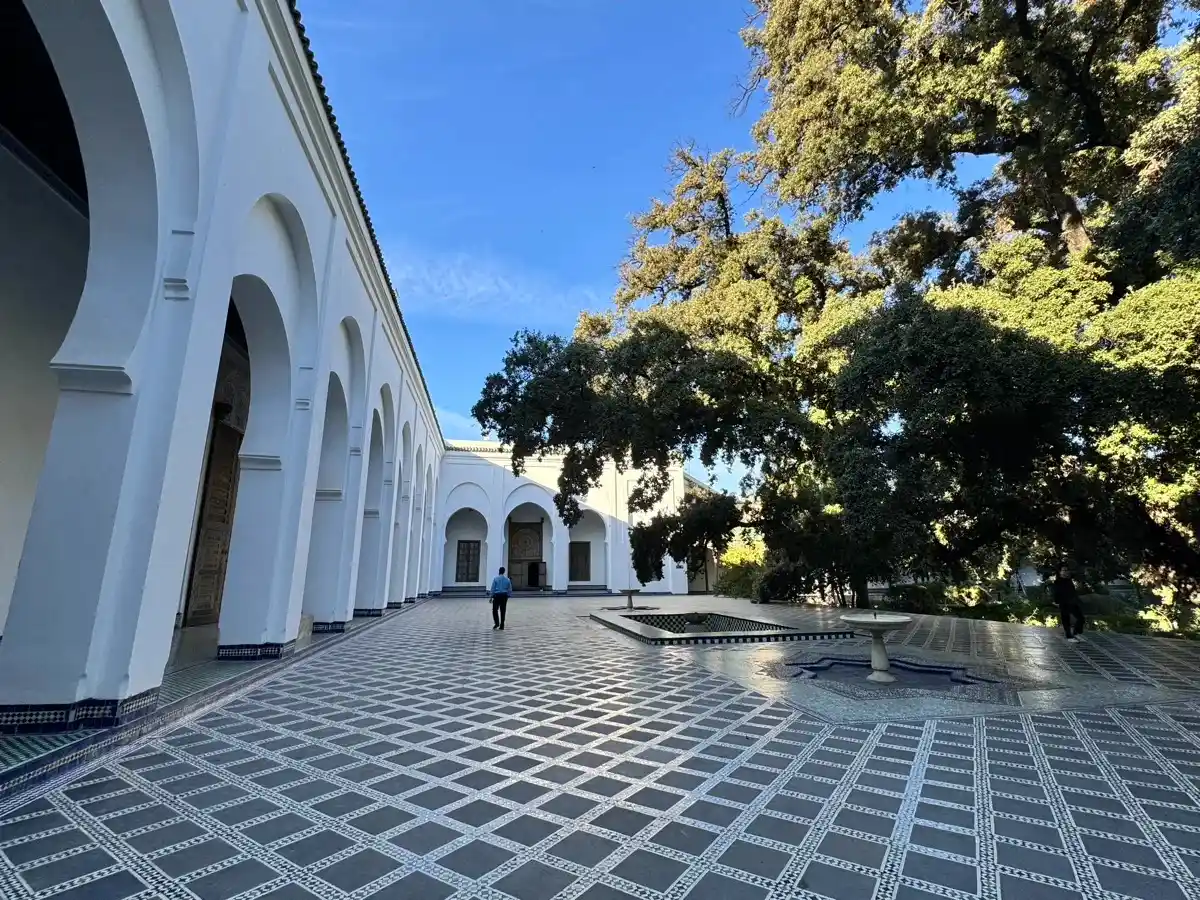
The Al Batha Museum is in what used to be a royal summer palace that was built in the 19th century. The exhibits are in two buildings facing each other with a walled outdoor area between them. In front of each building is a beautifully tiled terrace with fountains. None of the fountains were running today.
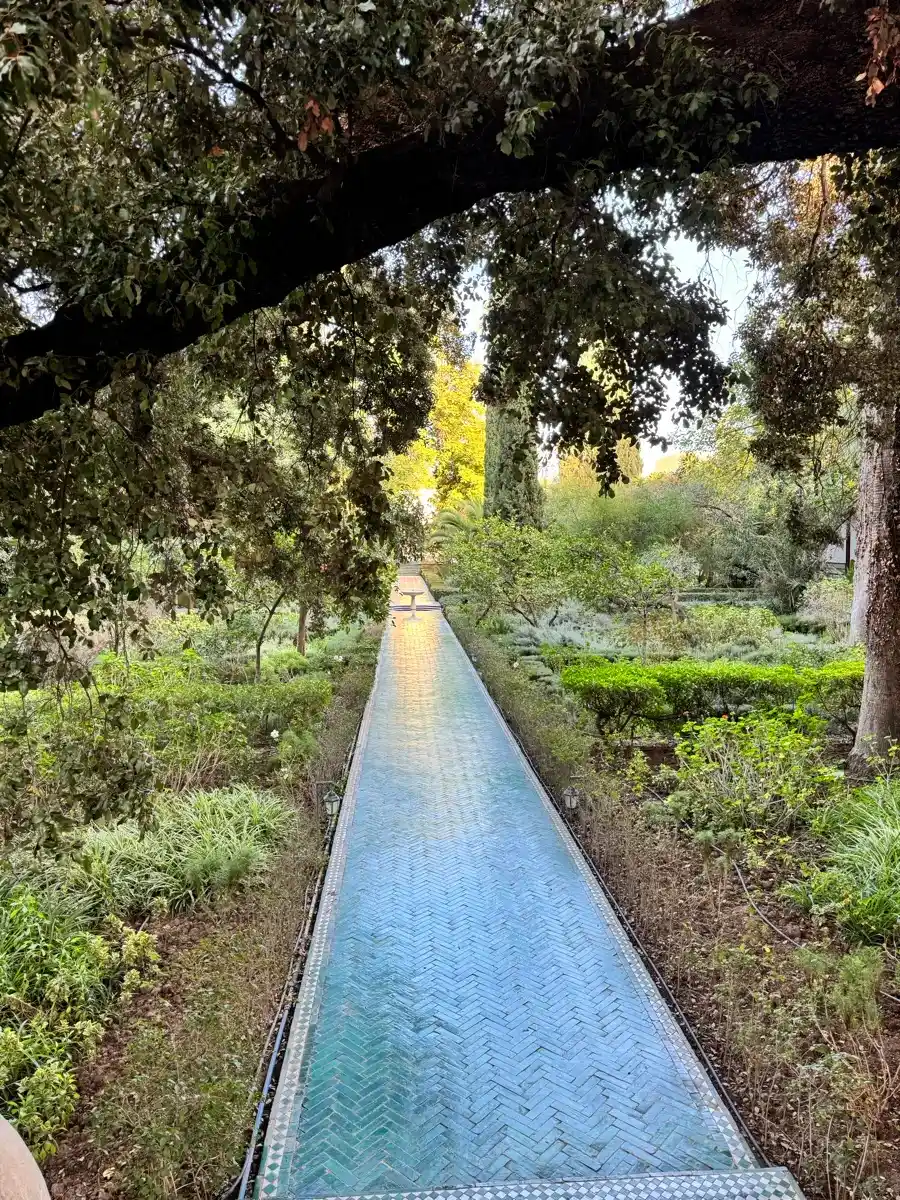
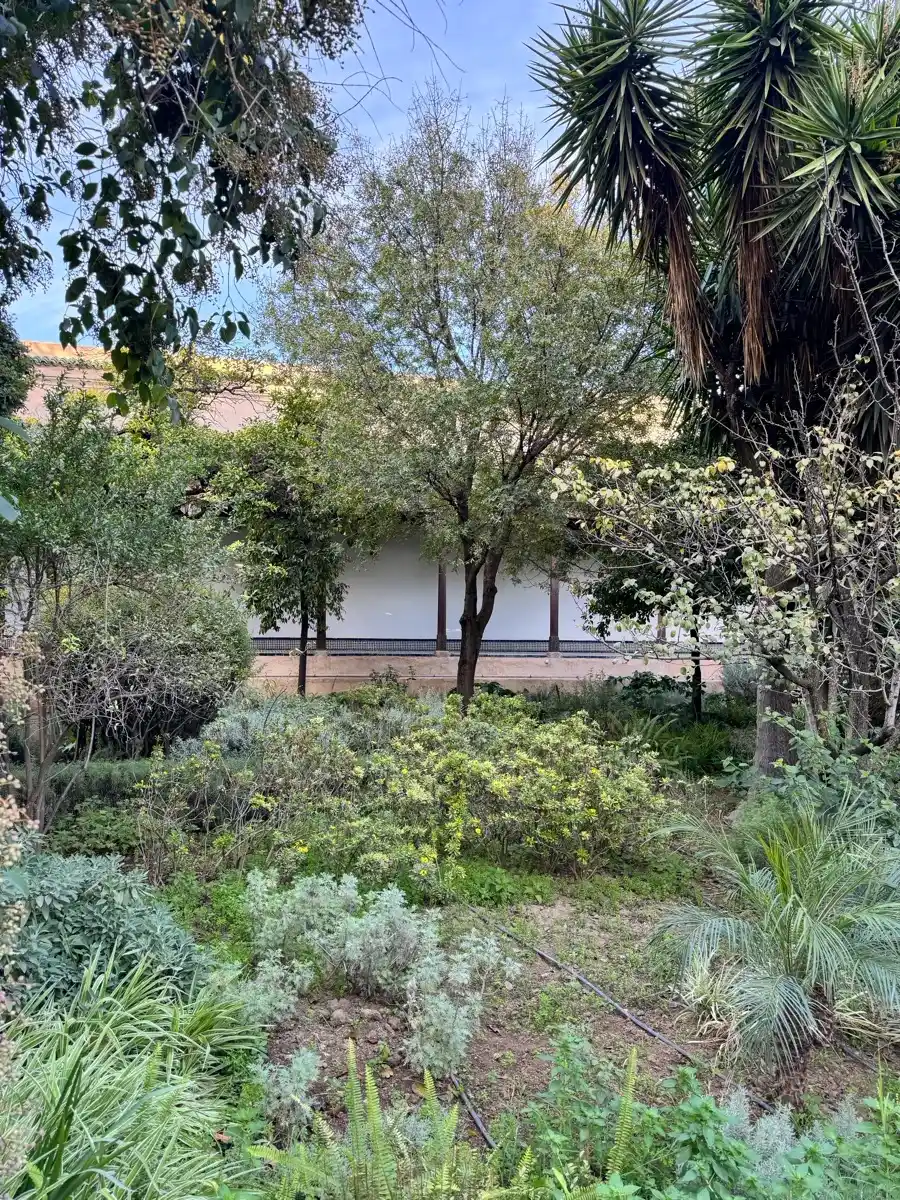
The two terraces are separated by a large, glorious Andalusian garden filled with trees, bushes, flowers, and a small, also dry, fountain.
The exhibits are in a few small rooms in each of the buildings. They explore the history of Fez and its Islamic culture and its roots.
All of the text in the Al Batha Museum is trilingual: Arabic, French, and English. So, that was handy for me.
A sign near the start of the museum states that there has been a human presence in Morocco for a million years. (I assume they mean broadly hominid because Homo sapiens hadn’t yet evolved a million years ago.) Remains of the oldest Homo sapiens, dating over 300,000 years, were found at the Jbel Irhoud site in the El Youssoufia region, near Marrakesh.
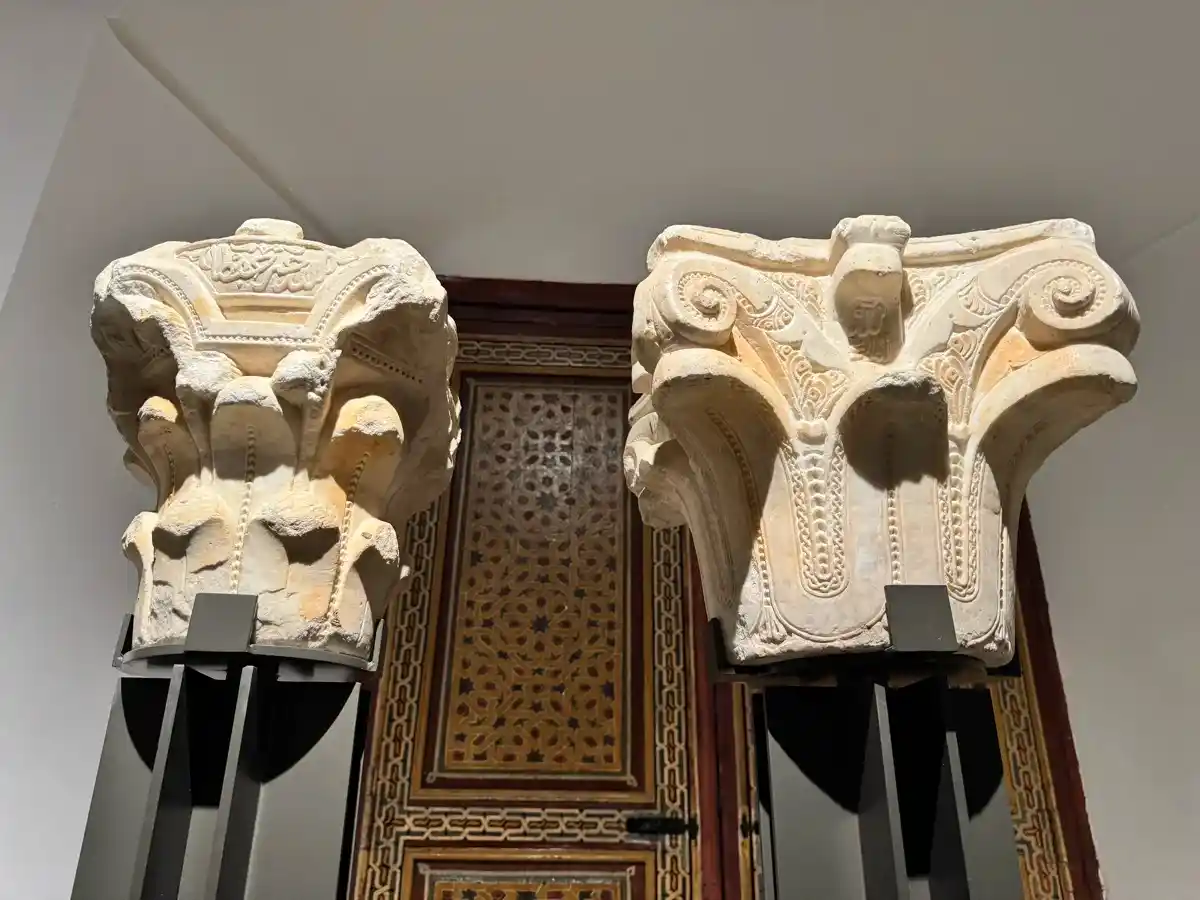
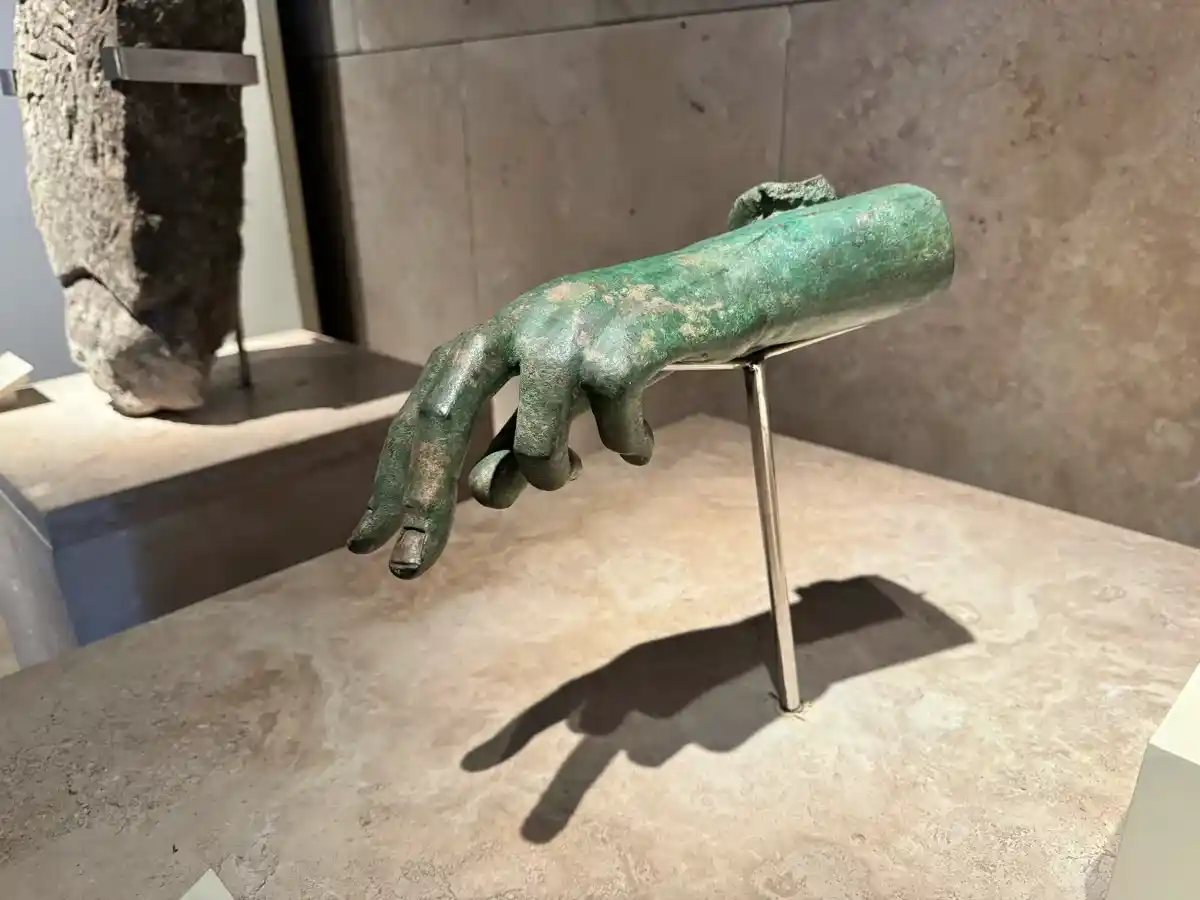
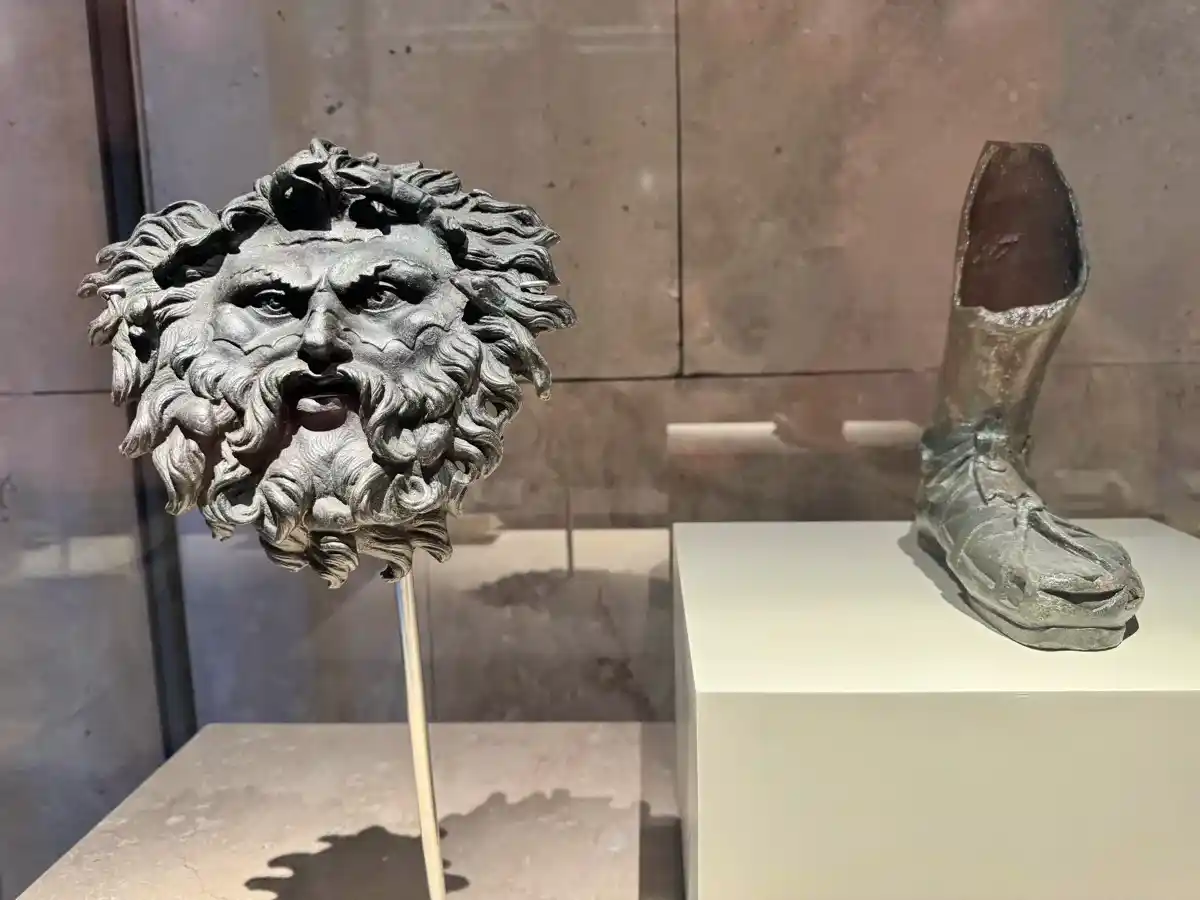
Some of the artifacts on display are from the Roman period, including a hand severed from a statue, a leg from another statue, and an Ocean Mask from the first century BCE, among a few other items.
Oh, by the way, before moving on, a word about dates in the Al Batha Museum. The date on the placard beside the mask said just “1st century BC.” But most (probably all) of the dates after the sixth century of the Common Era listed two dates. If it gave a century, the signage listed the date as “Xth century AD/Yth century H,” where “Y” was six less than “X.” Sometimes the placards cited a specific year rather than a century. In those cases, the AD date was approximately, but not exactly, 600 years less than the H date. The difference between the two dates varied somewhat over history.
I made a guess that proved to be correct. According to Google AI, H stands for “Hijra (or Hijrah), referring to the Hijri era” in an Islamic date.
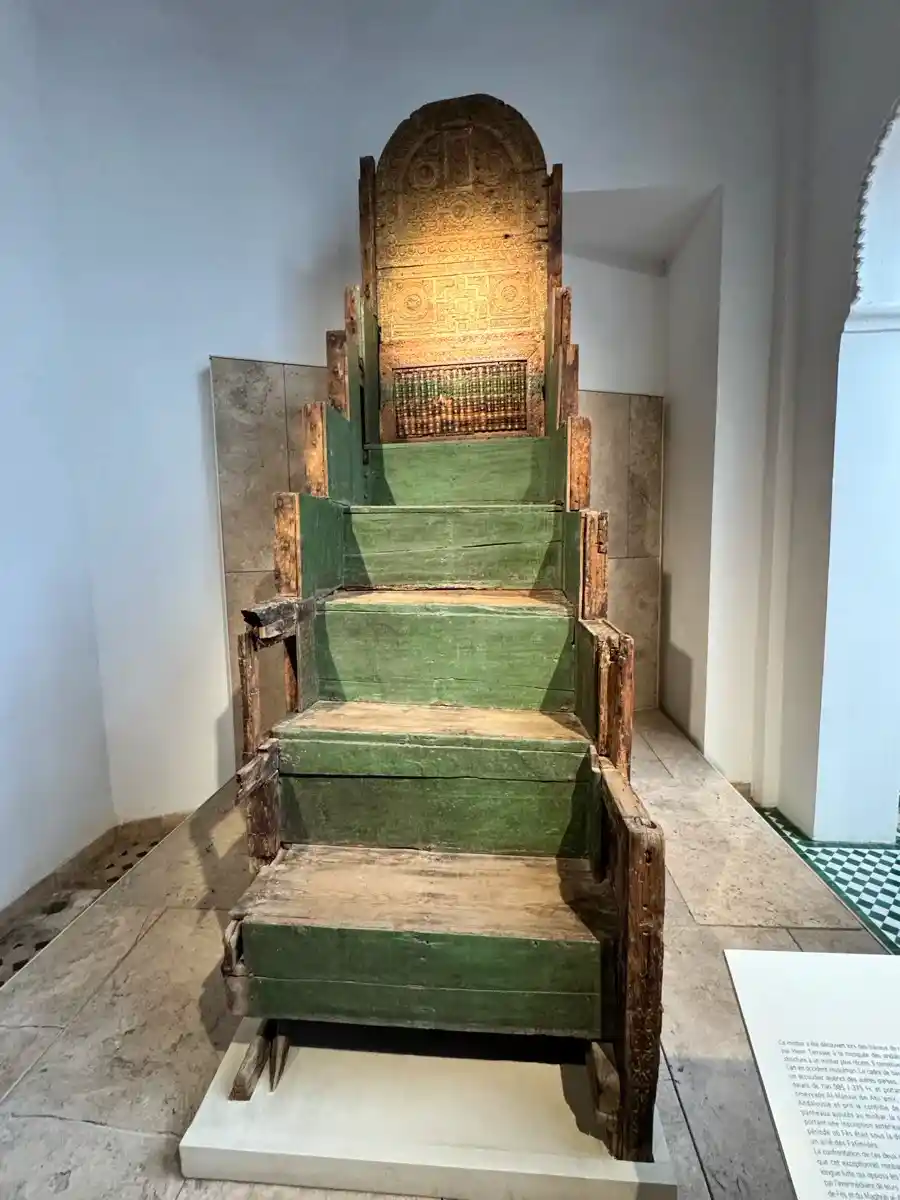
Despite there being relics from the Roman period, the majority of the items are from the 18th and 19th centuries. But there are also several objects from between those extremes.
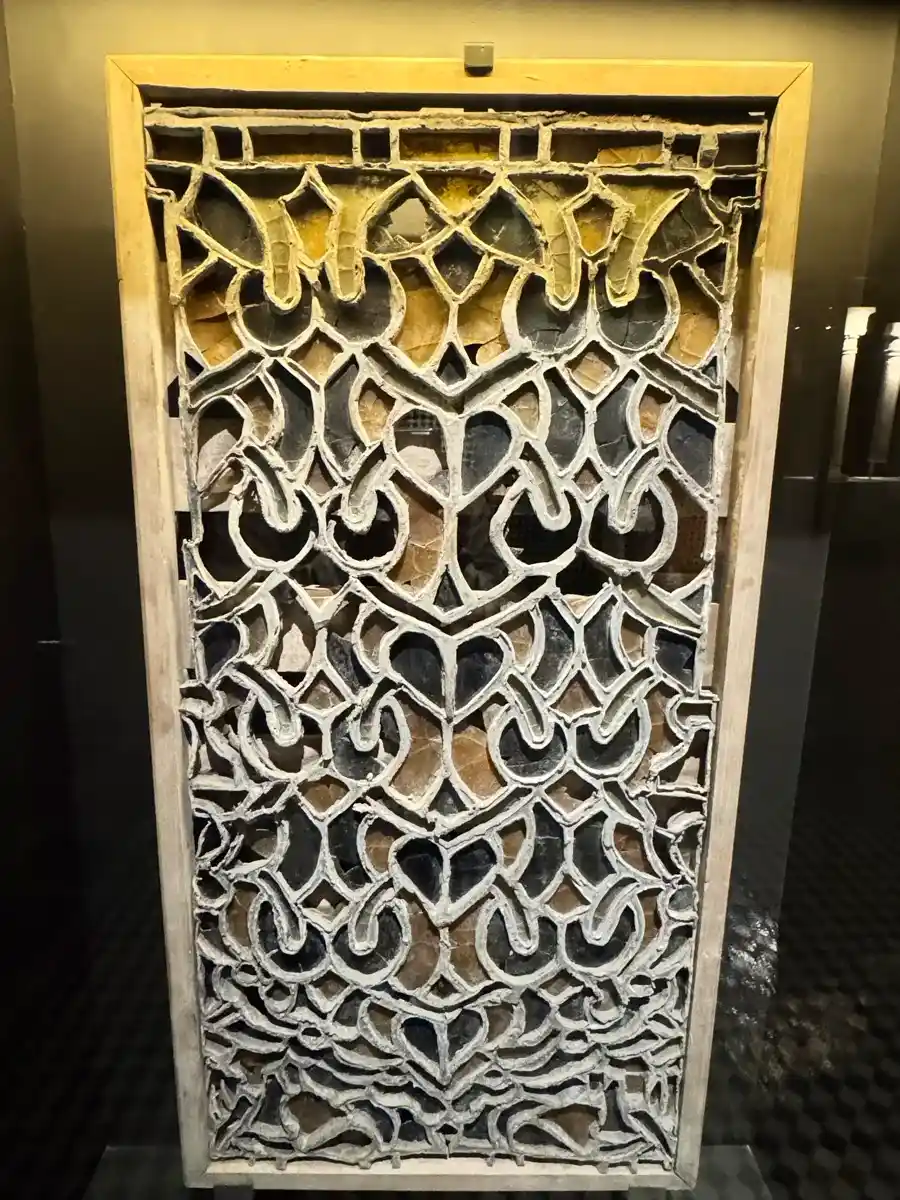
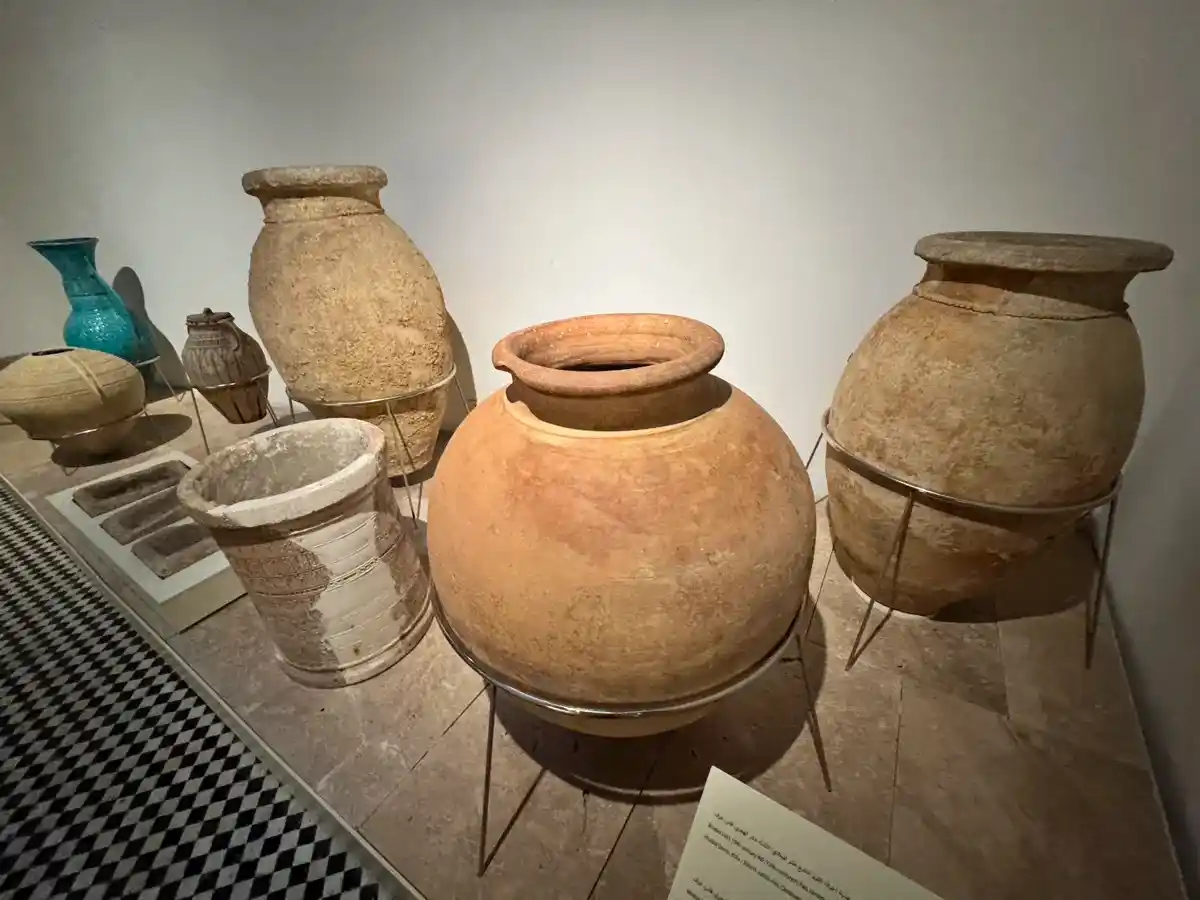
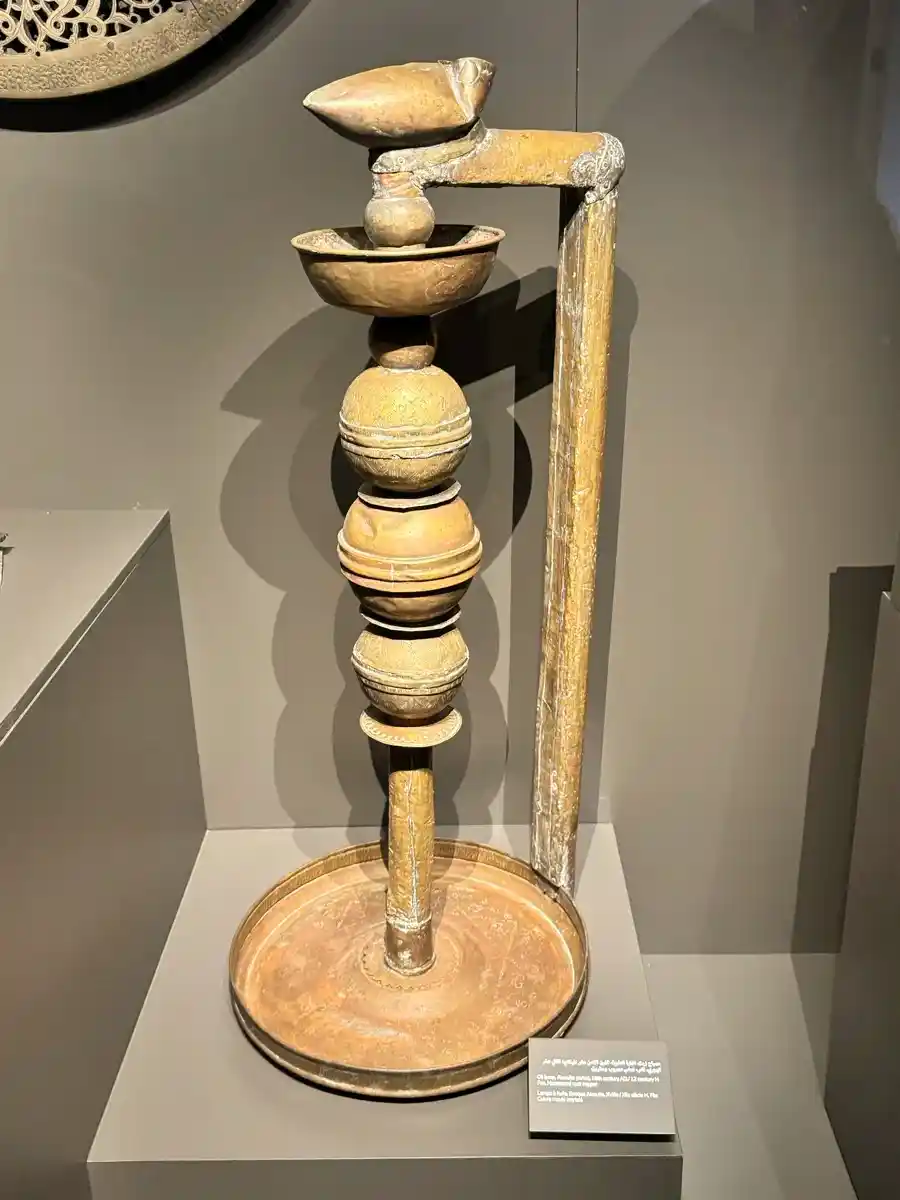
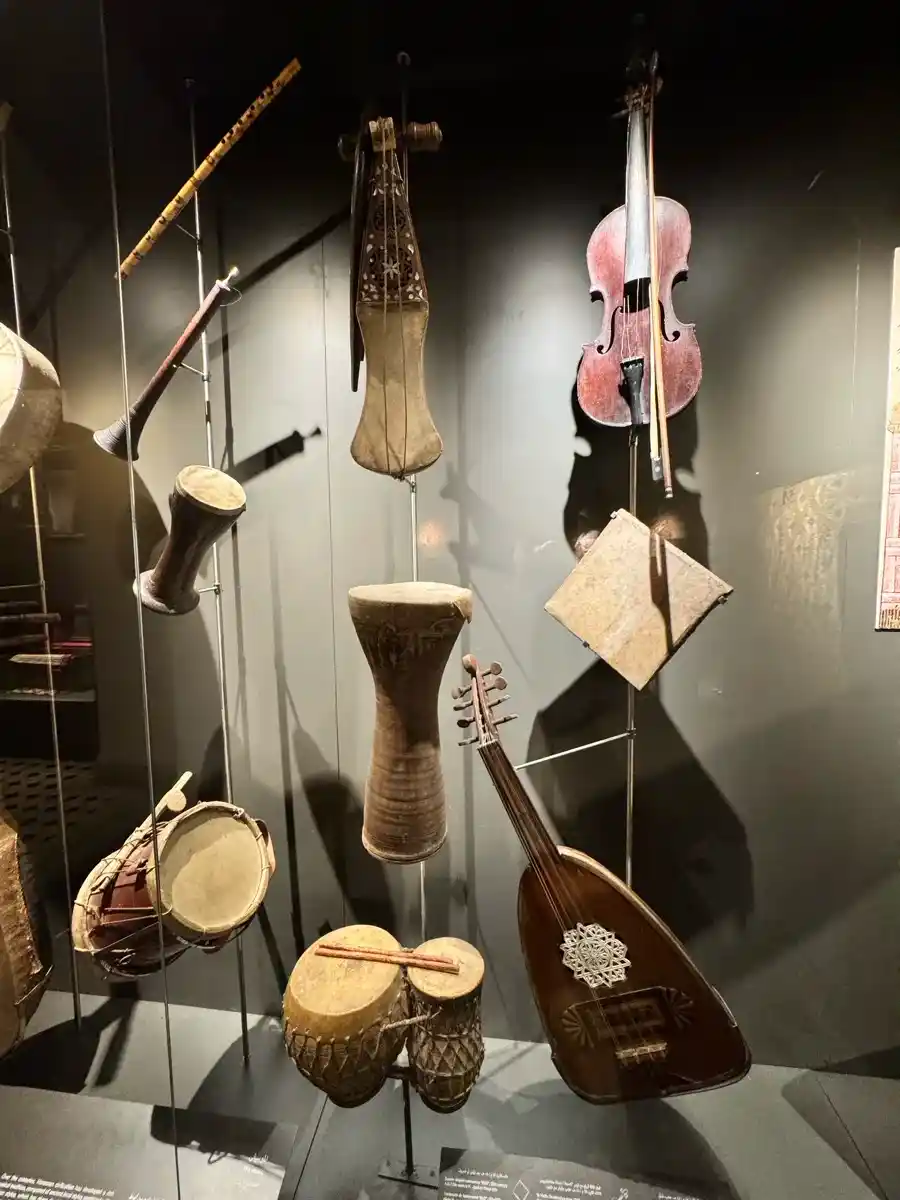
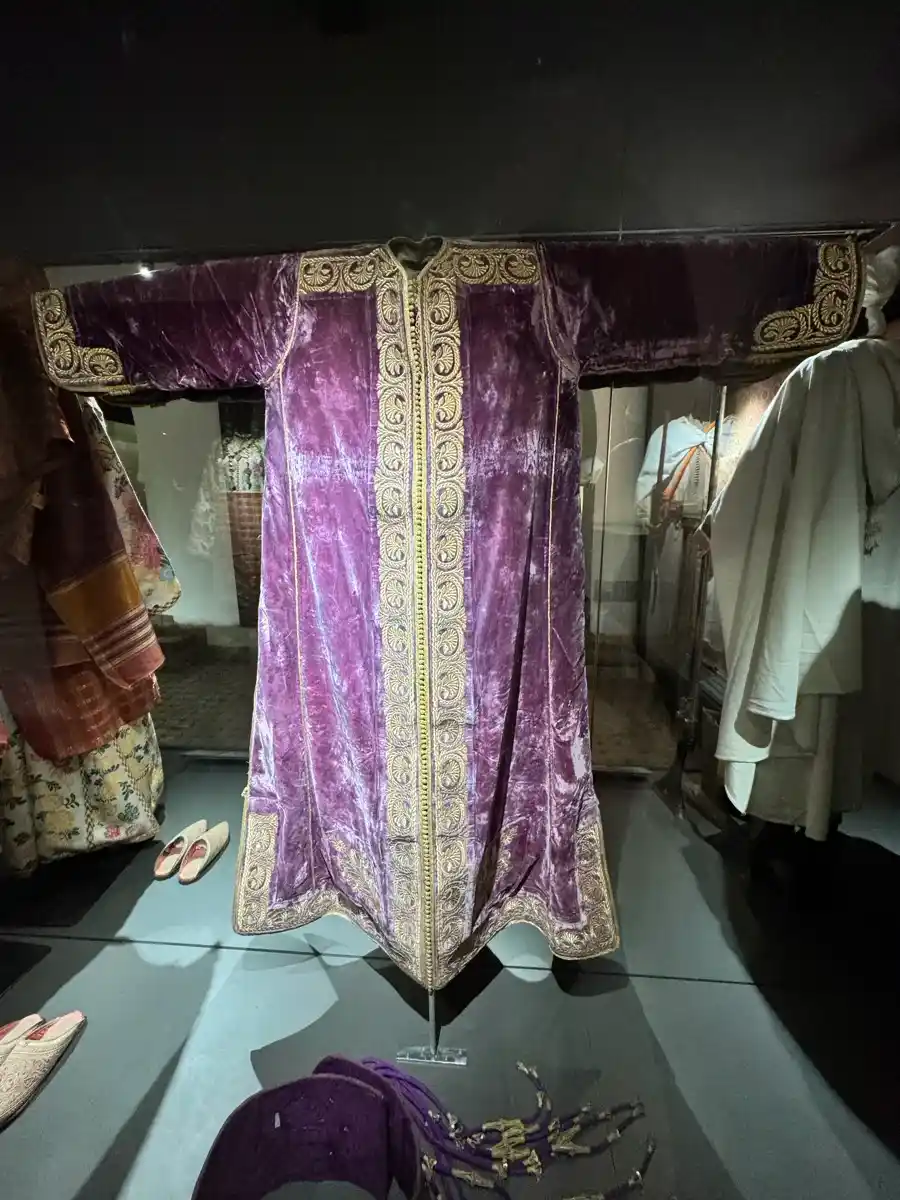
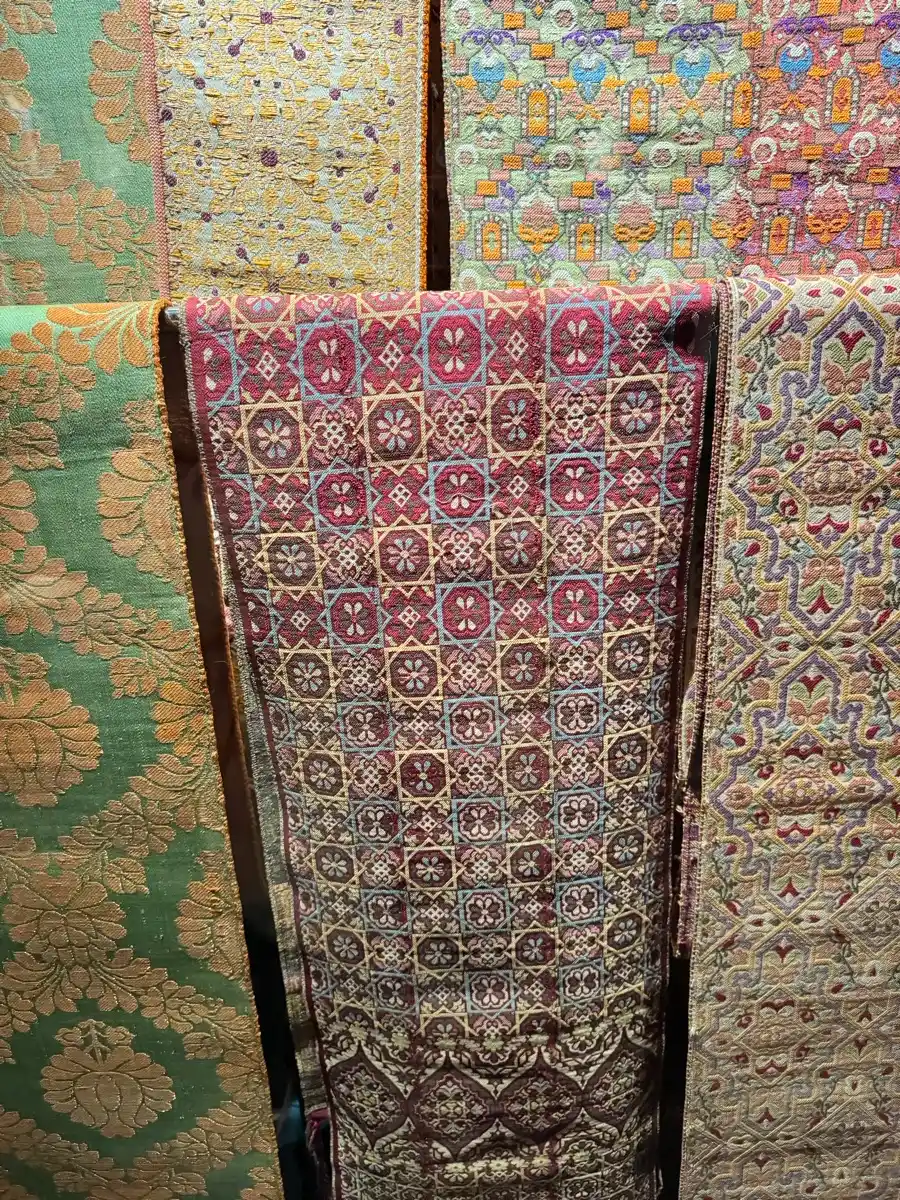
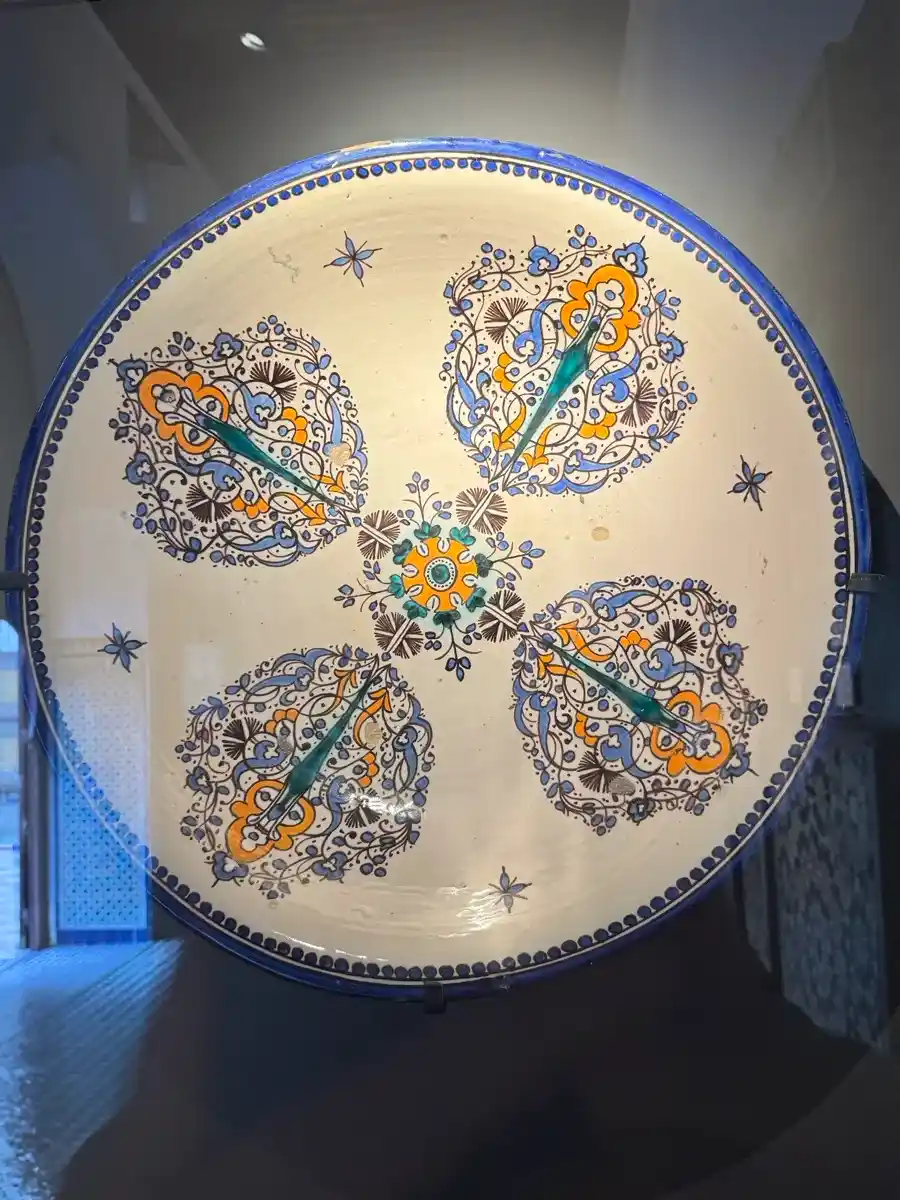
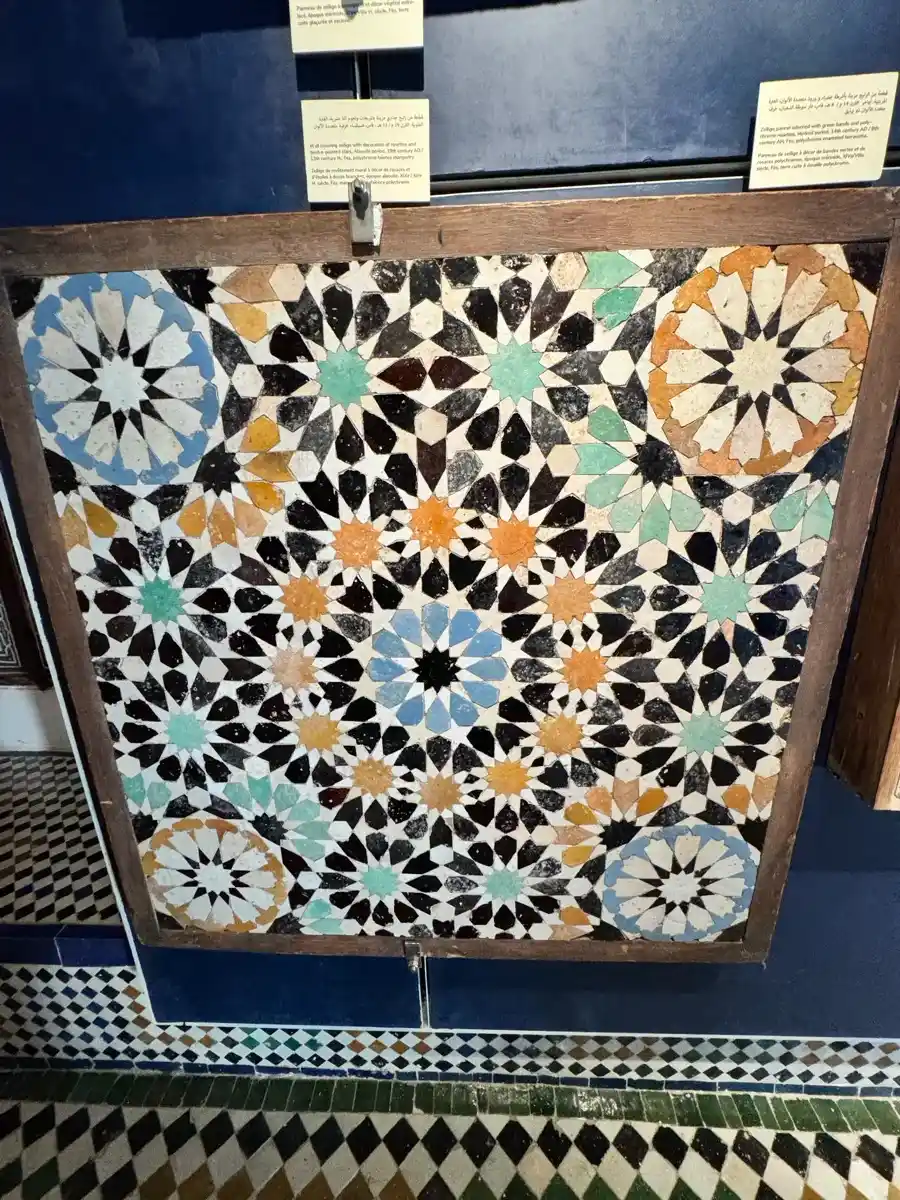
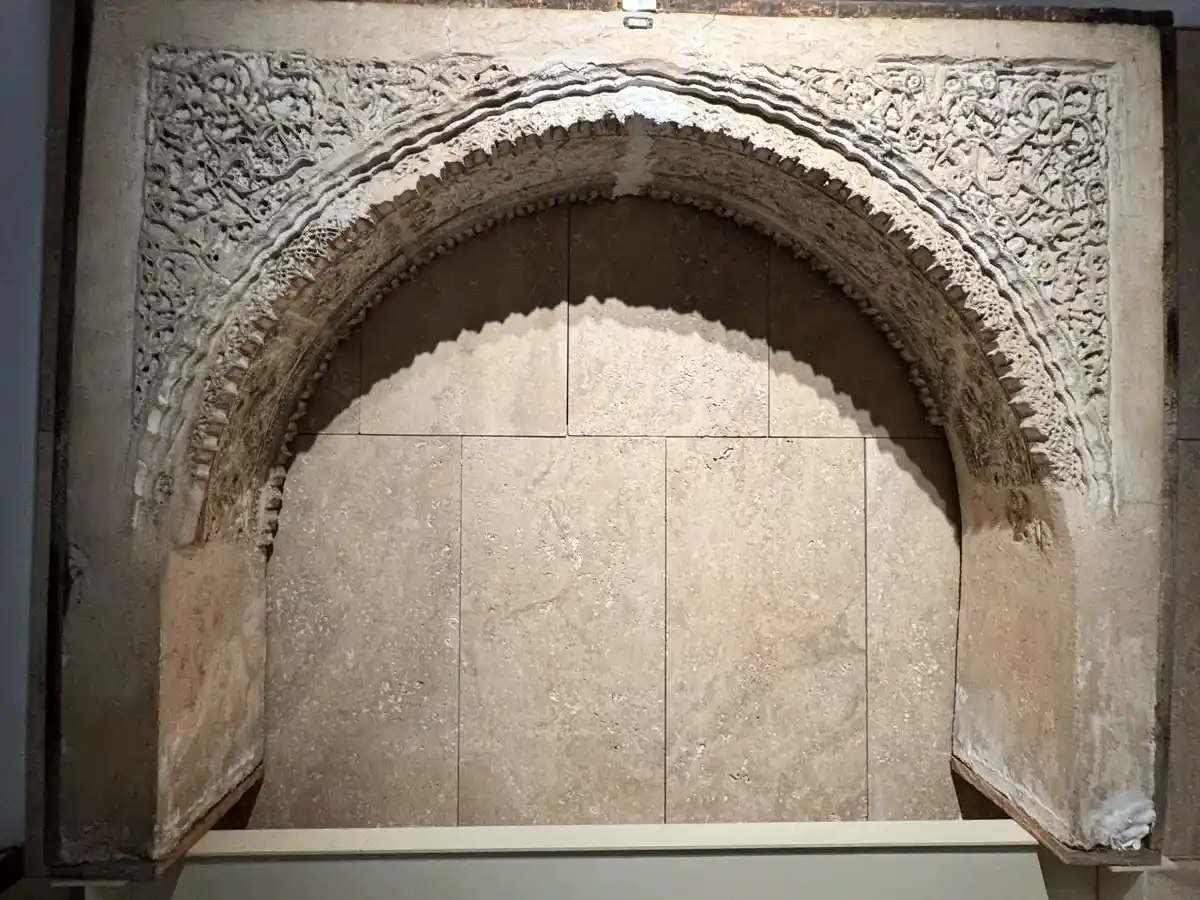
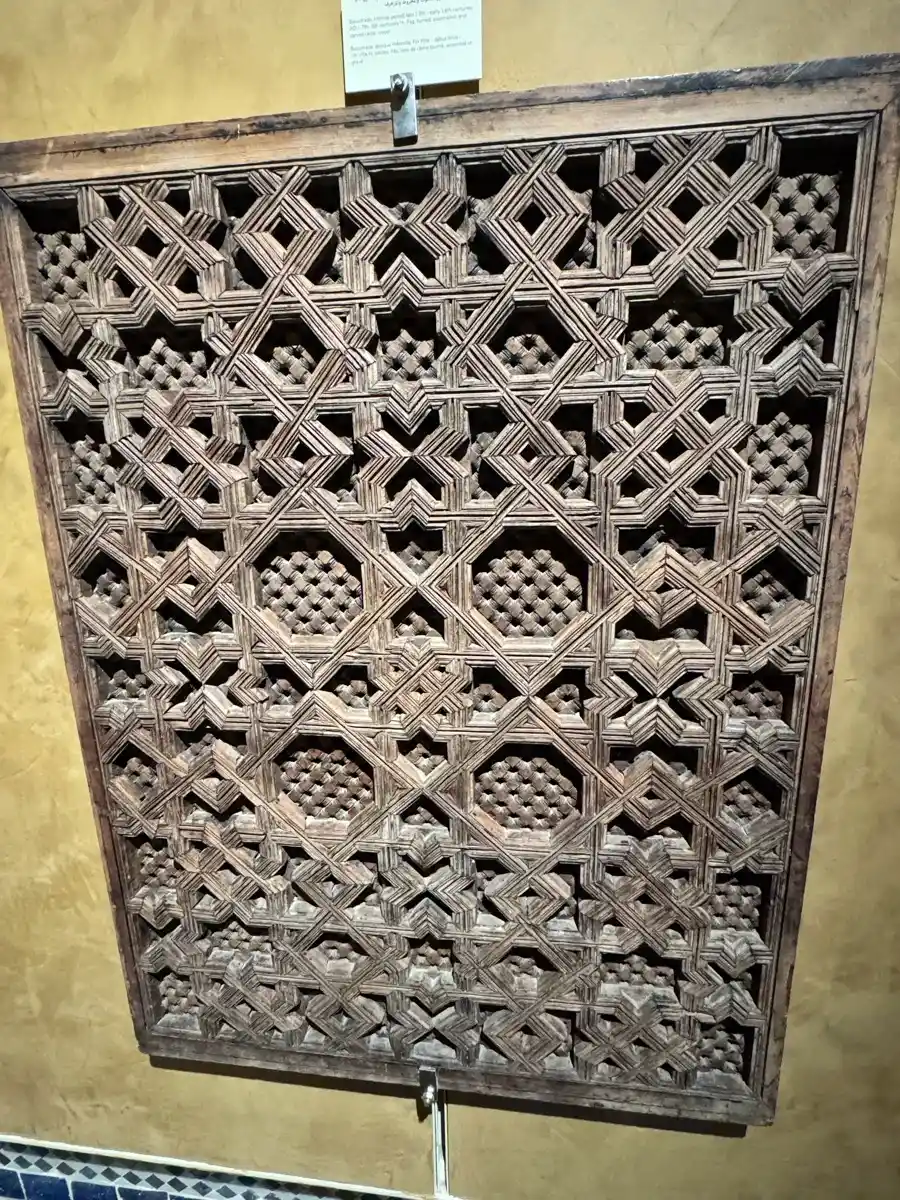
Objects on display run a wide gamut. There are sculpted and carved stone and wood decorated architectural elements, friezes, latticework, decorative tiles, pottery of many shapes and sizes, ceramics, rugs, clothing, fabrics, old Korans and other documents hand-printed in a Moroccan calligraphic style, weapons, and probably much more that I’ve forgotten.
The weapons—guns, daggers, and swords—are intricately decorated, sometimes with just etching, but sometimes with polychrome designs.
The Al Batha museum also displays three old minbars, two in one building and one in the other. To be honest, if I ever knew what a minbar is, I’d forgotten. (Either is possible. My ignorance is boundless and my memory is limited.) And I totally misread the signs at first.
“Minibars? How the heck are those minibars? And this is an Islamic country. Muslims aren’t supposed to drink alcohol. Why do they have minibars?”
(Before you ask, hotels and many restaurants do serve alcohol.)
Then I read the sign more carefully and saw it said minbar, not minibar.
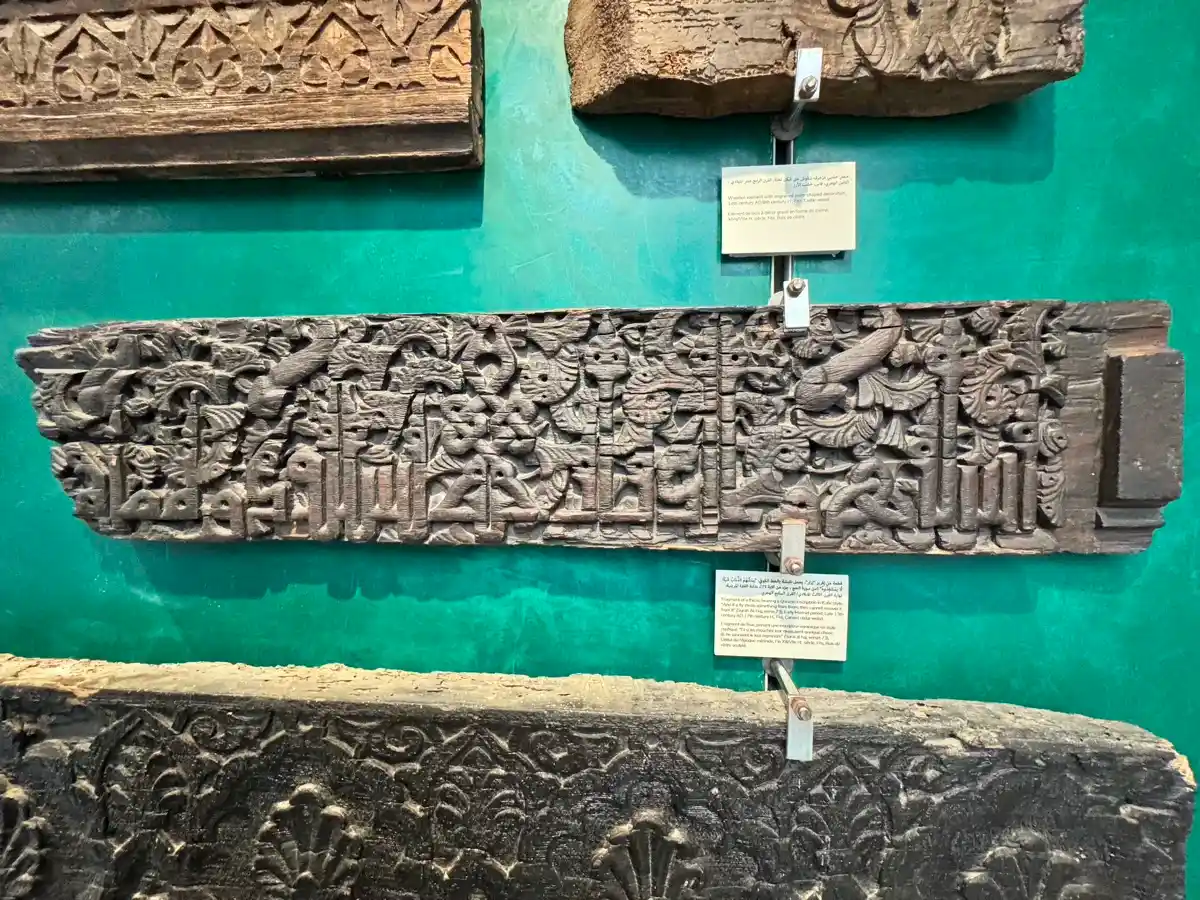
From the side facing museum visitors, they each look like a flight of stairs leading to nowhere.
I looked it up in the dictionary while I was there. A minbar is a short flight of steps used as a platform by a preacher (imam) in a mosque.
The minbars on display came from different mosques. One bore an inscription that dated it from 985 CE.
Al Batha Museum is very interesting and informative. It’s large enough to make it worth going out of the way to see it, but small enough that you won’t (or at least I didn’t) come close to experiencing museum fatigue. And the garden is gorgeous.
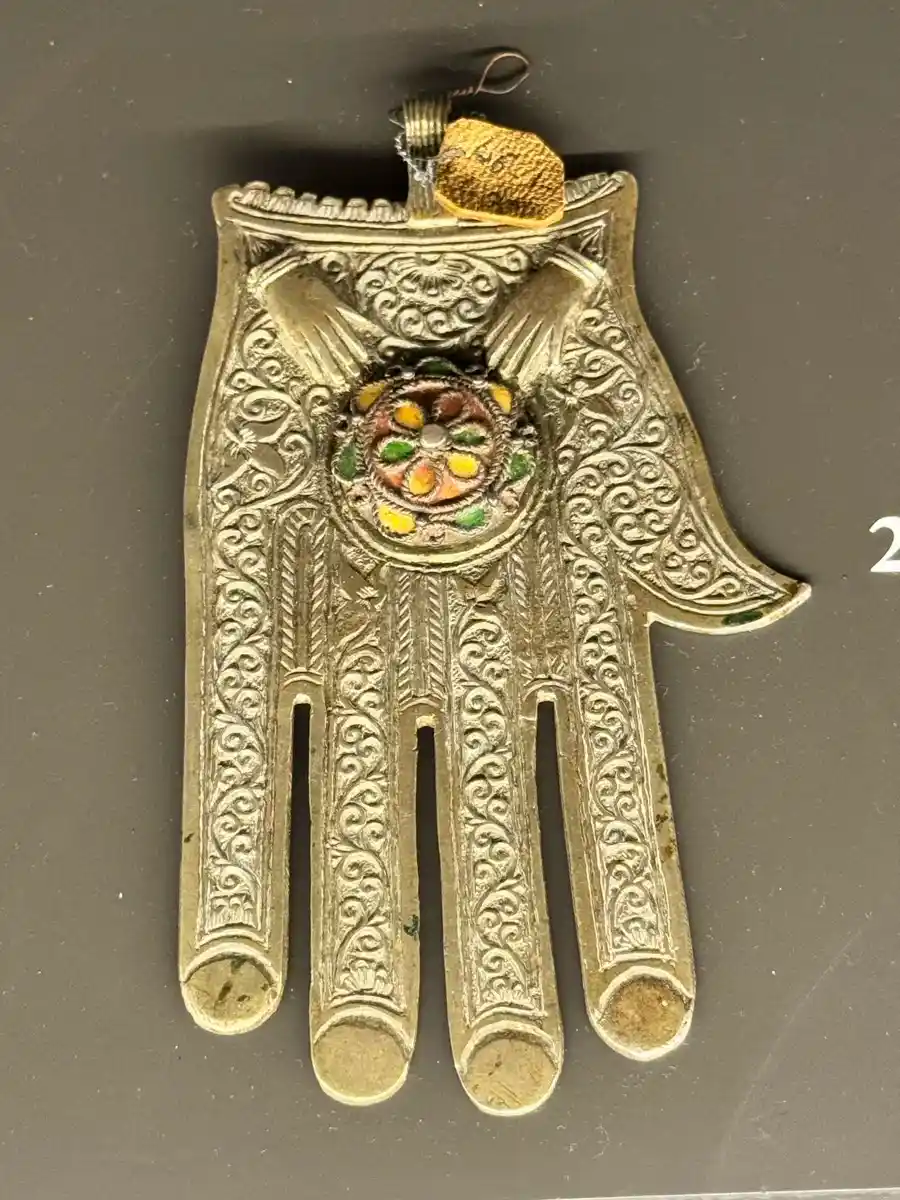
More photos from Al Batha Museum:
A Bit of the Fez Medina
I’d read that the Fez Medina is not only huge, but it’s also the largest pedestrian zone in the world. And like the Casablanca Medina and Tangier Medina, which I’d already been to, it’s more than a little bit of a maze.
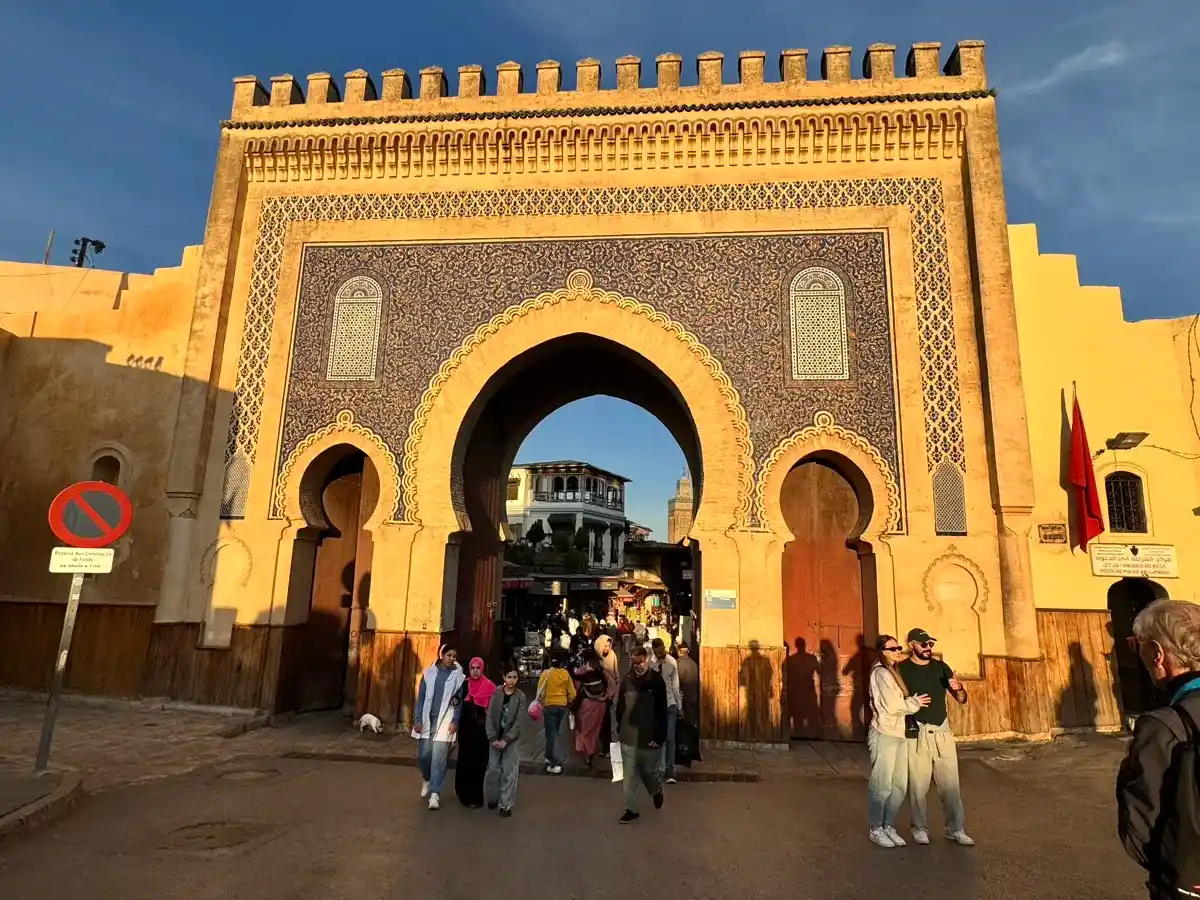
The Medina is a walled city unto itself, and there are several gates into it. The Al Batha Museum is a short walk from the most noted of its gates, Bab Boujeloud, also known as the Blue Gate.
It’s not an old gate. The Blue Gate was built in a Moorish revival style in 1913, during the French protectorate period. It’s a beautifully decorated gate. Unsurprisingly, blue is the dominant colour, although in the late afternoon sun of my picture, it doesn’t look it.
Because it was getting late in the afternoon, I figured I’d look at the gate, duck briefly into the Medina, and then take a long walk back to my hotel. (The Blue Gate is a little farther from my hotel than the Al Batha Museum is.)
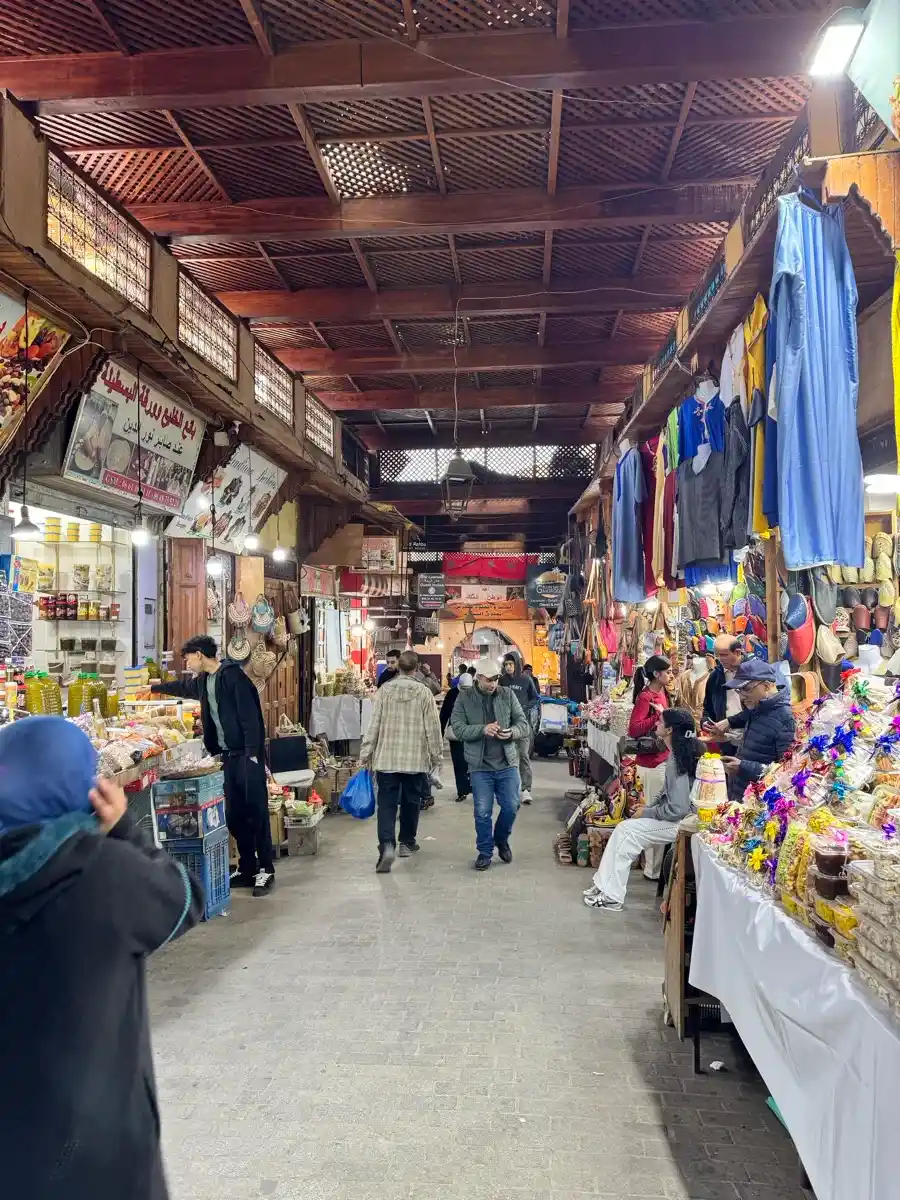
I walked through one of the Medina’s gates on my way to the Blue Gate that was so nondescript that I didn’t realize it was a gate. I walked a bit past it and noticed that the street I was on was narrow, only for pedestrians, and was lined with small shops like a souk in a Medina. I walked farther in the direction that Google Maps told me Bab Boujeloud lay in. After a little while, I was surprised to find myself looking at the back of the Blue Gate, with regular traffic on the other side. Until then, I hadn’t realized I was already in the Medina.
I walked out the Blue Gate, took a look at it from the front, then went back into the Medina.
Close to the gate, I came upon what I think is a rare straight souk laneway into the depths of the Medina. I walked along it for a bit, figuring that if I went in a straight line, it wouldn’t be long until I got to the other side of the Medina and could get a taxi. (I was walking farther away from my hotel, so a taxi seemed advisable.) And I walked for a bit. And I walked for a bit. I began to think the Medina was infinite in that direction. Google wasn’t much help because it didn’t show the boundaries of the Medina, or at least I couldn’t see them.
I decided to give up and turn off the lane in the direction of the nearest wide street on Google Maps, figuring that must be a vehicular road outside of the Medina.
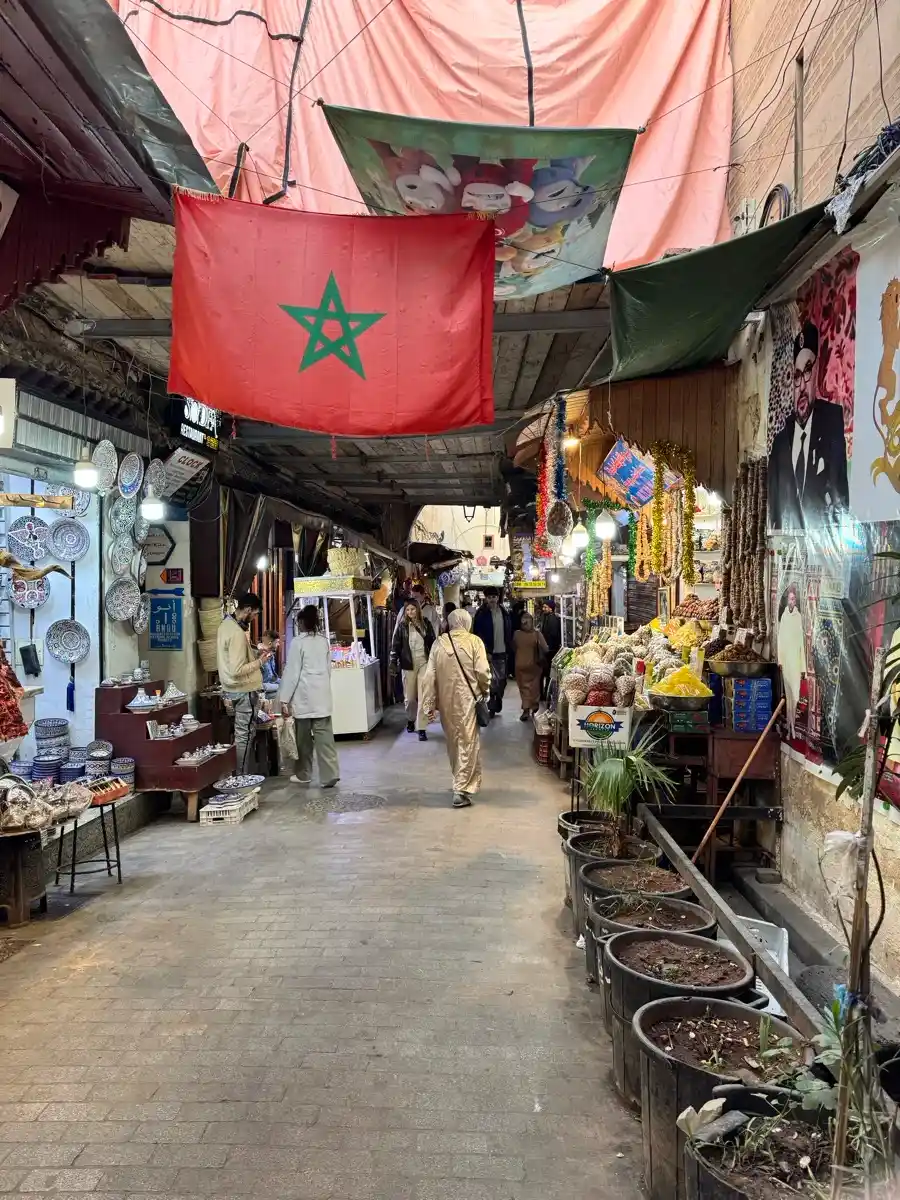
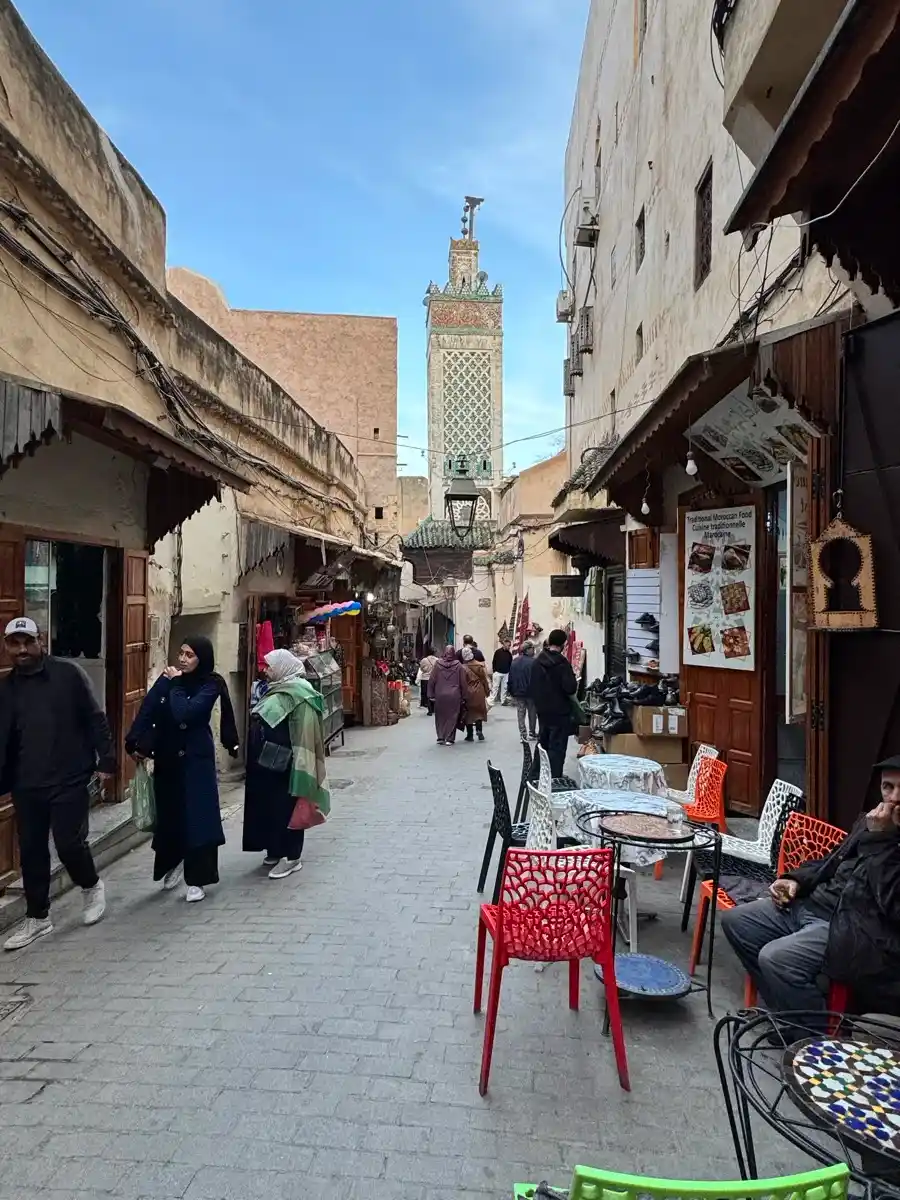
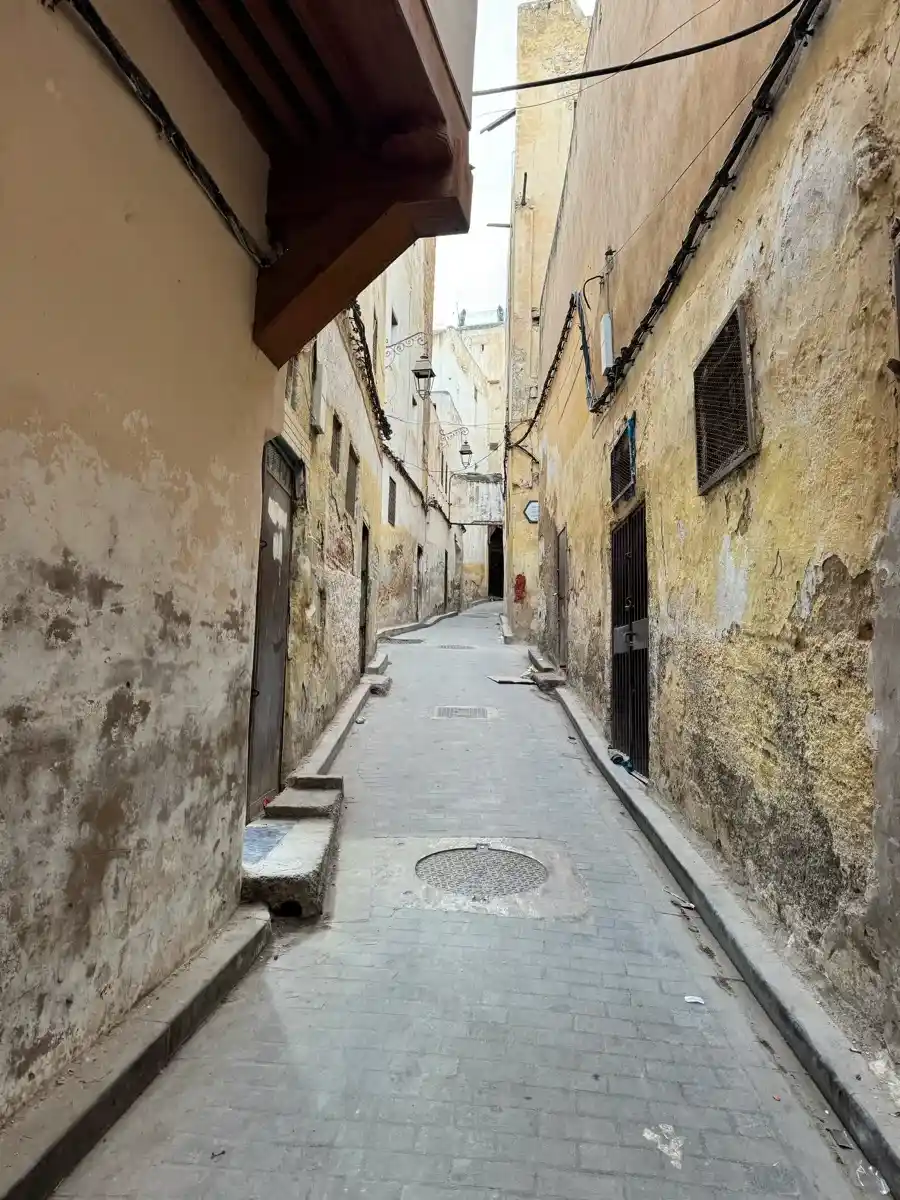
Off that straight lane, the Medina became a maze, with no through lanes. I eventually found my way out and hailed a cab.
I expect to be back to the Medina extensively during my tine in Fez.
More photos from the Fez Medina:
Aside
Taxi Adventures in Fez
I’ve been in Fez for less than half a day, and I’ve already taken three taxis here. They can be an adventure.
The taxi from the train station was no problem. It was a standard “petit taxi” like I described in a post from Casablanca, one from a line of them at the train station.
The driver refused to use a meter. He quoted a price. It seemed a bit high for taxis in Morocco, but dirt cheap compared to Toronto taxis. Rather than haggle or try to find a cabbie who would use his meter, I took that cab. The ride was uneventful.
Going to Al Batha Museum and back, I hailed cabs on the street. Taxis in Fez are not like taxis back home.
And in at least one regard, it wasn’t like the taxis I took in Casablanca. (Although maybe I was just lucky there.) Here, the taxi you get in Fez isn’t your taxi to ride. When you flag a taxi, the driver will stop for you even if they already have a passenger. You then tell the driver where you want to go. If it fits in with the destination of a passenger he already has, then he’ll take you.
In my experience so far, taxis are very plentiful in Fez, but also exceptionally heavily used.
On the way to Al Batha Museum, there was already a passenger in the cab. She got let out not too far beyond my hotel. And the cabbie continued on with only me as a passenger.
On the way back, I flagged down a cab that already had a passenger (all of the many taxis that passed me had passengers; some were full), but my destination didn’t fit with where he was going, so he didn’t take me.
I flagged down another taxi. It too had a passenger, but this time my destination worked for him. The cabbie drove on a piece and let the passenger already in progress off. We drove on for a while, and he picked up a couple to replace the one passenger who got out. The couple got out a little while later. Then I was alone with the cabbie, who took me directly to my hotel.
Don’t ask me how the fares work. They have their metre on for a while, then they press some buttons when dropping off or picking up passengers, and the metre does something that I think is random. Then, when it’s your turn to get out, the cabbie tells you what the price is.
The fares to Al Batha Museum from my hotel and back to my hotel from the Medina were identical, and they were less than half the fare the other cabbie charged me to go to my hotel from the train station, despite the former drives being considerably longer. Go figure. Or don’t go figure and just go with the flow.
Oh, a couple more things about the taxis I’ve experienced in Morocco so far. For one, if the cab is empty other than the driver. Choose whether you want to sit in the front or the back. Both are perfectly acceptable.
For another, pretty well nobody here wears seatbelts. I’ve been in a couple of different cabs where the taxi had seatbelts but nothing to buckle them into. I fished around in the fold of the seat extensively in case it got pushed down there. But there was nothing.
Considering that most drivers drive like maniacs and there are exceptionally few traffic lights, I’m amazed anyone is still alive here.
One more thing. Most of the restaurants here, except for the smallest of them, take credit cards, including Apple Pay. I don’t think any of the cabbies do. Cash is king here. I don’t know if that will eventually change.
Discover more from Joel's Journeys & Jaunts
Subscribe to get the latest posts sent to your email.
Thanks for the helpful tips about the cabs. As you say, who knows if any of this will change, but for now it is different enough from what we are used to to warrant some travel advice. I thought the artifacts you showed us in the museum were gorgeous, and the Medina endlessly intriguing, if only seemingly endless. Enjoy your time in Fez (or however it is spelled). I know I will enjoy riding virtual shotgun with you.