Roundhay Park, Leeds
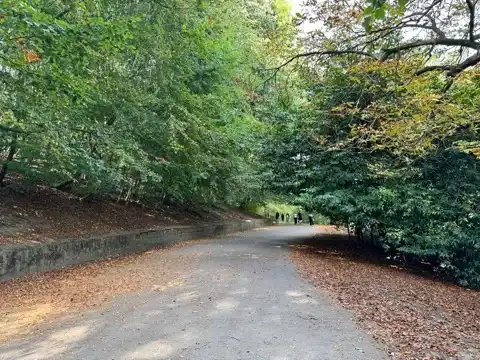
I spent all this afternoon, my last full day in Leeds, England, in Roundhay Park.
At one time, Roundhay Park was privately owned. William the Conqueror granted the lands to Ilbert de Lacy in the 11th century to reward him for his support. The land passed down through several people and families over the generations and is now owned by the people of Leeds and managed by the Leeds City Council. Thank you, people of Leeds, for allowing me to enjoy your park.
Because this is my last Leeds post, there’s a summary of my time here at the end.
At Roundhay Park
Roundhay Park is a beautiful, large 700-acre park. It’s less than a twenty-minute city bus ride from central Leeds.
Pro travel tip: If you have a choice, always opt for a large 700-acre park instead of a small 700-acre park.
In truth, a couple of information sources I saw told me that Roundhay Park is more than 700 acres. So, presumably it’s closer to 700 than 800 acres. But my large versus small 700-acre park joke wouldn’t have worked as well with “more than 700 acres.”
Then again, it wasn’t exactly uproarously funny with just “700 acres” either. But, hey, I have to uphold my reputation for bad dad jokes.
(Please, I beg of you, nobody tell the authorities that I’m not a father. I don’t want to spend time in jail for telling dad jokes without a licence.)
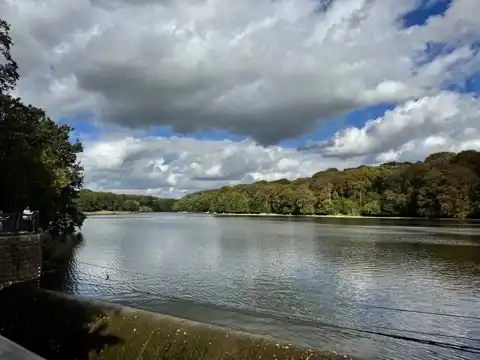
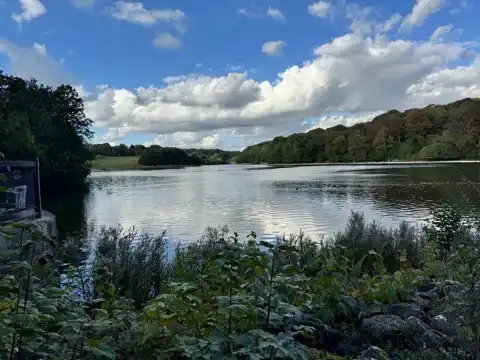
Roundhay Park contains two decent-sized lakes. Neither is anywhere close to being a Great Lake, like Lake Ontario, mind you. But both are easily more than large enough to avoid being called a pond.
The lower lake, Lake Waterloo, is the larger one.
Google Maps cleverly names the upper lake as “The Upper Lake.” Then again, Google Maps currently lies to viewers in the United States and tells them that Lake Ontario is Lake America. So it’s unwise to trust Google Maps. However, a sign at Roundhay Park also calls it The Upper Lake, so I guess that’s its name.
The Upper Lake is atop a hill that rises behind Lake Waterloo. That seems just because it would be silly for The Upper Lake to be at a lower elevation than Lake Waterloo, which I just described as the lower lake.
The lakes are both irregularly shaped. This led me to believe that they occurred naturally. The edges of the lakes are reinforced. But I figured this was added to the natural formation to prevent erosion.
A sign near Lake Waterloo disabused me of this notion. The sign told me that it took two years and cost £15,000 to construct the lake. Nature typically provides slave labour, but it usually takes much longer for it to construct a lake from scratch. So I assume humans did the work.
The sign didn’t offer a date for the construction of the lake. Nevertheless, it said that the work was done by soldiers returning from the Napoleonic Wars. (Hence the name, Lake Waterloo.) Wikipedia tells me that the Napoleonic Wars occurred between 1803 and 1815. So, presumably, Lake Waterloo was constructed sometime after 1815.
The sign didn’t say whether The Upper Lake is natural or constructed. However, it says the landscaping around the lake was designed during the mid-1800s.
Walking paths wrap around both of the lakes.
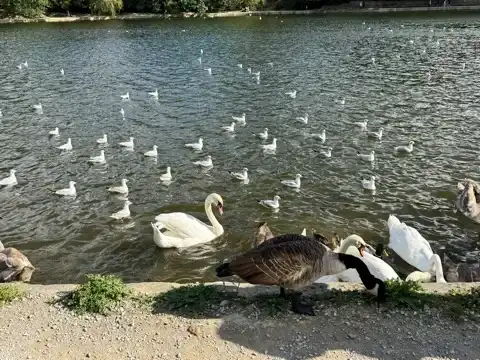
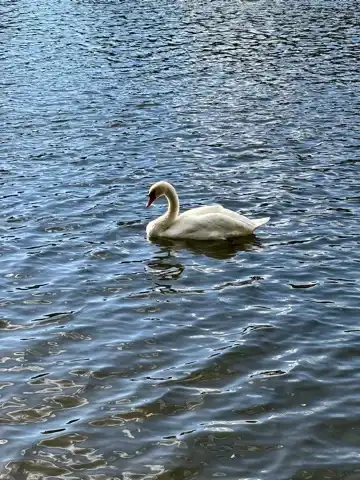
Significant numbers of waterfowl frequent the lakes, particularly Lake Waterloo. I saw several swans, even more birds that could have been white ducks or possibly a slightly different species of seagull than I’m used to, and a lone Canada Goose representing my country.
Signs at frequent intervals on the paths around the lakes forbid entry into the water. Presumably waterfowl get a pass on this restriction because so few of them are literate.
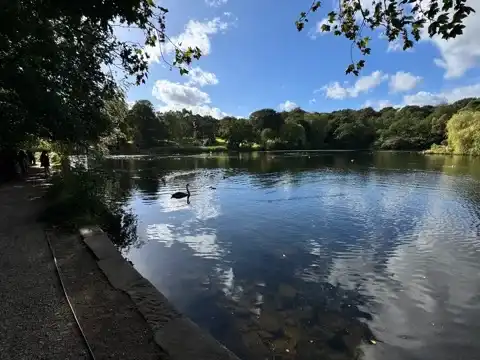
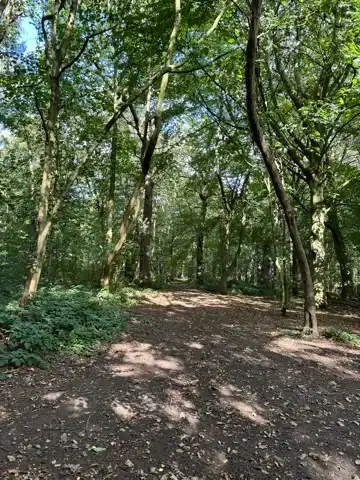
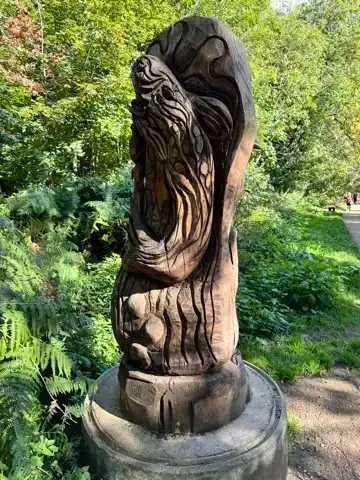
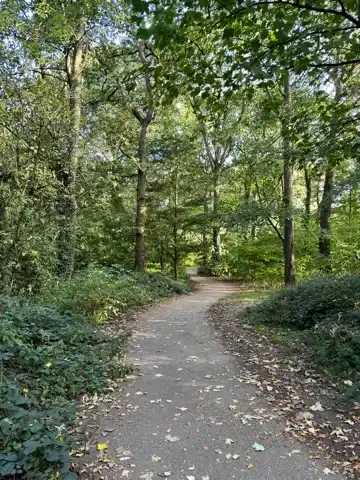
In addition to the lakes, Roundhay Park has considerable forests, lawns and lots of trails. A few large, double-sided wooden statues dot one of the paths through a forest. There’s also a golf course.
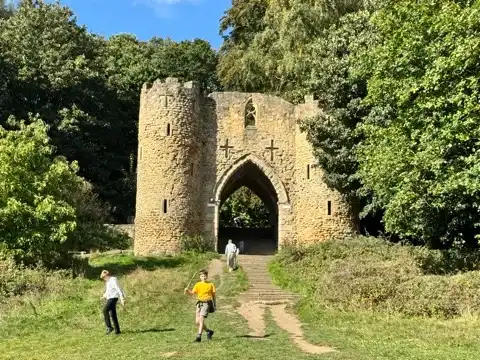
Atop a hill, between Lake Waterloo and The Upper Lake, sits a castle. Except it’s not a castle. It’s a folly, more like a Potemkin castle, built by Thomas Nicholson when he bought the property in partnership with someone else. It consists of two not-terribly-large towers with an arch between them. Stairs climb up under the arch. The “castle” has no more depth to it than the two small towers.
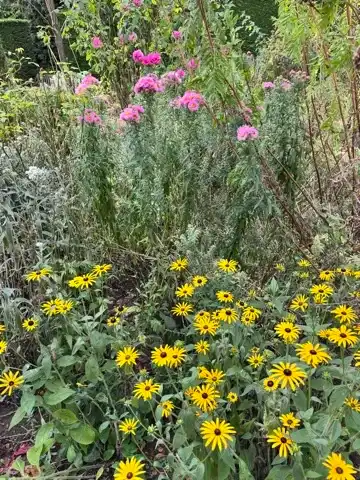
Walking up from Lake Waterloo and past The Upper Lake, there are some beautiful gardens. On the other side of a road from the main part of the park, there are lush flower beds and a small rectangular pond. Just beyond that is “Tropical World.”
More pictures from Roundlay Park:
Tropical World in Roundhay Park
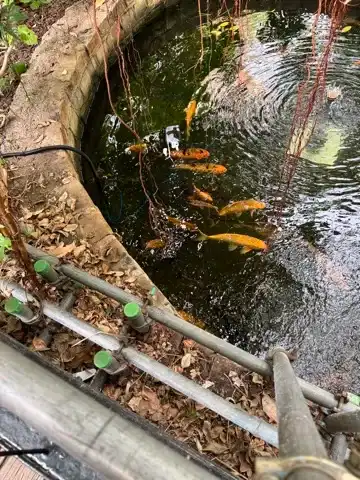
Despite being across the road from the main section, Tropical World is considered to be part of Roundhay Park. The rest of the park is free, but there is a small fee to enter Tropical World.
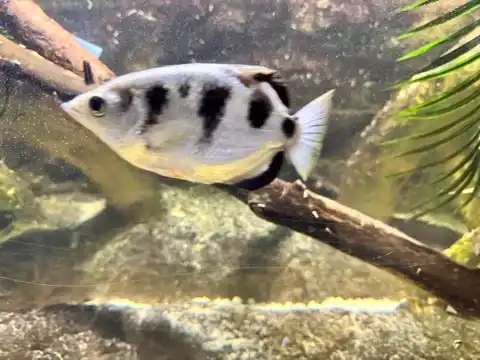
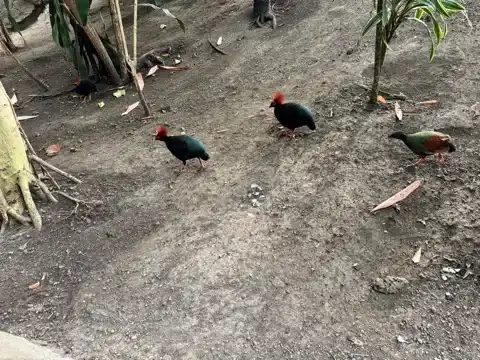
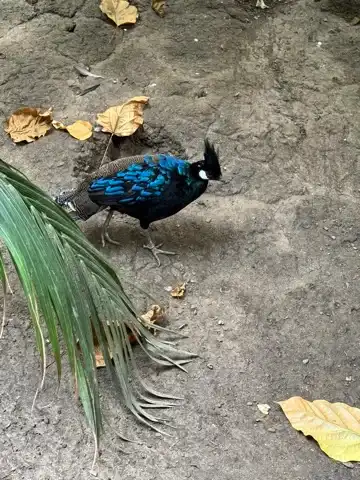
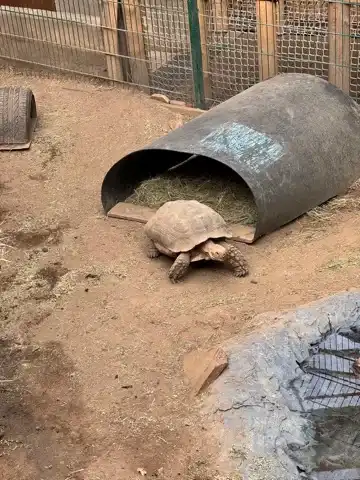
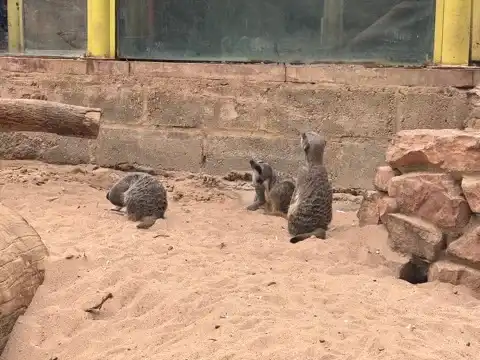
It’s a zoo of sorts. There are several small tanks of small fish, a couple of koi ponds, a butterfly and bird area, an alligator, some turtles and tortoises, a few meerkats, a couple of incredibly cute cotton-top tamarins, and I forget what else. The butterflies fluttered around in a small room. Some birds walked around in the same room. I didn’t see any of the birds fly. They just walked.
The animal compounds were generally quite small. And, apart from the birds and butterflies, the animals were mostly visible only through dirty glass.
It wasn’t a horrible experience, but, to be brutally honest, I wasn’t overly impressed.
Nevertheless, the rest of Roundhay Park was spectacular. I’m thrilled I went.
More pictures from Tropical World in Roundhay Park:

Leeds Summary
I stopped in Leeds to break up what would otherwise be a long train ride between Edinburgh, my first stop, and my next destination. As such, it more than served its purpose.
I can’t say I loved Leeds, but it has some interesting sights to see and a generally pleasant vibe.
In the core of the city, there are a few connected wide pedestrianized shopping streets, along with some lovely shopping arcades that I visited. Regular readers know that I love pedestrianized streets. So, I give Leeds a few points for that because cars spoil almost everything.
One of the few things cars don’t spoil is jaunts that are too far to walk comfortably, for which there are no reasonable bus, subway, or rail options. But that’s about it.
I spent three nights, meaning two and a half days, in Leeds. If I’d stayed any longer, I think I might have gotten bored here. A half-day less might have been better, but the time I spent here was good. That said, I think I could have taken day trips from Leeds by train to fill in a longer stay, but I didn’t investigate that.
In summary, if you’re passing through Leeds, it’s certainly worth a stop. But if you have to go out of your way to get there, you can probably find better ways to spend your tourist time.
Discover more from Joel's Journeys & Jaunts
Subscribe to get the latest posts sent to your email.
Leeds Park Square, Corn Exchange, St. John the Evangelist Church
Leeds City Museum, Art Gallery, and Some Arcades
What a lovely place.
Quite well-sized, too.
We spent a week in nearby Pudsey in 2025.
I enjoyed the area.
A warm, if not blazing hot review of Leeds. As the visitor says above, it seems a lovely place. The park was a treat. So many fish! Gaggles of waterfowl! It was hard to make out, but was that a fish sculpture, or just my fishful thinking? And I must say, I always love a folly. Who doesn’t? I look forward to finding out what is next on your itinerary. Safe travels!