Art Gallery of New South Wales, Australian Museum
The heat of this morning in Sydney, Australia intensified this afternoon. Think toaster oven at full-blast, but more humid. So I put indoor, air-conditioned activities on the agenda again for the afternoon. That included the Art Gallery of New South Wales and the Australian Museum.
By the way, the forecast for tomorrow, Friday, is for the temperature to drop and “only” reach a high of 24°C, compared to today’s 36°. That’s a little warmer than I’d prefer, but still within the bearable range. Saturday is expected to get hot again, 32. So, not as brutal as today, but still unpleasantly hot. Then the high for Sunday, my last full day in Australia, is forecasted to get to only 23. Consequently, I’ll probably have two days of outdoor activities and one more inside before I leave. We’ll see how it goes.
Art Gallery of New South Wales
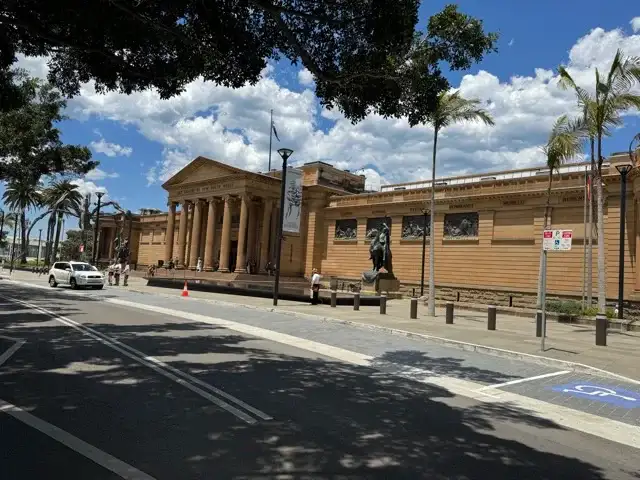
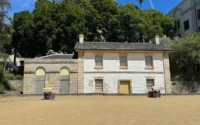
The Art Gallery of New South Wales is a decent-sized, two-level, two-building gallery. One of the buildings (pictured here) is a heritage building. The other is quite modern.
One section of the old building has a few rooms that contain paintings and sculptures of a more classical look. By that I mean I could identify their subjects as scenes, beings, and/or objects that might now exist, or at one time have existed, in the real world.
Despite having what I crudely label as a classical look, not all of them are particularly old. I saw a number dating from the 19th and 20th centuries.

I saw a sign in the gallery that said its collection dates from the 14th century. Of the wall tags I looked at, the oldest work dates from the 16th century.
I probably looked at less than half of the wall tags. And this might be a result of me being, as I’ve admitted many times in this journal, an art ignoramus, but I recognized only two of the artists’ names.
I saw two works by Peter, Paul, and Mary. (*cups his right hand to his right ear*) Wait. I’m being told that’s Peter Paul Rubens, not Peter, Paul, and Mary. Sorry about that. It’s an easy mistake to make.
I also saw two works by Emily Carr, a noted Canadian artist.
This building also contained a collection of Asian art; some old, some new.
Most of the rest of both buildings displayed modern art. However, I don’t think I use the term “modern art” the way art historians do. To me, it’s less an indicator of age than of look. Specifically, if, regardless of vintage, it’s an abstract or abstracted piece then it’s modern art. If not, then not.
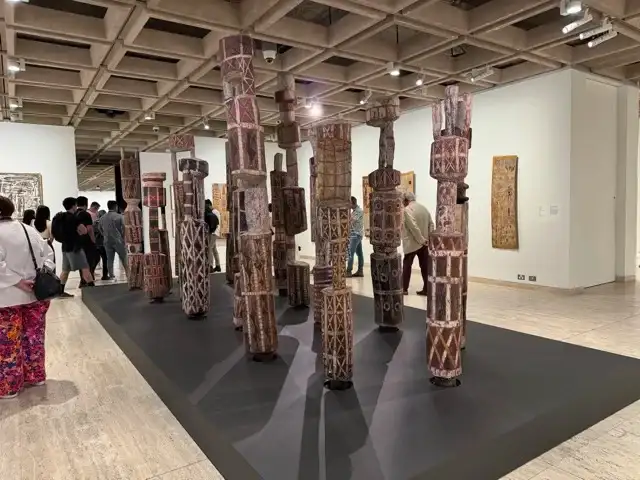
Much (most? almost all?) of the art outside of the “classical” exhibits is by Australians, including indigenous artists.
I started in the older building. When I was done there I asked the person at the information desk if there was an indoor passageway to the other building. “No,” she replied. “Unfortunately not. This is a heritage building so we weren’t allowed to attach a hallway between the two buildings. But it’s only a one-minute walk away and the air-conditioning is blasting there.”
Well, okay. I suffered the one-minute walk.
Entrance to the permanent collections in both buildings of the Art Gallery of New South Wales is free. But both of them also had temporary exhibitions that required paying for a ticket if you wanted to see them.

The temporary exhibition in the old building displayed works by Kandinsky.
The one in the new building was titled “Louise Bourgeois Goes to the Movies.” According to the website description, visitors “Delve into a summer of classic psychodramas courtesy of one of the most iconic artists of the past century, Louise Bourgeois (France/USA 1911–2010).”
I considered buying a ticket for the Kandinsky exhibit because I’ve recently developed an intense interest in air-conditioning and I wanted to extend my time at the Art Gallery of New South Wales. But, in the end, I decided to save the $25 (AUD) and not subject myself to a spell of mindlessly staring at mostly abstract or abstracted art, which I believe is the oeuvre of Kadinsky.
I don’t know if I would have visited the Art Gallery of New South Wales at all if it hadn’t been so scorching today. I craved air conditioning and the art gallery offered it. I’m convinced that a certain art historian did a deal with the Weather God to bring on the heat to convince me to visit another art gallery.
Aside
So, This Happened at the Art Gallery of New South Wales
As I walked into the section of the old building with the “classical” works, I passed a cluster of men wearing roughly identical dark blue suits. They each had a discreet earpiece plugged into one of their ears, with curled, almost-clear wires attached to the earpiece and running under their jackets. One of the men was talking into his sleeve.
As I walked past them, still a bit distracted by them and wondering why they were there, I stopped short before accidentally bumping into a man intently inspecting one of the paintings.
The man was very distinctively Boris Johnson, as only Boris Johnston can be. I can say this confidently despite only having seen pictures and video clips of him before today. I don’t imagine the blue suits would have taken kindly to me bumping into him, accidentally or not.
Australian Museum

Don’t ask me why Sydney gets to call its major museum the Australian Museum when the capital of the country is Canberra, but it does.
The Australian Museum is a traditional museum. As all fine, traditional museums do, it has dinosaur exhibits, including some fossilized skeletons or recreations thereof and some skin-on models of dinosaurs, along with information panels about the creatures.
There is also one exhibit of a “dinosaur autopsy.” This consists of a large model of a dinosaur with its skin on, possibly life-size, but with limbs cut off so you can see the cross-section of them. And it displays some internal organs. Text accompanying the exhibit says that nobody knows the colour of dinosaur skin, so there was some creativity involved in creating that.

The sign mentions creativity only as to skin colour. I don’t know how they can be confident about the appearance of the internal organs. My understanding is that soft tissue doesn’t fossilize, just bones. But I might be wrong about that. Do I look like a paleontologist? No. No, I don’t. I look like a schlemiel.
Of course, the museum also has other sections. For example, it has a good mineral collection. Some minerals, not just here, but in other museums too, amaze me with the almost impossible shapes they form naturally.
Another room has a large collection of stuffed animals from around the world. I don’t know if they are taxidermy or, essentially, plush toys. Labels beside each animal give the species, its geographic range, and one- or two-word ratings of its evolutionary distinctiveness and conservation status.
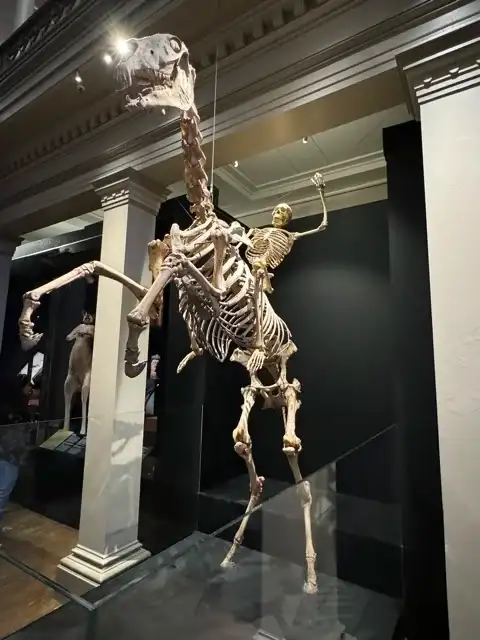
Another long hall in the Australian Museum is called “200 Treasures.” This is a very eclectic collection. The museum’s website’s description of it is, “The Westpac Long Gallery showcases 100 treasures from our collections alongside the stories of the 100 people who’ve helped shape Australia.”
When I said eclectic, I meant it. One piece is just downright weird and not like anything else in the collection. I included a picture of it here. You’ll recognize it when you see it. And you’d recognize it even if I hadn’t put a caption on it. It’s from 1870 and titled, “Sir Hercules and a Rider.” The accompanying sign says that staff and visitors alike affectionately dub it the “Bone Ranger.”
The Long Gallery is on three levels, but the upper two levels are narrow balconies beside the atrium that rises above the lower level. The collections on the balconies are against the wall.
I’m pretty sure the first balcony is considered to be part of the 200 Treasures, but I don’t think the second one is. It displays only a large collection of stuffed Australian birds, one sample for each species. Again, your guess is as good as mine as to whether this is taxidermy or stuffed toys. The reason I say it probably isn’t considered to be part of the 200 treasures is that, while I didn’t count them, I wouldn’t be surprised if there are at least 200 species represented.
Ramses & the Gold of the Pharaohs
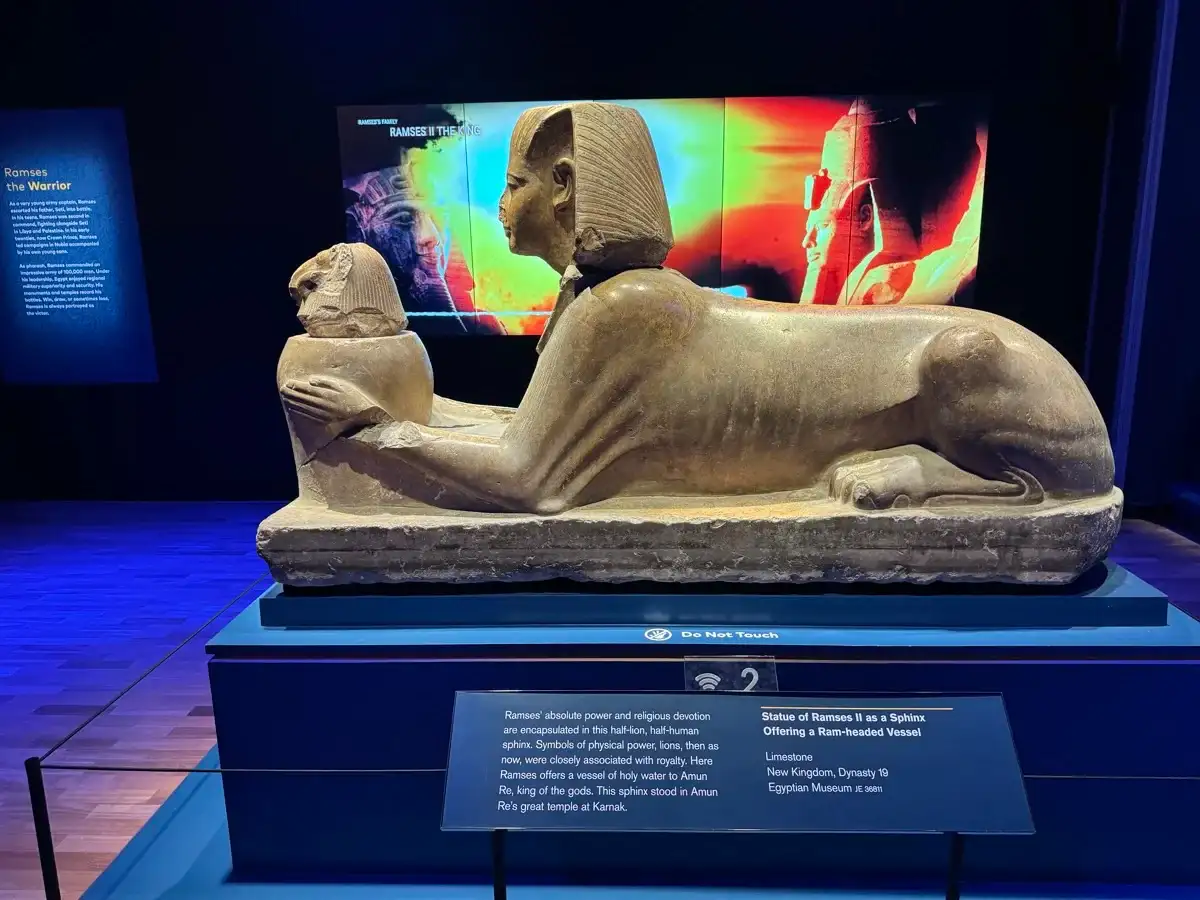
As at the Art Gallery of New South Wales, entry to the permanent exhibits at the Australian Museum is free. But special temporary exhibitions may require a paid ticket to enter. Such was the case with the “Ramses & the Gold of the Pharaohs” exhibit on when I was there.
This time I paid to go in.
The exhibition started with a four-and-a-half-minute video. No, I didn’t time it. I know it’s four and a half minutes because when I got to the entrance of the exhibition a rope barred my way. A staff member told me, “There’s a four-and-a-half-minute video and it just started. You can go in when that’s over and it’s about to start again.”

Of course it just started. Maybe I was imagining things, but I could swear that as I approached the entrance I heard someone inside shout, “Hurry! He’s coming! Start the film so we can make him wait!” But that might have just been something the paranoid voice inside my head conjured up.
The video told the story of Ramses, his character (self-promoting), his rule, his battles, and the buildings he initiated. Inside, the exhibition included whole or, typically, portions of statues, including one with Ramses as a sphinx; jewelry; a cat coffin’ a cat mummy; a crocodile coffin or two; some coffins of other Egyptian bigwigs; Ramses’ coffin; and some other artifacts I’ve forgotten.
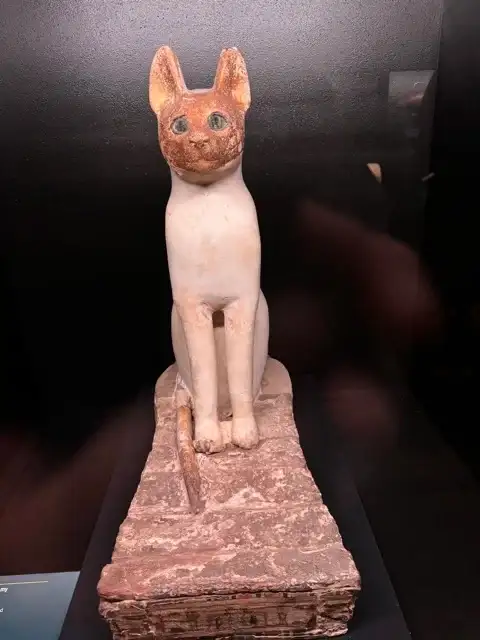
Most (all?) of the objects on exhibit were on loan from Egyptian museums.
Despite the title of the exhibition, there were far more stone statues and other objects of stone or other materials than gold pieces. I didn’t consider that a serious drawback.
In summary, it was a great exhibition.
And with that, I ended my day’s tourist activities and walked back to my air-conditioned hotel. More tomorrow.


ASIDE: Legal Grounds
I meant to include this with this morning’s post, but I forgot. On the way to St. Mary’s Cathedral, inadvertently by way of Hyde Park, I saw a sign naming a cafe as “Legal Grounds Café.” I guess if the coffee isn’t fresh, it isn’t legal.
Readers who live in, have lived in, or are familiar with Boston will get the reference. Everyone else, Google “Legal Seafoods.”
Discover more from Joel's Journeys & Jaunts
Subscribe to get the latest posts sent to your email.
Yes, there is an art historian around here who would have paid to see what you missed, but then again, I didn’t fork out the ticket to Australia, did I? I am just along for the ride. Quite intrigued by what you showed, though. I am also fascinated by great rock specimens, so I am glad you showed us a beauty, along with lots and lots of bones. And then there is good old Ramses. He aspired to be larger than life and look at where it got him – his stuff touring the world thousands of years later. Speak of aspiring to be larger than life and touring the world, I don’t think that even I would miss identifying Boris Johnson, and I can never recognize anyone from a photograph. Quite the eventful day!
Admittedly, our interests differ in some areas.
Something I meant to put in the entry about the Ramses exhibit, but I forgot to include, is that Ramses lived to be 90 and sired about 100 children from at least, I think the number given was, 8 wives. The exhibit said “at least,” so they weren’t sure, and I might have misremembered the number they gave. Living to 90 without the aid of modern medicine is quite something. And, 100 children? Heck, the species might have gone extinct without him. (Obviously, I’m joking, but imagine the childcare costs.)
I’m like you. I usually can’t recognize people from pictures, but Boris Johnson has such a unique look. And the protective detail triggered me to be a tad more observant than I usually am.
From Horus to Boris and the Bone Ranger: a fascinating admixture.
I was quite taken aback by that unexpected appearance. The Bone Ranger, that is, but Boris too.