Herschel Museum of Astronomy, More Bath, and More Bristol
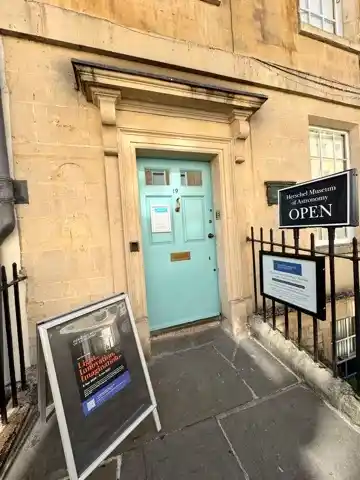
Still on my day trip to Bath from Bristol, after lunch I visited the Herschel Museum of Astronomy and then wandered around Bath some more. I returned to Bristol around mid-afternoon and wandered a bit more there.
This is my last entry from Bristol. At the end, I’ll post a summary of my time while based in Bristol, including my two day trips to Bath.
Herschel Museum of Astronomy
I know what most of you are thinking. “The Herschel Museum of Astronomy. Ho, hum. This is going to be a bore. I’ll stick with it, but I’m not going to be happy about it.”
Some of you might have left out the “I’ll stick with it” part. But if so, you’re probably no longer here to read this. Pity.
It might indeed be boring, but only because of my writing. Not because the museum is tedious.
For one thing, the Herschel Museum of Astronomy is too small to have an opportunity to become tedious.
The museum is in one small townhouse on a reasonably nondescript street. It was the home of William Herschel. Or at least it was one of his homes. He lived in four different Bath homes at different times. He moved as his space requirements necessitated it. But this home was a special one.
I don’t know if this is embarrassing for me, or if, instead, like me, very few people knew this, but before researching Bath and its sights, I don’t recall ever having heard of William Herschel. There are two possibilities in that: One, I never heard of him before, or two, I heard of him, but completely forgot. They are both equally possible, and neither says anything good about me.
He started his adult life as a musician and composer who dabbled in astronomy as a hobby. He became fascinated with astronomy and had , if you’ll pardon the pun, some stellar successes in it. He then switched to the field full-time.
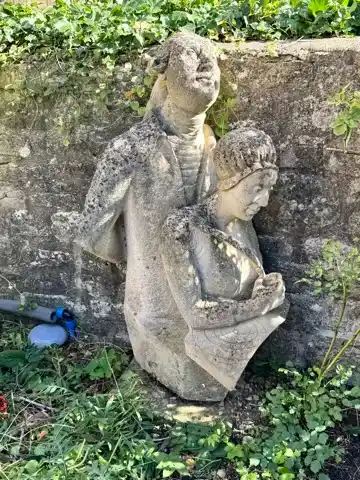
William’s son, John Herschel, became a polymath. Astronomy was one of his fields too. John made a voyage to the Cape of Good Hope in 1833 to map the southern skies. But this wasn’t his home, and this isn’t about him.
When I use “Herschel” here without a first name, I’m referring to William, the dad.
So why is William Herschel and this home so special? I’m glad you asked.
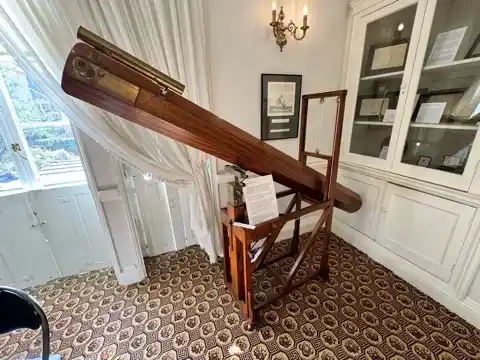
On the night of March 13, 1781, Herschel peered through a seven-foot telescope he set up in his backyard—this backyard—when he spotted a celestial body that had never been seen before, or at least never reported before.
At first, he thought it was a comet. But he pointed it out to some other astronomers who told him that no, he’d discovered a planet. On that very spot, William Herschel discovered Uranus. The discovery of that planet doubled the size of the then-known solar system.
He didn’t call it Uranus. He called it Planet George. How incredibly boring.
Another name would have had much more pizzazz. Planet Joel has a nice ring to it, doesn’t it?
But King George was president at the time, so he named it after the king.
King George was so impressed with Herschel that he made Herschel his personal astronomer. Oh, so that’s why Herschel named it Planet George.
The Europeans weren’t happy about a planet being named after a British king. They were the ones who renamed it Uranus, thus launching an untold number of juvenile anglophone jokes.
The discovery of Uranus wasn’t Herschel’s only accomplishment. He made other astronomical discoveries, discovered infrared radiation, and worked with the inventors of photography to help advance that. Sure, but he never programmed a mainframe computer or wrote marketing literature for business-to-business software companies as I did during my now-finished career. So, I’ve got him beat there.
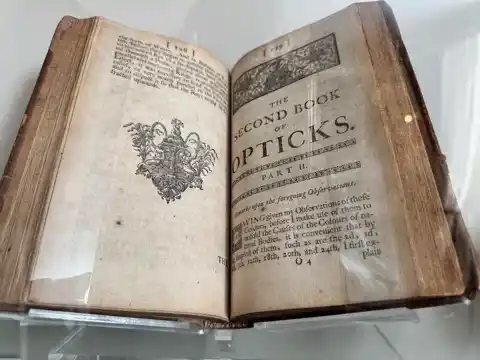
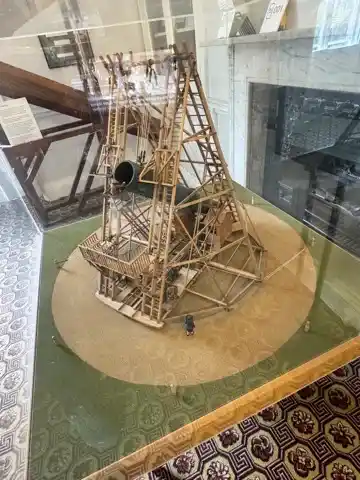
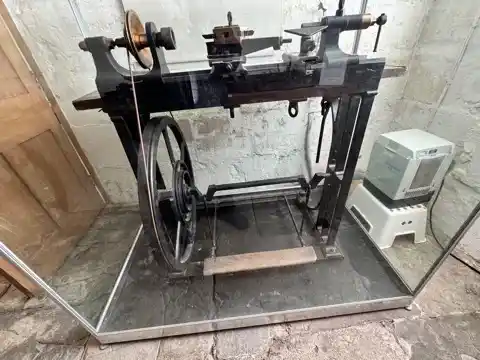
The exhibits in the museum are in rooms on the ground floor, first floor, and basement. They include text panels and artifacts. The artifacts include a replica of the telescope that Herschel used to discover Uranus and a scale model of a much larger telescope that he designed. There are also other telescopes, a lathe that King George gave to Herschel, a second edition of a book by Sir Isaac Newton, household items, and more.
The door to the backyard is unlocked so visitors can go out. The person at the front desk said that in Herschel’s time, the backyard was much more open. Back then, Herschel could see all the way to the river, two or three blocks away. Today, all you can see is some privacy vegetation blocking the view of the house immediately behind the Herschel house. So, I can’t say I stood in the exact spot Herschel stood when he discovered Uranus. Perhaps he was further back in the then open backyard. But I was close. So, that was very cool.
(By the way, I got the above information from a combination of my memory of what the guy at the front desk told me and photographs I took of the information panels. I’m reasonably confident that, assuming those sources were correct, I got most of it right.)
Wandering Around Bath
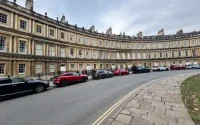
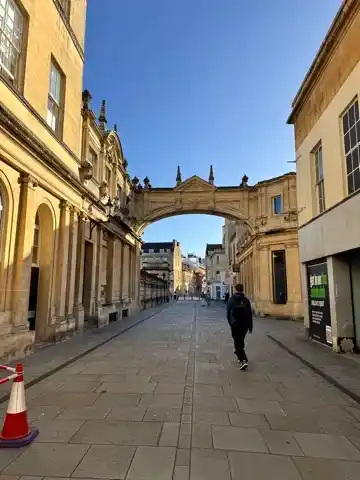
After I left the Herschel Museum of Astronomy, I did some more wandering around the streets of Bath, including along the River Avon. I don’t have much to add, other than that I love the city. It is such an enjoyable place to walk around, and it is very atmospheric, whatever the heck that means.
River Avon in Bristol
The train station in Bristol is near what Google Maps and Apple Maps label as River Avon. So far in my visit, I hadn’t been on that side of the station. Instead, I’d walked around the watercourse and basins that had been Bristol’s port when it was a major port city. I believe they were dug artificially.
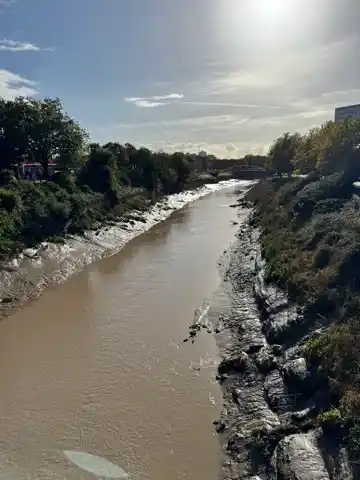
When I got back to the Bristol train station, I walked to the River Avon and along a sidewalk between the river and a street that runs beside the river. I walked along the sidewalk for only a short distance.
The river hasn’t been developed for tourists there. The banks are fairly steep and deep. The river looked very shallow and extremely muddy.
I think the River Avon is tidal at that point. The lower portion of the banks was very wet mud. I suspect it was low tide and the river is much higher at high tide. But I’m not certain.
That look at the river ended my activities in Bristol.
Bristol Summary
Bristol is well worth a visit for travellers with enough time on their hands, provided they’re not thrill seekers. I don’t mean to demean Bristol in the least by saying “provided they’re not thrill seekers.” I mean that as a very positive attribute.
I tend to be nervous about a great many things. For example, climbing to the first step of a step ladder triggers my acrophobia. I still push myself to climb to high points when I travel because I love the vistas, but that doesn’t mean I’m not phobic, sometimes excessively phobic, when I do.
I don’t know why my mind went there other than to say that Bristol is an enjoyable, non-threatening place to visit. I don’t imagine it’s on any traveller’s bucket list, but there’s a river, canal, and basin to walk along, beautiful churches to admire, pleasant parks to relax in, attractive streets to stroll along, high places to view vistas, and more.
What might edge Bristol onto a bucket list is nearby Bath. It’s beautiful and fascinating.
I stayed in Bristol rather than Bath because there’s more train service to Bristol Temple Meads, Bristol’s main train station, than to Bath Spa, Bath’s main train station. When planning this trip, I couldn’t find any direct trains from Leeds, my previous stop, to Bath at reasonable times. Nor could I find any direct trains at reasonable times from Bath to my next destination after Bristol. In both cases, if I based myself in Bath, I would have had to change trains in Bristol both coming and going.
You can catch any of a few trains every hour during the day that run between Bristol and Bath. Depending on which train you get and whether it makes any stops between the two cities, the ride takes between eight and a little more than fifteen minutes. So, Bristol made more sense as a base.
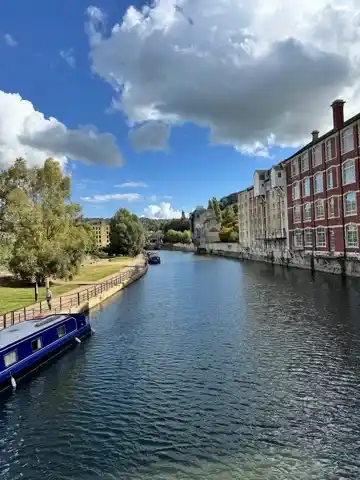
Bath, as I said, is spectacular. The streets are very clean and handsome. They include several engaging pedestrianized shopping streets. The architecture along the streets is attractive. The Bath Abbey and the Roman Baths are incredible. The River Avon is pretty as it passes through Bath. And there are pleasant parks.
I stayed five nights in Bristol, which translated into four and a half days. Two of those days were taken up by day trips to Bath.
Had I stayed only in Bristol, and not gone to Bath, I probably would have been bored by the end of my stay. But I did go to Bath. There are sights in both cities that I didn’t have enough time to see. So, I probably would have enjoyed a day, or two, or three more there.
Discover more from Joel's Journeys & Jaunts
Subscribe to get the latest posts sent to your email.