Gyochon Village & Woljeonggyo Bridge
I engaged in a bit of a lazy morning in Gyeongju today. I walked to, and then around, Gyeongju’s Gyochon Village. I then walked to and across the adjacent Woljeonggyo Bridge.
I know. I know. It’s shameful that I did so little. You’d almost think that this is a leisure trip. Wait. It is. Never mind.
갑시다!
(Google Translate tells me that’s Korean for “Let’s go!”)
Gyochon Village
Gyochon Village is a small enclave of traditional hanock houses. I don’t know if they’re all old traditional or if some are more recently recreated traditional.
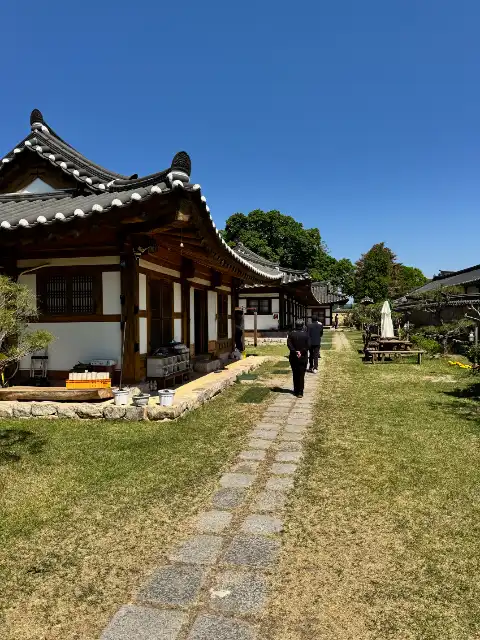
At least a few of the buildings have been around for a while and have signs in one to four languages that attest to the building’s heritage.
Most prominent tourist sites, or sites that aspire to prominence, have two to four languages on signs. If there’s more than one, English always makes an appearance. But when there’s only one, it’s of course Korean.
When there are four languages, I don’t know what the other two are. My guesses are Chinese and Japanese. Whatever they are, I can say with certainty that they are not French, Italian or any of the other Romance languages.
The named—named on signs I saw—Gyochon Village sights I visited were: The Historic House of “Rich Man” Choe, the Gyeongju Choe Family Academy, the Gyeongju hyanggyo, and the Korea Earthenware Exhibition Hall.
Historic House of “Rich Man” Choe
‘”Rich Man” Choe’ sounds like a gangster name, doesn’t it? It’s not. The Choe clan were a respected family known for their benevolence and ethical behaviour. As to the family’s benevolence, there are panels affixed to a wall in the courtyard that list, in four languages, the rules the Choe clan lived by.
The English version says:
Six Instructions
- Apply for the state examination ‘Gwageo, but do not accept an official rank higher than Jinsa
- Return to society any possessions worth more than 10,000 seok (about 1,440 tons of rice).
- In times of famine, never increase your farmlands.
- Receive travelers (sic) as well as visiting guests with warm hospitality.
- Never let anyone within a 100 li (about 40 kms) radius starve to death.
- Daughters-in-law should wear cotton clothes for no less than three years.
I don’t know—be humble, be generous, treat people well. It sounds pretty woke to me.
Although the daughters-in-law thing just jumped right in there out of the blue, didn’t it? I’m not saying I added it. It was there on the sign, verbatim. Be a terrific person, but force your new daughters-in-law to wear cotton for three years. What’s that all about?
What is the guy’s real full name? I don’t know. The sign outside only refers to the primary occupant as “the rich man Choe.” It refers to him that way a few times.
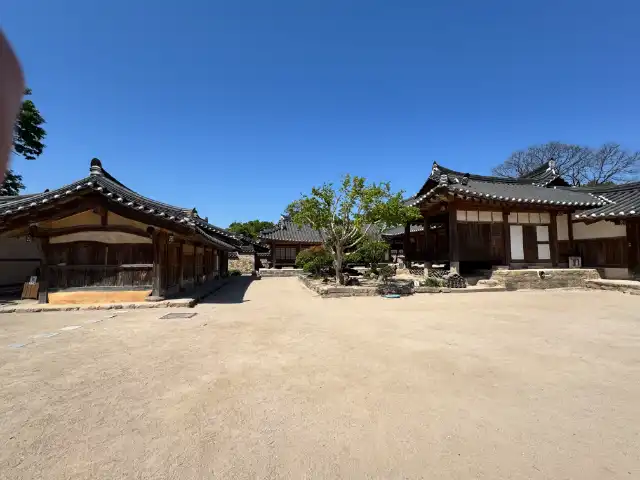
The “house,” which is close to the nearby stream and in the heart of Gyochon Village, is more than just one building. It’s a small compound. The sign provides some facts and figures about it. For example, it says the house was known to have been built around 1779.
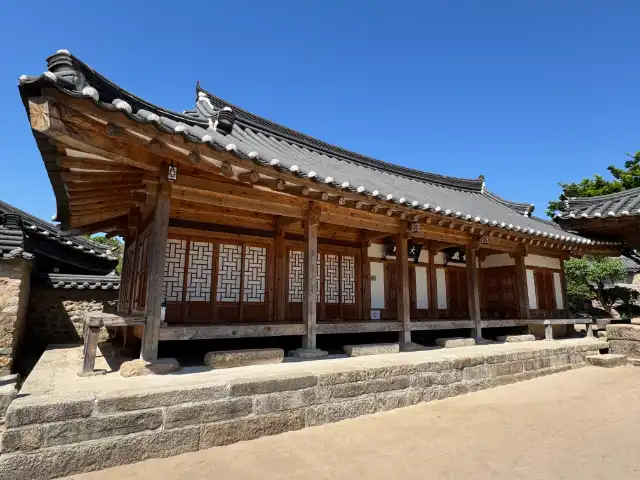
It also gives the original size of the house using a measure I’d never heard of. It says the house “was originally a large 99-kan house.” I guess I’m not the only person who’d never heard of a “kan” as a measure of size because the sign goes on to parenthetically say that one kan is “the space between two columns, roughly 3.3 meters.”
As I said, it was more like a compound than a house. It consisted of “a munganchae (gatehouse), sarangchae (men’s quarters), anchae (women’s quarters), family shrine and storehouse.” According to the sign, the shrine was positioned unconventionally in the compound.
Gyeongju Choe Family Academy
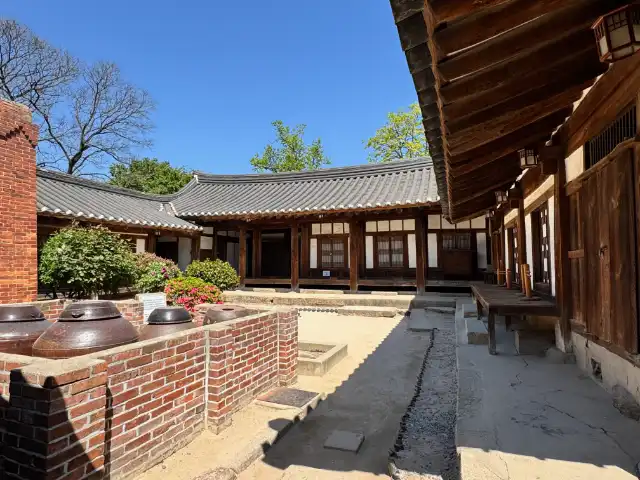
Another compound in the Gyochon Village is the Gyeongju Choe Family Academy. The sign in front of it expanded on the nature of the Choe family’s ethics and benevolence. “The Gyeongju Choe Family has succeeded to [for?] 12 generations for 400 years with wealth and honor (sic), showing the example of the Korean capitalism by coexisting with [the] local community.”
That being said, the city, not the Choe family, now runs the Choe Family Academy. Then again, now that I’ve said that, I don’t know if the Choe family is still a thing in Gyeongju.
There are a few old, traditional buildings in the academy compound.
Gyeongju Hyanggyo
“Hyanggyo” is a generic term for a “local, public education institution of the Goryeo (918-1392) and Joseon (1392-1910) periods.” A hyanggyo teaches Confucianism.
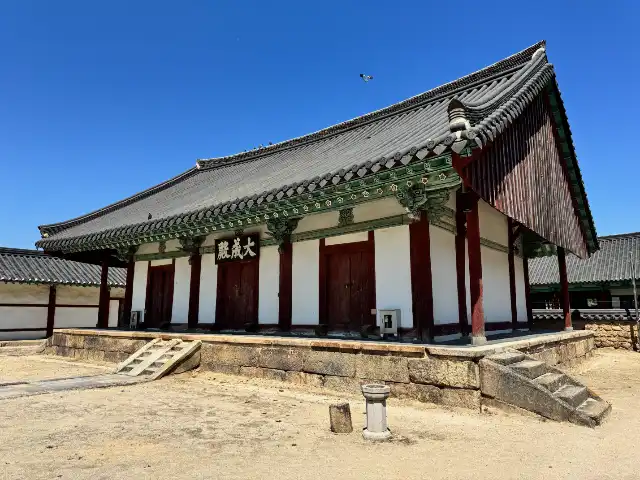
The hyanggyo in Gyochon Village looks old and mostly unadorned. Then again, Confucianism holds simplicity in high regard, so mostly unadorned might come with the territory. I don’t know.
In addition to the old buildings, there’s an old well. A sign beside it tells a story. Myth has it that “this was the site of the royal residence where Princess Yoseok, daughter of King Muyeol (r. 654-661) of the Silla kingdom, lived. The princess, after being widowed in 655, gave birth to a son out of wedlock by the monk Wonhyo (617-686) sometime before 660. This son was Seol Chong, a renowned scholar of the Unified Silla period 668-935).
“It is said that he became a great scholar after drinking this well’s water, which became known as the ‘water of cleverness and brightness.'”
The water of cleverness and brightness, which will turn you into a great scholar just by drinking it. If only. I’d bottle it and sell it to kids thinking of applying to an Ivy League college or professional school for an infinitesimal fraction of the price they’d pay to get a degree there.
(Some readers of this journal might take exception to that plan. For everyone else. Stay tuned. I’ll announce pricing as soon as I’m able to sneak back into the Gyochon Village hyanggyo and siphon the water out of the well.
And, hey, to all those people who do object, is it any worse than students using AI to write papers for them rather than taking the time necessary to learn and comprehend the material? At least with the water, the wisdom gained would become inherent in them.)
Korea Earthenware Exhibition Hall
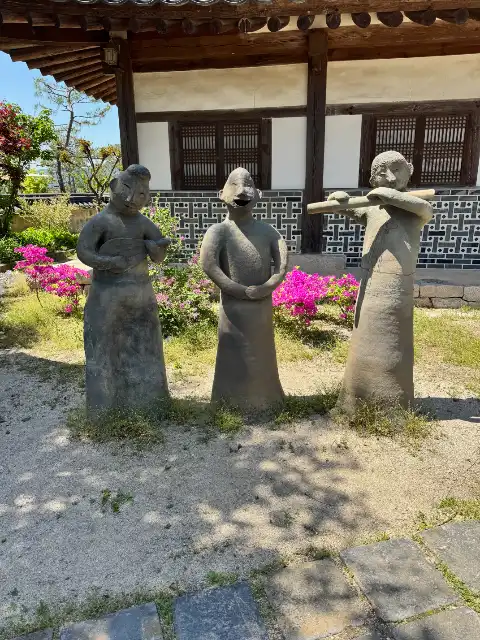
The last of the named buildings that I spotted on my stroll through Gyochon Village and went into titled itself as a Korea Earthenware Exhibition Hall. It exhibited first-edition Slinky toys.
No, it didn’t. It exhibited earthenware.
Oh, shut up. Why do you always have to spoil my jokes?
Because your jokes suck so bad that to call them jokes makes a travesty of the word.
Shut up! Shut up! Shut up!
(I hate it when I argue with myself. Why can’t I just learn to get along?)
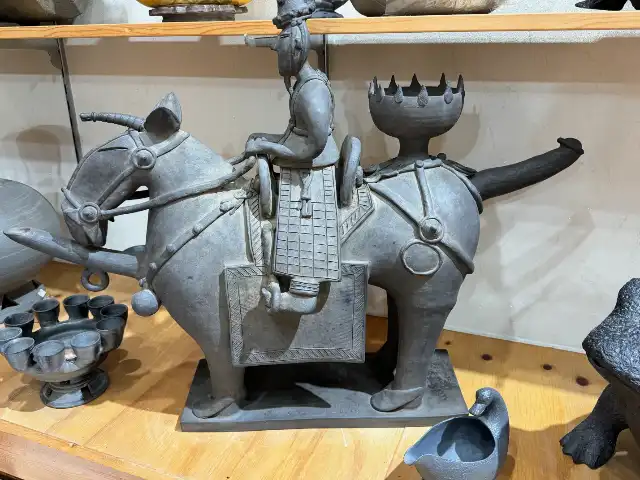
There are some large statues in the front yard of the exhibit hall. Smaller pieces are inside in one small room. Another room looked like it was a studio.
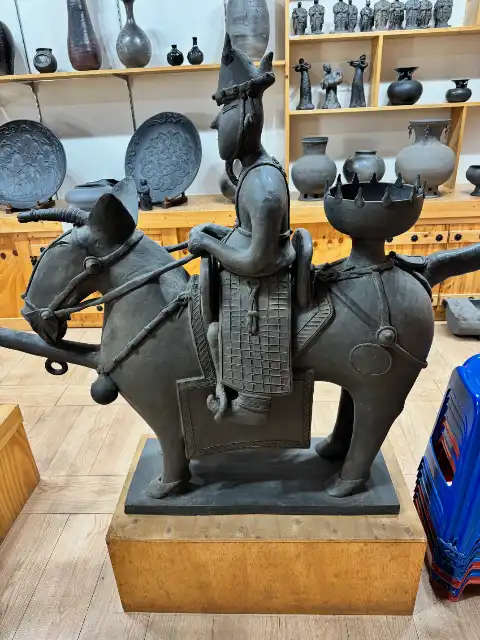
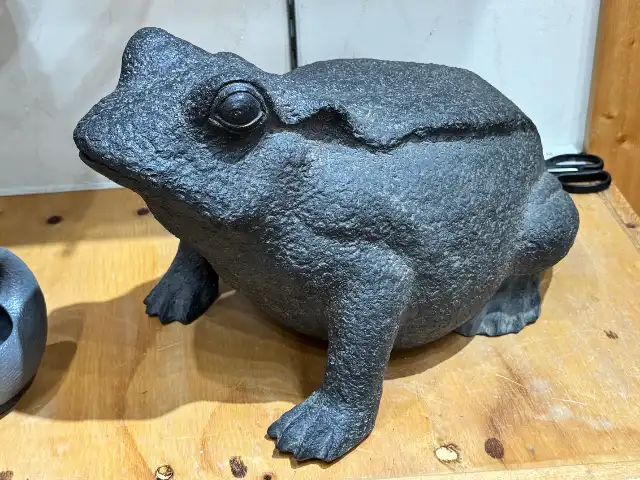
Many of the pieces on display were primarily artistic. Others, such as bowls, plates, and teapots, were primarily utilitarian. Many of the artistic pieces were whimsical or the stuff of legend.
Pictures of some of the pieces inside the Korea Earthenware Exhibition Hall:
Woljeonggyo Bridge
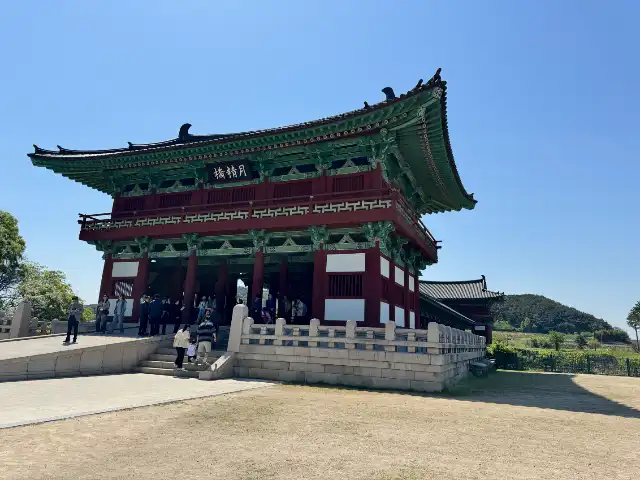
Woljeonggyo Bridge crosses a stream, Muncheon Stream, that forms one of the borders of Gyochon Village.
(“Woljeonggyo Bridge.” Say that three times fast. Or, better yet, slowly. Or at least once slowly. Seriously, I have no idea how it’s pronounced. I’d like to hear it spoken. Hearing it three times slowly probably wouldn’t be enough to catch it and be able to replicate the sounds, but I don’t want to be too demanding.)
Woljeonggyo Bridge is a substantial, beautiful bridge. But it’s not the original. An information panel beside it says that the Woljeonggyo Bridge was built in 760 and was 60.57 metres long.
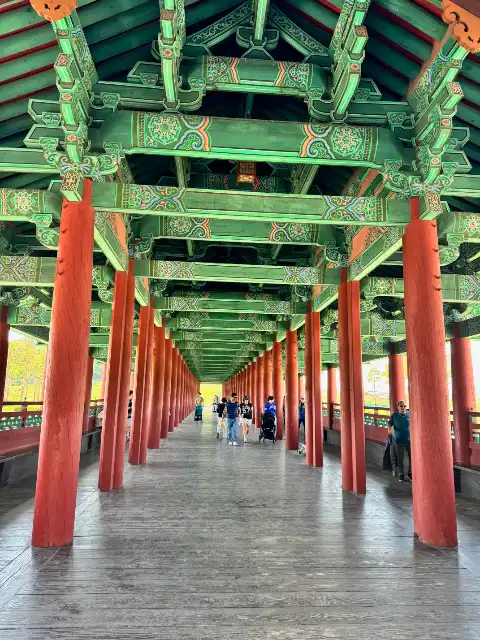
The sign didn’t say how it was destroyed, but it was. After considerable research into the remains of the bridge, it was reconstructed recently. The sign didn’t say when the reconstruction happened, but one of my guidebooks says it was restored in 2009.
The bridge is covered and has a beautiful ceiling for its entire length.
There are small, two-storey towers on either end of the bridge. The stairs up to the second floor are open to the public. I went up one of them, thinking I might get a view. I thought wrong.
There are windows on the second floor, but there were closed wooden doors with signs on the inside of them saying not to open them. There is some, but not much, information about the bridge up there. I should have looked closer at the tower before I went up. I probably wouldn’t have climbed the steps if I had.
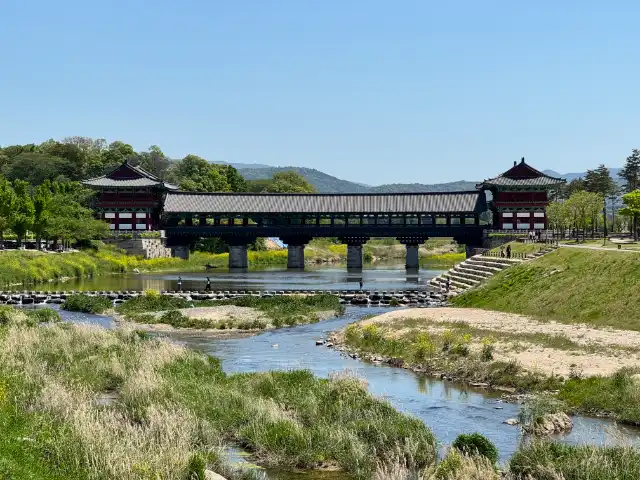
I didn’t go up the other tower, but when I was off the bridge, I looked at it and saw that it, too, had closed wooden doors blocking its windows.
Lunch
For lunch, I walked back into Gyochon Village and ate in an attractive hanok house restaurant with a lovely garden. I ate a large, but light, seafood pancake that came, unasked for, with an array of small dishes containing Korean side dishes. The side dish thing seems to be standard with all restaurant meals here.
After finishing my lunch, I called an end to the morning.
Everything I saw this morning was clustered in or next door to the relatively small Gyochon Village, and most were fairly small sights. (Just to be clear, I don’t think Gyochon Village is politically separate from the city of Gyeongju. It’s a neighbourhood within it.)
There. How can you get more lazy than that?
- You could stay in bed all day and not do anything.
- You could get out of bed, but never venture past the breakfast table.
- You could hire someone to see sights for you and then report back with descriptions and pictures (maybe in blog format).
- You could…
Alright. That’s enough. There are plenty of ways you could get more lazy than that. Never mind.
Discover more from Joel's Journeys & Jaunts
Subscribe to get the latest posts sent to your email.
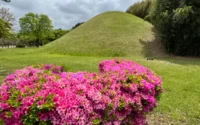
Daereungwon Ancient Tomb Complex
Gee, I’m in Gyeongju

Thank you for your blog. Reading it has given me the right to say that I have done something on this lazy Saturday morning. I am thinking I might go out in the neighbourhood this afternoon, but then I might not. That is lazy. Not gallivanting around tourist sights in Korea.
From an expected quarter taking umbrage: having a sip of that water of cleverness and brightness is what you want to do BEFORE you go to one of those Ivy League schools. Then you can use their resources to become a scholar and advance knowledge rather than fill your coffers by using them to fast track into financial consultancy. (There is a double haruumph in there. Can you spot it?). Don’t get me started on the state of their current woes, but if you have the opportunity to be instrumental in assisting a healthy realignment, don’t sell that water too dear, dear.
Making inferences based on some hard won scholarship on early modern societies, I might guess that the newlywed women were restricted to simple garb for the first years of their marriage to avoid the temptations of conspicuous consumption and the unrest caused by ensuing pride and envy, with the added bonus of being an expression of female modesty. Women of a certain class generally had very little outlet for social and personal expression beyond their clothes. Hence the patriarchal impulse to nip the temptation in the bud. However, not having done research on Korean societies, I leave the explanation to the esteemed scholarly experts.
I found your blog stimulating at another juncture, when it sent me momentarily imagining ancient ceramic Slinky toys. I could have stayed with that one for a while working out the logistics if you hadn’t brought me back to reality and replaced my musing with that really cute frog ceramic. Did I say I was having a lazy morning?
You’re welcome.
“Lazy” isn’t necessarily pejorative.
Re the knowledge and insight you provided: You obviously drank the water.
Cute frogs will do that, won’t they?