Senso-ji Temple and More

After a tasty sushi lunch near the Sumida Aquarium that I visited this morning after the Skytree, I took a walk over to the highly rated Senso-ji Temple. From there, I used my walking tour app to find nearby attractions that were lesser rated, but still recommended.
I didn’t think of it at the time, but should I have had sushi near the aquarium? Did my lunch deplete some of the tanks somewhat?
That, aside. Let’s go, shall we?
Senso-ji Temple
In contrast to the Meiji Jingu Shrine that I visited yesterday, which is embedded in a large, lush forest away from the core, Senso-ji Temple is very much a city temple.
It’s deep in the Asakusa district of Tokyo. The residential and commercial buildings of the high-density neighbourhood surround the shrine’s compound.
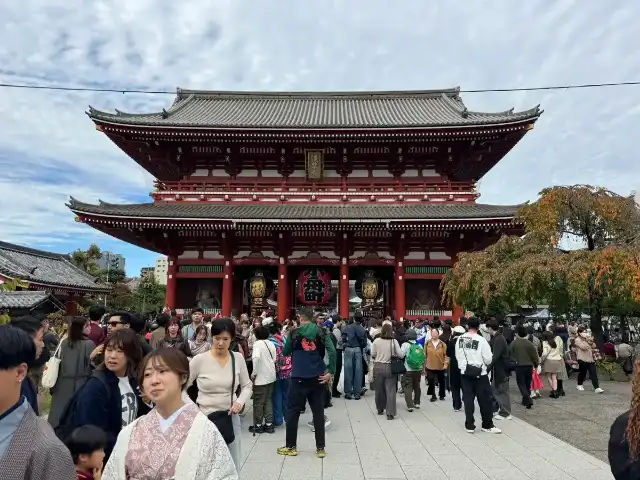
One of my guidebooks says that Senso-ji temple is Tokyo’s most sacred and spectacular temple, along with being its oldest. That’s a bold statement. Spectacularness is an objective evaluation, and sacredness isn’t exactly quantifiable. However, I will grant them that it is spectacular. As to how sacred it is? How should I know? I’m an atheist Jew. What do I know about Buddhist sacredness?
As to its age. Well, yeah, sort of. The temple dates back to the seventh century. It survived a major earthquake in 1923. But it didn’t survive Allied bombing during World War II. Consequently, most of the major buildings have been reconstructed since then. So, the history of the temple as an institution is quite old. However, the buildings themselves are replicas of old buildings, but relatively new replicas.
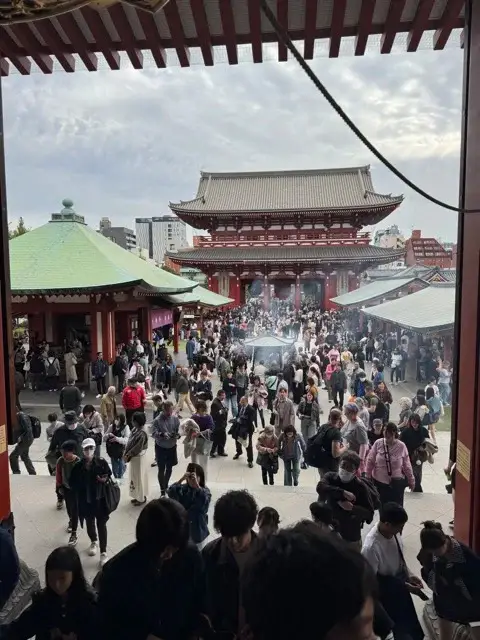
A street a few blocks long runs directly to the gate building of the Senso-ji Temple. Small shops selling foodstuffs or souvenirs line one side of that street. There were also some stalls around the edges of the temple compound selling similar items.
The gate building is predominantly red wood, with two tiers of grey-green pagoda-like overhanging roofs. Three giant lanterns hang inside the gate. The shrine itself has a similar-shaped roof structure, but with only one tier that heavily dominates the building.
A large incense-burning pedestal sits in the courtyard in front of the main shrine. A constantly changing cluster of people surrounded the pedestal, swooshing their hands passionately to wash the incense smoke over them.
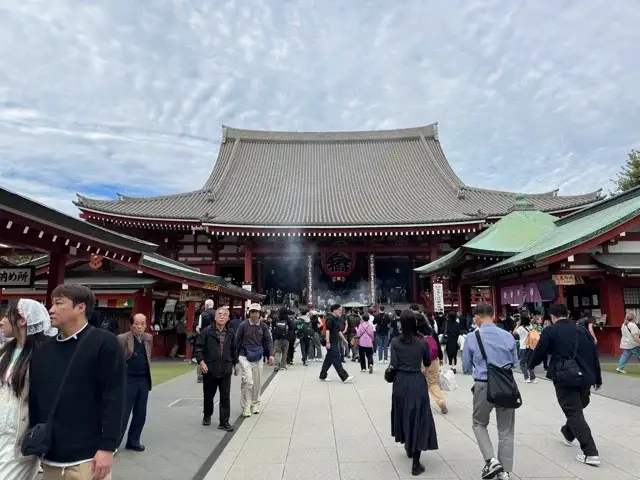
The shrine is divided into two sections. The general public is allowed into the section closest to the front courtyard. Only worshippers can go into the back section, where there is much more ornamentation and many more religious items, although you can see into one from the other.
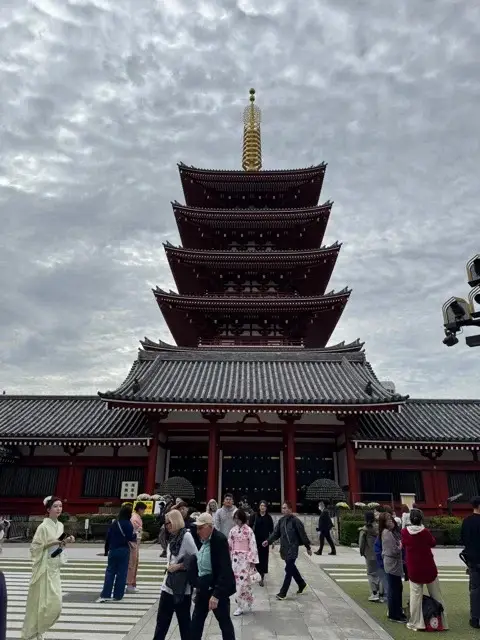
The temple compound also contains a beautiful five-storey pagoda, other, simpler structures, and some statues, including a large Buddha and a pagoda sculpture.
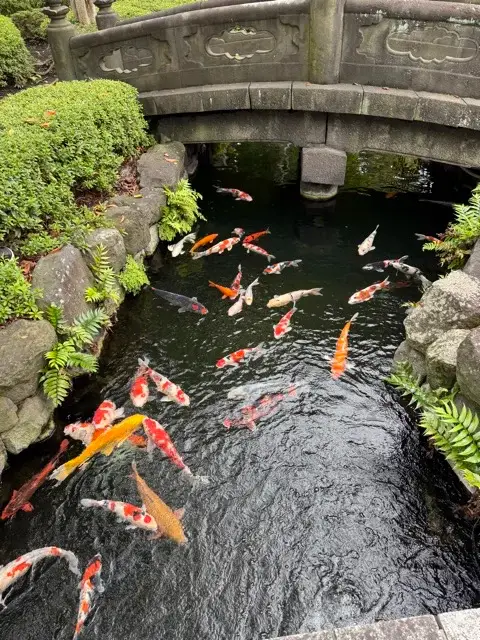
There is a small garden with a pond and a waterfall in the Senso-ji compound. One end of the pond was filled with a cluster of carp. I don’t know why they clustered at that end. Nobody was feeding them, and a sign said not to.
How could I resist posting a picture of the carp here? With the Sumida Aquarium in the morning, this makes two posts in a row with at least one picture of fish in it (and this morning’s post, which included the aquarium, had multiple fish pictures. I know of one loyal reader who will enjoy that.
I don’t know if it was because it’s Saturday, but the public portion of the temple and its compound were overly crowded today. The souls of sardines packed into a tin would have felt pity for me if they saw how heavily thronged the temple was today. Then again, they would have envied me for being, you know, alive.
There were a lot of sightseeing tourists among the crowd, but I’d say the majority of the people were there to worship. There were also some women dressed in beautiful kimonos and men attired in traditional Japanese men’s attire. Some were having pictures of themselves taken. Others were merely wandering around without a camera visible among their party.
Asakusa Shrine
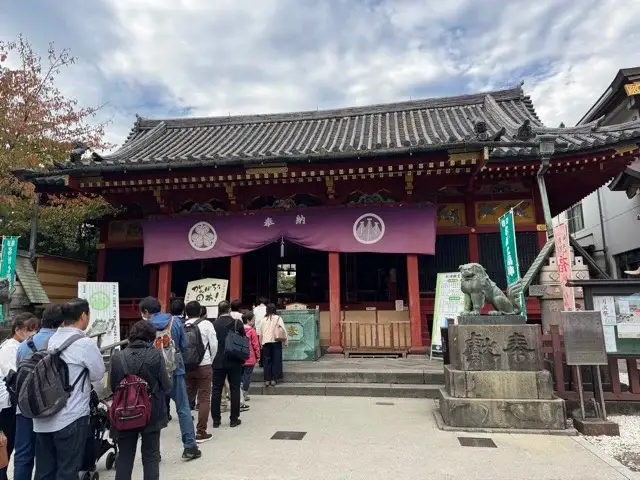
The Asakusa Shrine sits right beside the Senso-ji Temple. It’s much smaller and more unassuming. There was a mostly single-file line of people in front of the shrine, waiting for their turns to briefly worship individually in the direction of the shrine in front of them.
The Asakusa Shrine also dates back to the seventh century, so I assume that it and the Senso-ji temple have always been closely linked, particularly because they are almost within the same complex. I didn’t see anything in my information sources that said that the shrine has been rebuilt, so I don’t know if it survived the Allied bombing and is the original.
Suzukien Tea Shop
My walking tour app recommends the Suzukien Tea Shop (also known as Suzukien Asakusa) as an attraction.
Suzukien Tea Shop does have tea, but you don’t go there for tea. You go there for matcha gelato. One of my guidebooks also recommends it for that.
It has seven different matcha gelatos, each numbered, along with some other flavours. The matcha versions have different matcha intensities. Number seven is the strongest and uses premium matcha. They charge more for that.
You can order one scoop or two (they aren’t overly generous with their scoops—not particularly stingy, just not overly generous) in a cup or a cone. If you order two scoops, they will not sell you two number seven scoops. You must choose something else for your other scoop. I chose number six to go with my number seven.
There are signs in the store that say you can’t walk and eat. You have to eat in the store. There’s a small room for that purpose upstairs. (The building is too small for much more than the sales and scooping area on the first floor.)
It is delicious and was well worth the long wait in line before I could order and get my gelato.
Sumida Park
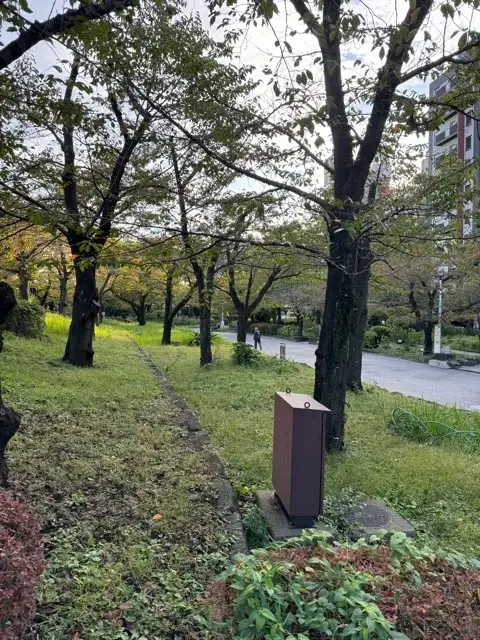
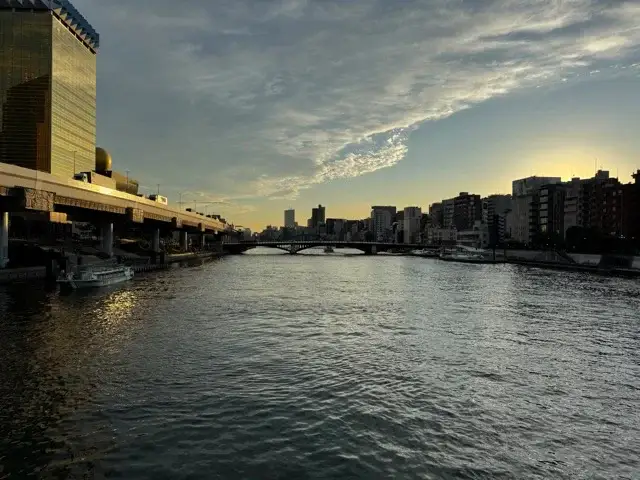
Sumida Park is effectively two parallel parks, one on either bank of the Sumida River. Bridges at the ends of the parks link the two. The bridge at one end carries motor vehicle traffic, with sidewalks on either side for pedestrians.
The other bridge is fairly wide, but it is only for cyclists and pedestrians.
The Sumida River runs roughly north-south, but it’s angled slightly to an east-west direction. Neither of the parks on either side of the river is particularly wide, but they are both the equivalent of several blocks long.
The park on the roughly western side is the wider one. It contains a baseball diamond and another sports area. There were also trees and some flowers. I read that a lot of the trees are cherry and plum trees that bloom in the spring.
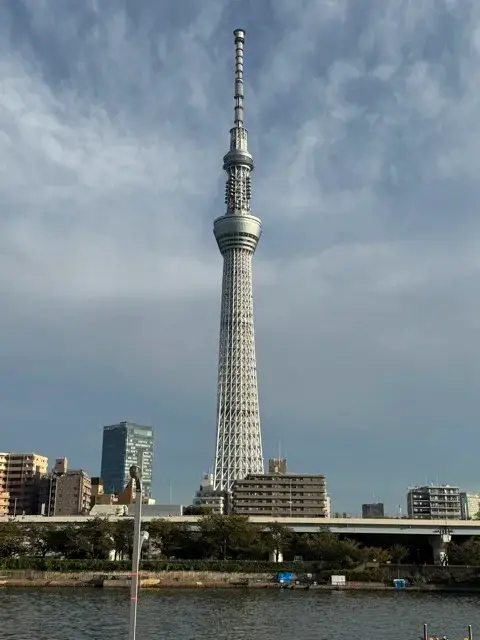
The park on the west side provides some of the best views in Tokyo of the Tokyo Skytree.
The park on the generally east side of the river is narrower and is mostly just two parallel river walks, although there is one small section of wider parkland. The walk closest to the river is not much above the river. (I don’t know if the river is tidal at that point. If so, its height would vary with the tides.)
The parallel path that’s slightly farther from the river runs along the top of what I presume is a manmade embankment. I assume that because the embankment runs fairly precisely parallel to the river and the city away from the river is roughly the level of the lower riverwalk, not of the embankment between them. How the heck would that happen naturally?
I entered the northernmost part of the park on the west side of the river, walked along to the other end of it, crossed over the bridge there, and walked back up the riverwalk on the other side. I then headed back to my hotel. And here I am, writing up this journal entry that you’ve now finished reading.
Discover more from Joel's Journeys & Jaunts
Subscribe to get the latest posts sent to your email.

That was lovely. What healthy looking fish. Quite a good day, no? The temples look lovely and I was very interested in the account of the gelato. I thought you were time-tripping me, but surely it was Saturday? At least that is what Prof. Google tells me. But then, I hardly know what day it is here. Travelling does that…
So long for now, and thanks for all the fish.
Quite a good day, yes.
Did I mention the day in that post? If so and I didn’t say it was Saturday then I erred. It was indeed Saturday. I’ll go back and correct it if I made a mistake.
You’re welcome.
Here a temple. There a temple. Everywhere a temple, temple. Here a scoop, there a scoop. Everywhere a matcha scoop. Here a park, there a park. Everywhere a park park. Oh my goodness, I am barm(y). EIEIO.
Temples and scoops and parks, oh my. We’re off to see the … oh, never mind.