Still Raining. Still the Natural History Museum. Plus Victoria & Albert (V&A)
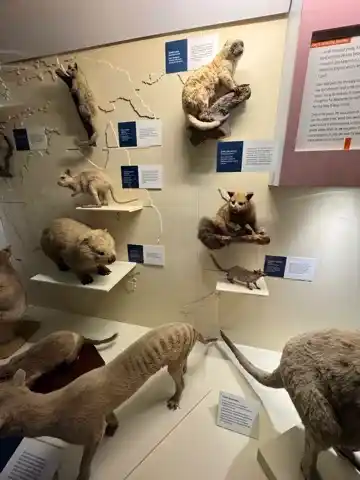
After I had a light lunch in the Natural History Museum this morning, I still hadn’t finished exploring it. I spent a little of the afternoon in there as well.
When I was ready to leave, the phenomenon that led me to choose indoor activities for today, rain, still hadn’t dissipated. So I dashed across the street to another large museum of an entirely different sort, the Victoria & Albert Museum, commonly known as the V&A.
In addition to being very close to the Natural History Museum, the V&A offered another benefit on this showery day that I didn’t learn until I’d explored it a bit. In the lower level of the V&A, there’s a tunnel that connects to a long pedestrian tunnel leading directly to the South Kensington Tube station. That’s the same station I disembarked at to go to the Natural History Museum this morning.
Thus, even if it continued to rain throughout the afternoon, I wouldn’t know it until I left the Tube to walk to my hotel. Bonus!
Finishing Up at the Natural History Museum
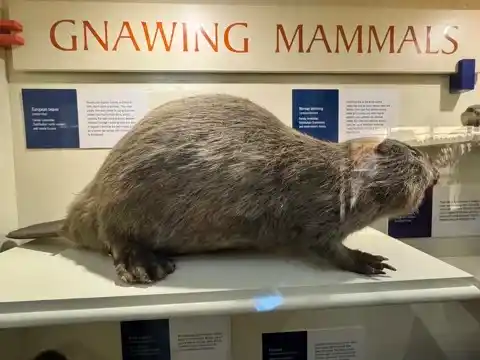
I still had a few galleries to see after lunch in the Natural History Museum.
The first one I tackled was the multi-room mammals gallery. The first room was an empty space except for the human visitors. I’m kidding. It had display cases of various land mammals, grouped by the type of food they ate, their type of skin or fur covering, or some other criteria.
There was also a room filled with marine mammals, including semi-aquatic animals like hippopotamuses.
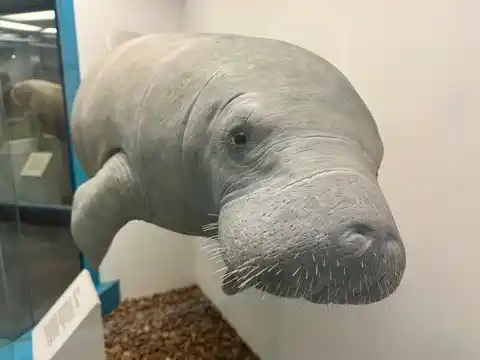
The room had a display about sea cows, which include manatees and dugongs, along with an extinct species. I’d never heard of dugongs, but that’s not what sparked me to mention them here.
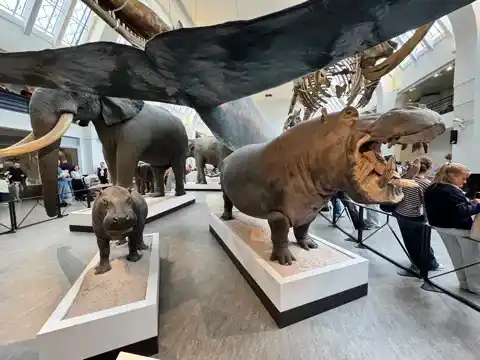
A sign associated with the display said, “Apart from cetaceans, sea cows (sirenians) are the only mammals that spend the whole of their lives in water. And they are the only aquatic mammals that eat plants.”
“Apart from cetaceans?” Cetaceans include all species of whales, dolphins, and porpoises. That’s one heck of a lot of sea creatures. So, saying, “Apart from cetaceans, sea cows (sirenians) are the only mammals that spend the whole of their lives in water” is kind of like saying, “Apart from Lake Ontario, the imbecile whom Americans elected as their president recognizes the legitimate names of all of the Great Lakes.”
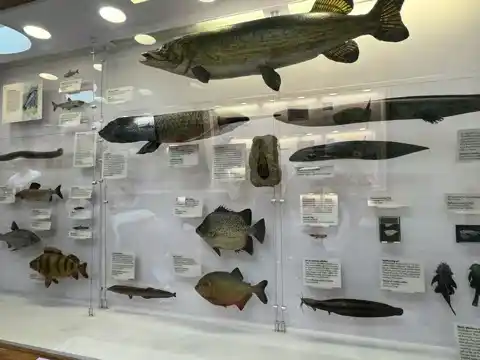
There was also a very small fish gallery.
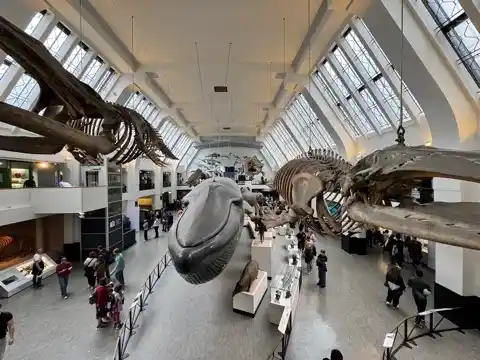
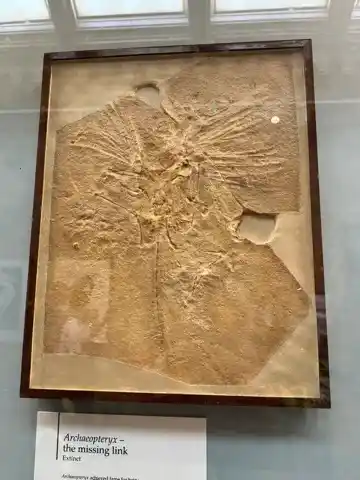
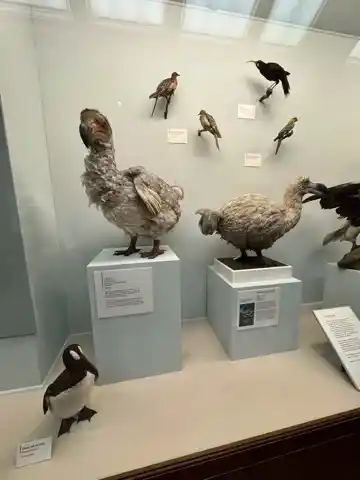
I then moved on to the evolution gallery. It has a large collection of stuffed birds. What does that have to do with evolution, you ask? There is also a cast of an Archaeopteryx fossil. If you don’t know what that was (the past tense is appropriate here; they’re extinct), you’re not alone. I didn’t either.
A sign said, “Archaeopteryx achieved fame for being the missing link between birds and dinosaurs. While it has the impressions of feathers – a feature now unique to birds – it also has many reptilian characteristics, such as teeth, clawed fingers and a long, bony tail.
“Archaeopteryx lived during the Mesozoic Era, 150 million years ago. Only 11 fossils of this species have ever been found, making each one incredibly precious to scientific investigation. This cast was made from the first fossil excavated in Germany in 1860.”
The sign went on to say, “You can see the original fossil on display in Treasures.” Damn. I missed it there. (I didn’t go back.)
The evolution gallery then moved on to talk about human evolution. It contained casts of early human skulls, along with recreations of the heads of those species with skin and hair, to compare and contrast them.
I next visited the “Earthquakes and Volcanoes” gallery. It talked about the causes and effects of volcanoes, the types of volcanoes, some history of them, and the types of rocks and minerals they create,
You’ll be happy to know that:
- Supervolcanoes are very rare. The last one occurred 74,000 years ago at Lake Toba in Sumatra, Southeast Asia. Then again, maybe that just means we’re long overdue for another one.
- In Britain, where I am as I write these words, there hasn’t been a volcanic eruption for 55 million years. But, then again, well, you know.
Okay. If you’re a worrier like me, perhaps knowing that won’t make you all that happy.
The gallery also talked about plate tectonics and the causes and effects of earthquakes.
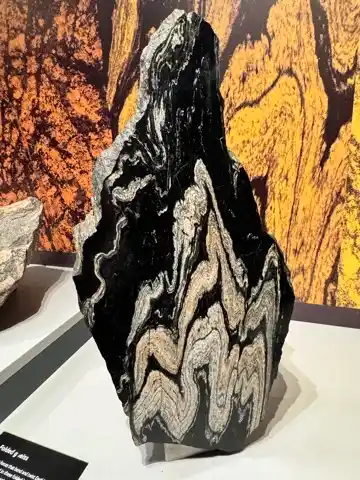
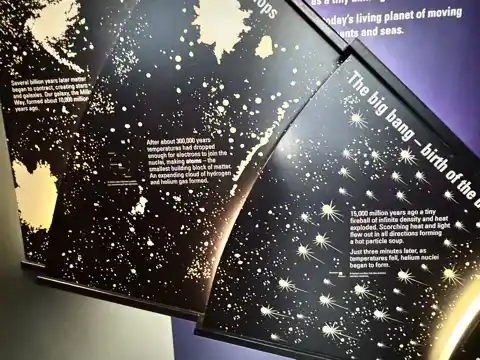
The final two galleries I visited included one that, briefly, obviously, provided a timeline of, and information about, the creation of the universe up to the evolution of humans. The other contained minerals. There were far fewer, by an order of magnitude, minerals in the mineral gallery I visited this morning. However, unlike the previous gallery, which only named the mineral and provided the location the sample came from, this one provided more information about minerals in general.
As I said this morning, the Natural History Museum is huge. I suspect I missed a section or two. But, for the most part, I greatly enjoyed my visit and found it very interesting.
And with that, I braved the downpour and left through the back exit and headed across the street to the V&A.
More photos from the Natural History Museum:

The V&A

Like the Natural History Museum, the V&A is listed as a must-see in my walking tour app and guidebooks. Also like the Natural History Museum, I have no recollection of having visited it before in my previous times in London, nor, until now, was there any record of me having done so in this journal.
I should note that if you search for V&A here, you’ll find one entry other than this one. Two years ago, I was in Dundee, Scotland. There’s a V&A museum in Dundee that’s also part of the V&A organization. It was completely different than the one in London.
I didn’t particularly enjoy the Dundee V&A, so I was reluctant to visit the one here. I’m glad it was raining hard when I finished with the Natural History Museum. Otherwise, I might have gone elsewhere. But I quite enjoyed this V&A.
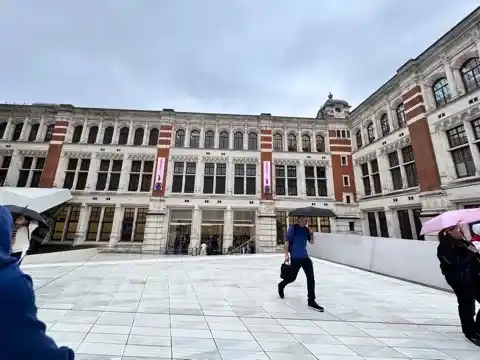
The V&A is a large, confusing-to-navigate art gallery/museum. I’m almost certain I unintentionally missed some of it.
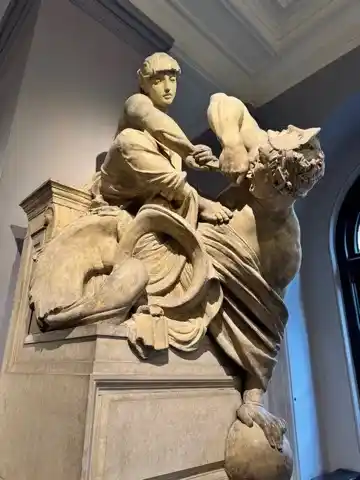
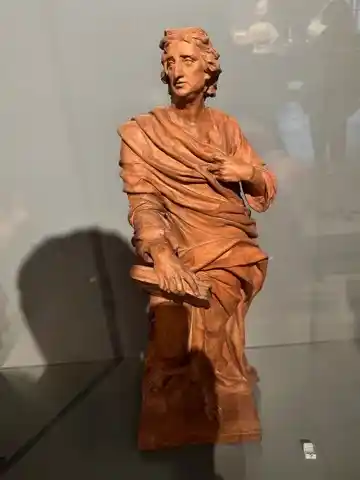
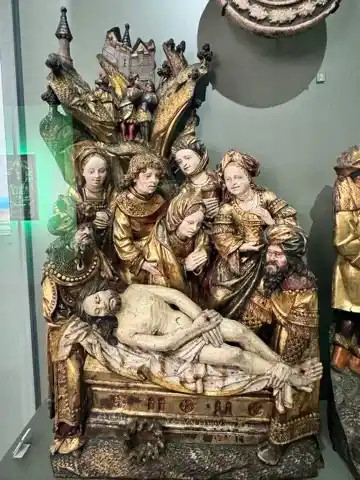
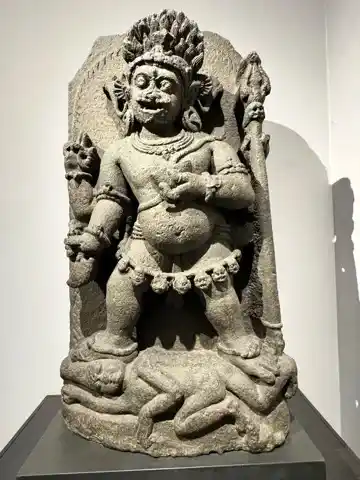
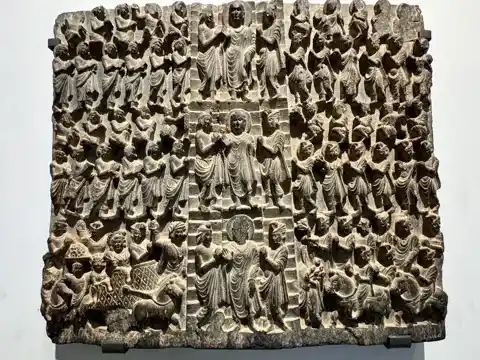
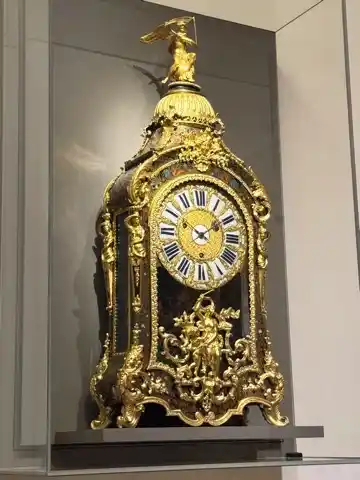
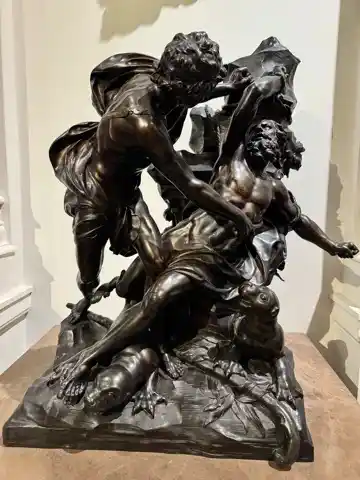
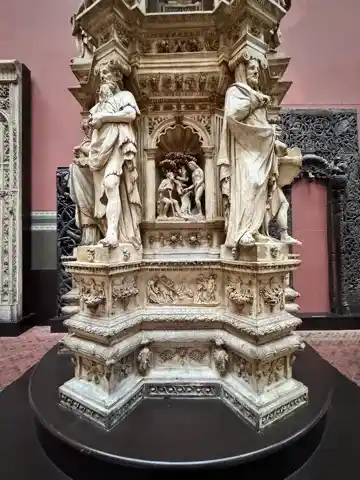
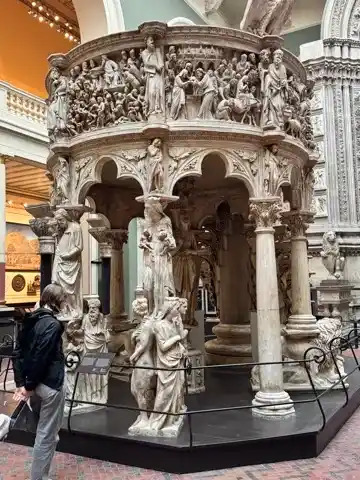
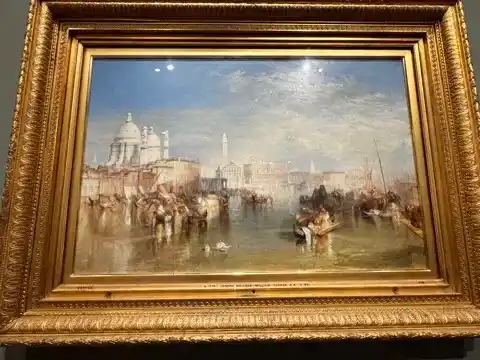
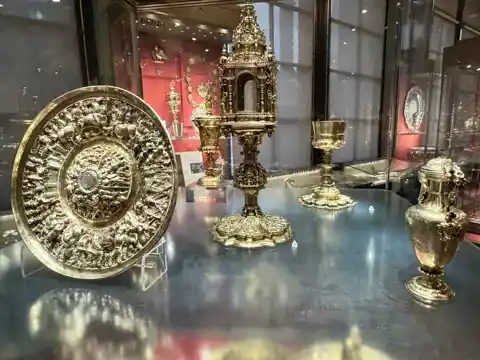
I think sculptures occupy more floor space in the V&A than other items. However, sculptures aren’t anywhere close to all of it. There are paintings, tapestries, decorated rugs, silver religious and household items, dinnerware of various sorts, aristocratic home furnishings, architectural elements, jewelry, and probably lots of other categories of art and decorative arts that I’ve forgotten.
The art contains European, Asian, and Islamic pieces.
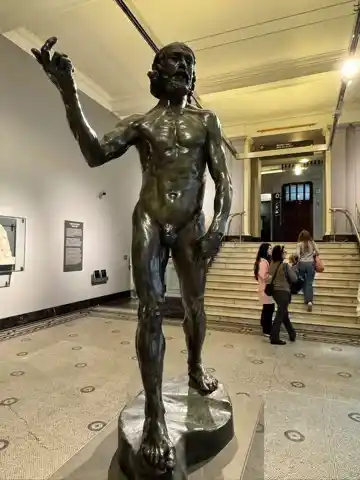
Among the sculptures, there are a few by Rodin that were donated to the V&A by Rodin himself.
I took a lot of pictures with the intention of making some snarky comments about a few of them. But, despite it not yet being especially late as I write these words, I find myself hit with a wave of tremendous exhaustion. So, I’ll skip most of the snarky comments (you’re welcome) and just post the pictures.
However, there are some remarks I feel I have to make. But they’re not the least snarky.
First, I might be wrong about this because I didn’t look particularly closely, but I don’t think many of the pieces in the museum are more than a few centuries old. However, there are casts of items that are much, much older.
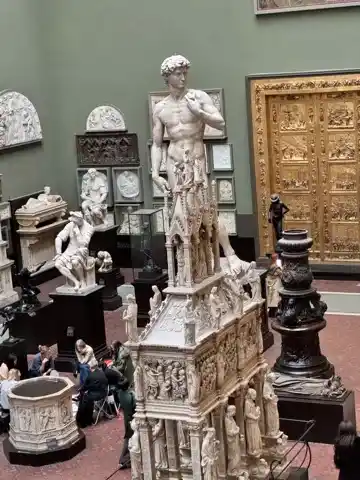
Speaking of casts, the V&A has two large “Cast Courts.” Each is an atrium about three storeys tall. They contain enormous casts of old items. The Cast Courts were built in 1873 to hold casts in the museum’s possession that couldn’t fit anywhere else in the V&A’s building. A second-floor balcony allows you to see the pieces mostly from above, but some reach higher than that.
There are a couple of life-size casts of two of Trajan’s Columns from Rome.
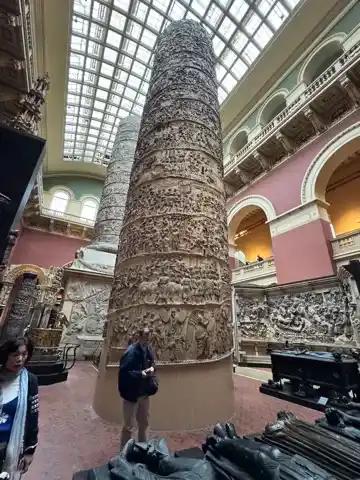
There’s also a life-size cast of Michelangelo’s “David.” I don’t mean to brag, but I’ve seen the original two or three times in Florence on trips that predate this journal. If you’ve seen the original anywhere other than Florence, direct disapproving eyes at the person who told you it’s the original. The David is huge. It doesn’t get moved around a lot. And certainly not to other cities.
The Courts also have casts of other much smaller, but still large pieces.
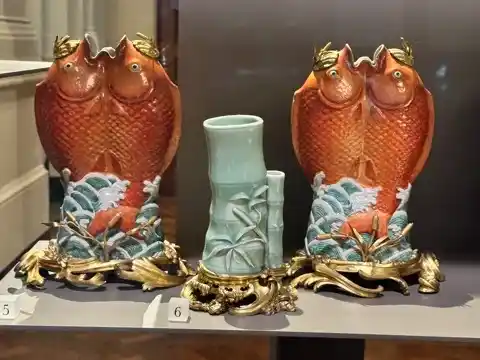
Included in the V&A’s collection are two identical vases. I mention that for one particular reader, but you’re all welcome to the information. Each vase is in the shape of two fish facing each other. You can find them in the photo slideshow below. You’re welcome.
I was surprised how much I enjoyed the V&A. It’s a splendid collection. That said, I’m an art Philistine, so perhaps you shouldn’t listen to me when I say things like that.
They were great rainy-day choices, but after exploring both the Natural History Museum and the V&A in a single day, I was completely museumed out. That might explain my exhaustion now. Good night.
More photos from the V&A:



Discover more from Joel's Journeys & Jaunts
Subscribe to get the latest posts sent to your email.

Loved the fish vases! If I thank you now, will you have to say you’re welcome again? Naahh… And I am assuming that the lovely grey whiskered creature in your photo gallery associated with the Natural History Museum account was a dugong? Handsome fellow. Looks exactly like what I would imagine something called a dugong would look like. One very fetching looking hippopotamus, too. Such a wealth of exhibits to visit! The V & A is enormous, full of great stuff. Doing both museums in a day is definitely worth rewarding with a good sleep. A lot to take in. I am heartened that you not only made it through, but largely really enjoyed your time. Perfect rainy day outing, if you ask me. Hope it clears up for you tomorrow. Regardless, I am sure you will dig up some cool things to do.