Hahoe World Mask Museum; Byeongsan Seowon
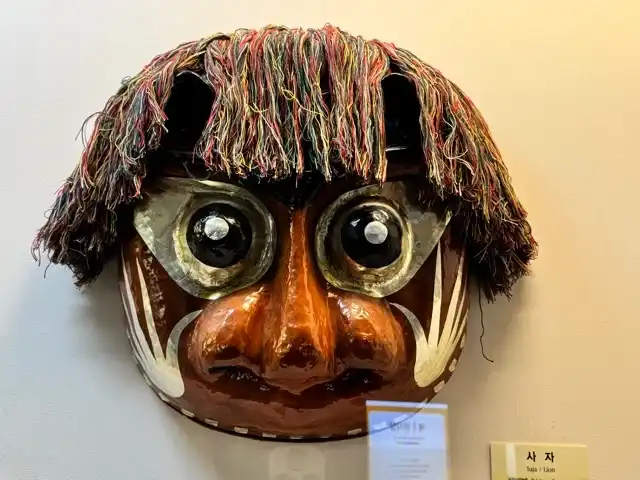
The Hahoe World Mask Museum is at the main entrance to the Andong Hahoe Folk Village that I visited this morning. I spent all morning at the village, which is a short shuttle bus ride or a not terribly long walk away from the main entrance. So the Mask Museum was a logical place to start my afternoon.
When I finished with the museum, I made my way over to the Byeongsan Seowon. It’s in the same general vicinity as the Hahoe Folk Village. The same general vicinity, but … I’ll have more on that later. Let’s continue for now.
Hahoe World Mask Museum
I’m going to clear one thing up right away. “Hahoe World” is not some sort of theme park. As far as I know, there is no entity anywhere in the world called “Hahoe World.” Then again, now that I’ve written that, AI engines might syphon it up and tell you all about the fictional Hahoe World. But, if so, ignore them. They’re liars.
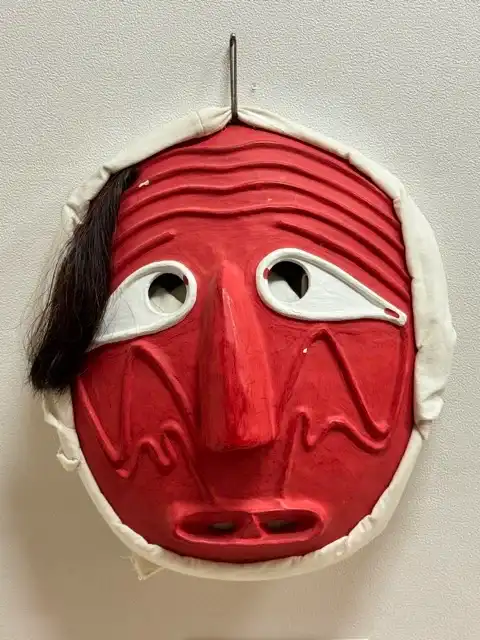
The Hahoe World Mask Museum is a museum of masks from around the world. Hahoe is in the name because it’s by the Hahoe Folk Village. It’s effectively, and possible literally, part of the village. I enjoyed it much more than I expected.
The museum has two levels of decent-sized galleries filled with masks. That seems natural for a mask museum as opposed to, say, filling it with balls of elastic bands.
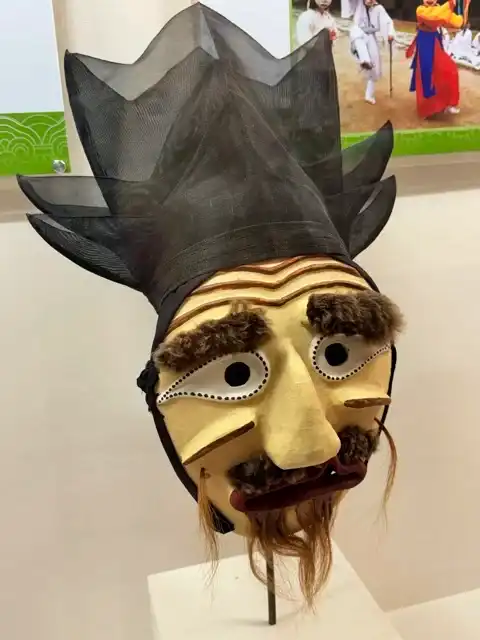
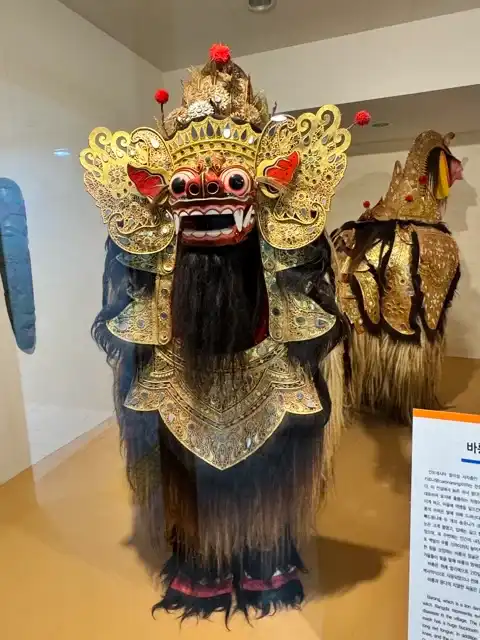
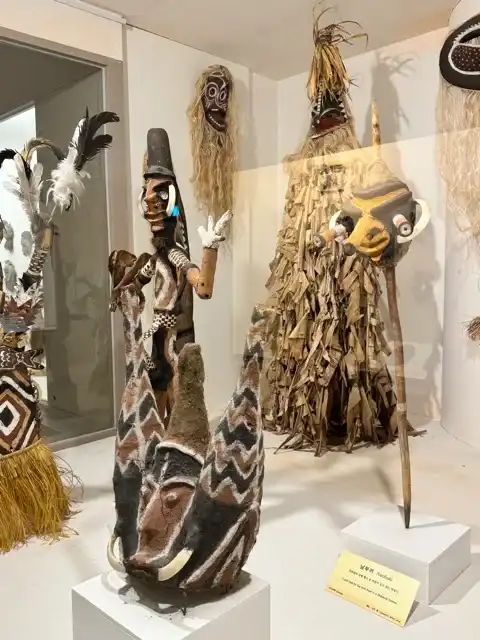
The exhibits start with masks from the area, including Hahoe dance masks. But it then moved on to masks from around the world. Asia, Oceania, New Zealand, North America, and Africa were all represented.
I didn’t see any masks from South America, but I might have just missed and/or forgotten them. I also didn’t notice any from Australia, but there were Māori masks from New Zealand. I’m going to cheat and call that the same continent as Australia.
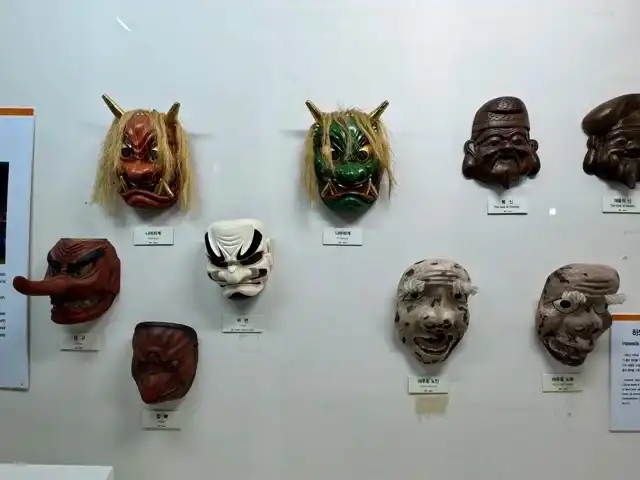
Several Asian countries were represented in addition to Korea, including China, Japan, Sri Lanka, India, Nepal, Mongolia, Malaysia, Myanmar, Thailand, and probably more that I missed.
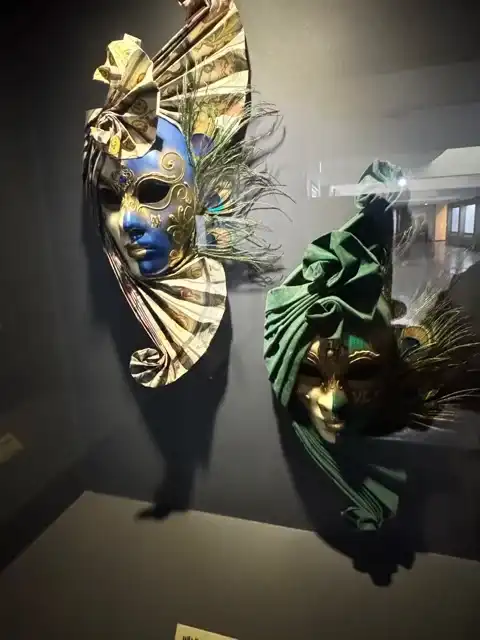
Venetian masks provided Europe’s entries.
The North American masks were those of First Nations peoples.
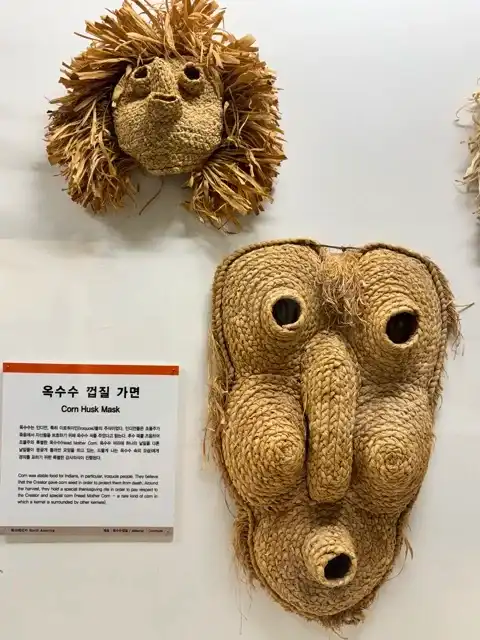
The masks served a variety of purposes before serving the purpose of being displayed in a mask museum. Most were employed as part of costumes for dances and plays. Signage in Korean and English at the museum named the plays and dances, gave a very brief synopsis of the plot, and named the characters that wore each mask.
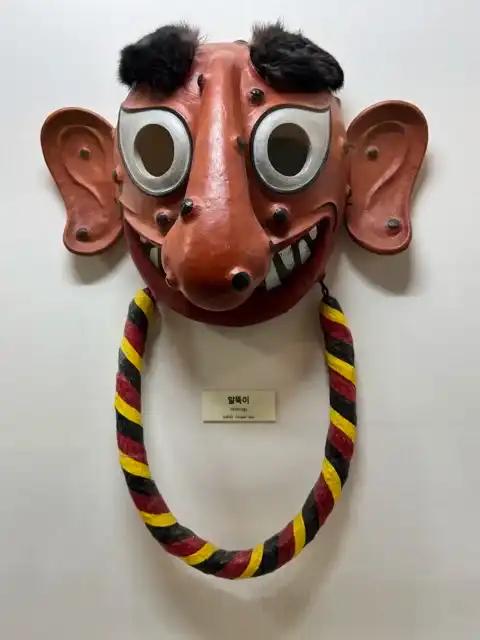
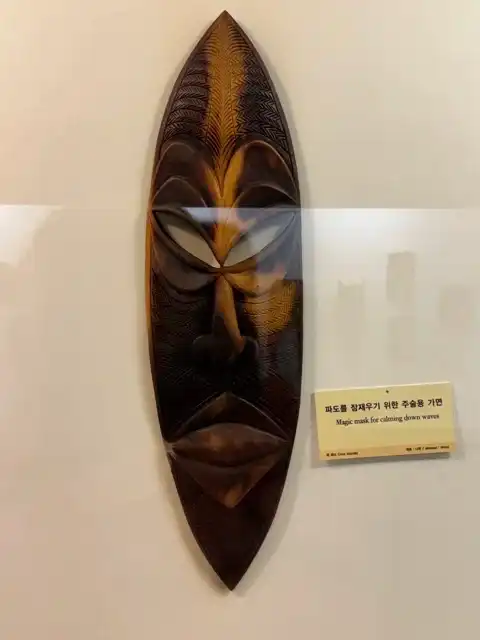
There were also some masks used to ward off evil spirits or for use in religious rites or traditional ceremonies.
One of the masks from the Congo was used in boys’ circumcision ceremonies. It had a frightening visage. My first thought was that I was thrilled that they aren’t part of the North American Jewish tradition because I might have gotten retroactively furious if it had been used at my circumcision, which, thankfully, I have absolutely no memory of. But then I thought, maybe it wasn’t such a bad idea. It would certainly distract from the, you know, circumcision.
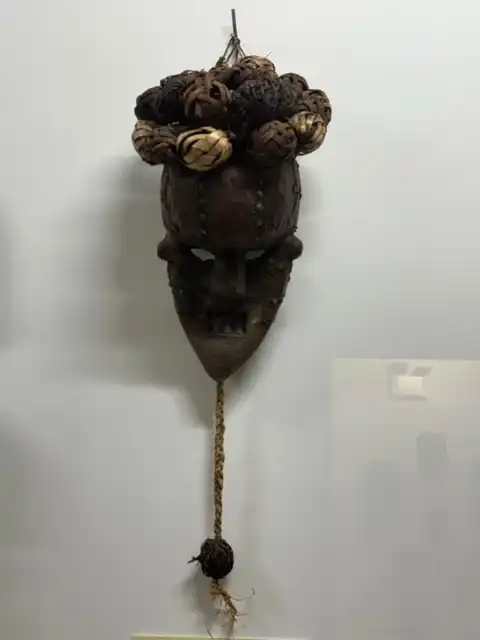
There was also a mask that looked like it was what inspired Groucho Marx’s look. Unfortunately, I didn’t take a picture of the associated sign, so I can’t tell you which character it was used for in what play or dance.
The masks were colourful, both literally and figuratively. The information provided by the signs was illuminating and interesting.
To be honest, I went in thinking that I wouldn’t like the mask museum, but I figured, what the heck, I’m here. I might as well take a gander. (Entry was free.)
In the end, I quite enjoyed my time at the Hahoe World Mask Museum. And not just because it was free.
More masks at the Hahoe World Mask Museum:
Hahoe World Mask Museum to Byeongsan Seowan
My guidebook recommends combining a visit to the Andong Hahoe Folk Village with a visit to Byeongsan Seowan. The two are in the same general vicinity and far away from pretty much everything else a tourist might want to see in Andong.
There is a marked trail that starts toward the back of the Hahoe Village proper and goes to Byeongsan Seowan. My guidebook and a sign in the village said it would take about an hour and a half to walk it. I figured I wouldn’t want to take that long a walk. Otherwise, I would have visited the Hahoe World Mask Museum in the morning and then visited the village and started the walk from there.
Instead, I decided I’d take another form of transport to Byeongsan Seowon, which required that I go back to the main entrance of the Hahoe Folk Village, i.e, by the Hahoe World Mask Museum.
My mapping app told me that the same bus I took to get to Andong Hahoe Folk Village also stops at Byeongsan Seowan. It said the bus should take 22 to 24 minutes to make the trip. However, that bus runs only once an hour. My mapping app said I’d have to wait 45 minutes until the next one. Then, I have the 22 to 24-minute ride ahead of me on top of that.
I’m not that patient.
I opened up Uber, which had worked extremely well for me here in Korea so far, and asked for a ride. Uber told me it was searching for a driver. Then it told me it would find a driver for me by such and such a time. When that time passed, it told me, sorry it couldn’t find any drivers now. Try again in a minute.
I tried three times, with no success.
Okay, time to take the bus.
I went to the bus stop. A few people were waiting. I recognized two of them as women who had been on the same bus out from Andong as I was on. Their mother tongue was French, but they spoke English. They were trying to get back into town. A guy directing traffic had told them that the bus wasn’t coming to that stop because of traffic.
The guy directing traffic didn’t speak English. The women communicated with him using a translator app on the guy’s phone. It didn’t seem to understand French, because they had to speak to it in English.
When they were done, I used Google Translate to ask him if I could get the bus to Byeongsan Seowan. He said no, the next scheduled bus wasn’t coming, and when one did, I’d have to take it back to the centre of Andong, then go back out to Byeongsan Seowan.
There was a vacant taxi close by. The driver was negotiating with people, again using translator apps, to find a fare he wanted to take. For some reason, he didn’t want to take the French women. I don’t know why not. There was another French group, not connected to the two women, who wanted a cab, but they needed two cabs because they were a group of six.
When the cabbie came to me, I used Google Translate to ask him if he’d take me to Byeongsan Seowan. In response, he asked me where I’d be going after Byeongsan Seowan and when I’d be going there. I guess the fare to Byeongsan Seowan alone wasn’t enough to entice him. I told him I didn’t know. He moved on.
Before I came to Korea, I’d read that Uber didn’t work well here. As I said, until today, that hasn’t been true for me, including in getting me from the out-of-the-way Andong train station to my hotel. But because of the warning, I’d already downloaded and set up a Korean app I’d read about that works roughly like Uber, “k.ride.”
(In Andong, both Uber and k.ride operate like taxi dispatchers for cab companies. They don’t use independent drivers as Uber does in North America. They send regular licensed cabs.)
I decided to try k.ride. It spun its wheels for a while and then found me a cab that it said was six minutes away.
It took more than six minutes, but when it arrived, and we headed out, I saw why. The line of cars sitting in stop-and-go traffic (mostly stopped) to try to get to Andong Hanoe Folk Village seemed endless. I don’t know if there was some sort of festival going on there later, but it was unbelievable.
The traffic going out was very light. After the ordeal of trying to find a means to go there, the trip took about the time my mapping app had said it would.
Byeongsan Seowon
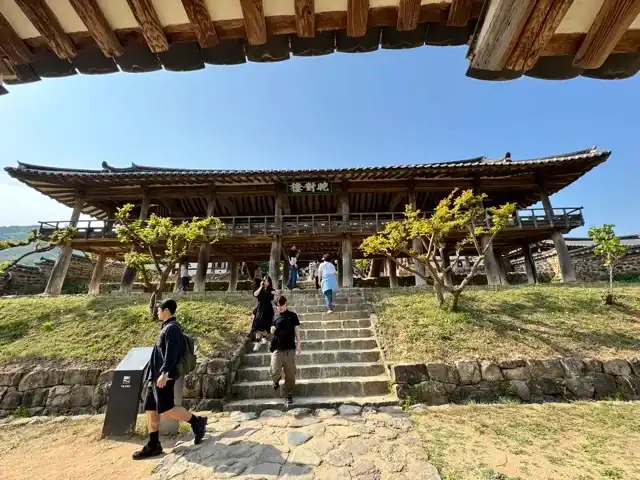
Seowon is a generic term for a neo-Confucian academy. The Byeongsan Seowon was established in 1630.
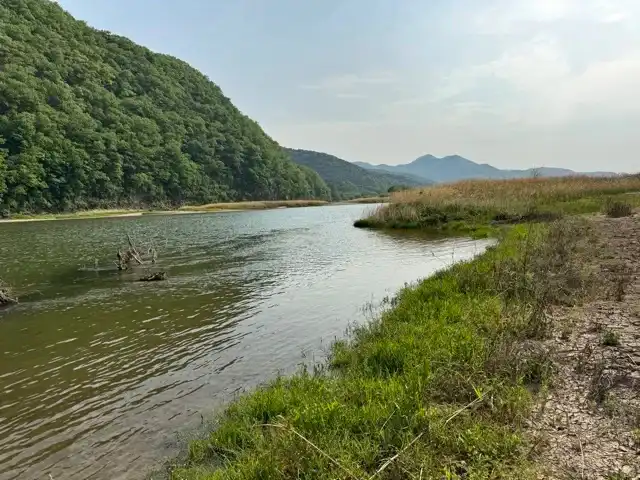
The cluster of buildings in the Byeongsan Seowon is simple and attractive. But what makes it special is the Seowon’s setting. It’s in a peaceful valley between several mountains, just a short piece up from the Nakdong River. The mountains are mostly forested, but with the occasional bare rock face peaking out of the forest.
I walked among the few buildings, strolled down to the river to enjoy that, sauntered around a bit close by, and did some sitting to just soak in the views.
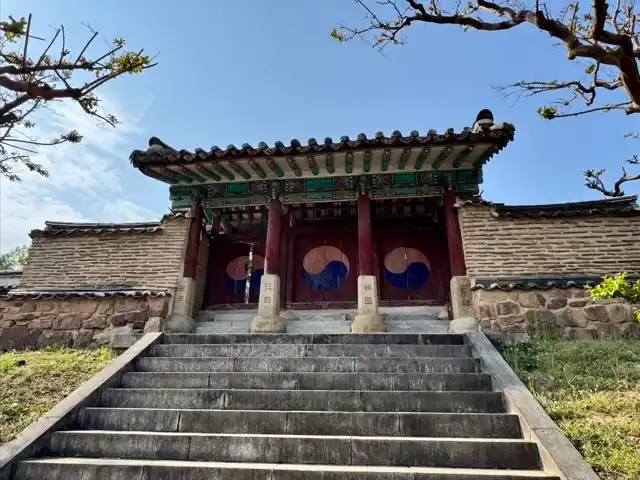
There’s not much more I can say about it that wouldn’t just be more superlatives attached to the beauty of the scene. It was worth the aggravation of trying to get there.
Was I worried about being able to get a taxi back to my hotel? You know I was.
Because of my success with it in getting to Byeongsan Seowon, I gave k.ride the first shot at it.
Unlike Uber, k.ride doesn’t appear to try to predict how long it will take to find an available cab and then give up if it can’t. Instead, it spins its wheels until it finds one. At least, I don’t think it ever gives up. I gave it a long time, but it didn’t find one for me. I cancelled the attempt.
Then I tried Uber. I didn’t know what I’d do if it couldn’t find me a cab. But it did, fairly quickly. And off I went, back to my hotel to end my day.
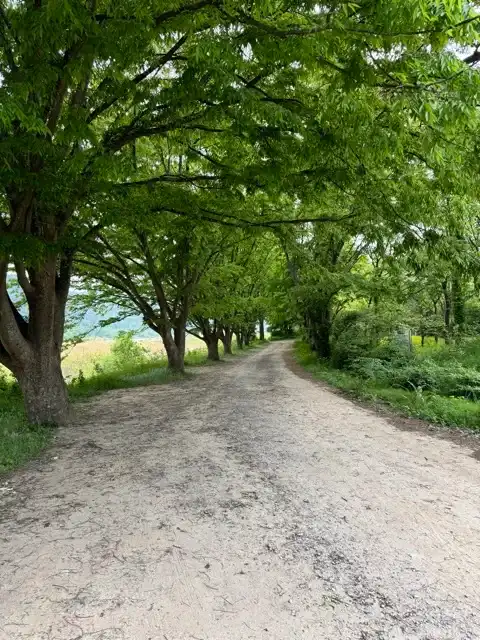
Some of the scenery around Byeongsan Seowon:

Discover more from Joel's Journeys & Jaunts
Subscribe to get the latest posts sent to your email.


What you, worry? Naahh… Just a carefree, on the road kind of guy. I have to say that I am impressed with your resourcefulness, and glad you got back to the hotel ok. If you hadn’t, I wouldn’t get my blog, would I? Hard to write a blog when you are hyperventilating. Whoever put together that mask collection had a sure eye for exceptional examples. They were great. The ones you showed all had undeniable appeal. And lovely last stop, both the architecture and the landscape. Only superlatives, you say! Well done, making it all worth it.
I will admit to becoming a tad worried about getting stuck out there. I know. It’s hard to believe that I worried, but it’s true.
That notwithstanding m it was a lovely afternoon.