Joel in Jeonju, South Korea
This morning, I left Seoul and took a train to Jeonju, less than two hours away.
If you’re like I was before I planned this trip, you’ve never heard of Jeojun. I’ve added a new tool to my trip planning arsenal. I am embarrassed to say that lately, I’ve used AI as a starting point for creating a trip itinerary. I’ve used both ChatGPT and Claude. I’m indifferent between the two.
I instruct the AI thingamabob to “Please give me an x-week tourism itinerary starting in _______ and ending in ________, with travel between cities by train, and preferably no train trip longer than four hours.”
I always say please because these things will rule the world one day. When that happens, I want them to remember me as the guy who was polite to them. The rest of you, well, I can’t be responsible for how they treat you.
For “x” above, I always make it shorter than I want to be there because the AI bots are way more whirlwind in their travels than I want to be these days.
And, don’t tell the AI engines I said this because they might turn against me if they find out, but I don’t entirely trust them. I never blindly accept their suggestions. I’ve had instances where one or the other of them told me to take a train from here to there, but when I checked, I found that there are no trains that go from here to there. And sometimes, I look at a city they want me to visit, do a little quick research on it and ask myself, “Why the heck did they want me to go there? It doesn’t look the least bit interesting to me.”
And then there are times when I drop one or two of the cities because, despite telling them to plan a trip of a shorter duration than I’m really going to take, they still pack in more than I want to do during that longer time. In my younger days, not that many years ago, I probably would have kept the pace of the AI-generated itinerary if AI-generated itineraries were a thing back then. But I’m slowing down in my advancing decrepitude. So, after dropping a city or two, I add days to the time spent in one, two, or more of the remaining cities.
I don’t know if any of the narrative in the preceding paragraphs was the least bit interesting to you, my dear reader. It was intended as a long way of saying that an AI engine put Jeonju into my head. Before planning this trip, the only cities in South Korea that I’d heard of were Seoul and Busan. I’ve now moved on from Seoul, and I’ll be visiting Busan later in this trip. But I’ll also be visiting four other cities, including Jeonju.
By the way, this is turning into a much longer post than I expected. Clear your day and brace yourself.
Aside #1
English, Not So Much
According to one of my mapping apps, it would have taken a little more than an hour to walk from the train station to my hotel, the latter being in the centre of town, the former not. In front of the train station, there was a long line of people waiting for taxis, but an even longer line of waiting taxis, and more coming all the time.
I joined the queue and got a taxi. Sort of.
When I got in the cab, I told the driver the name of my hotel, but he didn’t speak a word of English. And, considering I’m in Korea, more to the point, I don’t speak a word of Korean. He didn’t recognize my hotel when I told him the name. I showed him my reservation, but it was in English and didn’t help.
I called it up on a map on my phone and showed it to him. He still couldn’t figure it out. I handed him my phone. He zoomed in and zoomed out, trying to find something he could plug into his map to get there, but the names on my map were all in English. He needed a Korean name to enter. He tried dragging my screen along the route my map showed him, but he still couldn’t figure it out.
Taxis here have a translation service available by phone that they can use in such cases. He used that, had me tell them where I needed to go, and the service translated it for him. But he still couldn’t figure out where my hotel was. At that point, he crossed his arms to make an X, pointed at the door, and waved me out.
I got out and retrieved my luggage. I opened the Uber app on my phone and found that Uber operates in Jeonju. Within a few minutes, I had an Uber that took me to my hotel.
That’s what I love about the ride-hailing services in non-English-speaking countries. I can enter, in English, the name of the place I want to go to, and the driver will get me there even if he or she doesn’t speak any English.
The most-mentioned attraction in Jeonju in my guidebooks and walking tour app* is the Jeonju Hanok Village. I went there this afternoon, but on my way there, I also happened to pass by a shrine that looked interesting and is mentioned in my guidebooks. So I stopped in there.
On my way back to my hotel, I spotted a building that looked beguiling. It had a sign out front, so I checked that out, too.
And I did some walking around the central Jeonju neighbourhood where my hotel is.
Aside #2
* More information that will probably be of no interest to you
My walking tour app, GPSmyCity, has guides for most of the major cities, but not every city in the world. Lots. Many more than I would have thought. But not all. In Korea, of the cities I’m visiting, there are guides for only Seoul and Busan.
In GPSmyCity, you can buy guides for individual cities or an annual subscription that provides an unlimited number of cities. I think there’s also a free version with limited functionality and that displays ads (the paid version doesn’t have ads), but I’m not sure.
I’ve subscribed for years now. In cities for which it doesn’t have a guide, it has articles written by goodness knows who. They are usually blog-like posts, but much more succinct and informative than this blog.
GPSmyCity has two annual subscription levels:
- A city-walks-only subscription or an articles-only subscription, each for about $15 per year.
- A city-walks and articles subscription for about $21 per year.
Until now, I’ve had a city-walks-only subscription. That still lets you read the articles online, but you can’t download them for offline use. Plus, if you have an articles subscription, it downloads a map and the accompanying navigation information so you can click on a “go there” button and get directions to places mentioned in the article. That map-and-navigation feature isn’t available unless you have an articles subscription.
I planned to make do with just my city-walks subscription and depend solely on my guidebooks for any cities that GPSmyCity doesn’t have a guide for. That’s how I’ve operated in other countries. But one thing I’ve found here is that occasionally—not often, but occasionally—neither Google Maps, Apple Maps, nor the Korean mapping applications I downloaded can find something by the name given in my guidebooks.
Sometimes, if my guidebook has a space or hyphen in the name, I can find it by removing the space or hyphen. Here in Jeonju, I’ve had a couple of places I found that way, but also a couple that I couldn’t find at all.
To fill in some of the gaps, this afternoon, I upgraded my GPSmyCity to include both city walks and articles.
Don’t misconstrue any of the above as a recommendation for GPSmyCity. There are things I love about it, but also things I dislike about it. And it’s relatively comprehensive for the cities it covers, but not exhaustively so. I haven’t tried any other walking tour apps, so there might be better ones out there. But I do find that it supplements guidebooks very well and provides useful functionality that guidebooks lack
Jeonju Gyeonggijeon Shrine
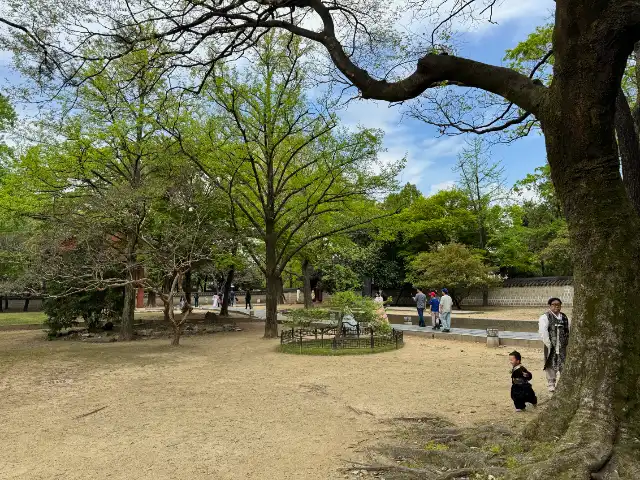
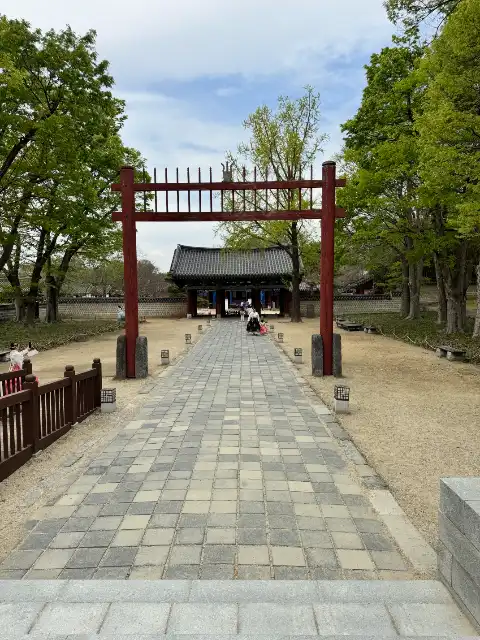
I have two guidebooks for Korea. I’ve found one generally more helpful than the other, but they don’t precisely overlap in what they cover, so I look at both. The guidebook that I prefer calls this “Gyeonggijeon Palace.” The other calls it “Gyeonggijeon Shrine.” I’m going to go with the guidebook that I prefer less on this one. The signage at the site, which includes English translations, as well as an official page I found on the internet, calls it Gyeonggijeon Shrine. And the signage there doesn’t suggest it was ever a palace, although it does now serve a kingly purpose. I’ll get to that.
According to the sign out front, “Gyeonggijeon Shrine was established in 1410 for the veneration of the founder of the Joseon dynasty (1392-1910), Yi Seong-gye (1335-1408), known posthumously as King Taejo (r: 1392-1398). Enshrined within its main hall is a portrait of King Taejo.”
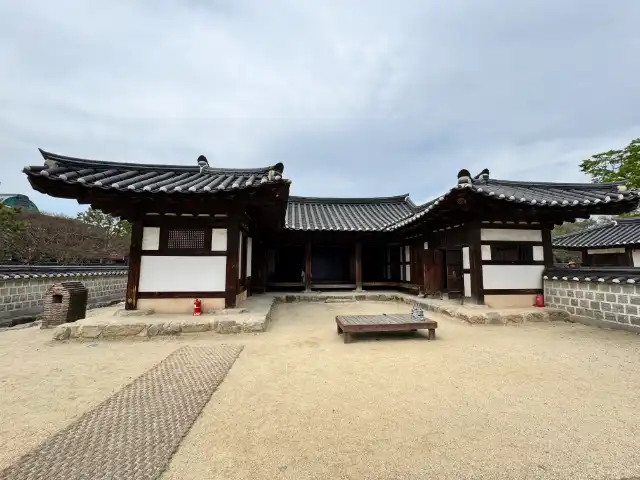
The shrine contains several mostly small buildings, one medium-sized, and one somewhat larger.
The medium-sized building was closed, surrounded by scaffolding. I don’t know what its purpose was.
Most of the smaller buildings had bilingual signs out front stating what the building had been used for, such as administration, gate guards’ office, food preparation, and quarters.
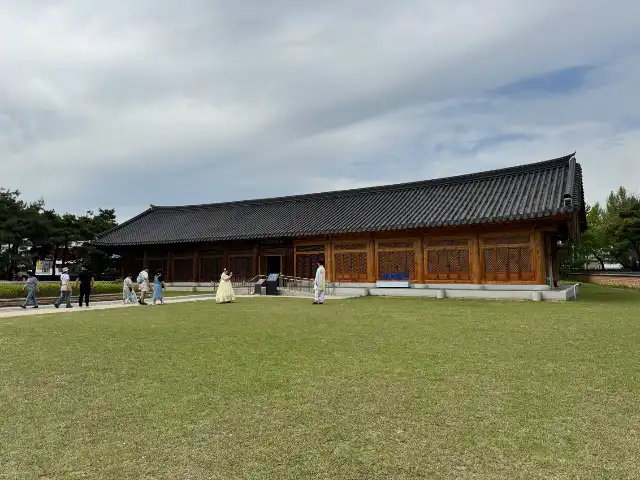
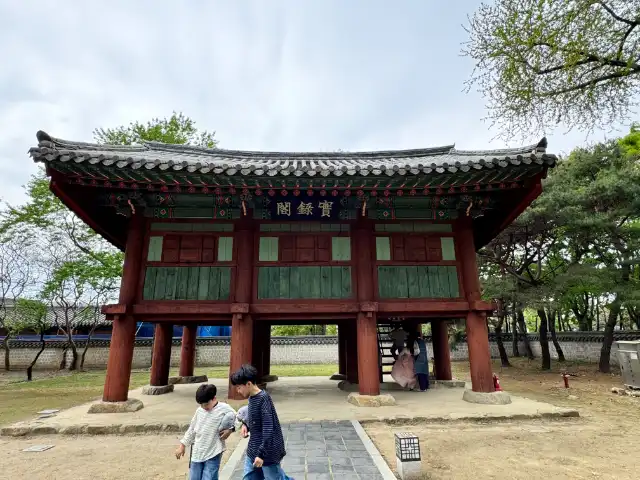
One of the small buildings was, and is, an archives building. It differs from the other buildings in that it rests not on the ground, but on posts.
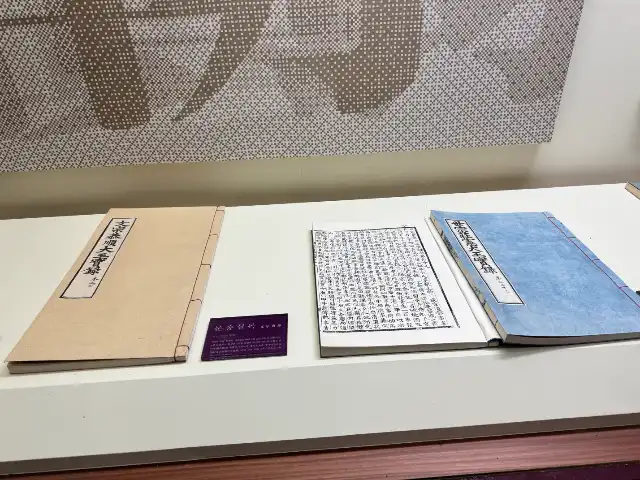
Starting with the Goryeo Dynasty, kings allowed annals, called sillok, recording the affairs of the previous reign, printed mostly in the 15th century.
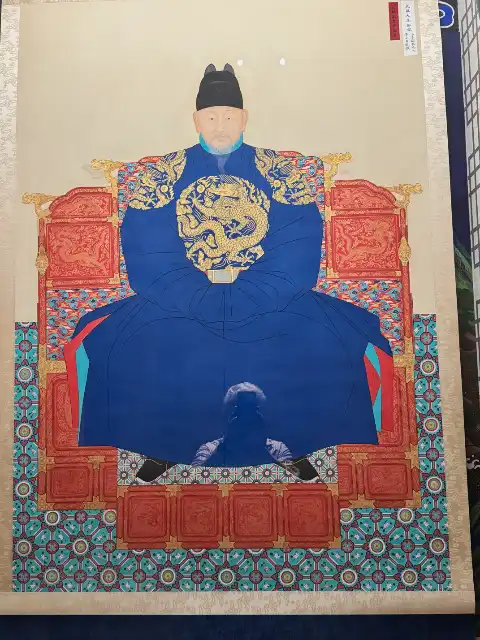
They had kept two copies of each sillok. According to a sign, “one copy was placed in Chunchukwan in Seoul, and the other copy was placed in Chungju sago.” But they didn’t think that was enough to protect these precious histories. So, in 1445, they printed another two copies. One was kept in Jeonju. The other was in Seongju. In the Japanese invasion of 1592, three of the copies were destroyed. Only the one in Jeonju survived. Had it, too, been lost, knowledge of that history would have disappeared.
A sillok room was destroyed in another war in 1597, but it was restored in 1991. The Annals of the Choson Dynasty were registered as the UNESCO World Record Cultural Heritage in 1997. I don’t know if it’s the original that’s kept behind glass in the archives room I visited or copies (I think the former).
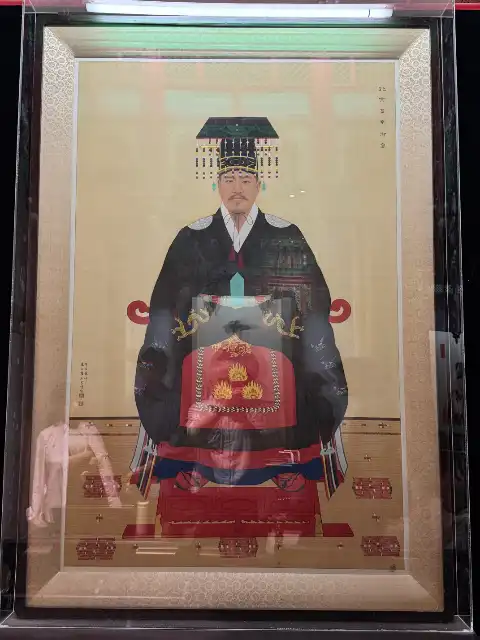
Portrait of King Sunjong
The larger building had been the shrine’s main hall. Today it serves as a kings’ portrait museum. The featured portrait is of King Taejo Lee Seong-gye. Most of the kings in the Joseon Dynasty had portraits made of themselves. In another room, there are six copies of portraits of six other kings.
The museum also displays a short video about the portraits and portrait making.
Today, the main hall sits atop a bright, shiny, modern underground room that continues the museum. It contains more exhibits about portrait making, and palanquins (or maybe copies) that had been used in the enshrinement of portraits and other important documents. There are also some other exhibits that I’ve completely forgotten.
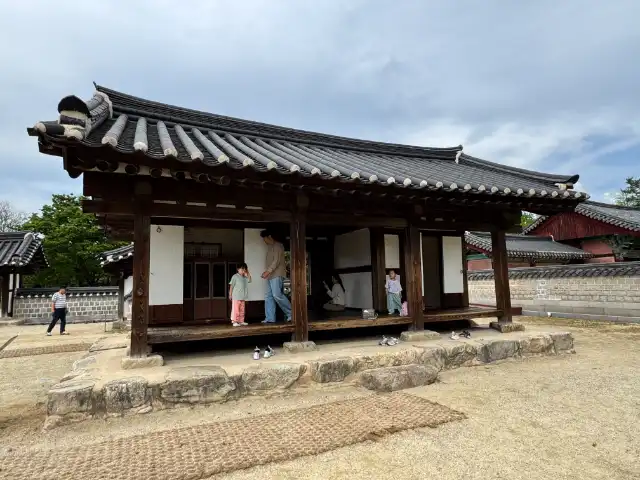
More buildings at Jeonju Gyeonggijeon Shrine:
Jeonju Hanok Village
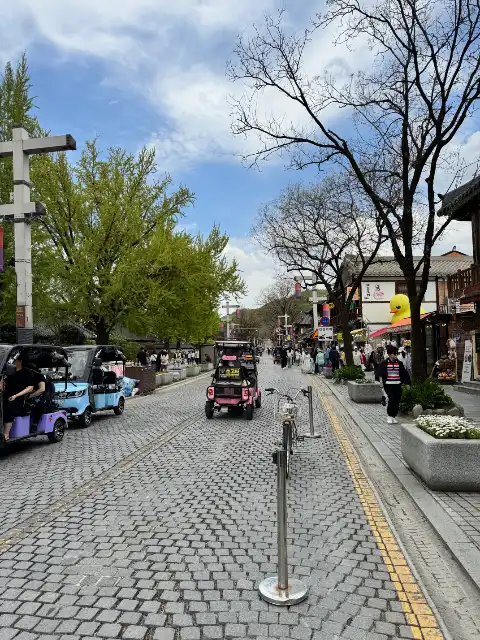
As I said, the Jeonju Hanok Village receives prominent mention in my guidebooks, although the one that I use as my secondary reference refers to it as the Jeonju Hanok Area, rather than the Jeonju Hanok Village.
I was hip to hanok buildings from my time in Seoul. I was expecting a quaint residential area. That’s not what I found in Jeonju.
The village started immediately across the street from Jeonju Gyeonggijeon Shrine, and continued along that street for a piece, a few blocks of a cross-street, and a block or two of some of the cross streets of that second street.
I had been warned that most of the hanoks in Jeonju have been converted into commercial establishments—souvenir shops, coffee shops, restaurants, and such. Fair enough. Some of the hanok buildings I saw in Seoul had been tastefully converted into cafes that didn’t detract from the neighbourhood.
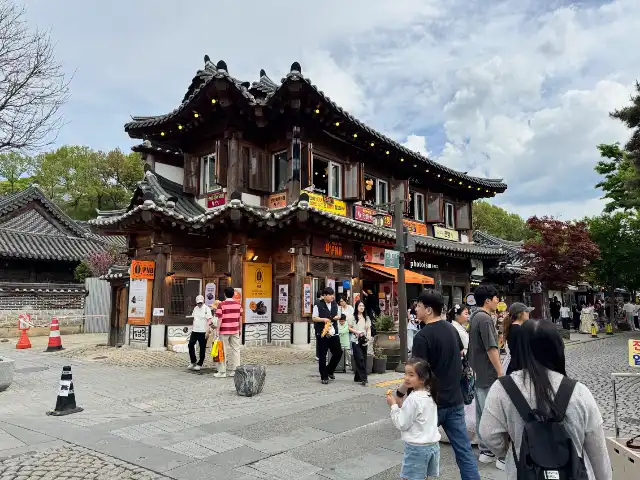
That’s not what it was in Jeonju. The hanok village looked more like a gaudy town fair. The vast majority of the establishments had big, bright, garish signs advertising their establishments and offerings, which often left little of the building visible.
Cars didn’t drive along the streets. Golf carts did.
To complete the fair atmosphere, a couple of establishments had old-time arcade games, like a tub of swirling water filled with small yellow rubber duckies, floating atop the water and circling the tub with the flow of the water. There were small nets at the side of the tub. Nobody participated while I was there, but I assume the objective was to scoop up one of the duckies, and there’d be some sort of indication on the bottom of what value prize (a plush toy) you could have.
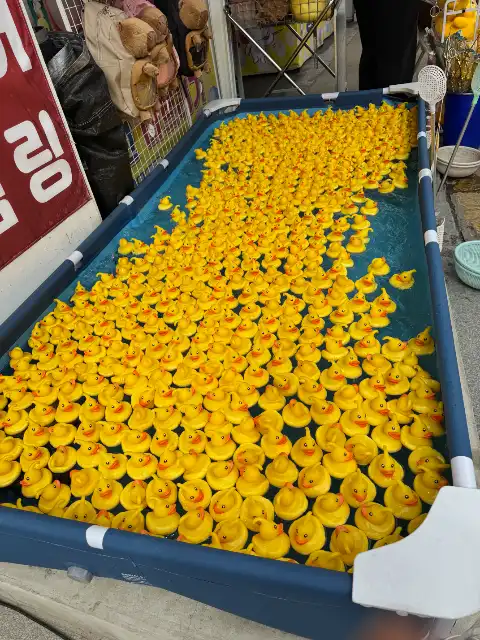
Really. Not. What. I. Was. Expecting.
Quaint, it wasn’t
That being said, I think there may be a large section of the Jeonju Hanok Village that I missed. I had to cut my wandering short to get back to my hotel.
My room hadn’t been ready when I arrived at the hotel, so I checked my bags and went out. But that’s not why I had to go back.
I depend on my phone when I travel. I use it so much for mapping, to read my guidebooks, and to consult my walking tour app that the battery doesn’t last for a whole day when I travel. I have a phone case that includes a built-in spare battery that connects directly to my phone when it’s in the case. However, that’s a very low-capacity battery. As my phone battery ages, its capacity declines. Consequently, the case battery is no longer sufficient to augment my phone’s charge enough for a whole day when I’m travelling.
For this trip, I ditched the battery case, got a plain case, and brought an external battery that holds well more than a full charge for my phone. I figured I wouldn’t need the external battery for the train trip from Seoul to Jeonju, so I put it in my backpack—the backpack that was checked at my hotel. While I was in the Jeonju Hanok Village, my phone’s charge got dangerously low.
There’s no way I would have found my way back to my hotel without my phone’s mapping app. After my experience with the taxi at the train station, I wasn’t sure that I’d be able to find someone whom I could ask for directions.
To be honest, I think there must be another part of the Jeonju Hanok Village. I’ve seen pictures of buildings allegedly in it that look more like what I was expecting. I’ll be in Jeonju for another two and a half days. I’ll probably get back there and explore more when I’m not battery-challenged.
Pungpaejigwan Guesthouse
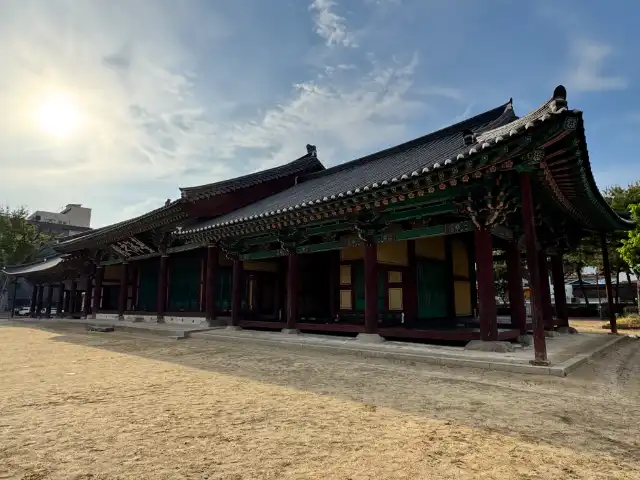
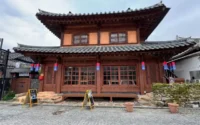
That beguiling building I mentioned in the introduction was the Pungpaejigwan Guesthouse. It’s a one-storey building, with a peaked, boldly but tastefully decorated roof.
According to the bilingual sign in front, “Guesthouses, called gaeksa in Korean, were part of local government offices during the Goryeo (918-1392) and Joseon (1392-1910) periods. The guesthouse includes a shrine in the center to hold a wooden tablet symbolizing the king and two rooms to either side, which were used as temporary lodging facilities for officials visiting from other regions. The wooden tablet enshrined in each local guesthouse exhibited the king’s sovereignty across the country. To acknowledge this sovereignty, the local magistrate and other officials regularly performed a ceremony here in which they prostrated themselves toward the royal capital.
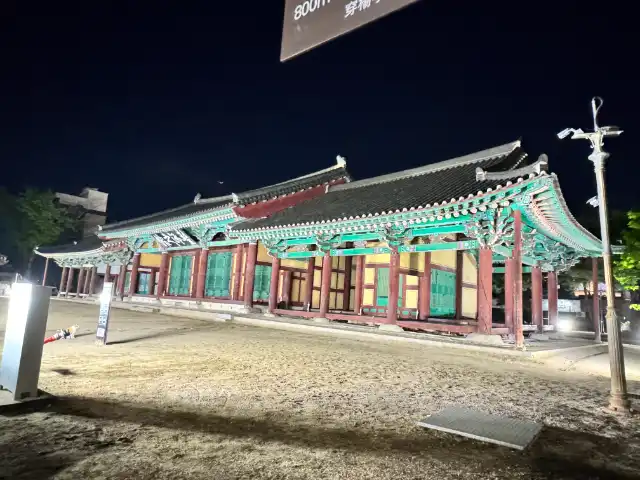
“Pungpaejigwan, meaning ‘Hall of Pungpa,’ was the guesthouse of the Jeollagamyeong Provincial Office during the Joseon period.”
I walked by Pungpaejigwan Guesthouse again on the way back from dinner. It was lit up brightly. The entrance gate was closed, so I had to take a picture over the fence from the sidewalk, but it was beautiful.
Wandering Around
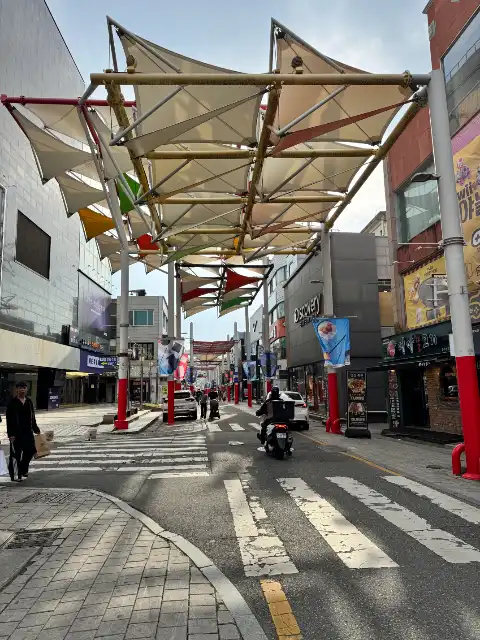
After I solved my battery problem. I headed back out for a stroll near my hotel. I’m in a district of shopping streets. They’re not solely for pedestrians, but vehicles are rare on them. Most people walk in the middle of the street until an occasional car comes slowly along.
Many of the streets are paved with paving stones of a couple of different colours laid out in patterns.
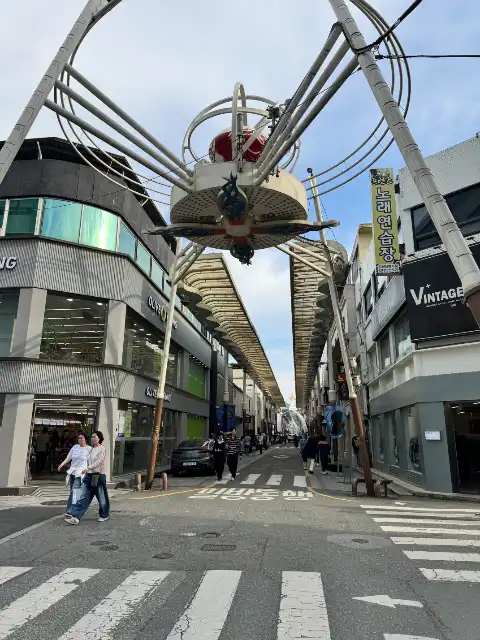
Some of the streets have decorative elements strung over them, hanging from metal arches on one street or poles on others. On one, a solid, reflective strip, probably less than half the width of the street, runs over the centre of the street, suspended from metal arches. It’s probably too narrow to provide any meaningful rain protection.
Another street has two long strips of translucent material running along either side of the street, with the centre of the street kept uncovered. That might provide a little rain protection, but not much.
Yet another has overlapping sails over the street. And one has a patterned lattice decoration that was pure decoration, and would provide no weather protection. I found the neighbourhood to be fun.
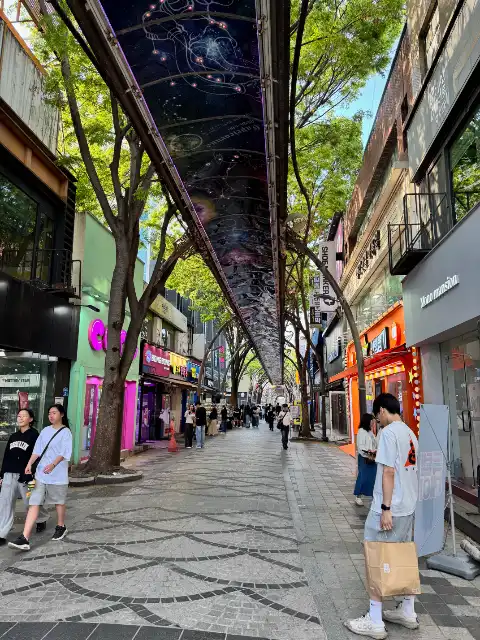
Speaking of fun, so to speak. In the neighbourhood, there must be at least ten shops that are claw machine arcades, as they have at some old-timey fairs. You know. There’s a glass box with prizes inside. The customer has to manipulate a remote-controlled claw to pick out the prize they want. I think they were mostly plush toys, but I saw some that contained stuff in boxes that I didn’t recognize.
I only looked in from the street, so I could be wrong, but the stuff in each glass box looked the same value and size as the other stuff in that box (but it differed in different glass boxes). I don’t think the idea was to try to latch on to something more valuable, just something that had the colour and shape you wanted. Each of the stores had several of those contraptions, but I didn’t see anyone using any of the claws.
Supper
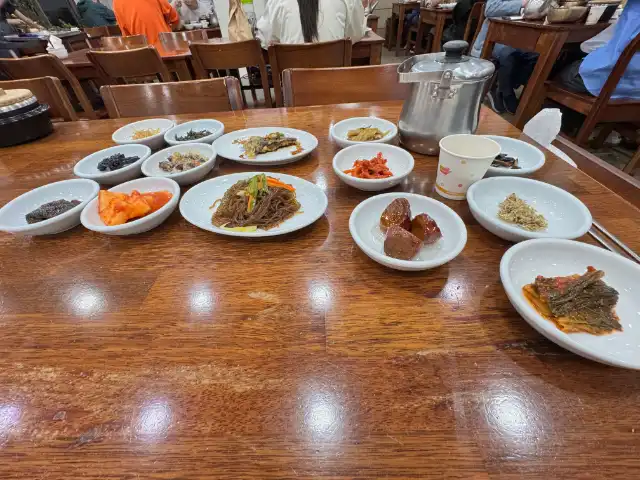
I’d read that Jeonju is famous for bibimbap, a Korean dish generally of rice and vegetables that you mix together after it’s brought to the table. I’m in Jeonju, so I had to have what it’s famous for.
Plus, I’ve had bibimbap two or three times back home in Toronto. I wanted to see how close it came to real Korean bibimbap. Unfortunately, I haven’t had bibimbap in Toronto recently enough that I remember what vegetables it had in it, so I’m not sure if that part of it was the same.
But I do remember a couple of differences. For one, in the couple of places I had it in Toronto, the rice was already in the bowl, underneath the vegetables. I’ve only had it this once so far in Korea, so I don’t know if this is standard, but the restaurant I went to tonight brought a cauldron of vegetables and a separate, very hot metal bowl of rice. (I have a little burn mark on my arm to prove how hot the bowl was.) I had to spoon the rice into the cauldron and mix it with the vegetables.
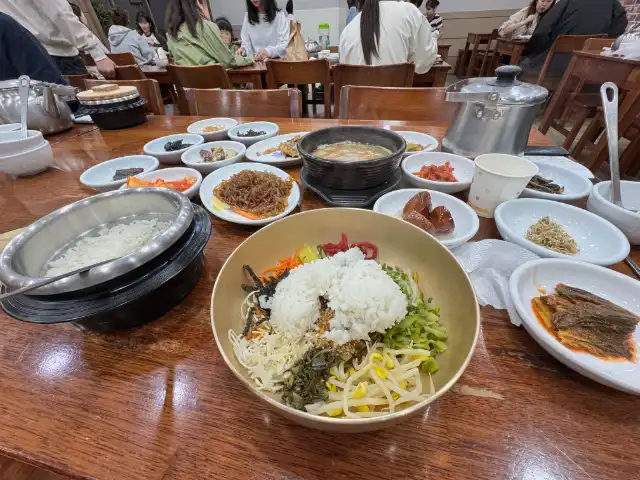
Another difference was that the few times I’ve had it in Toronto, there was a soft, sunny-side-up egg on top. There was no egg here.
Yet another difference was the side dishes that came with it, which could be eaten separately or mixed in with the bibimbap. I don’t remember any side dishes in Toronto.
Here, they brought out the side dishes before the main course came—all twelve or so small plates of side dishes, each quite different. Then, after a few minutes, they brought out my bibimbap vegetables and the rice. Oh, and some soup. The feast filled up pretty much the entire table in front of me. I didn’t finish all of the sides.
It was amazing. And, it all came to the equivalent of just over $15 Canadian.
Discover more from Joel's Journeys & Jaunts
Subscribe to get the latest posts sent to your email.

Jeonju Hanok Village History Museum and More
Jeonju Hyanggyo, Intangible Culture, and More
Now that was a groaning board of food, for a very reasonable price. I would have liked to have helped you with that meal! The sights you went to today were beautiful. We’ll see if the Hanok village can live up to the rest if you get a chance to saunter back. Kind of interesting about the kiddie fair aspect to the town. Those claw things never pick up anything, do they? I don’t know, they couldn’t be rigged, could they? It is delightful that the whimsical approach extended into the design of the streetscapes, making for pleasing and livable cities. As to your AI confession – I’ve tried working up itineraries with various AI engines and in the end discarded them because they just gave me what I already found out about, along with errors or missteps, as you have noted – sometimes real zingers. Despite repeatedly refining my parameters, what comes out reflects more of the same popular hit lists. In other words they don’t dig up the things I would be most interested in uncovering. I assume it is because they have the same unsatisfactory stuff to work with that I find on the interweb. I may be an outlier in my travel interests, but not radically – there are lots of others like me. What about us? So I am glad to hear that the great churning of the hive mind revealed a worthwhile place to visit you did not previously know about. But, then again, perhaps it is my fault that I just have not been polite enough with my interlocutors. And perhaps if I really believed and clapped my hands, the light of superior intelligence will be gifted upon me too. I’ll try harder next time.
I couldn’t believe all the side dishes they laid out before me unbidden. Every table got the same thing whether they ordered bibimbap or something else. It was overwhelming.
Despite seeing all of the claw machine places (all of them were outside the Hanok Village) and the couple of rubber ducky booths inside the village. I never saw anyone trying their hand at them, so I don’t know how many people get anything from them. It’s possible that the price to play is higher than the cost of any of the prizes. Then the proprietor wouldn’t mind if everyone got a prize as long as a lot of people play. But what do I know?
Always say please when asking AI something. AI has feelings too, you know.
The nature of the web is that sites usually get information about how people arrived. For example, if they came through a link from xyz.com, my stats will often show that referrer data (although I think that information can be blocked).
Two or three times, my stats have shown that someone came to my blog through ChatGPT. I assume that means that ChatGPT has sucked up my pages and was kind enough to provide a link when someone asked for sources of information about the subject of my site or one of its pages. The scary part is that probably means that my pages are included as a infinitesimal part of its so-called knowledge. There are times I unintentionally make mistakes. Other times I attempt to make a joke that I hope is so patently false that any human would easily recognize that. But is ChatGPT providing that information as truth, probably without citing the source unless someone specifically asks for sources? I bear such a burden.