National Folk Museum, A Village, and a Temple
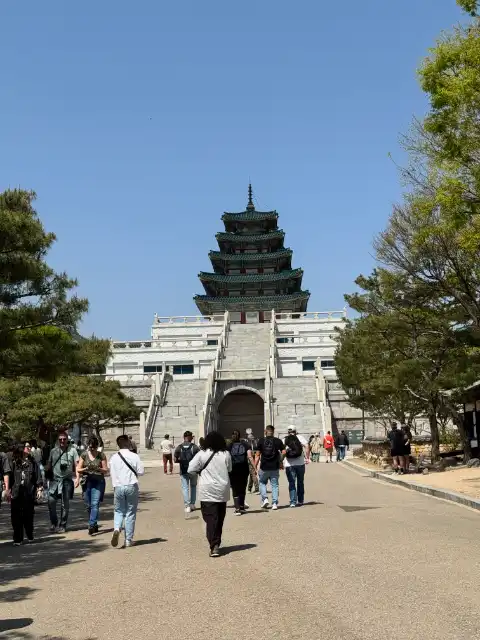
In this morning’s post about Gyeongbokgung Palace, I mentioned that my first destination of the afternoon would be a sight right next door. That’s the National Folk Museum.
After that, I walked over to a Hanok village, Bukchon Hanok Village, to be precise. I finished with a Buddhist temple, Jogyesa Temple.
I’m still not caught up on my sleep or over my jet lag, so let’s dive right in and try to get through it quickly so I can get some sleep.
National Folk Museum
In terms of the National Folk Museum’s architecture, the most impressive part may not actually be part of the building. Beside the museum building, there’s a beautiful, imposing, five-tier pagoda that perches atop a tall, even more imposing, set of stairs and terraces.
I couldn’t see a sign saying anything about the pagoda structure, just one about a couple of lion statues in front of it. The pagoda structure may be attached to the National Folk Museum building. For all I know, some of the museum exhibit space may be in the base of the pagoda pedestal. I don’t know.
It’s not that the museum building isn’t nice. It’s just that the pagoda tends to dominate it.
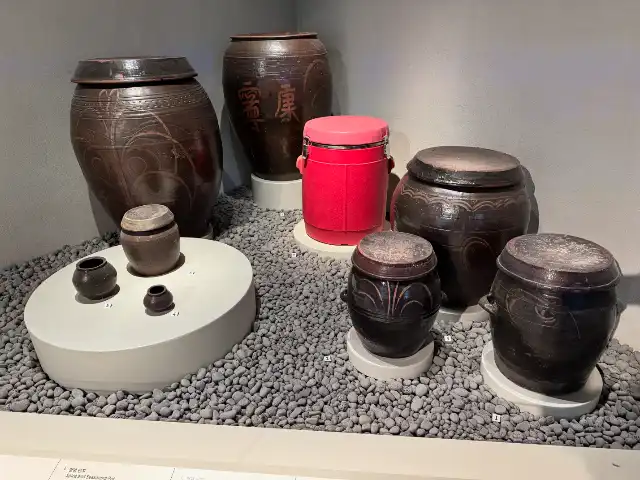
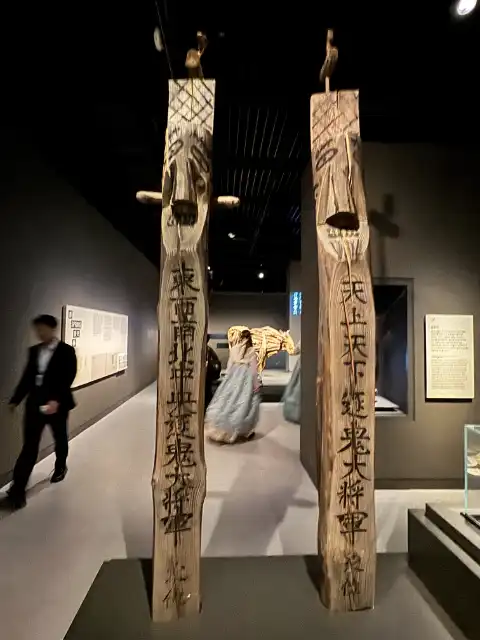
The National Folk Museum contains three permanent exhibit spaces and one temporary exhibit space. There’s also a children’s museum section, but I didn’t go into it. In addition, some funerary stones and statues, and some historical buildings sit outside on the museum grounds.
When I was there, the temporary exhibit was on birth, specifically the customs and practices surrounding pregnancy and the birth itself. The exhibit compared and contrasted traditional birth customs and practices with modern ones.
One of the permanent exhibits is titled “A Year in Korea.” It talks about the changing seasons in Korea, official seasonal holidays, and the differing activities, such as agricultural activities, in the different seasons.
In this exhibit, I learned that Koreans identify five seasons, rather than four. In addition to spring, summer, fall and winter, Koreans recognize the first month of the lunar calendar as its own season, Jeongwol.
In the spring, there’s a lantern festival. In front of each house, celebrants place a pole. They hang lanterns off the pole. Either that or they hang a string of lanterns from the eaves. They make as many lanterns as there are people in the household, “as a prayer for peace and well-being during the year,” according to a sign in the museum.
Peace and well-being. I don’t believe in prayer, but it’s worth a try for that.
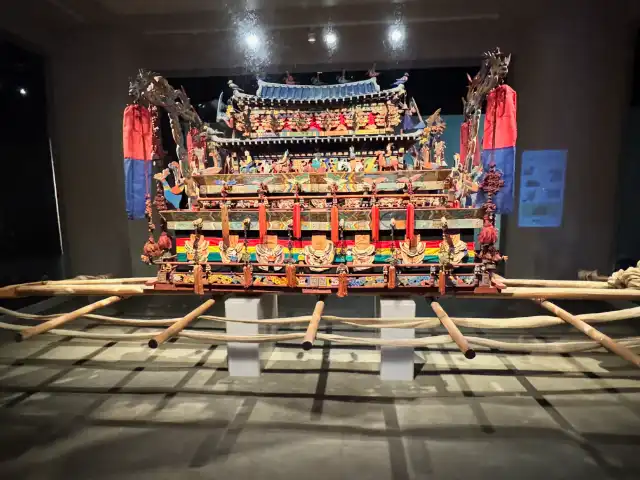
One of the seasonal holidays described in the museum was “Yudu.” According to a sign in the museum, “Yudu falls on the 15th of the 6th lunar month, and the term is an abbreviation of the phrase dongryu-sudumokyok, which means washing hair and taking a bath in the water flowing eastward. It is also called Sodu or Sudu. Sodu means to wash hair and Sudu means to water the head.”
Um. Okay. I hope that’s just the day when they bathe and wash their hair in east-flowing water, and they bathe and wash their hair in water that flows in other directions on other days. I don’t want to even think of the possibility that that’s the only day in the year when they bathe and shampoo.
Another of the permanent exhibits at the National Folk Museum was titled “The Beginning of K-Culture.” It explores the development of Korean culture over the past couple of centuries, and the world’s greater exposure to it more recently.
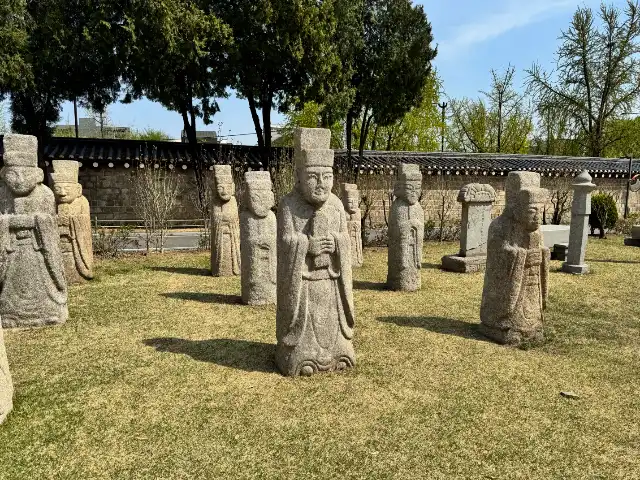
The final permanent exhibit at the National Folk Museum was titled “Korean Life Passages.” It described customs associated with major life events—birth, acceptance as an adult, death, and probably a few others I’ve forgotten—in Korean culture from the Joseon dynasty through to the early twentieth century.
For example, in the olden days, males had a major coming-of-age ceremony when they turned twenty and females at fifteen. I wonder if I would have been able to handle my Bar Mitzvah with a little less angst over the chanting of my portion if I could have done it at twenty rather than thirteen. Probably not. My angst levels haven’t declined much.
I found the National Folk Museum to be interesting. Plus, it was small enough that I didn’t get bored and big enough that I didn’t leave thinking, “That’s it? That’s all there is?”
Bukchon Hanok Village
If you read my post from yesterday afternoon, my first afternoon in Seoul, you’ll know that I visited the Namsangol Hanok Village and left not excessively impressed with it. You’ll also know that it didn’t match the image that had formed in my head when I read about Hanok villages when planning for this trip.
Bukchon Hanok Village is much more like what I expected and is more impressive. But I got a little worried when I came to what I thought was Bukchon Hanok Village.
I used one of the local mapping applications to find it. I arrived at what I thought was the spot when I saw several tourists hanging around or walking up a street. Every few metres on the street, there was a large sign explaining that it was an active residential area, so please be quiet. It also gave hours when tourists weren’t allowed in the neighbourhood.
I walked along the street with those signs on it. The buildings were low-rise. There were several shops and some residential. They were nice, but not at all out of the ordinary. I thought, “What’s so special about this? Why is this a major tourist attraction?”
Nevertheless, I walked on. Then I got to it, the true Hanock Village.
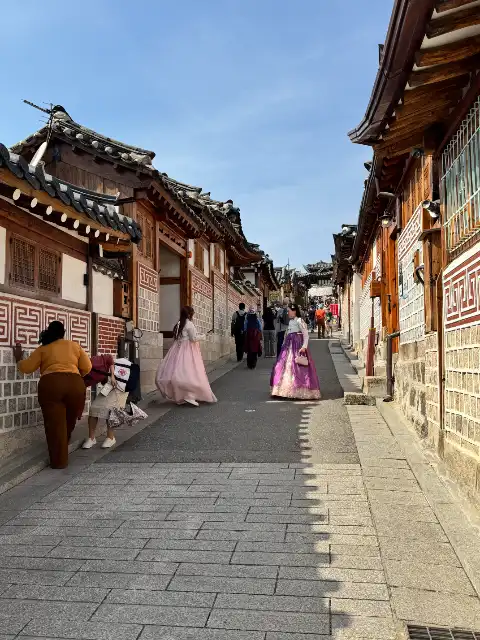
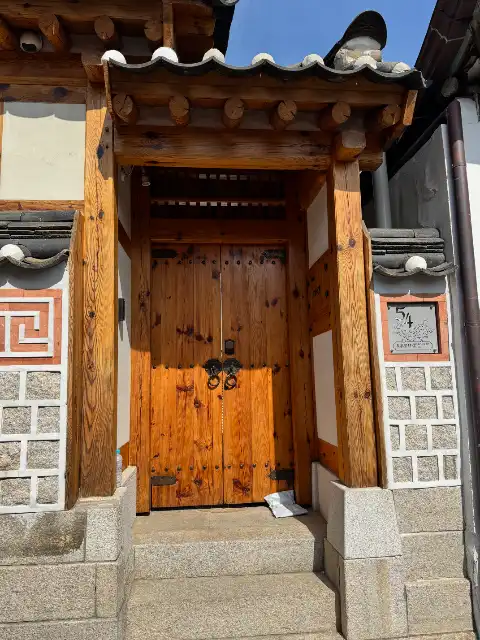
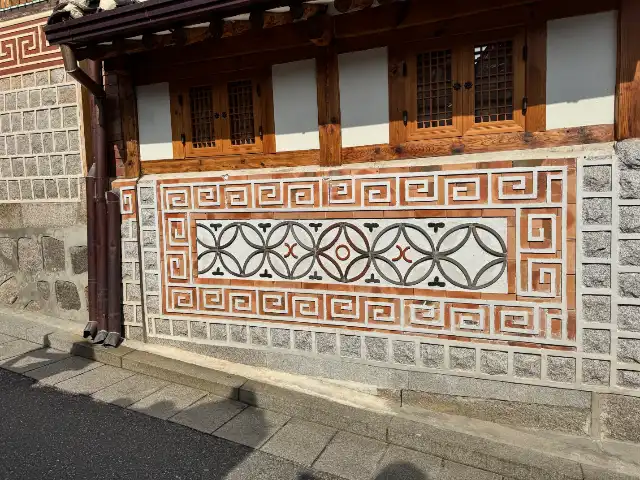
The buildings are all low-rise residential, and they are lived in. The street-facing facades bear geometric patterns of opposing colours, the same colours on all of the buildings, along with stone squares, with thick, straight-line grouting. There is also lots of wood trim.
The doors are reasonably unadorned but constructed of very handsome wood.
Roofs are tiled with what look like cylindrical logs with pointed ends, but I don’t know if the material really is logs.
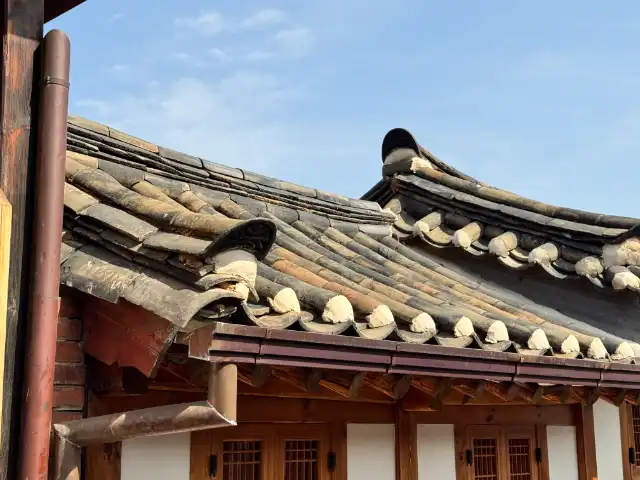
This ran for a few blocks of one street and a piece of a parallel street one block over. There was only a very small amount of commercial space. To the best of my recollection, it was mostly on the cross street joining the tops of the two streets.
The streets were very attractive. However, if I lived there, I don’t think I’d be thrilled with all of the tourists, people like me, for instance.
Jogyesa Temple
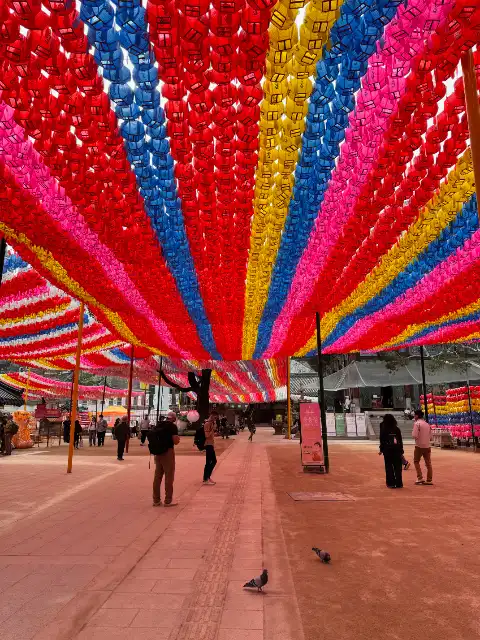
I finished the afternoon at Jogyesa Temple, a major Buddhist temple in Seoul.
Dense rows of lanterns strung over the large courtyard in front of the temple were close enough together that they almost formed a ceiling. There were also stands of lanterns perched on the ground.
I’d read before coming that there are always a lot of lanterns in the courtyard, but I think there might have been more than usual. There’s a lantern festival coming up in May. Jogyesa Temple is a major venue. A large cherry picker that was sitting in the yard led me to think that the overhead lantern-stringing might have been recent. Then again, maybe they were getting ready to take them down.
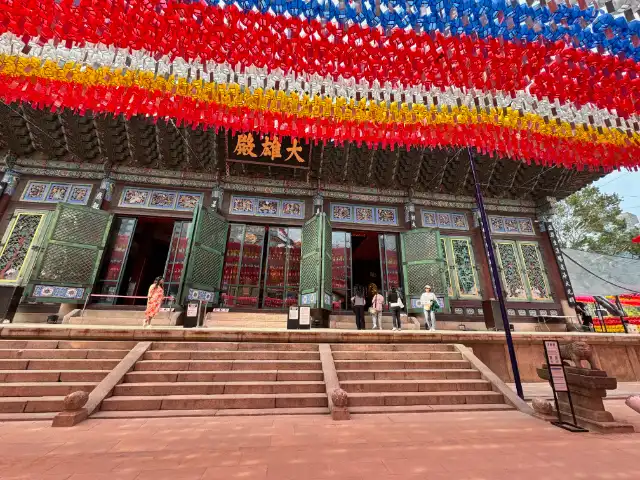
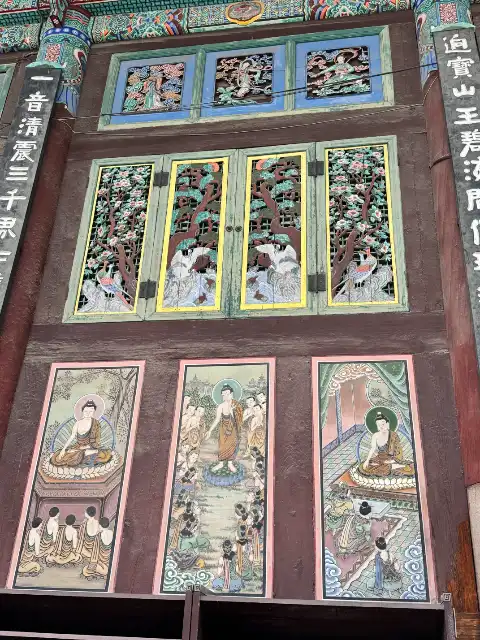
Three large, gold-coloured Buddha statues sit inside, at the front of the main hall of the temple. Photography is not allowed in the hall, so I don’t have any pictures. But I did go inside, which required taking off my shoes. That is the rule at most of the Buddhist Temples I’ve been to. Since I started doing some Asian trips, which only happened later in my life, I’ve come to expect to have to take my shoes off to visit a temple.
And so ends my programming day. I’ll have more tomorrow.
Discover more from Joel's Journeys & Jaunts
Subscribe to get the latest posts sent to your email.

DMZ Part 2: Third Tunnel, Dora Observatory, JSA Museum
Namsangol Hanok Village and Much More

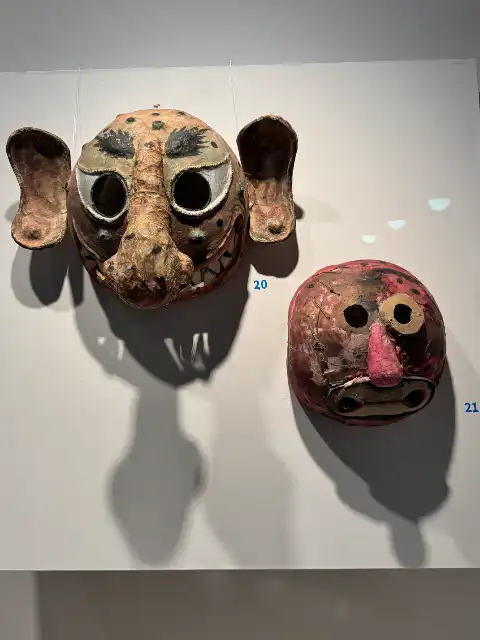
Gorgeous. Some really attractive sights. I was thinking the same thing as you about residency in the Hanok village. Such an attractive idea, but potentially so difficult to live in a tourist attraction. I thought the same thing about quaint Circus Lane in Edinburgh, and that one seems somewhat less frequented. Liked those masks in the museum, and the aesthetics of the temple and house architectural details. Thanks for showing them to us.
I had to go back and look at the post because there was one picture I thought I’d posted and was certain you’d comment on. Turns out, I forgot to include it. The museum had a display of lanterns on posts. One of the lanterns was in the design of a cheerful fish. Sorry I forgot to post that.
The only time me so far I’ve been on Circus Lane, it was reasonably empty. There were no more people than you’d see on an average non-tourist street. Maybe that was unusual. If I remember, the weather wasn’t great then.
Great post , thank you for sharing.