Visiting Arundells and Other Sights in Salisbury, England
This was a relaxed afternoon, during which I took in a couple of sights and generally wandered around. Arundells, mentioned in this post’s headline, wasn’t the only or the first sight I saw, but it was the highlight for me.
I didn’t consider either of the named sights I saw this afternoon to be blockbuster attractions, but both were listed as “must-sees” in my walking tour app, and I enjoyed them. The rambling around was pleasant too.
Salisbury Market Day
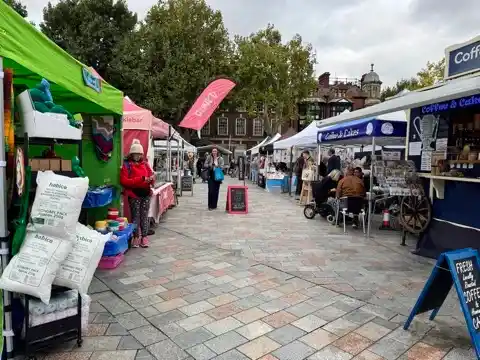
The bus I took back from my visit to Stonehenge this morning passed a temporary market in a square just a few blocks from my stop. After I got off, I walked back to it.
It’s a very eclectic market. Stalls sold fruits, vegetables, meat, clothing, jewelry, nuts, prepared food for eating there, knickknacks, and more.
I subsequently learned that the market runs on Tuesdays and Saturdays. Today is Saturday.
It isn’t a huge market. I wandered around a bit. Took in the character of the place, bought a small package of smoked almonds, and moved on.
Mompesson House
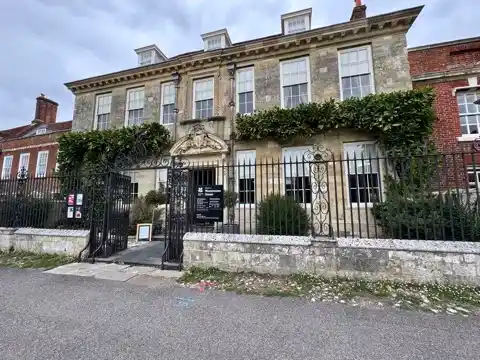
Both Mompesson House and Arundells, which I visited next, are in Salisbury’s Cathedral Close.
Mompesson House, which is in a Queen Anne style, has a long history. Thomas Mompesson leased the land from the Dean and Chapter of Salisbury Cathedral in 1635. His grandson, Charles, rebuilt the house in 1701.
It passed through a few different families until both the land and house were bought by Denis Martineau in a truly momentous year in world history, 1952. Okay, maybe that wasn’t all that momentous a year. But it was the birth year of a famous writer. Alright, perhaps he’s not famous, but he writes a travel blog that a small number of people read. Oh. Never mind.
Where was I? Oh yeah, Denis Martineau bought the house in 1952. However, the seller placed a condition on the sale: Martineau was required to leave the house to the National Trust on his death. That happened in 1975. The National Trust got the house, but the contents were sold.
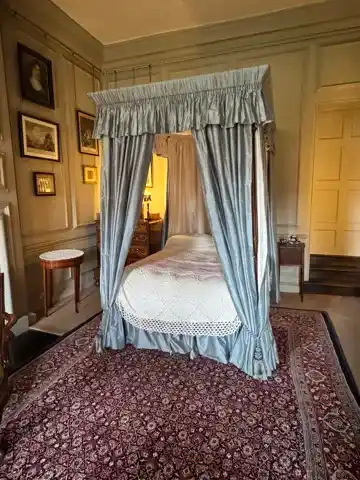
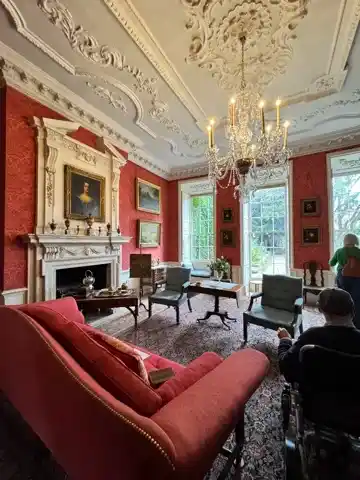
Today, the rooms in Mompesson House are decorated with period pieces. The house is open for the public to roam around for a fee. There’s lots of textual information provided about the house, its owners, and customs back in the day. For example, according to a sign in the house, “During and before the 18th century, breakfast was a hearty meal consisting of eggs, kidneys, chops, and liver, eaten about 10 o’clock in the morning, though it soon became more fashionable in town to breakfast later in the morning.”
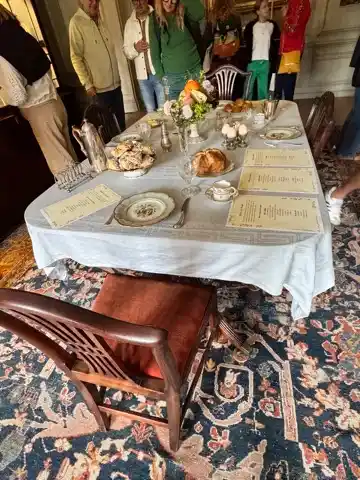
Not exactly early risers, were they? Then again, I know modern-day people who do consider that early. Never mind.
Also, “By the end of the 18th century, dinner had moved from the middle of the day to quite late in the evening, for the upper class at least. This was another way of showing wealth, as evening entertainment was only possible due to advances in candle making and, by the 1790s, the introduction of oil lamps.”
Well, la, tee-dah.
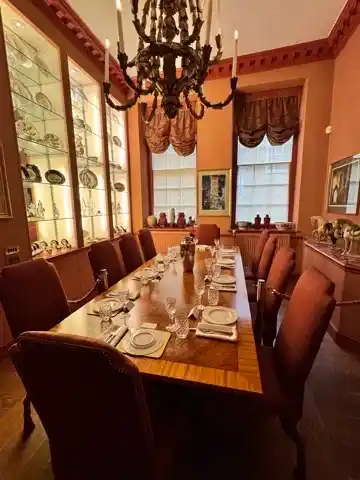
In the dining room of the house, there’s a cabinet with a collection of vintage drinkware. Out back, there’s a peaceful garden. Beside the garden, there’s a small building that currently houses a used-book store.
I didn’t spend a lot of time in Mompesson House, but it was enjoyable.
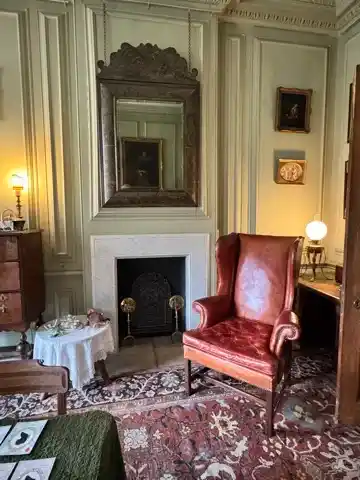
More pictures inside Mompesson House:
Arundells
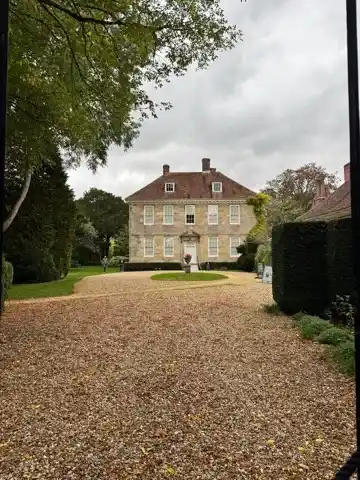
Arundells is a house that has had some notable residents. Its first recorded occupant, Henry of Blunston, was Archdeacon of Dorset. He lived there from 1291 until he died in 1316.
Arundells got its name from James Everard Arundell. He was the son of the 6th Lord Arundell, who had married the daughter of the previous owner, John Wyndham. The Arundells were a distinguished family of the Roman Catholic persuasion.
Arundells had a few other occupants before and after the Arundell family. It fell into disrepair for a while and was refurbished in 1964.
However, none of that is what most makes Arundells famous today. That is a result of its final occupant, Sir Edward Heath, who was Prime Minister of the United Kingdom from 1970 to 1974. He died in 2005. His ashes are buried under the floor of the nearby Salisbury Cathedral, as I mentioned in my journal entry about the cathedral.
I didn’t go into the house first.
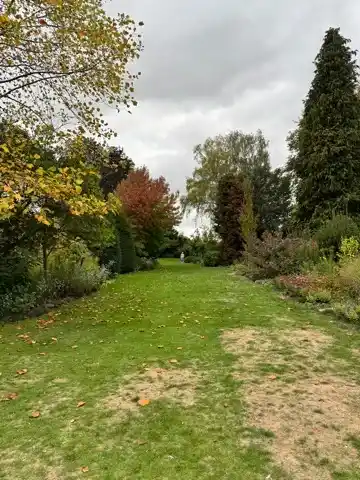
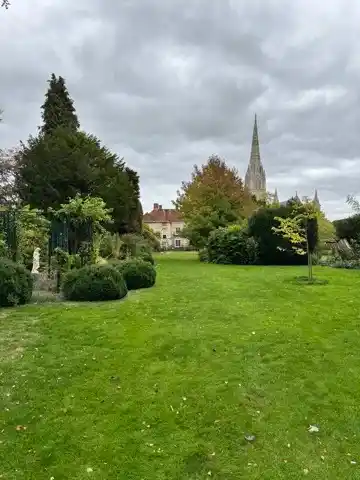
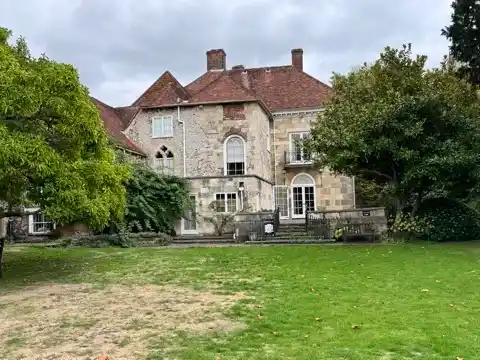
There is a gorgeous garden out back. I went there first. It has a lawn that extends from the house, quite a ways back to the peaceful confluence of the River Avon and the River Nadder.
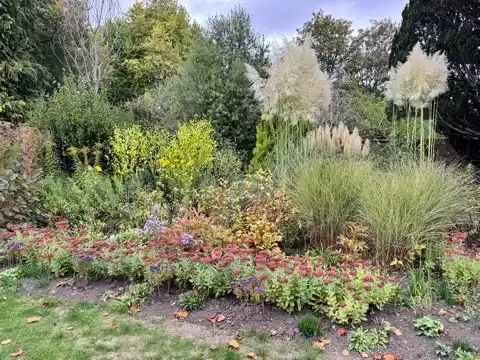
On either side of the lawn, there are small, delightful specialty gardens.
A visit to Arundells is worth it just for the garden alone. But do go into the house.
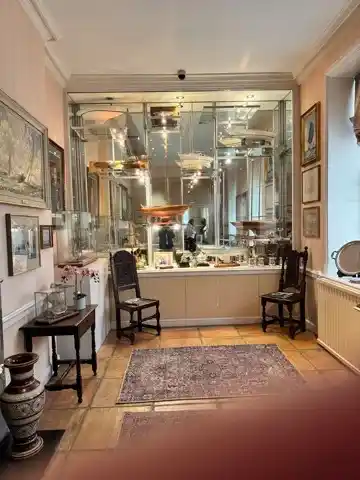
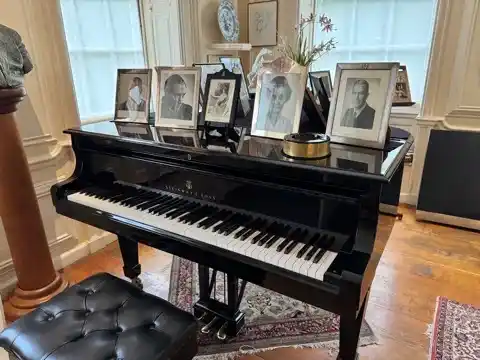
For the most part, Arundells is furnished as it was when Edward Heath was living there, including his furniture, memorabilia, and paintings and drawings on the walls. There’s one wall with Chinese wallpaper. It was custom-made in China and depicts an illustrated Chinese scene. A couple of Heath’s former secretaries who were working in China brought it back and gave it to him as a gift.
In each of the rooms, there are laminated sheets with information about the rooms, their contents, and their use. In rooms with paintings and/or drawings on the walls, other laminated sheets provide the titles and artists of each of the artworks.
One room contains information about Edward Heath’s military history, which, according to one of the guides in Arundells, most people aren’t aware of. (I know I wasn’t.) In addition to the information panels in this room, there were also some uniforms hung on forms. Included was “Lt Col Heath’s No. 1 Dress Uniform, Honourable Artillery Company.”
Guides were positioned in most of the rooms. They were all personable and informative. The guide in the second room was quite chatty. She talked with me for a long time about Heath, the house, and sights in Salisbury. That’s how I learned that market days are Tuesday and Saturday. She then asked me where I was from. After I told her, she asked a few questions about Canada.
I found the whole experience enjoyable and enlightening.
More pictures of Arundells and its garden:

More Rambling
After I left Arundells, I rambled a bit around Salisbury.
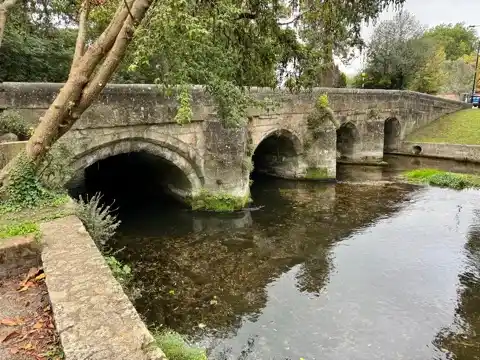
I walked by and over Crane Bridge. There are records of a bridge there from around 1300, but the current bridge dates mostly from the 15th century. In 1898, one side of the bridge was removed, the road was widened, and the removed section was reinstalled on the new side of the road. Crane Bridge is a simple but handsome old stone bridge.
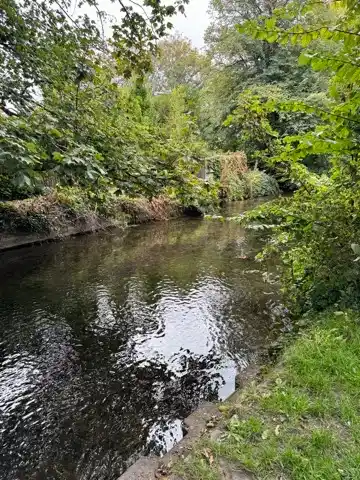
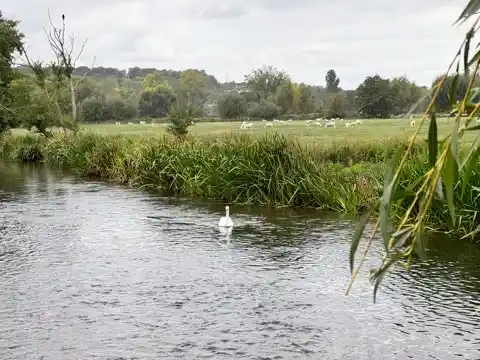
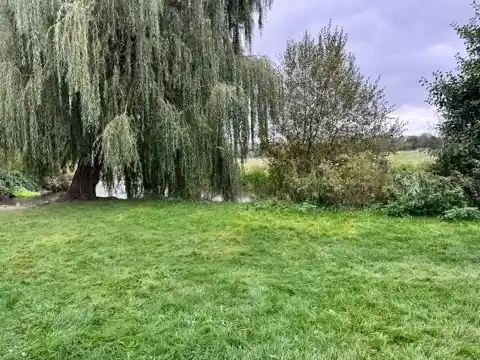
Crane Bridge passes over the River Avon. There’s a walking path starting from beside the bridge that runs beside the river for a short distance. I walked along that and found that I had entered the other side of Queen Elizabeth Garden from the side I’d been in yesterday.
I walked toward the back of the park on that side. From there, I could see in the near distance across the river the sheep grazing in the Harsham Water Meadows, which I walked through yesterday. I strolled in the park. Then I sat for a while on a comfortable bench with a pleasant view. Done sitting, I left and returned to my hotel.
Pictures of Queen Elizabeth Garden and River Avon within it:
Discover more from Joel's Journeys & Jaunts
Subscribe to get the latest posts sent to your email.
Exploring Salisbury Museum and Churchill Gardens
Climbing Salisbury Cathedral Tower

We are getting a taste for how the upper class lived, aren’t we? Having late breakfasts is another privilege of the moneyed landed gentry, and, by the way, of retired people, if only for those who don’t wake up in the middle of the night and have breakfast then. No retired people I know eating dinner very late, though. More likely to be at the early bird specials and into bed. Beautiful nature and gardens! A lovely day’s activities. Do sheep graze the pastures down to nubbles along the Nadder, I wonder?
It might be nice to live life like the upper class. But I probably needed better grades for that. And a larger inheritance.
It was indeed a lovely day. As to whether sheep graze the pastures down to nubbles along the Nadder, I have no notion of that.