Panier District and More
It was a mostly sunny morning in Marseille today. I took advantage of the dry hours to do a little exploring and visit some sights.
That exploring began in the Panier District, moved on to La Charité Museum, and ended at Cathédrale de la Nouvelle Major.
Panier District
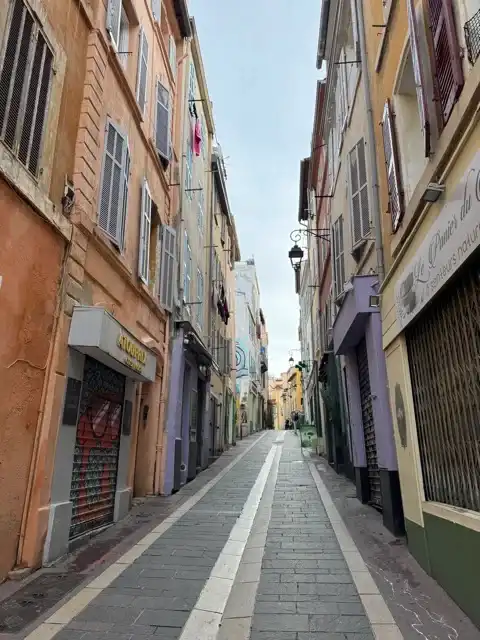
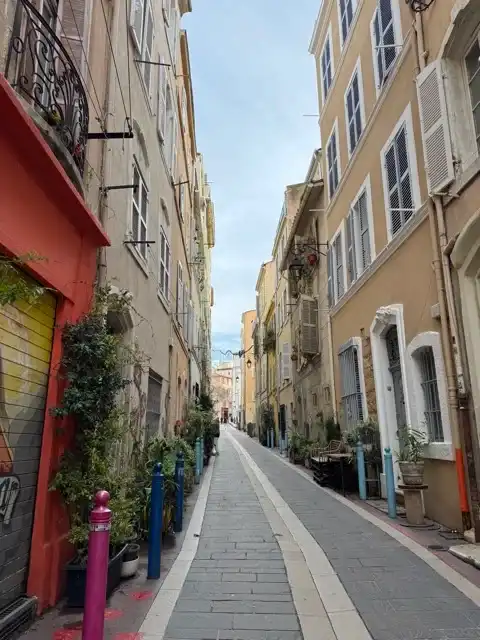
The Panier District is Marseille’s old town. The streets are not overly narrow, but not particularly wide either. Just right for pleasant strolls.
Some of the streets are paved with paving stones, others with cobblestones, and a few with asphalt.
Automated bollards that lower into the ground for vehicles authorized to go there close off a couple of the streets. There was little vehicle traffic anywhere in the Panier District, thereby adding to its charm.
The buildings in the Panier District are mostly three to five stories tall and painted in slightly, but only slightly, worse-for-wear pastel colours.
One of my guidebooks told me that the city keeps rents low in the Panier District so artists, artisans, and other creative businesses can afford to be there.
This raised some unanswered questions in my mind. How does the city keep rents low? Does Marseille own the buildings? Or is there rent control that prevents landlords there from charging as much as landlords elsewhere charge?
And, regardless of how the rents are kept low, why does that primarily appeal to artistic types? Don’t other people want to take advantage of low rents in a nice neighbourhood? Or do landlords tell prospective tenants, “Paint me a picture. If I think it has artistic merit, I’ll rent the space to you. Otherwise, you’ll have to find another place. Sorry.”
Of course, if that’s the sort of thing they say, they’d say it in French. However, I doubt they say that in any language because who rents apartments, offices, or stores that way? But that still leaves the question of why it’s predominantly artistic types who congregate there. Or was my guidebook wrong about that?
These are the sort of idle, meaningless quandaries you can thoroughly waste your time contemplating when you’re retired and have nothing of any importance or value to do or contemplate.
The presence of artists might explain the mostly fanciful murals painted on walls throughout the Panier District. Or perhaps they weren’t painted by neighbourhood artists at all. Maybe the city paid painters from elsewhere to create the works.
There’s yet another unanswered question to plague me. As I always say, it’s not easy being me. I should probably stop always saying that. It’s hard to order a meal at a restaurant when I repeat “it’s not easy being me” continuously. It takes a special kind of mind-reading server to be able to translate that into “I’d like the mushroom soup and sauteed shrimps, please.” Those sorts of servers are exceptionally rare. I might starve to death.
But enough about that.
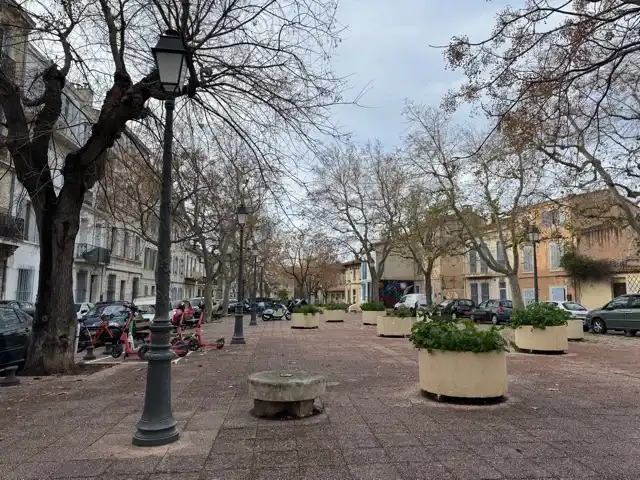
The Panier District also has some pleasant public squares. The primary one is Place des Moulins, or, if translated into English, Place of the Windmills. I read that there used to be several windmills around what is now the square, hence the name of the square. The windmills took advantage of the hilltop location to capture the breezes and use them to power local industries.
None of the windmills are there today. I don’t know when they disappeared or if they were even still around within the memories of anyone alive today. I have no expertise in this, but I believe the faculty of memory declines considerably upon death. Not that it’s doing all that well in life. But maybe that’s just me. And it’s not at all relevant to my time here in wherever the heck I am.
(Of course, I’m kidding. I remember perfectly well where I am. I’m pretty sure it begins with an M.)
La Charité Museum
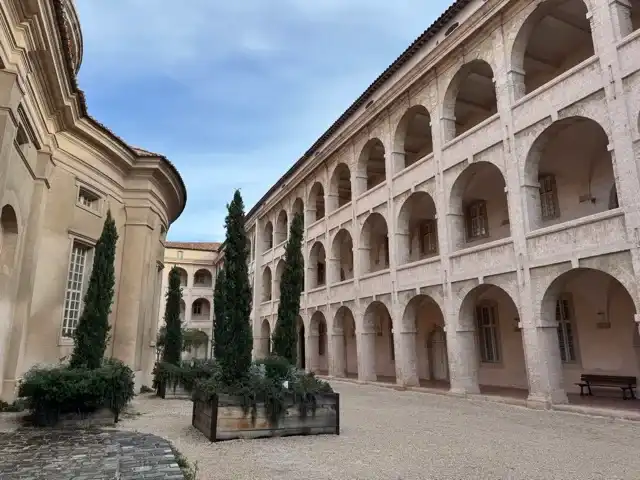
After spending a while wandering around the Panier District, I visited the La Charité Museum. That wasn’t a long walk. It’s immediately beside the Panier District. In fact, for all I know, it might officially be part of the neighbourhood.
What is now La Charité Museum was built as La Vieille Charité between 1671 and 1749. The King of France then thought it was unacceptable for homeless people to live on the street, so he had La Vieille Charité built as a poorhouse for them.
Housing homeless people. That’s rather progressive, isn’t it?
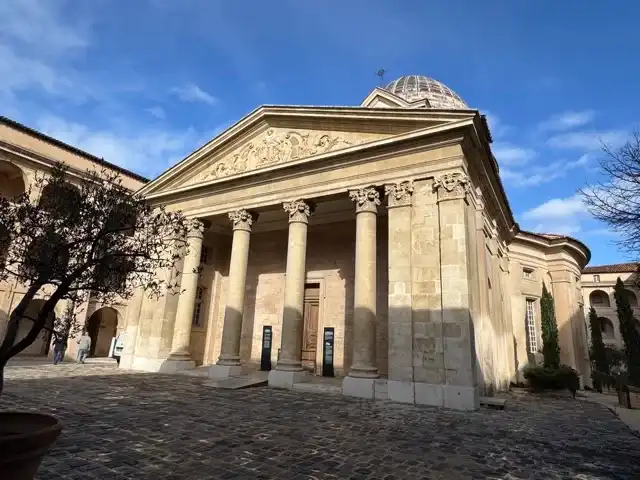
And what a charming place the formerly homeless people got as an abode! I don’t know what it was like inside when it was a poorhouse, but it’s a very handsome structure. The building wraps around a rectangular courtyard. Including the ground floor, there are three levels of cloistered exterior hallways, with simple, but attractive arches and pillars.
An attractive, free-standing chapel sits in the courtyard. It wasn’t open when I was there.
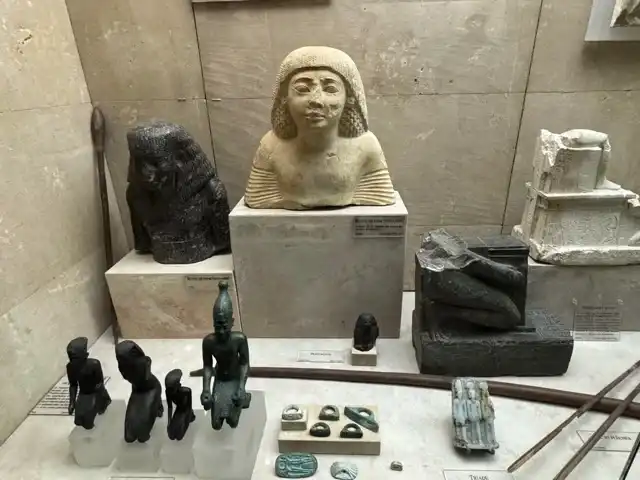
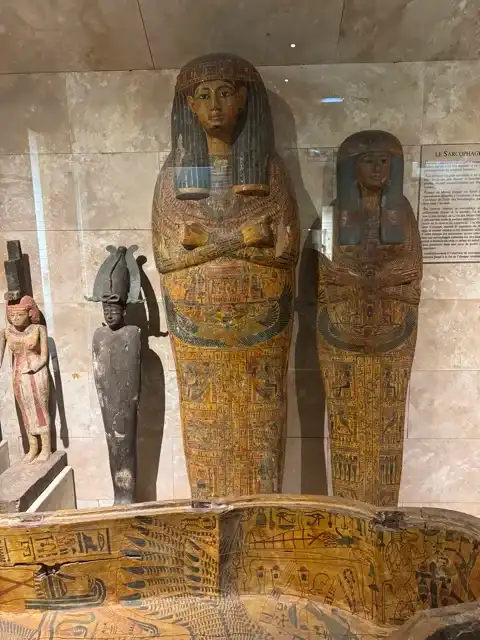
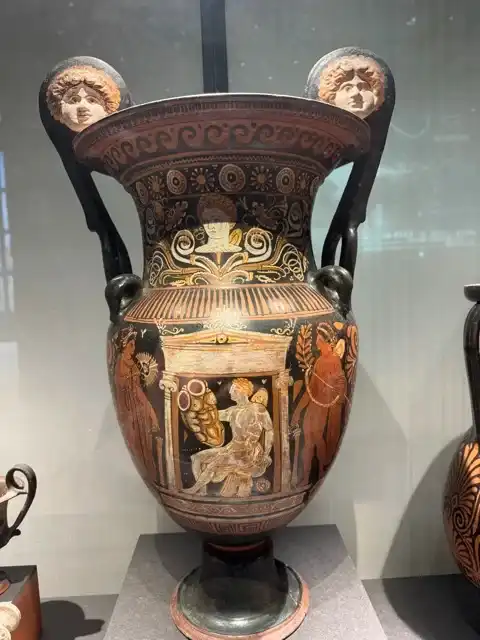
The former poorhouse now contains museums. The ground floor is set aside for temporary exhibits. The first floor houses a permanent exhibition of Greek and Roman archaeological artifacts. The second floor contains another permanent exhibition of African, Oceanic, and Amerindian arts.
Entrance to the permanent exhibitions is free for everyone, not just for ancient people like me. However, there’s a charge for the temporary exhibits. There was a temporary exhibit on when I was there, but the signage said little about it. All that the signs displayed were the exhibition’s title and a subtitle: “ADEN – MARSEILLE: D’un port à l’autre, entre Arabie et Méditerranée.” From this, I gathered that it was an exhibit on the relationship between two ports, Aden and Marseille.
I went to the ticket office to enquire about it. The two ticket sellers spoke very little English. They didn’t seem at all interested in selling me a ticket to the temporary exhibit, and I didn’t push it. The ticket seller who was the primary one to speak to me was able to convey that the exhibitions on the deuxième étage were closed this morning for a private function, but the exhibitions on the premier étage were open. (Yes, she did tell me most of that in French, but between my limited French and her few words of English, I had no problem understanding what she was telling me, without the need to consult either of the translator apps on my phone. Unless, perhaps, she was telling me the final score of a local football (soccer) match. I don’t think so, but maybe I should have used one of the apps.
The upshot is that I saw only the Egyptian and Roman exhibitions on the premier étage. (The first floor is the floor above the ground floor in these parts.)
Even though the permanent exhibits are free, you still have to get a ticket to go into them. And people at the doors to the exhibits insist on carefully checking the free ticket and its date. What’s the point? It’s free. It’s not as if they have to bar anyone who didn’t pay for a ticket. Are they afraid the pulp mills, paper makers, and printers will go out of business if they don’t hand out tickets?
Most of the artifacts in the Egyptian exhibit were from a few to more than a few centuries before the Common Era. In the Greek and Roman exhibits, they ranged mostly from a few centuries before to a few centuries after the turn of the Common Era.
Almost all of the signage in the museum was entirely in English. And when I say “almost,” I mean very, very close to all. There was plenty of descriptive signage, but only one sign that I saw had an English translation on it. The English portion of that sign had a title and four paragraphs on “The persistence of the heroic figure in memory and culture.” Don’t ask me why that sign, but none of the others, got an English translation.
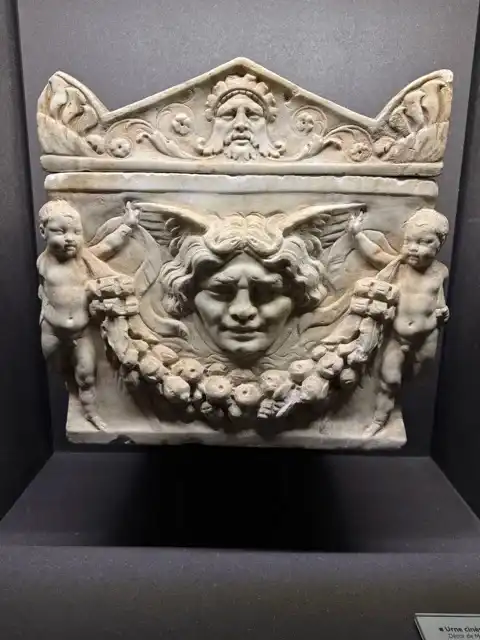
I read a few of the other signs as well. I was surprised that even with my very limited French vocabulary, I was able to use the context of the words I did know to extrapolate the meaning of the other words and understand most of what the signs said.
I was amazed to learn that in ancient Egypt, the servants of the pharaohs used novelty ballpoint pens shaped like fruit, such as bananas and kiwis, to inscribe the household’s shopping lists. To conserve precious paper, they wrote the lists on the backs of used envelopes. What’s more, the pharaohs had supermarkets built close to their homes so that the frozen goods wouldn’t melt before the servants could get them home and place them in the home freezer or thaw them for immediate consumption. Unfortunately, cars were still quite slow back in the days of the pharaohs.
It’s possible I got a few of the minor details of my translations wrong.
Cathédrale de la Nouvelle Major
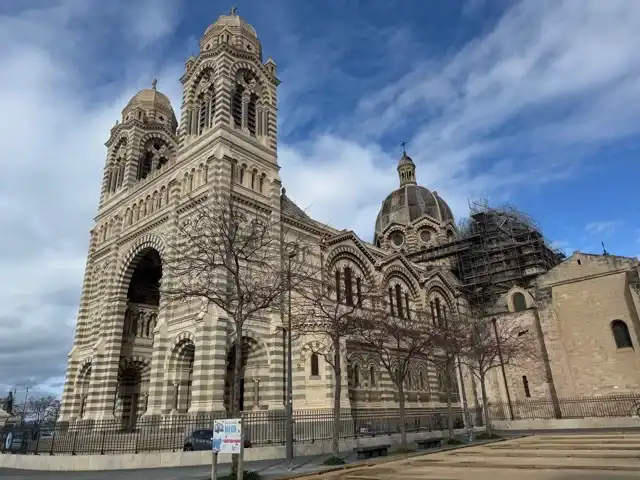
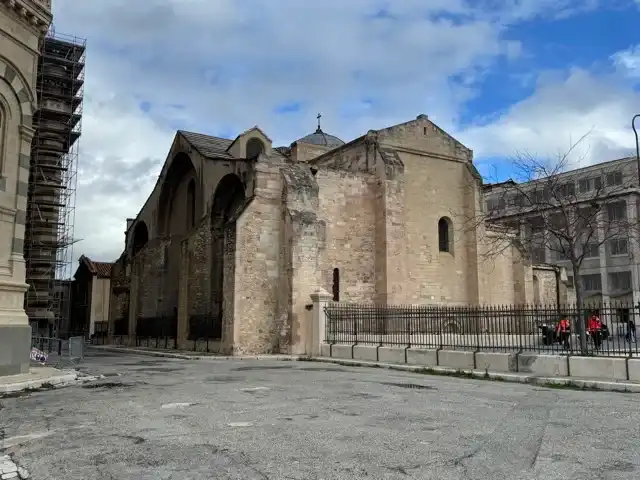
The Cathédrale de la Nouvelle Major is a large structure built almost next to the sea and close to the Painier District. A couple of towers and a couple of domes perch on its roof.
The facade is constructed of alternating pinkish and sandy-coloured stone in horizontal stripes. This design surprised me because I’ve always thought, based on conventional wisdom, that horizontal stripes make you look fat. But it works on Marseille’s cathedral.
The Cathédrale de la Nouvelle Major was built in the 19th century to replace a smaller 12th-century cathedral that Marseille had outgrown.
A partial remnant of that old cathedral still stands beside the new one. I don’t know if it’s because much of the original structure is gone, but the old cathedral looks quite plain.
It didn’t look like there was any way to go inside the old cathedral now. I don’t know if that’s always the case or only because I was there.
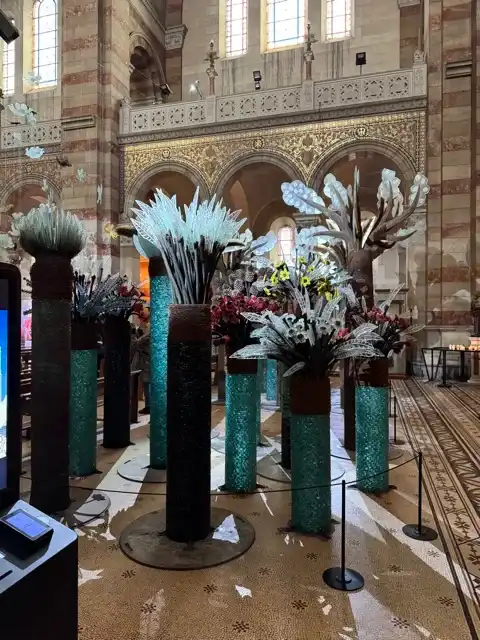
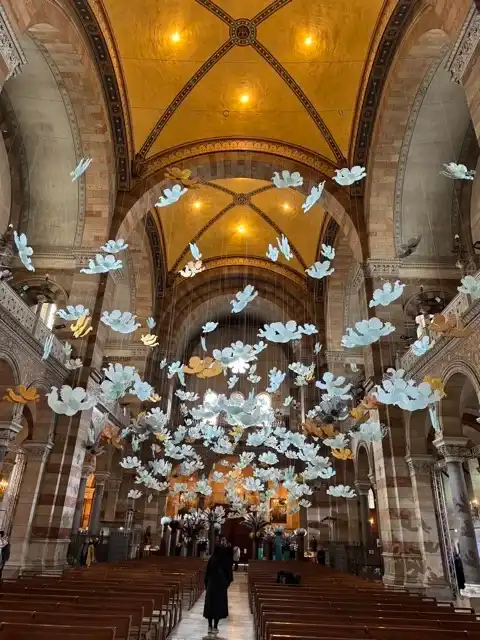
It was hard for me to get a sense of what the interior of the new cathedral normally looks like because there was a major temporary art exhibit, titled “Lumières Célestes,” mounted inside when I was there. All of the work was by a single artist who goes by just one name, Marcoville.
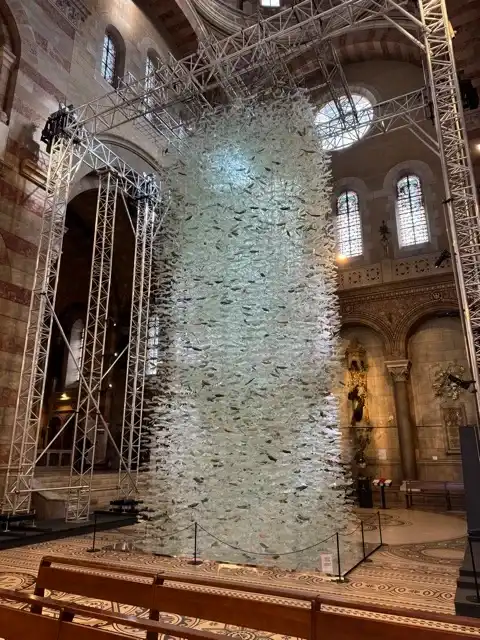
Near the entrance, there was a small forest of stylized trees made of coloured glass. Along the side walls were almost, but not quite, two-dimensional sculptures of people, mostly in religious garb. Over the back section of pews, a large number of frosted glass cherubs hung from the ceiling.
In one of the transepts, there was a massive piece. One particular reader might want to sit down for this. The piece had probably at least hundreds of component pieces arranged into a tall, largely straight-sided structure. The base looked like a large square to me, but I didn’t measure the sides to ensure it was square.
That particular reader is probably wondering why she had to sit down for that. Here it is: Those probably hundreds of component pieces? They were all fish shapes made of frosted or coloured glass. How cool is that?
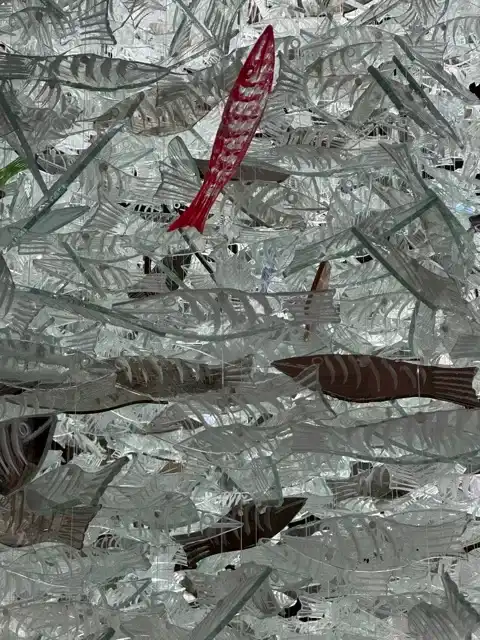
Not having anything to top a sculpture composed of hundreds of glass fish, I’ll end this morning post here and come back at you with some words on my afternoon later.
Discover more from Joel's Journeys & Jaunts
Subscribe to get the latest posts sent to your email.


Good thing that this particular reader is propped up on the bed in her hotel room reading this. You had me at fish sculpture and then included a detail and the mind reels (pun intended). So much so that I have forgotten all the rest of what you’ve written in this post. Where did you say you are? Some place starting with an M? Mackerel? Marlin? Monkfish? What a great morning. What a wonder of a place. May the rest of the trip live up to it.
I knew the fish would snag you. Wow. You know your M fish, don’t you?
Housing for the un-housed! Des poissons en vers (La Tour Poisson?). Near the square where windmills used to catch the coastal wind. Windmills? Like the telltale miniatures in the church yesterday, grinding even when the rest of the display sat in suspended animation.
When you put it like that, my day sounds even more eclectic than I remembered it being.